
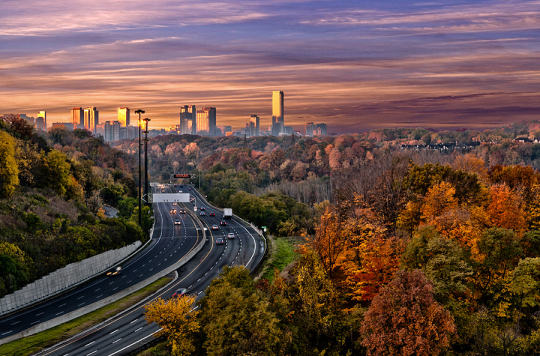
Three months ago when Toronto City Council voted
not to remove the Gardiner Expressway
East (which in
my view was a mistake), it did so with a commitment to look at tolling
options for both the Gardiner Expressway and the Don Valley Parkway (which in
my view is a positive thing).
Last week a preliminary report was released
discussing some of those tolling options. If reading dry city reports is your thing,
you can do that here.
The Coles Notes version (CliffNotes for you
Americans) is that a $3 flat toll on both the Gardiner and the DVP – the same
cost as riding transit in this city – would be expected to reduce vehicles on the highways by 9% and 12%, as well reduce end-to-end travel times by 3 minutes and 5
minutes, respectively. There’s obviously a lot more in the report, but these
figures stood out for me.
Given how monumental the
3 minute delay was in the Gardiner East debates, it will be interesting to
see whether people treat a 3 minute time savings in a similar way. I suspect
they won’t. The cost will be the larger issue.
I’ve been a
vocal supporter of tolls and road pricing on this blog. One of the main reasons
for that is because I view the demand for highways as being largely inelastic
and therefore a potentially great source of transit funding.
The discouraging part of the above report is
that its primary goal is to explore tolls for the purpose of “offsetting
capital, operating, and maintenance costs.” The primary goal is not to come up
with sustainable sources of transit funding.
Having these costs paid for by user-fees as
opposed to general taxes is still a good thing in my view. But an even better thing
would be to help fund mobility solutions that we know will be far more
effective at getting people around this region as millions more people move here
in the coming decades.
The other discouraging part of the report is
that near the end it explains that while the City of Toronto Act of 2006 allows
for toll highways, they cannot be implemented without the Province passing
regulation.
It’s a reminder that our governance structures do
not reflect the current urban reality of this country.