Daily insights for city builders, delivered every morning at 6 AM ET. I’m Brandon Donnelly — a Toronto-based real estate developer and founder of Globizen. I’ve been writing here since 2013.

Tag: driving

  • What it takes to unlock infeasible development land (and some thoughts on parking)

    image

    One of the questions that came up after my recent post about land pricing was: what is it going to take to develop underutilized land on the outskirts of city centers?

    So today I thought I would talk about a new development project that was also discussed at the Land & Development conference I recently attended. I think will begin to answer this question.

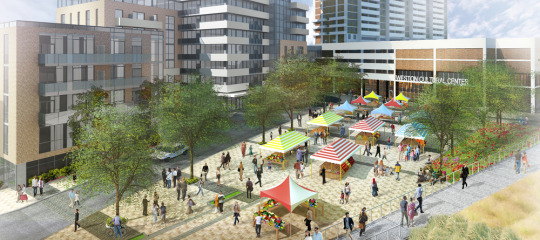
    The project today is known as the Rockport Weston Community Hub & Rental Building. And it’s going to include a community cultural hub, 26 live/work artist spaces, and 300 rental apartments. 

    It’s located in the Weston neighborhood of Toronto, which is designated as a “Neighborhood Improvement Area.” These are lower-income areas that the city considers to be “at-risk.”

    Given this, rents are naturally lower here than in other parts of the city, which means that it’s basically infeasible to develop here. There has been no large scale development in this community since the 1970s!

    To put some numbers to this, the developer said they were projecting rents somewhere around “two and a quarter.” So let’s assume for a second that the average apartment rents will be $2.25 per square foot. 

    At this rate, it means that a 600 square foot one-bedroom apartment will have a face rent of $1,350 per month. This may seem fairly high, but it almost certainly wouldn’t be enough to get a project like this off the ground under normal market conditions. At least, that’s the case here in Toronto with current cost structures.

    So what had to happen was a fairly complicated public-private partnership, which you can read all about here. But at a high level, there seems to have been 3 main economic factors that allowed this project to move forward:

    1) The developer was able to acquire the land for cents on the dollar. As I said in this post, land is expensive. So this helps a lot.

    2) The developer was able to make use of extra parking in an adjacent building. Assuming that underground parking could cost around $50,000 per stall, this is a huge cost savings.

    3) Lastly, the project is benefiting from the public invest made in the airport rail link that now quickly connects this site to both Pearson International and downtown Toronto.

    The moral of the story is that infeasible sites require some sort of subsidy or top up to make them work. Or, there needs to be an exceptional circumstance. Because if the rents aren’t there, nobody is going to build. It’s as simple as that.

    That said, here’s one idea…

    This discussion reminds me of a post I wrote a while back called, The hypocrisy of parking minimums. Frankly, I don’t understand why a city like Toronto still has parking minimums. If anything, we should have parking maximums.

    Underground parking is a huge cost that has to get carried by purchasers and renters in a new building. For example, let’s assume that 300 apartment suites would require 180 parking stalls (ratio = 0.6). Assuming $50,000 per stall, that’s a $9 million cost.

    So the second takeaway is that it’s probably time we took a good hard look at how we think about and plan for parking in our cities. Especially since the entire mobility space is being quickly disrupted.

    Image: Rockport
  • The ROI of cycling infrastructure

    Toronto can’t make up its mind right now as to whether it would like to invest in additional cycling infrastructure. 

    Of course, we have a history of vacillating on topics like this. And I think it’s because we’re at a tricky inflection point. We are weaning ourselves off of the car, but most parts of the city remain underserved by transit and heavily dependent on the car.

    So today I thought I would share some numbers from a research study that was published last year by Stefan Gössling of Lund University and Andy S. Choi of the University of Queensland. It’s called, Transport transitions in Copenhagen: Comparing the cost of cars and bicycles.

    Much of the focus of the paper is on the cost-benefit analysis that the City of Copenhagen uses to make its cycling investment decisions. Here is an excerpt from ScienceDaily:

    “If the costs to society and the costs to private individuals are added together, the impact of the car is EUR 0.50 per kilometre and the impact of the bicycle is EUR 0.08 per kilometre.

    The study by Stefan Gössling and his colleague also shows that if we only look at costs/benefits for society, one kilometre by car costs EUR 0.15, whereas society earns EUR 0.16 on every kilometre cycled.

    “The cost-benefit analysis in Copenhagen shows that investments in cycling infrastructure and bike-friendly policies are economically sustainable and give high returns,” says Stefan Gössling.”

    So there you have it. Now I thought we could debate this in the comment section. Your thoughts?

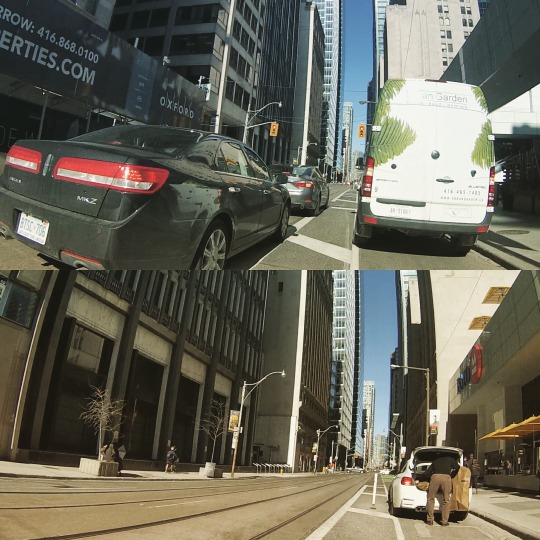
    P.S. The images at the top of this post were taken by me using my new GoPro bicycle handlebar mount.

  • Automobile vs. tram

    In grad school, I was fortunate enough to be a teaching assistant for a class called Urban Real Estate Economics, which was taught by Dr. Richard Voith. It was one of my favorite classes. So if you ever find yourself at the Wharton School, I would highly recommend it.

    Richard is also the President of a consulting firm in Philadelphia called Econsult Solutions. And I think a lot of what they focus on would be of interest to the audience of this blog. Their focus is on urban economics, real estate economics, transportation, public policy, and – you get the idea.

    Recently, he wrote a post called, Moving Cities: Berlin, where he outlines some of the transportation decisions that West and East Berlin made in the second half of the 20th century. 

    What I found most interesting was how the trams of East Berlin were stigmatized to represent communism and a centrally planned economy. On the other hand, West Berlin was all about the free market, and the symbol for that was none other than the automobile. That meant that the trams had to go. 

    Here is a quote that he shares from B.R. Shenoy, first published in August 15th, 1960:

    “The main thoroughfares of West Berlin are near jammed with prosperous looking automobile traffic, the German make of cars, big and small, being much in evidence. Buses and trams dominate the thoroughfares in East Berlin; other automobiles, generally old and small cars, are in much smaller numbers than in West Berlin. One notices cars parked in front of workers’ quarters in West Berlin… In contrast with what one sees in West Berlin, the buildings [in East Berlin] here are generally grey from neglect, the furnishings lack in brightness and quality, and the roads and pavements are shabby…”

    My favorite line: “…jammed with prosperous looking automobile traffic.”

    Of course, Berlin wasn’t the only city to eschew trams in the 20th century. Detroit and Los Angeles both did exactly the same thing. But in Berlin, this philosophy wasn’t applied equally across the urban fabric. And that’s what makes it a particularly interesting case study.

    I don’t know Berlin well enough to comment specifically, but Richard writes about how parts of East Berlin remained quite pedestrian friendly compared to West Berlin. That makes intuitive sense, given that it didn’t reorient itself towards the car in the same way that the West did. That being the case, I am curious to what extent those parts of the city may be benefiting today.

    In any event, you should also give Richard’s article a read. You can do that here.

  • Everything you ever wanted to know about automated vehicles

    Last fall, David Ticoll (who is a research fellow at the Munk School of Global Affairs at the University of Toronto) published a thorough discussion paper called Driving Changes: Automated Vehicles in Toronto

    If you’re interested in driverless cars, and I know that a lot of you are, then it’s definitely worth a weekend read. It’s fairly long. He gets into the various automation levels, the transition period, the implications for policy makers, the benefits, and so on.

    Here’s a quick snippet on the topic of benefits:

    “This report provides bottom-up analysis based on Toronto-specific data. The result is a conservative estimate that were AVs to be at a 90% adoption rate in Toronto today, the result would be annual savings of $6 billion, or 4% of the City’s $150 billion gross
    domestic product. This includes $1.2 billion from reduced collisions, $2.7 billion out of congestion costs, $1.6 billion from insurance, and $0.5 billion from parking fees and fines. AVs will provide other quantifiable social and economic benefits that range from fewer deaths and hospitalizations thanks to lower particle emissions, to productivity gains in many business sectors.”

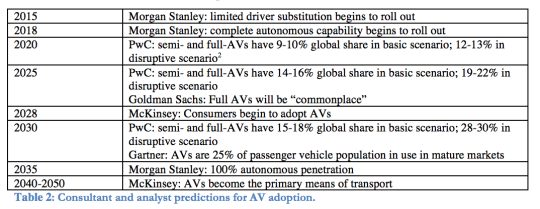
    But of course there’s the question of: when will this happen? Below is a chart from the paper that was assembled using various consultant/analyst predictions. Based on this, we’re still over a decade away from the consumer adoption of automated vehicles.

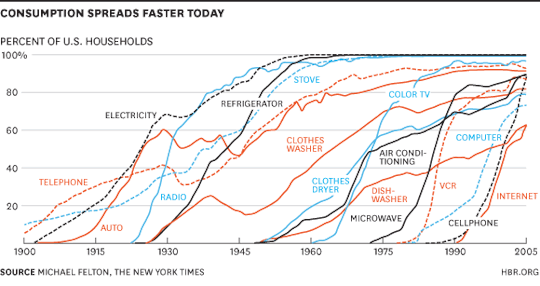
    However, these are just estimates and history has shown us that the adoption rate for new technologies has been increasing over time. Below is a chart by Michael Felton, which is also from the paper, that shows this phenomenon. Take a look at the telephone in comparison to the internet.

    Maybe I’m being overly optimistic (it wouldn’t be the first time), but consumer-facing driverless cars, at least to me, feel pretty close to the horizon.

  • We’re driving again

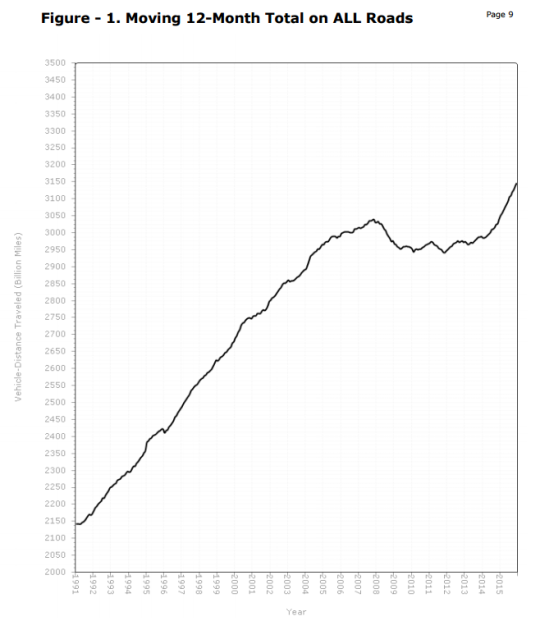
    For a number of years now, urbanists – including myself – have been thinking about “peak car.” And that’s because if you looked at vehicle miles traveled (VMT) in the United States since about 2007, the trend line was more or less flat. 

    This had us wondering whether or it was simply an outcome of the recession or some sort of broader shift.

    Well, if you look at the December 2015 numbers from the U.S. Department of Transportation, VMTs are once again growing. In fact, it’s now above the 2007 “peak.” Compared to December 2014, travel on all roads and streets in December 2015 was up by 4.2% or 10.6 billion vehicle miles traveled. 

    Here’s the chart:

    A lot of this could be because of lower gas prices. But I would be curious to hear your thoughts in the comments about whether or not you think 2007 to 2014 was (1) a recessionary blip or (2) a longer term trend in the making.

  • Should you buy a car or just take Uber?

    Urban dawn by Raymond  on 500px.com

    https://500px.com/embed.js

    My friend Evgeny published a great blog post today called, On Car Ownership And The Future Of Transportation

    And in it he made the argument that instead of buying a car and an expensive downtown Toronto parking spot (average price: $40,000 – 60,000), most of us urbanites would be better of just taking a taxi or Uber.

    This got me thinking: At what point does it really make sense to completely forgo owning a car? (Full disclosure: I own both a car and a downtown parking spot.) So I decided to dig into the numbers a bit more and compare 4 mobility options:

    • Owning a car ($25,000 upfront) + downtown parking spot ($40,000 upfront) and driving yourself everywhere
    • Taking a regular taxi exclusively ($3.25 base + $1.75 per km)
    • Taking an UberX exclusively ($2.50 base + $1 per km)
    • Or, taking a futuristic driverless car everywhere (here I assumed $1.50 base + $0.25 per km)

    With the above numbers, I then assumed 15,000 km traveled per year and an average trip length of 15 km (so 1,000 trips per year). The trip length and number of trips per year matter because of the “base fare” that is charged when you take a taxi or Uber.

    I also assumed that the cost of owning a car is $0.60 per km (estimated from this Globe and Mail article) and that there is an opportunity cost to NOT renting out your downtown parking spot ($200/month). That is, every month that you spend driving yourself around and parking your car, you are forfeiting parking revenue.

    Finally, I looked at a 10 year time horizon and then “discounted” all the costs back to today’s dollars so that I could compare each mobility option.

    So what did I find?

    image

    What this says is that if you’re driving 15,000 km per year (average trip length 15km), then you’re better off taking UberX everywhere, as opposed to going out, buying a car and parking spot, and driving yourself around.

    But does this hold true at different travel distances?

    Based on my model, once you hit around 18,000 km per year, then you’re better of with option 1 (owning a car). That’s because the per km savings associated with driving yourself around are enough to offset the upfront costs of the car and parking spot.

    On the flip side, when you drop below 7,500 km traveled per year, even a regular taxi starts to make sense. That’s because you’re simply not traveling enough to reap the benefits of owning a car/parking spot. Again, high upfront costs; lower per km operating costs.

    Of course, there are a number of things I didn’t consider in my model. For one, most people finance their car and parking spot (it is bundled into their home mortgage). So I’m sure there are ways that you could change the above outcomes using leverage.

    At the same time, I didn’t account for the fact that when you’re being driven around (as opposed to driving around) you have the flexibility of doing work, responding to emails, and so on. If you want to attach a value to your time, then the scale would tip back in favor of taxis and Uber.

    But all of this was really just to make one point: look how cheap it could be to ride around in a driverless car. When that becomes the reality in our cities, which it will, it’s going to completely transform our current beliefs around cars, parking, and many other things.

    I guess that’s why General Motors just invested $500 million in the peer-to-peer ridesharing company, Lyft. They know the shit is coming.

  • 5 random charts related to cities and real estate

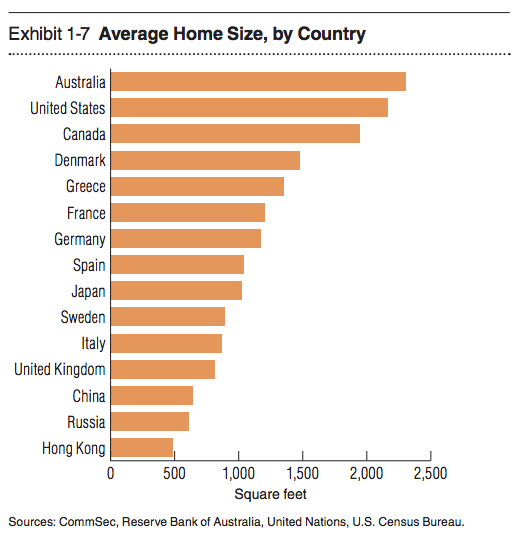
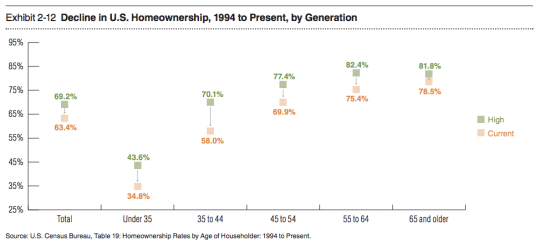
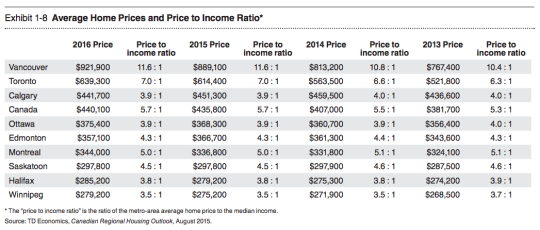
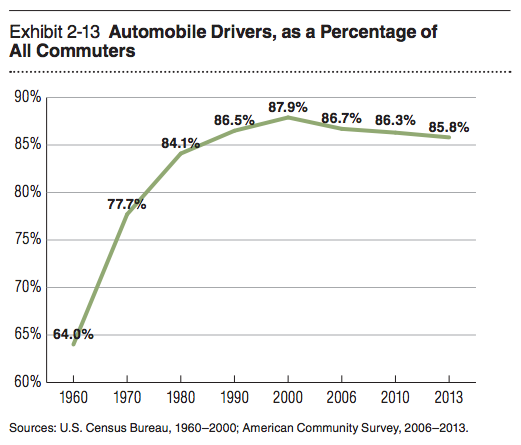
    I was reading through PwC and ULI’s 2016 Emerging Trends in Real Estate report this evening and a handful of charts stood out to me. They’re not all related to each other, which is why this blog post is called what it is. But I think you’ll find them relevant to many of the things we talk about on this blog.

    1. Average home size by country

    With all the interest today in “small urban spaces” it’s interesting to see that the average home size for half the countries on this list is somewhere between 500 and ~1100 sf. It’s also amazing to see Hong Kong hovering just below 500 sf.

    2) The decline in homeownership in the US

    I like to follow home ownership rates because there’s a lot of debate around whether or not this obsession with homeownership – which has been so central to the ethos of countries like the US and Canada – is at all falling out of a favor. This chart shows some pretty significant drops from previous highs.

    3) Average home prices and the price to income ratio in major Canadian cities

    Not surprisingly, Vancouver and Toronto are the top of this list with the highest average home prices and the highest price to income ratios (i.e. the worst affordability).

    4) Drivers as a percentage of all commuters in the US

    This chart is similar to what you would see if you looked at vehicle miles traveled. I’ve heard some people say that driving is now once again on the rise, but for the past decade and a half it’s been on a slow and steady decline.

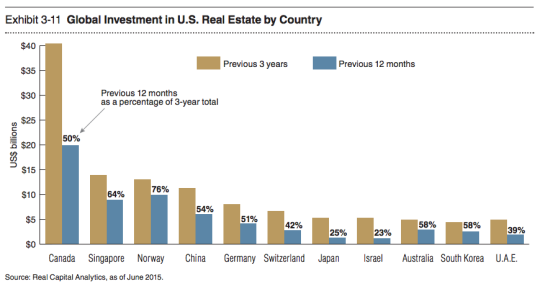
    5) Countries buying US real estate

    Canada is a big buyer of US real estate. But with the dollar where it is today, I am sure that number is headed downwards.

  • 16 mobile theses and how tech might change the built environment

    Caucasian woman standing near passing subway in train station by Gable Denims on 500px.com

    https://500px.com/embed.js

    One of the things that I try and do here on this blog is examine the intersection of design, real estate, and technology. I didn’t explicitly set out to do that, but more and more I find myself thinking that way when I’m writing and when I’m giving talks.

    Part of that is because of my passions, but part of it is because there is a big and important overlap. One example of that is autonomous, self-driving cars. The tech community is enamoured with driverless cars, but everyone involved in the built environment should also be thinking about their impacts. Because it’ll be significant.

    Benedict Evans – who is a venture capitalist with Andreessen Horowitz in the Valley – recently published a post called, 16 mobile theses. It’s a look at 16 topics, trends, and shifts that are happening in the tech space. (There’s also a related podcast discussion.)

    If you’re involved in internet products, you absolutely need to give it a read. But I also think it’s interesting to read it through the lens of a designer or real estate person. Productivity is changing. Notions around the living room are changing. And yes, autonomous vehicles are going to have a profound impact on the urban landscape of our cities – just as cars did initially.

    Below are 3 excerpts from Benedict’s post that I really enjoyed.

    The first is about mobile and just how massive it is:

    “The mobile ecosystem, now, is heading towards perhaps 10x the scale of the PC industry, and mobile is not just a new thing or a big thing, but that new generation, whose scale makes it the new centre of gravity of the tech industry. Almost everything else will orbit around it.”

    The second is about how “networked” is quickly becoming a given:

    “Our grandparents could have told you how many electric motors they owned – there was one in the car, one in the fridge and so on, and they owned maybe a dozen. In the same way, we know roughly how many devices we own with a network connection, and, again, our children won’t. Many of those uses cases will seem silly to us, just as our grandparents would laugh at the idea of a button to lower a car window, but the sheer range and cheapness of sensors and components, mostly coming out of the smartphone supply chain, will make them ubiquitous and invisible – we’ll forget about them just as we’ve forgotten about electric motors.”

    And the third is about those self-driving cars:

    “The move to electric and the move (if and when) to autonomous, self-driving cars fundamentally change what a car is, but also what the whole automotive system might look like. Electricity changes the mechanical complexity of cars and hence changes who might build them and what they might look like. Autonomy and on-demand services change who buys them, meaning the buying criteria will be different. But they could also change the urban landscape just as much as cars themselves did – what do mass-market retail or restaurants look like if no-one needs to park?”

    Can you think of other ways in which tech will impact cities and the spaces we occupy?

  • Big box stores are the new noxious-use

    As a follow-up to yesterday’s post on New Urbanism, I thought I would post an interesting video discussion between Andrés Duany and Ben Stevens. 

    Duany is the father of New Urbanism and Stevens runs a great blog called The Skyline Forum where he interviews notable city builders, developers, architects, planners, and so on. If you can’t see the video below, click here.

    [youtube https://www.youtube.com/watch?v=QfZZ61C4YOY?rel=0&w=560&h=315]

    Once again it’s a great reminder that so much of what we do and build in our cities is dictated by parking requirements. One of the ways Duany differentiates New Urbanism from “old urbanism” is that the new explicitly provides for the car. 

    Regrettably, I think we do that almost everywhere nowadays. But I take his point that New Urbanism happens almost as an intervention in areas where there are few or no other mobility options besides the car.

    I also thought it was interesting that Duany refers to big box stores as the new noxious-use in cities, rather than industry. He describes the parking, not the stores themselves, as creating a “flume of unwalkability.”

    It always seems to come down to parking.

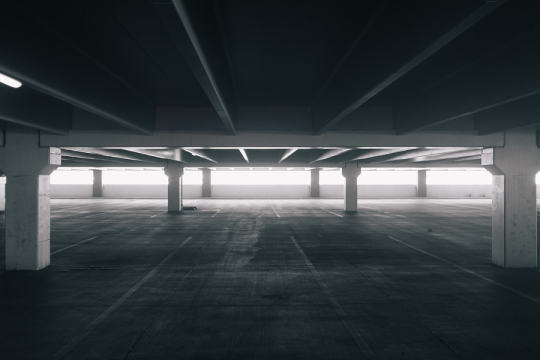
  • Will parking spaces in cities become more, or less, valuable in the future?

    Parking Garage by Nuno Silva on 500px.com

    https://500px.com/embed.js

    Lately I’ve been having discussions around the future value of parking spaces in urban centers. So yesterday I tweeted out this poll:

    //platform.twitter.com/widgets.js

    The sample size is very small, but for what it’s worth, there are some/many people who believe that urban parking spaces will become more valuable in the future.

    This is a reasonable assumption. 

    Over the last couple of decades here in Toronto, I would guess that parking ratios for new multi-family developments have probably fallen by more than half. It used to be that you had to build 1 to 1.5 parking stalls for each unit and now we seem to be sitting somewhere close to 0.5. Although, there are also exceptions and some projects today are getting built with no parking.

    So given that the supply side of urban parking spaces seems to be getting constrained and many cities are actively trying to encourage other forms of mobility, it’s not unreasonable to believe that parking stalls will only become more valuable. That’s why a new underground spot in Toronto might cost you $60,000 today and why some spots in New York can even fetch a $1 million

    But this assumes that the demand for parking will remain more or less the same. What if it doesn’t stay the same? What if we were to experience a tipping point that rearranged urban mobility? What if the cost of driving became so high that people stopped driving at scale? In these scenarios, the demand side of the equation would change.

    If you’re a regular of this blog, you probably know what I’m going to say next. But already I can think of two innovations that would contribute to the above scenarios: Uber and driverless cars.

    Uber’s goal is to continually drive down the cost of transportation and eventually get you to no longer own a car. They know very clearly that the demand for transportation services is highly elastic and that the cheaper they get the more you will use them. And the way they get cheaper is by continually increasing the utilization rate of their drivers/cars. An idle driver/car is the enemy.

    Of course, the other way to drive down fares is to remove the driver all together. And once you’ve done that, there is, in theory, no reason that a car should ever sit idle – like they do today. (The utilization rate for my car is around 2%.) And if a car is never sitting idle, then why would you ever need to park it? Certainly you wouldn’t need to park it as often as you do today.

    All of this isn’t going to happen tomorrow, but I believe – despite the supply constraints – that we are going to end up with excess parking spaces in our cities. And that will mean that they are going to be perceived as less valuable than they are today. I also believe that it will eventually seem silly to drive your own car. 

    What do you think?