As a broad rule, I like videos and movies that feature Toronto. I think it should happen a lot more often. So here’s Drake’s latest music video, which does exactly that. If you can’t see it below, click here.
Tag: drake
-
At the Ritz
Over the past few weeks Drake has been posting teasers on social media of his temporary condo in Toronto. It’s temporary because he’s waiting for his 35,000 square foot faux chateau to be completed in the Bridle Path. (See, some Millennials in Toronto are still able to break into the housing market.)
Here is one of those posts taken from Instagram:
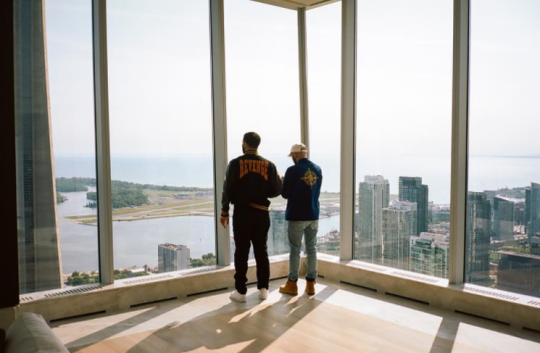
A lot of fans have been wondering which condo building Drake has been teasing. I like Drake, but my interest was peaked more as an architecture and real estate nerd.
Given the position of the CN Tower in the above picture, it looks like the building is to the north and just slightly to the east. The other clues are the curtain wall system (SOTAWALL THERMO-3 series, I think) and the perimeter heating at the base of the windows. These are somewhat atypical details for a condo in Toronto. Also, if you look closely at the corner you’ll see that the south facade appears to slope outward.
So my guess: The Residences at the Ritz-Carlton, Toronto – designed by Kohn Pedersen Fox with Page + Steele as the local architect of record.
-
Building crap
Last night I participated in an excellent dinner discussion with a group of planners, architects, city officials, and politicians from Amsterdam. They were visiting Toronto to see first hand what rapid intensification has done to this city. And I very much appreciated the invite. Thank you.
My message was that intensification has created a far more vibrant and exciting city compared to 15 or so years ago. It’s hard to know what exactly could be correlated with intensification, but we have certainly seen an explosion of culture, innovation, and pride in this city – among many other things. (It could be all Drake’s doing.)
However, the counter argument at the dinner table was that Toronto is letting unfettered development produce unremarkable architecture. We are simply building glass tower after glass tower. And I know that, for many of you, this will ring true. I hear it all the time, including in the comments of this blog.
Now, I will be the first to admit that there has been a lot of shit built in this city. No argument there. Some people have no taste. But at the same time, I think it’s myopic to assume that it’s strictly because of profit-motivated developers.
Oftentimes the perception is that development projects are awash in cash. There’s tons of money in which to do the right thing. Developers just need to stop being so greedy and start being more creative.
The reality is that developers operate within a market. There are real limits to what people will pay for new space. And when, for instance, land prices go through the roof (an input), municipal fees jump (cost of doing business), and approvals drag (time value of money), guess where everyone starts looking for savings? In the build.
I say this not to justify building crap. If I had it my way, everything would be beautiful. I champion design whenever possible. I say it simply to shed light on the process. Because when we all understand the factors at a play, I believe we all become more effective at finding solutions.
-
City-to-country colonization
Lately I’ve been feeling that we’ve been having some pretty serious conversations here on Architect This City. Everything from condominium reserve funds to housing/tax policy. So today I thought we could change it up and talk about something a bit more fun: farmhouses.
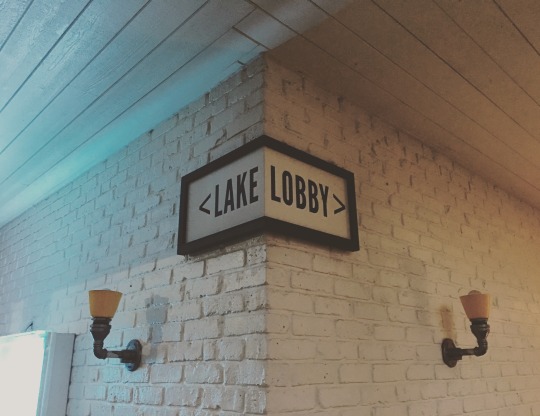
Last weekend when I was in Prince Edward County, one of the places that I visited was the Drake Devonshire Inn. It’s been on my list for awhile, so I’m glad I finally got to experience it. It’s an outpost of the Toronto-based Drake Hotel (no relationship to Hotline Bling Drake) and they refer to it as their “contemporary farmhouse.”
It was stunning.
As soon as I walked on the grounds, I couldn’t stop looking around, taking pictures, and examining all the art that they have sprinkled around the inn. Those are the sorts of things I do when I get excited by a building or place. I’m like a kid in a candy store.
I was so impressed that after I left I had to message my friend – who worked on the project and who I went to architecture school with – to tell her that she did an amazing job. Want to see for yourself? Click here for photos of the farmhouse. And click here for information on the design firm behind the farmhouse (+tongtong).
But beyond just a great space, the Drake Devonshire is also symbolic of something greater than seems to be taking place. Almost everybody I met in PEC seemed to be a Toronto transplant. They were done with life in the city and decided take off for the country. But along with them is coming pieces of the city. (The Hayloft Dancehall is another example.)
I used to think that this kind of city-to-country colonization was bound to happen in Niagara-on-the-Lake, which is only about an hour west of the city. But it turns out I was wrong. It seems to be happening to the east of the city in Prince Edward County.
-
How cities get branded
I have been thinking a lot about city branding lately. It’s a topic I’m interested in to begin with, and all of the Blue Jays mania going on in Toronto right now has got thinking about our own brand.
Because at the end of the day, yes, it’s baseball. But it’s also something much larger. It’s about civic and national pride, and it’s about who we are as a city. That’s why city branding has become a global industry and why it’s so closely connected to tourism, media, sports, and entertainment.
Still, great city branding is incredibly difficult to do. Lots of cities have tried and lots of cities – from Adelaide to Toronto – have failed. Anyone remember the “Toronto Unlimited” brand of the mid-2000′s? It had absolutely zero stickiness.
But in reality, cities are brand building all the time whether they realize it or not. Here in Toronto, our biggest brand builder right now is probably Drake. That might sound silly to some, but I believe it to be true. And next to that, you have people like Jose Bautista with his bat flips and his support of local brands like Peace Collective. In addition to their day jobs, these people are helping to shape the identity of the city.
What, then, is professional city branding supposed to do?
Well, in my opinion, it is their job to mine a city for the things that already exist. A city brand, no matter how great it may be, cannot be expected to create something from nothing. There has to be something there to begin with.
But once you identify that something, a great city brand can tie it all together; create a cohesive and collective identity; and serve as a guide for future decision making. And when that’s done effectively, you actually begin to enhance the things that you initially started out with. The associations become even more powerful.
So today I thought we could have a discussion in the comments about city brands. How would you describe the brand of your city in one sentence?
For me, I would describe Toronto along the lines of being the most livable and multicultural 24/7 global city. And when you think of it this way, you can probably see why I think a 2AM last call at the bar is laughable.
-
A self-fulfilling prophecy in the 6
[soundcloud url=”https://api.soundcloud.com/tracks/190951409″ params=”auto_play=false&hide_related=false&show_comments=true&show_user=true&show_reposts=false&visual=true” width=”100%” height=”450″ iframe=”true” /]
More so than any other genre of music, there seems to be a longstanding tradition in hip hop of promoting the city in which you’re from. From Los Angeles to Atlanta to New York, I’ve always admired the way that hip hop artists promote and showcase their cities.
For a long time in Toronto we didn’t have that. Our hip hop scene was too embryonic and we just didn’t have artists who were both big enough and willing to take the lead. Or at least, that’s what I was lead to believe as an outsider who candidly doesn’t really follow the scene.
But all that has changed.
Earlier this month, Pitchfork published an interesting article by Jamieson Cox called: Views From The 6 – Inside Drake’s Toronto. It talks all about Drake’s love affair with this city and it even has a map of all the areas of Toronto that have been featured in his videos.
But at one point in the article Jamieson argues that – like many hip hop cities – Drake’s depiction of Toronto is more fantasy than reality:
His mythological Toronto is a metropolis where everyone knows your name and exes are always lurking around the corner, a forest of penthouses with a panoramic view, a park-studded playground where the skies are free of ambient light and the highways are always clear. Like many hip-hop locales, it’s a city closer to the realm of theory—and fantasy—than reality.However, at the end of the day, I don’t think that matters. Similar to how your mind actually believes that wine tastes better out of an expensive glass, I think a big part of city branding has to do simply with how you’re supposed to feel. What is Toronto supposed to be like? How am I supposed to experience this?
I love what Drake is doing. Because if everyone thinks it’s supposed to be a certain way, eventually that becomes a self-fulfilling prophecy.
-
The branding of places
Most people would agree that branding is a powerful and important exercise in the world of business. We recognize that brand equity is something that pays dividends in the future.
When you walk around a city with a Starbucks, Tim Hortons, or some other coffee cup in hand, you are sending signals about who you are as a person and consumer. So, you could argue that you’re consuming the cup, as much as you are consuming the coffee.
But one area that still feels like it’s in its infancy is place branding. That is, the branding of nations, regions, cities, and places. I’ve talked a lot about the business of cities and how impressions are created around cities, but I’ve never explicitly talked about place branding.
However, it is an area on the rise. Monocle has written extensively about the importance of nation branding and there are firms, such as Vancouver-based Resonance, that now specialize in the strategy and branding of places.
Here’s a short 5 minute video that they prepared talking about place branding and their approach to it. If you can’t see the video below, click here.
//player.vimeo.com/video/66920801
But at the same time, there are more grassroot ways in which a place brand can emerge. Think about the number of times Jay-Z has referred to himself as the Brooklyn boy or Drake has promoted Toronto in one of his videos. It’s hard to measure the impact of these sorts of things, but I am sure there is one.
Here’s another example – a 4 minute video of Drake talking about why he loves Toronto. Click here if you can’t see it below.
[youtube https://www.youtube.com/watch?v=M3TrbGEJbio?rel=0]
Recently, you may have heard that Drake is about to give Toronto a new moniker: The 6. Some think it is in honor of our two main area codes 416 and 647, and I think that’s probably a good guess.
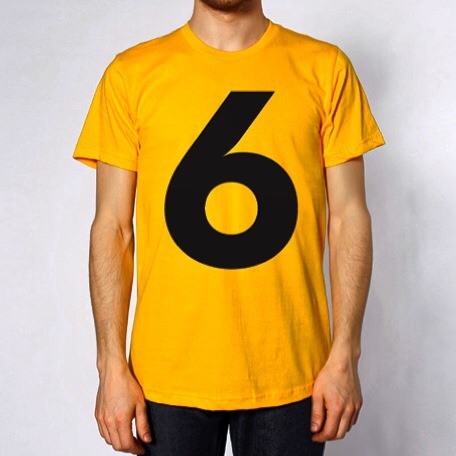
But whatever the reason, I thought it was an interesting exercise in place branding. So I decided to partner with Toronto-based design firm Badd Press and make a “The 6” t-shirt (shown at the top of this post). You can get yours for $30 by visiting shopATC.