Daily insights for city builders, delivered every morning at 6 AM ET. I’m Brandon Donnelly — a Toronto-based real estate developer and founder of Globizen. I’ve been writing here since 2013.

Tag: distillery district

  • Montréal is making yet another case for pedestrian-only streets

    There are parts of Toronto that are pedestrian only. There’s the Distillery District, some small laneways in Yorkville, the Toronto Islands (though this is a bit of a unique situation), and various other pockets around the city.

    There are also streets that we temporarily open up to only pedestrians, such as Market Street and King Street, and areas, such as Kensington Market, that we have been rigorously considering pedestrianizing for as long as I can remember.

    What is clear is that pedestrian-only streets are controversial. Motorists fear that it will make driving in the city even more inconvenient. And businesses fear that it will limit their customer base.

    While it is true that not all streets can and should be pedestrianized, there are countless examples of streets and areas that appear to be thriving because of it.

    Take, for example, Montréal.

    Since 2021, the city has been pedestrianizing a stretch of 30 blocks along Mont-Royal Avenue during the summer months. And according to Mayor Valérie Plante, the commercial vacancy rate for the street has dropped from 14.5% in 2018 to 5.6% in 2023:

    Maybe you don’t want to infer causality here, but at the very least, it seems to suggest that the street isn’t dying and bereft of human activity. This year, pedestrianization is also planned to be extended further into the fall.

    This won’t necessarily be the outcome for all streets, but I do agree with this recent Globe and Mail article that, oftentimes, the reasons for not pedestrianizing are “a question of philosophy, not geography.” Because there’s lots of research and data to support doing this.

    If any of you are business owners along Mont-Royal, I’d love to hear about your experiences and how you think, for better or for worse, it has changed the area. Leave a comment below or drop me a line.
  • Rendering of block 8

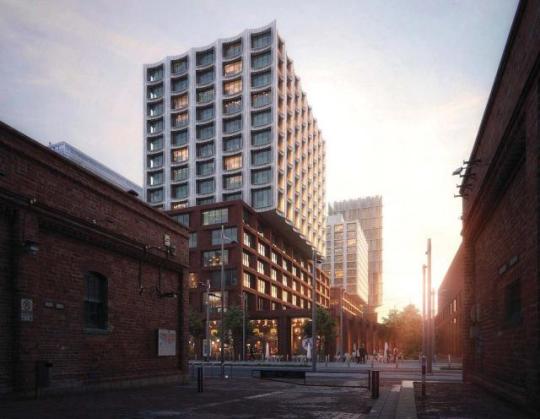
    I really like what has been put forward for Block 8 in the newly developing West Don Lands neighborhood of Toronto. Here is a rendering looking east from the Distillery District toward the proposed westernmost tower:

    image

    It feels like an extension of the Distillery District, which was clearly the intent. The materiality also reminds me of Junction House. Red brick at the base to fit within its context, and a more modern material palette on the upper floors. 

    I also like how, in this instance, the building steps out on its south side, as opposed to in. It’s something different. Not every building has to look like a wedding cake, right?

    The architecture is by COBE Architects and architectsAlliance. The developers are Dream, Kilmer Group, and Tricon. And the plan is for 756 rental apartments, of which 225 will be affordable and integrated throughout the 3 towers. 

    For more information, check out Urban Toronto.

  • Merry Christmas

    I took the above photo on Christmas Eve in Toronto’s Distillery District (one of my favorite neighborhoods in the city). It was before the snow had really started falling. We got a white Christmas this year – the best.

    This is one of the first photos with my new Fujinon 23mm f/2 (35mm equivalent) lens. I have come to realize that if I’m not photographing people, 35mm is the right focal length to have on my camera for the types of photos I seem to gravitate toward.

    And now back to eating. Merry Christmas everyone. If you’re reading this post in your inbox and it feels late, then: Happy Boxing Day 🙂

  • Preserving place

    I was recently asked: How do you go into a neighborhood, build new, and not erase and/or sterilize what makes that neighborhood interesting in the first place? 

    Gentrification is a controversial topic in city building. Too often I think we ignore what happens when we don’t invest in communities, but that doesn’t mean we shouldn’t be deliberate when we do make investments.

    Development is filled with tensions. We are constantly trying to navigate through constraints and balance out the wants of each and every stakeholder. It becomes an art. It doesn’t always work out as planned.

    To state the obvious, I would say that it starts with caring. If you’re not interested in community and city building, then the default response will be to simply replicate what worked on the last project.

    But every place has a local culture. And if city builders are to have any hope of preserving and building upon what makes that place unique, we have to first understand it. What made it successful in the first place? What is its DNA?

    Because then you’re in a position to think about both built form and programming in a way that is culturally sensitive.

    One example that comes to mind is the proposed redevelopment of Honest Ed’s / Mirvish Village here in Toronto. 

    The “micro tower” design is intended to create the sense that the area was built up organically over time. And the fine grain retail (50-60 individual retail spaces) is intended to house local retailers, micro retail startups, and pop-up shops. To me, both of these elements speak to the history and fabric of the area.

    Adopting a unique approach can also sometimes mean rethinking how you measure ROI. If all you care about is who will pay you the highest rent – right now – then you’re going to make a decision based on that metric.

    Maximizing revenue is not a bad thing. That’s what businesses are supposed to do. But sometimes there is or should be a larger vision at play. And sometimes you need to take a longer view.

    In Toronto’s Distillery District, the developers made the decision to eschew large chains and franchises (in favor of more local retailers) so that they could create a very particular place. Ultimately that particular place became a great place to sell condos, but they suffered early on for it.

    I like how Gary Vaynerchuk put it when he asked: What is the ROI of your mother? Sometimes you may not be able to measure it, but that doesn’t mean the ROI isn’t there.

    Any other suggestions?

  • Gray on gray on gray

    This past weekend was gorgeous in Toronto. I always love seeing the city come to life after the winter and last weekend was the first sign of that this year.

    Being the fair-weather cyclist that I am, I had the flat fixed on my single speed bike and I was ready to go by the weekend. I managed to test out the GoPro handlebar mount that I mentioned last week but, quite honestly, the footage was so jittery and bouncy that it made me nauseous to watch it. So I need to rethink my city geek filming strategy. 

    (Sidebar: GoPro needs to make it easier to turn their raw footage into content that is actually worth sharing.)

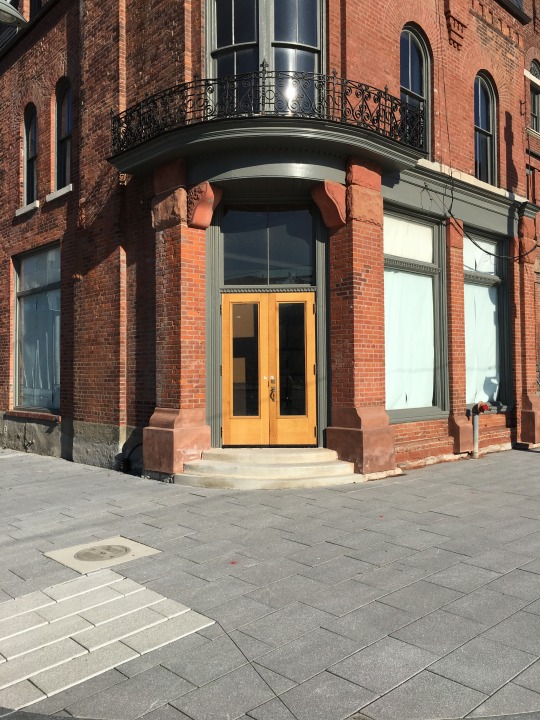
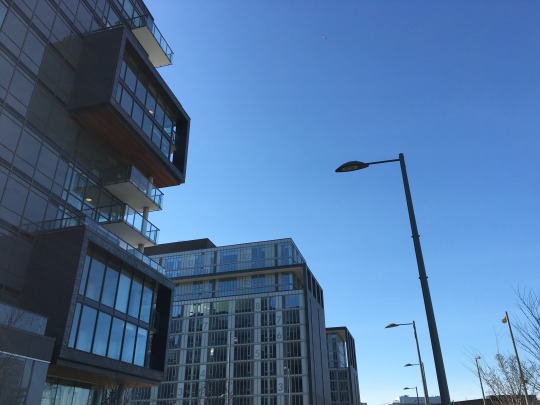
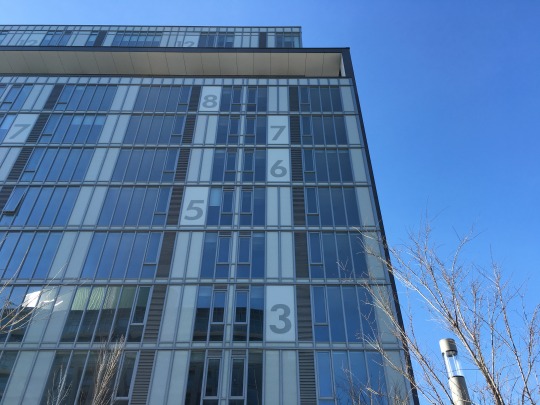
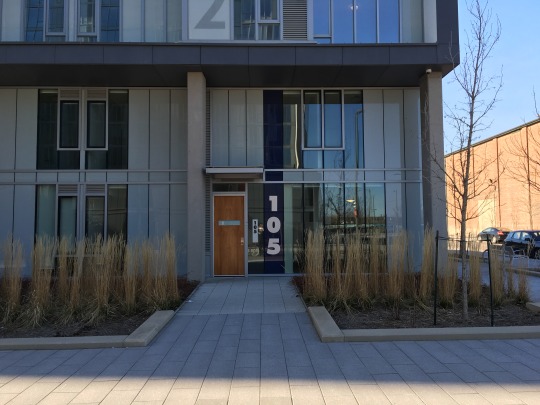
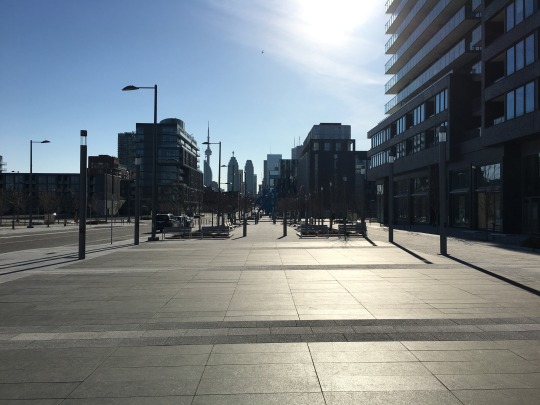
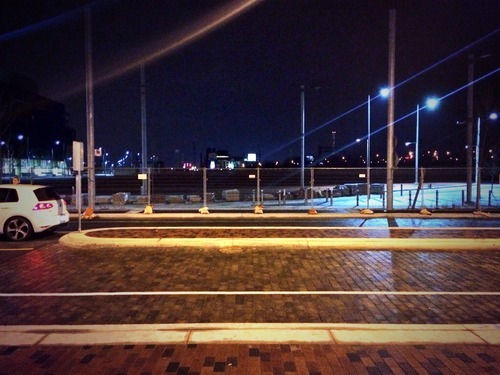
    Still, I had a good ride over to the new Canary District on the east side of downtown. The gates just recently game down, so I was itching to take a look at it. Here are a couple of photos to give you some context for the rest of this post:

    None of the retailers have moved in, so the area currently feels like Toronto post zombie apocalypse (to use a friend’s description of the neighborhood). But all of the bones are in place for an incredible downtown neighborhood.

    Here are some of my thoughts as I was riding around:

    The opening of this neighborhood repositions the Distillery District. Initially, the Distillery District struggled as a kind of island on the edge of downtown. But thankfully they stuck to their initial vision for the community and now they get the benefit of this new mixed-use anchor to the east of it.

    Trinity Street to the north of the Distillery District proper is a fantastic opportunity to not only extend the magic of the Distillery northward, but also “plug” the area into Front Street East, which is the primary east-west spine that connects the Canary District back to the downtown core. I hope we (the city, developers, and so on) take advantage of this.

    The Front Street Promenade running through the Canary District and connecting into Corktown Common (park) is going to be an absolutely magical urban space once the restaurants, cafes, and retailers open up. I can’t wait for this to happen. Live Work Learn Play has been orchestrating the retail component.

    Finally, why are all of the buildings gray? 

    Gray brick. Gray window wall. Gray spandrel panel. It’s gray on gray on gray. We’re playing into that boring Canadian stereotype here. I hope the subsequent developments introduce some wild colors. Although some red brick to tie into the Distillery District would work well too. The best nearby architecture (just to the north) is the River City complex by Saucier + Perrotte.

    Notwithstanding the gray, I’m super excited about the Canary District and I am generally bullish on the east side of downtown. If you’ve had a chance to visit, I’d love to also hear your thoughts in the comment section below.

  • Toronto’s King Street to be transformed into a transit + pedestrian corridor

    Take The Car by Jason Cook on 500px.com

    https://500px.com/embed.js

    I try not to focus on local Toronto issues this much, but this morning an important initiative was announced and it’s blowing up my Twitter feed.

    By spring 2017, the city hopes to have a pilot project in place that will transform King Street – running from Liberty Village in the west to the Distillery District in the east – into a priority-transit and pedestrian corridor.

    This isn’t to say the street will be closed to cars. I would imagine that at least 1 lane would remain for cars going each way. Instead it will be redesigned to prioritize transit, pedestrians, and cyclists.

    So why is this exciting?

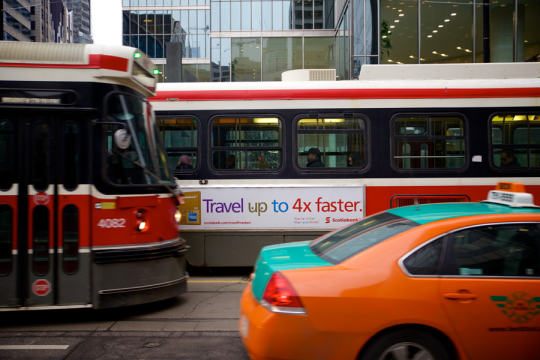
    The King streetcar is currently broken. If you’ve ever taken it across downtown during rush hour, you know exactly what I mean. It’s infuriating. You might as well be crawling on your hands and knees. One of the goals of this initiative will be to get it working again. Good.

    The shoulders of downtown – along King West and King East – are seeing some of the greatest intensification in the region. So much that it’s common for people in this city to complain that Toronto misplanned it all by allowing this development before the transit was there. Well, this is a quick and inexpensive way to get the transit there. Remember that when the inevitable “war on car” rhetoric ratchets up over the next year.

    The project will be deployed, first, as a pilot project. That will allow the project team to test and iterate. It has also become the way you get things approved in cities. You first make them temporary. 

    But I am certain that we will quickly discover how necessary these changes were.

  • It’s too cold for that

    This past Sunday I spent part of the afternoon in Kensington Market (Toronto) for Pedestrian Sundays. 

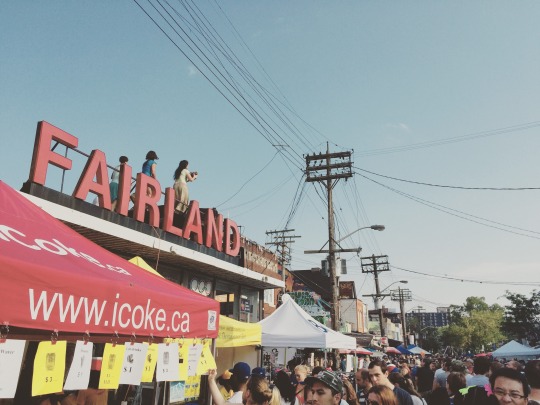
    If you’ve never been to a Pedestrian Sunday, you’re missing out. The entire neighborhood – which happens to be a National Historic Site of Canada – gets closed to cars, and filled with street vendors, musicians, bands playing on roofs (see above), and so on. It’s pretty wild. And it feels very Toronto to me.

    It happens the last Sunday of the month from May to October. But every time I go I wonder why the area isn’t this way more often or even all the time. It’s a natural candidate. But after 12 seasons of Pedestrian Sundays, it still hasn’t happened. It’s only 6 days throughout the year. 

    I remember being in a meeting early on in my career when I brought up the idea of a pedestrian mall in Toronto for a project I was working on. And I got completely shut down. I was told they don’t work here in our climate and that we should just forget about it. I was told to look at the failure of Ottawa’s Spark Street Mall.

    But I’m still not convinced that’s the case. In fact, I feel even stronger at this point that it could and would work in Toronto. I’ve been to the Distillery District in the dead of winter for the Toronto Christmas Market and I could barely move because of all of the people. 

    Acknowledging climate is important. But it shouldn’t become an excuse for not doing things.

  • 14 CityBuilders come together in support of removing the Gardiner East

    This will probably be my last Gardiner East post before the decision goes to City Council next week on June 10th. But I have such good news that I need to share it with you all.

    This morning 14 “CityBuilders” came together for the first time in support of removing the elevated Gardiner East and replacing it with a surface boulevard. They are real estate developers, investors, and other prominent business leaders in the city. And they sent a letter this morning to every single Toronto City Councillor outlining their position. 

    I can’t tell you how thrilled I am to see this happen, so I’d like to call out each and every member of the CityBuilders. They are (in alphabetical order):

    1. Castlepoint Numa
    2. Cityzen Development Corporation
    3. Context Development
    4. Continental Ventures
    5. Daniels Corporation
    6. Distillery Historical District
    7. Dream Unlimited Corporation
    8. Greybrook Capital and Greybrook Realty Partners
    9. Kerbel Group Inc.
    10. Manulife Real Estate
    11. QQE 162
    12. Streetcar Developments
    13. TAS
    14. Tridel Group of Corporations

    These are some of Toronto’s most important city builders and I am sure this will get the attention of both Mayor John Tory and the rest of City Council.

    If you haven’t yet signed the Gardiner East petition that Stephen and I started, please do so by clicking here.

    Happy Friday 🙂

  • Our fixation with height

    image

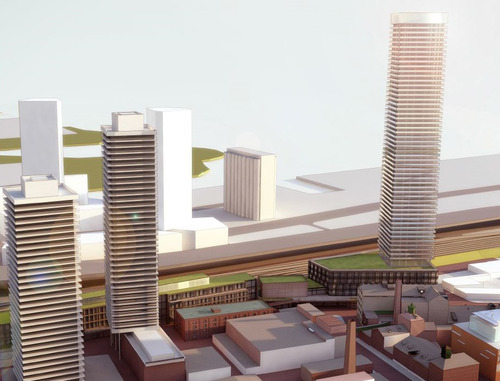
    Last summer a development application was submitted for a 57 storey mixed-use tower on the south end of Toronto’s historic Distillery District. 

    It’s the tower on the right hand side of the picture above. The 2 towers on the left are existing, although they’re quite recent. The development site is currently a parking lot and it abuts a railway corridor to the south.

    The reason I bring up this project now is because I recently saw this notice go out from the Gooderham & Worts Neighbourhood Association. It’s an announcement for a public meeting that I believe just happened earlier this week (I think they meant to say 2015 instead of 2014).

    After I saw the notice, I decided to share the rendering on social media to see what people thought of the proposal. The general consensus seemed to be that the tower looked a bit cookie cutter (though to be fair it’s hard to tell from renderings like this) and that 57 storeys was simply too tall for the area. I got comments back like “enough is enough.”

    Now, I’m not here to say that 57 storeys is exactly the right height for this building and this location (though it might be), but I am saying that I don’t think it’s as important as most people think it is. I think we’ve become over-fixated on height, at the expense of other important design issues.

    Part of this has to do with how we communicate projects and how we tell the story. If you look at the city’s website for this project, you’ll see that this is how it’s explained:

    The City has received an Official Plan Amendment and Rezoning application for a 57-storey mixed use tower and a 5-storey commercial building containing 496 residential dwellings, 5,048 square metres of retail gross floor area, and 21,243 square metres of office gross floor area. The 5-storey commercial building is within the Distillery District, and the 57 storey tower is immediately south west of the Distillery District.

    About the only thing that I think most people (outside of the industry) would understand are the heights of the buildings. Everything else – from the Official Plan Amendment to the number of square metres of gross retail area – is likely lost. 

    So it’s actually not surprising that most people just look at one or two renderings and the number of storeys, and then make a judgement call about whether or not it would be a positive thing for the city.

    Now, I know why we communicate projects in such a clinical way. It’s to appear impartial. But there are so many other considerations when it comes to great city building. 

    How does the building meet the street? What are the first couple of floors like at eye-level? What’s the materiality? What would the experience be like for someone having a coffee on a patio outside of the building? What kind of commercial tenants will there be? Is there a unique leasing/programming strategy? What’s the overall vision for the project?

    Again, I’m not saying that height is completely irrelevant. I simply fear that we might be losing sight of the bigger picture. The Distillery District is a magical place in Toronto. It’s hands down one of my favorite places to be. In fact, I’ll be there this weekend for a Winterlicious dinner. But I honestly couldn’t tell you how tall the existing towers are. Are they in the 40s? 

    I could, however, tell you exactly what it’s like to walk down the Distillery’s intimate cobblestone streets and sit on a patio with a beer in hand. It’s a beautiful thing.

    Note: I have zero affiliation with this project.

    Image: City of Toronto

  • Community building on the east side of downtown

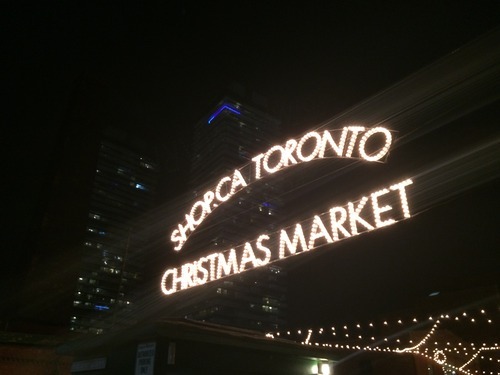
    Yesterday evening I went to the Toronto Christmas Market in the Distillery District. I had actually never been before, but it was something that I had been meaning to check out for a few years now. And it was wonderful. If you’ve never been, I would highly recommend you go. This past weekend was the opening weekend and it runs all throughout Advent until Sunday, December 21st.

    For those of who might not be aware, the Christmas Market festivity is a longstanding tradition that originated primarily in German-speaking Europe. Accounts of a “December market” were found as early as the end of the 13th century. The Toronto Christmas Market is a slightly more recent tradition (it’s only about 5 years old), but it was already selected as one of the world’s best.

    But Christmas carollers and hot toddies aside, the Market is also a fantastic opportunity to see the Distillery District in all its glory. Every time I visit the Distillery, I can’t help but feel how lucky we are to have a district like this in the city. The architecture and scale of the place is incredible and – alongside the Toronto Islands and Kensington Market, sometimes – it’s pretty much the only car free zone we have.

    However as someone who lived near the Distillery District in its early days, I remember how much of an “island” it was when it first opened. It felt disconnected from the rest of the city and the only way to get people there was to hold a special event. The retailers and galleries struggled and many didn’t last.

    With all the condos that have been built, literally on top of the neighborhood, that has changed dramatically. Today the area has become much more balanced as a mixed-use community. But the real tipping point, I think, will come next year when Toronto hosts the Pan Am Games and the West Don Lands neighborhood starts to come online just to the east of Cherry Street.

    Now all of a sudden the Distillery District won’t feel like the edge of downtown anymore, it will feel more like the middle of it. As my friend Alex Bozikovic of the Globe and Mail pointed out to me this weekend, the Pan Am Games are going to put the east side of downtown on people’s radars. And I would completely agree. Once that happens, the Distillery District will finally start to reach its maximum potential.