Daily insights for city builders, delivered every morning at 6 AM ET. I’m Brandon Donnelly — a Toronto-based real estate developer and founder of Globizen. I’ve been writing here since 2013.
One, the sales gallery for One Delisle has now officially closed in preparation for demolition and construction (above is a photo from moving day). None of us expected it to close so quickly after only having launched sales in May, but of course this is a good problem to have. We are now just waiting on our demolition permits to arrive, which we expect will happen sometime between the next few days and several weeks. The official groundbreaking ceremony will happen early in the new year once we have a clean/flat site to work with. Shoring and excavation works after that.
Two, we just announced a partnership with Technogym for Junction House. Our team was all in the office one day and I asked a question about who makes the best performing and most design-forward gym equipment. Technogym was immediately mentioned and so we reached out. They’ll now be equipping the entire fitness center at Junction House and the plan is to make it a longer-term relationship. If you aren’t familiar with Technogym, you can check them out here. They were the official supplier for the recent Olympic Games in Tokyo, as well as 7 other Olympics, which I suppose is something.
This article from the Guardian about two Brutalist housing estates in London is now more than five years old. But the story is perhaps just as interesting. The article is about two “New Brutalism” estates that were designed and built in the 1960s and 1970s.
The first is the Barbican Estate (which appeared recently on the blog over here) and the second is Robin Hood Gardens (pictured above, partially). Both were designed by notable architects and both have been equally divisive when it comes to their aesthetic appeal. We’re talking about Brutalism. So it’s likely that you either love them or hate them.
One of the big differences between these two housing complexes is that one is a private estate and the other is (or was) social housing. And perhaps because of this, the Barbican has remained desirable and Robin Hood Gardens was ultimately demolished starting in 2017. This is despite numerous outcries from the architecture and design community that it should be both preserved and listed.
We could get into questions of funding and maintenance, as well as the design differences between the two complexes (I don’t have any of these details), but even without all of this, I find these two divergent outcomes pretty interesting. Architecture, it would seem, isn’t everything.
Today we setup our construction webcam for Junction House. Here is a screenshot from this afternoon:
As you can tell, Mitchell Demolition is now on site. They still have some work to do inside the existing buildings, but after that everything will be coming down.
If you’d like to take a look at the public live feed, click here. It will also be available (embedded) on junctionhouse.ca in the next week or so.
Thank you Notion for letting us setup on your rooftop. If you aren’t familiar with Notion, check them out here. They make custom apparel and other cool stuff right in the Junction.
Despite not being the first example of infrastructural adaptive reuse, the High Line in New York has certainly kickstarted an urban trend. Cities all around the world now want their own “version of the High Line.”
Philly is working on a new “rail park.” I toured the space last summer and it’s very similar to the High Line in terms of existing infrastructure. Rome and Toronto are both working on “under” spaces, which are beneath an old viaduct and elevated expressway, respectively. And the list goes on.
But I think it’s worth remembering just how contentious the High Line was before it was built. For some people it was just an eyesore and a public safety hazard. Here’s a excerpt from a New York Times article dated 2002:
“This is a terrific win for us,” said Michael Lefkowitz, a lawyer for Edison Properties, one of 19 businesses that own land beneath the High Line.
Janel Patterson, a spokeswoman for the city’s Economic Development Corporation, said an agreement to share the $11 million cost of dismantling the High Line was being circulated among the property owners and the rail bed’s owner, CSX, of Richmond, Va. “It’s about eliminating a public safety hazard,” Ms. Patterson said, “but it’s also about enabling the city to move forward and better develop the area.”
It’s also worth mentioning that former Mayor Giuliani supposedly favored demolition of the High Line. Former Mayor Bloomberg, however, did not:
…Mr. Bloomberg said: "Today, on the West Side of Manhattan, we have an opportunity to create a great new public promenade on top of an out-of-use elevated rail viaduct called the High Line. This would provide much-needed green space for residents and visitors, and it would attract new businesses and residents, strengthening our economy. We know it can work … . I look forward to working with Friends of the High Line and other interested parties to develop a feasible reuse scenario.”
The challenge with these sorts of things – that is, new ideas – is that we live in a world of proof and precedents. We want to see that it has been successfully done before, because, otherwise, we might be wrong. So now that New York has shown what is possible, it has cleared the way for other cities.
Rethinking old infrastructure is a sound urban strategy. But we also shouldn’t forget that it’s less valuable to be right about something that every other city already believes to be true. The real value is created when you’re right about something that most other cities don’t yet believe.
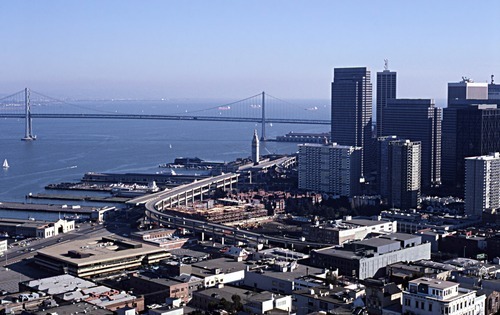
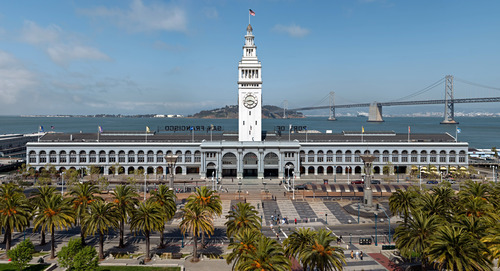
A few days ago I wrote a post talking about what happens when you demolish an urban highway. It was a link to an article giving 5 examples of cities that have removed their urban highways and benefited.
After I wrote the post, a number of people responded on Twitter. Some thought it was a great idea and gave examples of other cities, such as Detroit, that are thinking about doing the same. But others responded and said that I was out of line. And that while it might work in some cities, it simply isn’t a viable option in cities like Toronto.
So as somebody who believes we should be taking down the Gardiner Expressway, I thought it would be worthwhile to revisit the topic and provide a bit more information.
To be clear, I’m not suggesting we remove the Gardiner and replace it with nothing. My belief is that we should replace it with a broad surface street that would still move lots of cars, but that would make our waterfront much more open and accessible to everyone.
So how is this feasible?
Again it comes back to the concept of induced demand. Back in 2009, two economists from the University of Toronto and University of Pennsylvania – which are actually both of my alma maters – published a study called The Fundamental Law of Road Congestion.
In it they discovered something really fascinating: there’s a near perfect relationship between new roads and highways built and the total number of miles driven. In other words, as cities increased road capacities (during their study period of 1980 to 2000), the amount of driving went up just as much.
What this should tell you is that trying to build your way of out road congestion is usually a losing proposition. That’s why every large city has a traffic problem. Try and think of one that has solved this. And as much as it might seem intuitive to tell people at cocktail parties that your city simply needs to build more roads and highways, it’s typically not that simple. (In my view, the solution is road pricing.)
The other really interesting thing that this study revealed is that it works both ways. When you reduce road capacity, drivers start to disappear. People choose to live closer to where they work. People choose transit. People go into the office at different times. People make all sorts of different decisions in response to this road change, just as they do when there are more free roads available to them.
So within a reasonable band (obviously you can’t remove all roads), there is no perfect amount of road capacity. If you added another lane to your highway, it would be full. If you took away a lane, it would end up equally full. That’s why removing the Gardiner Expressway isn’t lunacy.
Instead, it actually makes a lot of sense:
It’s the cheapest solution (compared to repairing it or burying it)
It would free up money for transit and other mobility solutions
It would make our waterfront more open and accessible
It would beautify our downtown
It would increase land values all along the waterfront
And since we’re still in the early days of developing our eastern waterfront, now is the time to do it. The longer we wait, the harder it’ll get and the more expensive it’ll get.
So I hope that the leaders in this city will think long and hard about this as opposed to immediately assuming we need an elevated highway to keep this city moving. The last time I checked, it doesn’t work so well in its current state.
Images: Before and After the Embarcadero Freeway in San Francisco (via Gizmodo)