Daily insights for city builders, delivered every morning at 6 AM ET. I’m Brandon Donnelly — a Toronto-based real estate developer and founder of Globizen. I’ve been writing here since 2013.

Tag: crowdsourcing

  • Crowdsourced rental registry launches in Ontario

    Non-profit Vivre en Ville launched a new rental registry in Ontario last week. It is an extension of the one that they launched in Quebec last spring. The way it works is that it allows anybody to enter how much they’re paying in rent. In other words, it’s a crowdsourcing platform.

    The site then displays this information on a map so that everyone can see current and past rents. The data points are all anonymous and no personal information is linked to them, but the idea is to “preserve affordability in the residential market by providing access to important rent information.”

    Obviously, the thinking is that greater transparency will lead to more affordable housing. Presumably because you’ll now be able to see if you’re somehow being bamboozled, among other things.

    I’m not 100% convinced that this will be the case, but I am of the general opinion that more transparency and more information is better than less transparency and less information.

    I also find it interesting that there seems to be a lot of people willing to take the time to share this kind of information. According to the Toronto Star, they launched in Ontario with over 3,000 rental inputs. And according to their website, the full registry has over 40,000 inputs.


  • Good vibrations

    image

    There are 614,387 bridges in the United States and 55,707 of them are thought to be structurally deficient according to the US Department of Transportation (2016). About 188 million people cross “a deficient bridge” every day in the US (also a 2016 figure).

    Inspections are often infrequent and only visual, and so MIT Senseable City Lab is currently on a mission to come up with a more scientific approach. They believe that there’s a solution in crowd-sourced data and that it’s possible to create a community-driven maintenance program.

    What they discovered through a recent study, called Good Vibrations, is that mobile phone sensors can actually pick up the natural vibrations and oscillations of a bridge. And, that a mobile sensor located within a traveling car is actually 120x more precise than fixed sensors located on the bridge.

    Part of the problem is that fixed sensors have poor spatial coverage. They are located in specific locations. Whereas mobile sensors give you data across the entire span of the bridge as someone crosses it. And if you know how a bridge normally vibrates, you can quickly tell when something is off. 

    Here’s a quick video overview of the study. And here’s what you should do if you want to get involved.

    Photo by Joseph Barrientos on Unsplash

  • Urban change through rapid prototyping

    image

    The Market Street Prototyping Festival is just finishing up in San Francisco. The festival, which is now in its 3rd year, is centered around urban interventions that can be rapidly prototyped and tested. The goal is to discover new ideas that could be used to transform and improve Market Street – the city’s civic spine. It is a joint effort of both the San Francisco Planning Department and the Yerba Buena Center for the Arts.

    Here is a list of all the prototypes. You can “like” projects, but I wish they would have made it easier to filter and see which ones are the most popular.

    One project that I liked is Vote With Your Feet. It consists of two doorways and a single crowdsourced YES/NO question above it. You vote by choosing a doorway. Once you walk through, you are then shown the results. Here’s a Boomerang video of it in action. I like it because it provides a frictionless way to acquire lots of ground-up feedback. Imagine placing something like this at the exit of a busy train station or transforming the existing doors.

    Tactical urbanism can be a great mechanism for investigating and instigating positive change. This is hugely important considering how slow moving and bureaucratic city building can be. It’s not the same format, but NXT City here in Toronto has similar ambitions. They source new ideas for our public spaces from young people. I am thrilled that both of these initiatives exist.

  • Crowdsourcing unsafe cycling conditions with a small yellow handlebar button

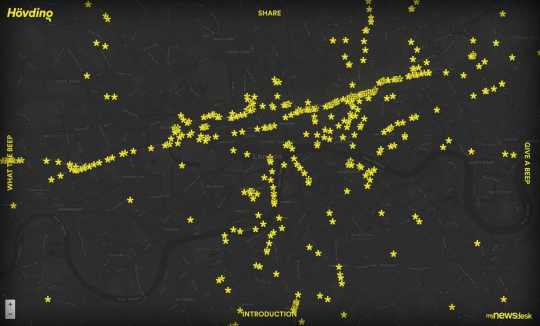
    Hövding – a Swedish company best known for its radical airbag cycling helmets (definitely check these out) – is currently crowdsourcing unsafe conditions and cyclist frustration in London.

    Working with the London Cyclist Campaign, they distributed 500 yellow handlebar buttons. Cyclists were then instructed to tap these buttons whenever they felt unsafe or frustrated with current cycling conditions. 

    Here’s what the button looks like:

    Every time the button is hit, the data point gets logged to a public map and an email gets sent to the Mayor of London reminding him of his promises around cycling. Both of these things happen via the rider’s smartphone.

    Here’s what the public map looks like at the time of writing this post:

    Not only does it tell you pain point locations, but it also seems to suggest the primary cycling routes. I think this is a brilliant initiative because, it’s entirely user-centric. It’s telling you how people feel on the ground.

    Supposedly, Hövding is actively looking for other cyclist groups around the world to help them distribute their buttons. So if you’re a group in Toronto or in another city, I would encourage you to reach out to them. The more data the better.

  • Towards decentralized city building

    One of the
    most profound shifts taking place today – because of new technologies – is
    that of decentralization. I’ve written about this before, but I keep coming
    back to it because I find it so fascinating.

    It’s
    happening to varying degrees, but as a general trend, I believe it is leading
    to better data (less information asymmetries), more efficient markets, and the
    removal of many middle people. In the past, some intermediaries were necessary in
    order to act as proxies for portions of the market. But I believe that is
    changing.

    So what’s
    an example of this? Bitcoin. Bitcoin is an example of decentralization because
    no one entity controls it. It operates through a decentralized public ledger.
    And because of this, it has the potential to be highly disruptive to the way we
    think about currencies today.

    Put another
    way, I see decentralization as a way to leverage the wisdom of crowds. I am
    convinced that large groups of people can be incredibly intelligent when they’re
    allowed to contribute in the right ways. And I think this could solve many
    different problems, from the infighting we see within cities to broader market phenomena.

    As another example,
    there’s something new in the venture capital space called DAO – which stands
    for Decentralized
    Autonomous Organization
    . Essentially it’s a decentralized VC platform based
    off of a Bitcoin derivative currency.

    But perhaps
    the most noteworthy and relevant feature is that it allows its large pool of
    investors to anonymously vote on which investments to pursue. This is in
    contrast to a more centralized approach where an investment committee would
    meet behind closed doors in a big boardroom and make a decision. This would be the
    more typical approach.

    If you’re
    not in the tech space, the above may not seem all that exciting to you. But I
    see many parallels between venture capital and real estate development, which is
    one of the reasons I follow the space. So I can’t help but wonder what this
    trend could ultimately mean for real estate, design, and other city building industries.

    I can
    certainly imagine a world where the forces that shape our cities are more
    collective and decentralized in nature. It’s already starting to happen through crowdsourcing, social media, ridesharing, and other online platforms.

  • #BuildHereNow — Crowdsourced city building

    image

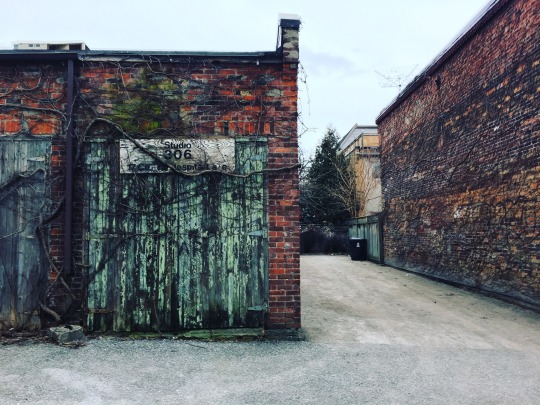
    This week Strong Towns has been running a great social media campaign called #BuildHereNow

    The way it works is very simple. They asked people to get outside and take photos of vacant and/or underutilized properties in their town or city and post them to Twitter or Instagram using the hashtag #BuildHereNow. The goal was to start to identify properties that could “use a little love" and to encourage city builders who might need a little push to develop a particular property.

    I’m a big fan of crowdsourcing information and I love the idea of digitally annotating buildings and spaces. In this case, it’s about pulling together the desires of the community,

    Hashtags are a great way to quickly make something like this happen, but I would love to see a purpose-built tech platform do this in a more permanent way. Of course, it doesn’t just have to be about developing. Buildings are rich in information; hopefully so rich that a platform like this could survive.

    If you think about it, property titles are already a form of annotating real property. So this isn’t really a new idea. 

    But now technology allows us to harvest all kinds of other information – such as what people would like to see built. Imagine the possibilities if we became more effective at collecting, organizing, and leveraging this data at scale.

  • Toronto housing — where we came from and where we’re probably headed

    This morning I’m working on a presentation that I’m going to be giving one evening next week to a delegation coming in from the US. The title of the presentation is the title of this blog post: Toronto housing – where we came from and where we’re probably headed.

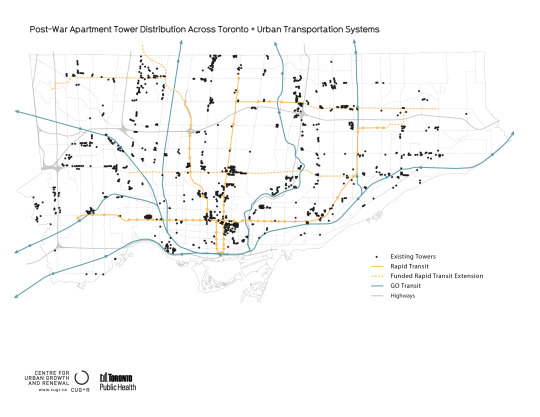
    My plan is to start in and around the 50s and 60s and talk about Toronto’s first tower boom following the war. For this time period, I’m relying a lot on the work of Graeme Stewart of ERA Architects, who is one of, if not the, expert on post war towers in this city.

    image

    I’m then going to move onto our current high-rise condo boom and compare the two.

    Because the interesting thing about the first boom is that, after it finished, we basically returned to the typical North American housing model: building single-family homes. And it wasn’t until this recent boom of the early 2000s that we once again resumed building more high-rise than low-rise housing. That is still the case today.

    But the question I want to address is really, what’s next? Where are we headed? Is history going to repeat itself or is – dare I say – this time different?

    I’ll eventually get to those questions here on Architect This City, but first I want to hear from you. So here’s what I’m proposing: leave your thoughts in the comment section below and I will feature the best ones in my presentation next week as the voices of Toronto. I’m sure many of you know that I’m a big fan of crowdsourced information.

    So here goes. Where is Toronto housing headed and how will we be living in the next 10+ years? Will we be raising families up in towers or not? Please comment by Sunday, September 27, 2015 at 6pm (ET) to make sure I have time to feature you in the presentation. 

    Thanks for participating 🙂

  • When the crowd builds a city

    I’ve been following and checking out Kickstarter pretty much since the beginning. But it wasn’t until last night that I backed my first project. 

    After doing that, I immediately started thinking about urban projects that might be able to also get crowdfunded using Kickstarter. How could it be used for city building? A Kickstarter project, after all, just has to be something with a defined scope and a clear end goal.

    Not surprisingly, this has already been happening for many years now.

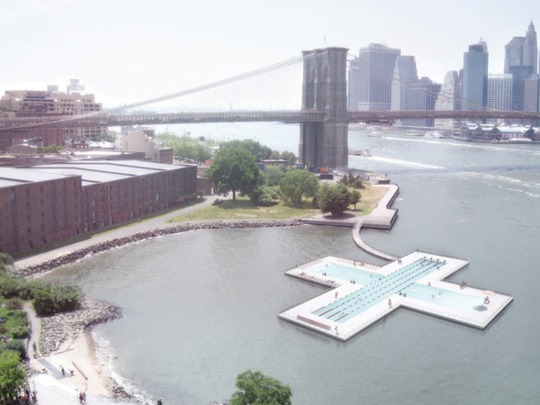
    A great example is +Pool in New York, which is an initiative to build a publicly accessible floating pool that also filters river water. The project launched in June 2011 and by July 2011 they had raised $41,648 USD to build and test different filtration techniques.

    image

    Today, the project is still moving ahead and they are now offering up the opportunity to buy and have your name engraved on tiles within the pool. If I lived in New York, I would be all over this.

    But what’s powerful here is the ability for crowd-based platforms (like Kickstarter) to both get radical new ideas off the ground and to empower local communities to affect change. Here’s a quote from PSFK:

    It’s very difficult to get funding for these ‘out there’ ideas that regular systems might not support. Creators have to take risks and be imaginative, as well as put their ideas out there and let the public decide. There are no traditional guidelines on crowd-sourced platforms—they’re much more meritocratic. You can think in big scope and that changes what gets made and who can access it. Anybody with a couple of doubles can voice what they want to be built, and in that way we see the entire community having a huge say in the design world.

    And when I see projects and platforms like this, I can’t help but wonder if (when) city building is going to become even more decentralized. 

    Last night I was also at an event – being put on by Ryerson University’s City Building Institute – called Bridging Divides: What Can Cities Do? And one of the suggestions that came up was that Toronto needs more local and granular community councils (there are currently 4) in order to bridge some of the divides that are happening in our city.

    But in a world where it’s possible for each and every person in a city to not only have a say but to quickly say it from their smartphones, why can’t we go even more local? Instead of 4, 10, or 90 community councils, why can’t we have everyone more engaged?

    I think we’re headed in that direction.

  • #ATHISCITY

    One of the things that makes cities so exciting is the fact that they’re always changing. New restaurants open up. New buildings are built. Old buildings (with no heritage value, of course) are demolished. Bike lanes are added. New infill homes pop up in quiet residential neighborhoods. And the list goes on.

    For years I’ve wanted an app or some sort of product that would allow city builders to keep track of everything that’s going on in their city. In the same way that Foursquare helps you find cool restaurants around you, I would like to know about everything that’s going on, from rezoning applications to construction updates.

    One of the challenges, of course, is that I’m sure more people care about cool new restaurants than about esoteric planning applications. It’s definitely a niche market. But that doesn’t mean there isn’t a thriving group of people who do care. So I’ve decided to introduce an Architect This City hashtag on Twitter: #ATHISCITY.

    I’ll be using it for city building updates and, if some of you join in as well, I think it could become a great way to keep track all of the neat things that are happening in our city, as well as in others around the world.

  • Could a decentralized sales model work?

    image

    Since I started blogging last year, I’ve been getting regular emails from both people I know and from readers I don’t know (but hope to one day meet) asking for advice on buying real estate. Usually somebody sends me the link to a place they’re thinking about buying, and they want to know what I think about the property and the neighborhood.

    I’m more than happy to help when I can and I try to be brutally honest in terms of what I think. What’s interesting about this dynamic though, is that I don’t have a vested interest in any of the outcomes. Whether I tell that person I love the place or that it’s shit, I don’t stand to gain anything. And that means I can be brutally honest. It’s for this same reason that customer reviews on websites can work so well. 

    Because on the flip side, if I make money when you buy, then guess what, I’m going to want you to buy. That’s how it works for any industry–from financial services to real estate to retail. That’s why some stores will promote the fact that their sales people are not on commission. Although you could argue that those sales people are then less motivated to help you.

    In any event, all of this got me wondering if there isn’t some way to take customer reviews to the next level. Could a decentralized sales model work?

    Last year I had a conference call with one of the chief officers of one of the top 3 real estate websites in the US and I was told that they had actually tested a “social buying model.” It ultimately failed, but it strikes me as an interesting concept. Reviews are starting to feel a bit dated now on the social web, but I think the idea of crowdsourced input is here to stay.

    Image: Flickr