Daily insights for city builders, delivered every morning at 6 AM ET. I’m Brandon Donnelly — a Toronto-based real estate developer and founder of Globizen. I’ve been writing here since 2013.

Tag: content creation

  • TikTok studios are the new multi-family amenity

    I just finished reading about an apartment building in Los Angeles that is currently retrofitting its amenity spaces to include, among other things, an appropriately spread out co-working space, two podcast rooms, and a TikTok studio. This latter amenity will be a roughly 100 square foot room with camera-ready lighting, tripods, and mirrors. It was described in the article as the perfect place for one or two people to create things and entertain themselves.

    The gist of the article is that home offices are the new must-have amenity and that developers have started to rethink apartment amenities in light of this. But I also take this to be a sign of the times. We are living in a world of content creation. Whether you’re a so-called influencer or not, TikTok has, for a lot of young people, replaced many other forms of entertainment and everybody, at this point, probably needs their own podcast.

    It is also true that there’s an “amenities arm race” going on within the apartment sector. This is nothing new and doesn’t have much, if anything, to do with this pandemic. Amenities have been how you differentiate your offering. And when you’re constantly selling (i.e. leasing all the time), they do become important. So here’s to podcast rooms and TikTok studios. If you had your pick, what kind of amenities would you like to see in your building?

  • My Focals by North fitting

    Over the weekend I went by the new North store on Ossington for the fitting of my new Focals by North glasses. According to Retail Insider, this is the first retail space in Canada that is entirely dedicated to wearable tech (shout-out to Hullmark and CBRE). Full disclosure: I am not being paid by North, but I was asked if I would accept a pair of Focals and provide my thoughts. So I will be doing that over the coming months on the blog.

    Previously known as Thalmic Labs, North is a Waterloo-based company that first attracted attention with the launch of a gesture-control armband known as Myo. What that product did was make digital interactions completely hands-free. It had strong use cases across medicine, music, and business. However, this past October the company announced that it would be moving on from Myo. Enter Focals by North. 

    Focals are custom-built eyewear with an integrated display that only the wearer can see. It is similar to, for example, BMW’s heads up display, and the idea is that it is a way for you to quickly get the information you want, without pulling out your phone and disengaging from the world. The ambition is human-centric technology that integrates seamlessly.

    Here is an example of what that display looks like (it is much better and cooler in person):

    image

    To control the display you use both your voice (the glasses have a microphone) and a 4-directional joystick called a Loop, which sits on your index finger like a ring and that you thumb. You can receive and send texts (voice to text), you can get turn-by-turn directions, you can view your appointments and the weather, and you can ask Alexa things.

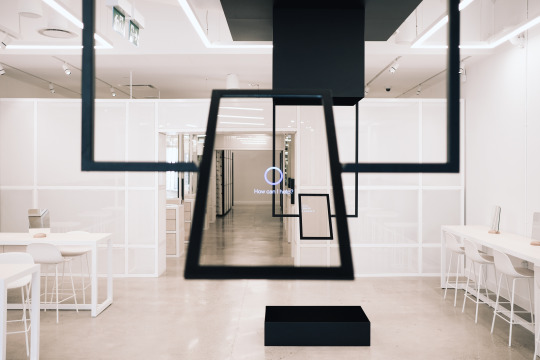
    The first step in the ordering process is a fitting. And that’s what I did over the weekend. The glasses are all custom made and so they start by doing a full 3D scan of your head in a room that feels like the future. Once that’s done, you pick what frame you want, the color, and your sun clips (an essential accessory for day drinking in Trinity Bellwoods). Total cost: CAD 1,299.

    While exceptionally cool, it is premature for me to really comment on the tech at this point. I’m expecting my Focals in 8-10 weeks. But is it interesting to opine on the current state of eyewear tech.

    Most people believe that the problem with Google Glass was the fact that you had to be a Silicon Valley nerd in order to want to wear them out in public. They looked and continue to look ridiculous, which is why Snap went fashion first with their Spectacles. I have always found this product really intriguing. I want to use it. But I’ve stopped using Snapchat entirely and I don’t really have a strong use case for them.

    Snap’s Spectacles are about capture and content creation, whereas Focals are about discreetly feeding you information that you would otherwise have to pull out your phone (or watch) to view. There’s no camera on Focals. That’s not what they are about. But they are obviously fashion first.

    The question for me is whether the experience will truly be seamless and integrated, or if I’ll still be disengaged – gazing off into my glasses (space) while I ask Alexa to UberEats me a chicken shawarma wrap. I’ll let you know in about 8-10 weeks. If you’re looking for more on Focals by North, check out their website and this CNBC piece. Go Canadian tech.

  • Attention = money; why the attention economy is broken

    “…the path to profit is to manufacture attention more cheaply than what you get paid for it.” Ev Williams

    A big part of our economy is centered around attention. Some would argue we are living in a de facto attention economy. That is now our scarce resource. There are only so many waking hours in a day and every company and social media platform is fighting for their sliver of your attention.

    However, the irony of the attention economy is that, while it has gotten easier to make and share “content” with the world, the quality of that content matters less than the attention it garners. Because that’s what the system rewards. Whatever you may think about Trump, he has mastered the art of attracting attention.

    Ev Williams – co-founder of Twitter and CEO of Medium – recently wrote a piece on this topic called: Words still matter. It is very much about the mission driving his publishing platform, Medium. Here is an excerpt:

    It’s not that there aren’t journalists, publishers, and thinkers doing great work and putting it out there. But the realities of the attention economy are very tough for those who create things designed for anything but the widest possible (i.e., lowest-common-denominator) audience. For ad-driven sites, the revenue per reader has been dropping for years (while the experience worsens and privacy disintegrates), leaving little room for research, fact checking, or polish… let alone nuance or complexity. The system demands quantity. It demands speed. And it demands little else — except our clicks.

    Their solution is the Medium Partner Program. It is an “open paywall” that allows publishers of great content to lock some of their best content behind a paywall. Their view is that to fix the attention economy, we need to move beyond ad-supported lowest-common-denominator content. 

    This not entirely novel, but they are calling themselves the first “open paywall” platform. I would be curious to hear your thoughts about this in the comment section below. I’ve had a few people suggest to me that I employ a similar approach for this blog. I’m not convinced.

  • Why blog?

    Someone recently asked me: “Why do you blog?”

    I have lots to say whenever someone asks me this and I’ve written a few of those things down, here. Obviously I believe that there’s tremendous value in writing your own blog and reading the blogs of others.

    It’s for these reasons that I really enjoyed one of Seth Godin’s posts this week called: Read more blogs. The post is about using an RSS reader (Feedly) to keep track of blogs (which I do), but it was the lead-in that caught my attention:

    Other than writing a daily blog (a practice that’s free, and priceless), reading more blogs is one of the best ways to become smarter, more effective and more engaged in what’s going on. The last great online bargain.

    Good blogs aren’t focused on the vapid race for clicks that other forms of social media encourage. Instead, they patiently inform and challenge, using your time with respect.

    He then ends by arguing that we shouldn’t sit idle while powerful gatekeepers like Google and Facebook “push us toward ad-filled noisy media.”

    The reality of many personal blogs is that they don’t live and die on clicks like other online media. It’s a labor of love and that makes it a unique place on the internet. I clearly like this place and, if you’re a reader of this blog, I suspect you might too.

    Thank you for reading my personal journal.

  • This is a personal blog

    The internet has created an interesting dialogue between personal identities and corporate brands.

    In the pre-internet and pre-blogging days, it was harder for individuals to establish a strong brand and public identity for themselves, unless of course they were somebody famous. The cost of doing so was simply prohibitive. To promote meant print, TV, radio, billboards, and so on.

    But now promoting can mean anything from tweets to writing a blog like this one. And that has opened up the opportunity for anyone to put themselves out there.

    The dialogue, or tension in some cases, is that it becomes a balancing act: what should I be putting out there? Myself, some faceless brand, or a mixture of the two? Brandon Donnelly or Architect This City?

    If you a run a company, you’re probably debating this. Do I create a personal social media account, one for my company, or both? And how do I go about managing both?

    To be clear, this blog is a personal blog. It’s not a business. 

    Some people have suggested I start to allow multiple authors and turn it into more of a platform. But I thought about that and that’s not what I want to do. Which is why I continue to write at brandondonnelly.com (i.e. myname.com). I like that I can send this URL to anyone and they’re able to quickly understand who I am and what I’m about.

    Because what I write about are things that I’m passionate about: cities, design, real estate, technology, and so on. But I also mix in personal things so that I feel as if I’m writing a public journal. There are many benefits to keeping a journal (my 4th grade English teacher Mr. Hoad-Reddick told me so). And that’s really how this whole blog phenomenon started – they were personal places.

    Over time though, blogs evolved to become less personal and more corporate. And I am sure that some of you would rather I keep things strictly business around here.

    But to be honest, my favorite people and brands to follow online are the ones that do make their content personal. Yes, I want to learn new things about interesting topics, but I also enjoy the connection that comes with reading somebody’s personal journal and engaging in discussion with them.

    In fact, I hate it when my Twitter feed becomes nothing but companies tweeting out polished articles and reports. That’s boring. I like seeing real people in my feed. People sharing what they’re doing and how they’re feeling. People being authentic, genuine, and even vulnerable.

    And ultimately I find it makes their non-personal content that much more engaging. You have context. You understand their thought process. You can read between the lines. Those connections are what social media and blogging are really all about.

    So I’m thinking that I’m going to try making this blog a bit more personal and a bit more playful. I hope you enjoy it. And if you don’t, I’m sure you’ll tell me about it in the comments below.

    On that note, I’m off to the gym to lift some weights. Besides blogging, that’s another one of my habits that I need to do on a regular basis in order to feel normal.

  • Value creation, transparency, and authenticity

    https://500px.com/embed.js

    I started writing this blog a year and 10 months ago. 

    At that time, I had no real title for it (it was just called “Cities”) and I had no idea where it was going to take me. All I knew was that I enjoyed the discipline of writing every day and that I wanted to talk about cities and city building. It was a way for me to neatly organize all of my passions – which span everything from architecture and real estate to technology and transportation.

    Since that time, this blog got a name (Architect This City). It was named by the Guardian (UK) as one of the best city blogs in the world. I’ve met an incredible array of different people (send me an email if you like coffee and are doing cool things). I get invited to comment on city building issues on a regular basis. And an incredible community of almost 10,000 daily readers has emerged (you can email subscribe here).

    A big thank you to everyone who reads and contributes to ATC.

    But over the course of writing this blog, something else unexpected happen. I started getting referred to as a “brander, marketer, and content creator.” Now, I’ll admit that I’ve become increasingly interested in these fields over the years, but it was certainly not something I thought of or could have predicted at the outset.

    What really happened though is that I simply started riding a wave that arguably took hold sometime around the mid-2000s and then focused my attention on an industry that has historically been slow to change (real estate). And that wave is the shift towards inbound marketing (as opposed to outbound or interruption marketing).

    If you’re a marketer, this is old news. You already know this. But I think there’s still lots of room for this to take hold in the real estate industry. So let’s talk about it a bit.

    To give you an example from outside real estate, take a look at Five O’ Clock magazine by Harry’s. Harry’s is a shaving company out of New York that offers moderately priced well-designed shaving supplies for men. It’s simple model that works very well.

    Their positioning has been around the idea of “Own Your AM”, which makes sense given that they are a shaving company. And so what they often do in their Five O’ Clock magazine is profile the mornings of interesting people, such as professional skier Jimmy Chin (who happens to live in one of the best places on earth).

    But if you do a search for the word “shave” in that Chin article, you won’t find it. Because it’s not about just creating content so that you can plug your business at every opportunity; it’s about creating value for your customers and building a relationship.

    And that’s really fundamental to the change I’m talking about. 

    Today, the marginal cost of reaching your customers has dropped to almost zero (even if you’re reaching out to them on a one-on-one basis over, say, social media). And so the opportunity exists for companies, brands, and individuals to do things that simply weren’t feasible before.

    Because of this, it is now possible for everyone to easily establish their own personal brand. I think we’re going to see more, not less, of that. And it has changed how we message and communicate – whether it be via blogs, social media, or online magazines.

    In my view it comes down to 3 considerations: value creation, transparency, and authenticity. If you can create value for your target audience and be transparent and authentic, you’re going to naturally draw people in. I try and do all of that on this blog and hopefully it comes through.