Daily insights for city builders, delivered every morning at 6 AM ET. I’m Brandon Donnelly — a Toronto-based real estate developer and founder of Globizen. I’ve been writing here since 2013.

Tag: columbia university

  • Population density map of the world

    I came across this interactive world population density map over the weekend and I immediately thought to myself, “this is going on the blog.” It uses data from the Global Human Settlement Layer (GHSL) produced by the European Commission and by CIESIN (super long name) at Columbia University. And it’s a fascinating way to explore how our world is urbanizing.

    What you will want to do is make sure that you head over to China and check out regions like the Yangtze River Delta (shown above). If you hover over a location, it will also bring up a graph and table showing you how that place has evolved from 1975 to 2015. Note: Shanghai’s peak population density in 2015 was 104,400 people per square kilometer!

  • Is this just how the game is played?

    As I am sure you have all heard, there’s a lot of debate in New York right now (city and state) about whether they should reject Amazon’s decision to open up a new headquarters in Queens.

    Urbanist Richard Florida has been arguing that one of the richest companies in the world shouldn’t be receiving taxpayer subsidies and that Amazon should do the right thing here. They should open up in New York but without any inducements.

    As a counter argument, Kenneth Jackson, professor of history at Columbia University, recently opined that this is actually business as usual. American cities have a long history of competing for companies because the benefits outweigh the costs over the longer term.

    Here is an excerpt from his op-ed in the New York Times:

    They are right about one thing. It is absurd that any city would agree to such a deal. But this is how the game is played. Paying companies to relocate has been the American way since 1936, when Mississippi established the nation’s first state-sponsored economic development plan. Under that plan, since followed by many other jurisdictions, cities and states agreed to pay companies to relocate by promising them new factories and low or nonexistent taxes. With those inducements, numerous businesses relocated in the decades after World War II, usually from the union-dominated Northeast and Midwest to the business-friendly South.

    Perhaps this would make a good debate topic for Kialo.

    Update: Amazon just cancelled its plans for a corporate HQ in NYC.

  • High resolution population maps

    image

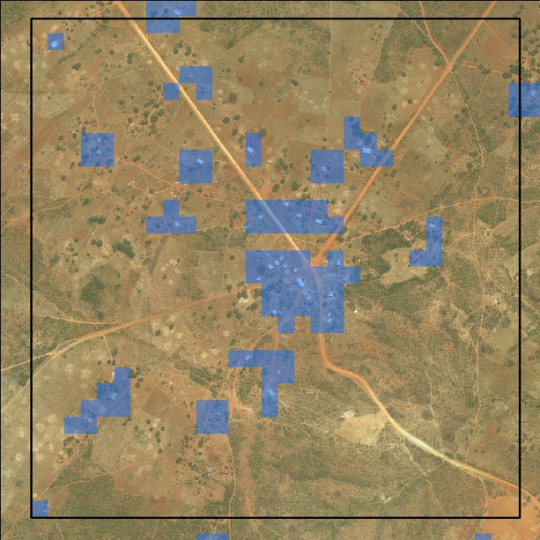
    Facebook, as part of their internet.org initiative, is working on bringing internet access to people in rural areas all across the world. For obvious socioeconomic reasons, this is an important initiative. From a business standpoint, it also grows the base of potential Facebook users at a time where that top line number is starting to plateau.

    In order to understand how people are settling and aggregating throughout the world, Facebook has been using high-resolution population maps and then creating models to drill down and analyze individual buildings. 

    This is interesting because: how else could you track informal settlements? So far this seems to be the most effective method. In fact, in architecture school I worked on a project in Dhaka, Bangladesh and I remember relying heavily on aerial photography because I simply couldn’t find the data I was looking for.

    Here’s an excerpt from a recent World Bank post. They, along with Columbia University, are collaborating with Facebook.

    Facebook’s computer vision approach is a very fast method to produce spatially-explicit country-wide population estimates. Using their method, Facebook successfully generated at-scale, high-resolution insights on the distribution of buildings, unmatched by any other remote sensing effort to date. These maps demonstrate the value of artificial intelligence for filling data gaps and creating new datasets, and they could provide a promising complement to household surveys and censuses.

    And here’s an excerpt from a recent Facebook post on the same topic:

    From this preliminary analysis, we’ve determined that slightly less than 50% of the population lives in cities. However, 99% of the population lives within 63 km of the nearest city. Hence, if we are able to develop communication technologies that can bridge 63 km with sufficiently high data rates, we should be able to connect 99% of the population in these 23 countries. [”These 23 countries” represents about 1/3 of the world’s population.]

    I would imagine that this type of model works better in sparsely populated / low-rise areas. Still, I am very interested in thinking about ways in which our current survey and census methods could be improved. Here in Canada we conduct our national census every 5 years. In today’s world that feels like eons. One day, I am sure, it will be real-time.

    Image: World Bank

  • School of Real Estate

    I’ve been getting a lot of (email) questions lately about what to study in order to become a real estate developer. So I thought I would reblog this post that talks about exactly that. I wrote it over a year ago and I almost forgot it existed.

    At the same time, I’m reminded of something: I think these questions really speak to the fact that there’s a significant opportunity (particularly in Canada) in terms of real estate development education. 

    Oftentimes when I get these questions, I end up recommending the Master of Science in Real Estate Development (MSRED) at ColumbiaMIT, and USC. Why don’t we have something similar (and better) in Canada? We are falling behind.

    I have raised this with some Universities here in Toronto, but the response I got was that they felt the real estate courses being offered as part of their existing MBA programs were more than sufficient. I think we can do a lot better.

    One professor suggested that I line up a big donor and work with them to spearhead the creation of the (Insert Donor Name Here) School of Real Estate. I think that’s a great idea, but not something I have the capacity for right now.

    Hopefully somebody else out there is of the same mind.

    Post Update: 3 days ago the Schulich School of Business (York University) announced a one-year full time Master of Real Estate and Infrastructure (MREI) program – the first of its kind in Canada. 

    This is great news. 

    Now I would love to see the University of Toronto and Ryerson University (as well as others) step up and leverage their respective architecture schools. Schulich is already out of the gate on this one.

  • 3 architects operating as developers

    image

    A reader recently shared with me an interesting article from Crain’s New York (2013) profiling three “architects as developers.” The three firms are DDG Partners (which I’ve mentioned before here on ATC), FLAnk, and Alloy.

    I’ve written a lot about these emerging business models and I continue to think that we’re going to see more of them in the coming years.  As evidence for that claim, I thought it was really interesting to read in the article that Vishaan Chakrabarti – who is director of the real estate program at Columbia University – made specific mention that there’s growing interest among his students to wear multiple hats. In other words, they don’t want to be just an architect or just a developer. They want do it all.

    In a lot of cases, these firms are made up of partners who have those diverse skill sets. There’s only so much that one person can do. But that doesn’t negate the fact that vertically integrated companies are being formed that handle everything from design and construction to property management and development.

    And if an increasing number of students today are interested and thinking about those models, then I think it’s a pretty safe bet that many of them will get out into the workforce and eventually create those companies in the future.

    Ultimately, I think that’s a great thing for cities. Developers tend to have a bad reputation for thinking only about money. But when you bring design and other disciplines in-house, you create tensions in the process. And tension can be a great thing for innovation and creativity.

    Image: 385 West 12th by Flank