Daily insights for city builders, delivered every morning at 6 AM ET. I’m Brandon Donnelly — a Toronto-based real estate developer and founder of Globizen. I’ve been writing here since 2013.

Tag: coffee shop

  • Ground-floor retail?

    I recently asked this on Twitter:

    You live in an apartment/condominium. If you could pick one ideal use/tenant for the ground floor of your building, what would it be?

    And a number of people responded.

    But I suppose I should also answer my own question.

    I lean more towards utility. My ideal use — assuming an urban storefront — is not a fancy restaurant or a super cool coffee shop. It would be some sort of quality bodega that:

    • Sells essential grocery needs (milk, eggs, toilet paper, etc.)
    • Sells wine & beer
    • Has a deli/food counter where you can buy a breakfast bagel, a sandwich for lunch, or a quick dinner when you’re in a pinch
    • And, yes, has pretty good coffee

    It would also need to be open early and late: 7am to 12am, please.

    What would you want?

  • Building cool things is not as easy as it may seem

    There was a good discussion on Twitter this morning about small-scale commercial uses in residential neighborhoods, like the coffee shop shown above on Shaw Street. In most residential neighborhoods in Toronto, this kind of commercial activity is not permitted if you were to try and initiate it today. The small convenience stores and bodegas that remain are often legal non-conforming uses. And while generally considered desirable in their current confirm, if you were to try and make a change, you could get caught in some municipal red tape where your grandfathered status suddenly no longer applies.

    That is exactly what happened in the case of the above coffee shop and, from the discussions that happened on Twitter this morning, it is a problem that is not unique to Toronto. Alex Bozikovic wrote about this coffee shop and this project in the Globe and Mail over seven years ago. Getting it approved and built was no easy task. And my friend Jeremiah Shamess — who renovated a similar and formerly commercial corner building in the area — ran into the exact same challenges.

    But let’s consider the other side of this argument for a minute. It’s easy to look at a great and well-designed neighborhood coffee shop like this one and say to yourself that it is obviously a desirable use and that we should be encouraging more of them in our residential neighborhoods. But what if it was a noisy late-night bar, a nail salon, or a massage parlor? Would your opinion change? Would it change if you were an immediate neighbor? It is perhaps easy to see why the fear of the things we don’t want has led us to sterilize our neighborhoods to the point where we no longer allow the things that we may in fact want.

    And herein lies the immense frustration that many of us have with our land use policies. There are countless examples of obviously desirable uses and built forms that are exceedingly difficult to execute on because of the barriers that we ourselves have put in place. Whether it’s a cool neighborhood coffee shop or new affordable housing, there are far too many examples of these sorts of projects being stuck in some kind of planning ether — sometimes for decades. We say and know that we want these things, but then it is frequently the case that we can’t get out of the way so that they can actually happen.

  • 2.6 meters wide

    The width of a standard parking space in Toronto is generally 2.6m. I say generally because it depends on a few other factors, such as whether it’s “obstructed” or whether it’s being accessed off a substandard drive aisle. But for the purposes of this post, let’s agree that the width of a standard Toronto parking space is 2.6m.

    The reason I mention this is because Onexn Architects has recently completed a 2.6m wide cafe in Shenzhen called Joys. Pictured above, the 9 square meter space used to house an air conditioner repair shop.

    Now, some of you are probably looking at the photos and thinking that this maybe isn’t such a big deal. But small spaces force you to be creative.

    Look at the grey exterior paving that creates the impression that the cafe is spilling out onto the sidewalk. And look at how they used an illuminated 5 meter tall canopy to try and accentuate the space.

    In some places and in cities, a retail space like this might easily become forgotten space. But here, it was something worth designing.

    Photography by Li Jinhui via Dezeen

  • Art is the new steel — a photo essay of Hamilton, Ontario

    Today, myself and a few others spent the afternoon urban exploring Hamilton, Ontario with Thomas Allen of the blog, Rebuild Hamilton. If you don’t read his blog, you should. Since he started writing about 3 years ago, he has really emerged as the online voice of Hamilton’s urban resurgence.

    If you’re from Toronto, you’ve probably been hearing rumblings about good things happening west of the city. Rumblings about people leaving overpriced Toronto for greener and more affordable pastures in Hamilton, and even that it was destined to become the Brooklyn of Toronto. That basically means Millennials, trendy coffee shops, and beards. (For the record, Thomas’s beard is very nice.)

    With all this talk of affordable housing and beards, I decided that it was time to make a pilgrimage. Below is a short photo essay of what we saw.

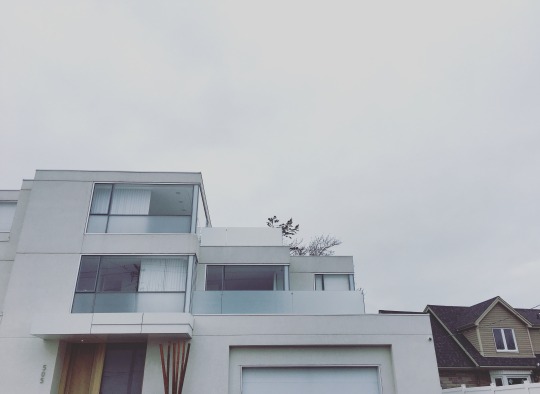
    We started the day east of Hamilton where we found this beauty along the waterfront. I don’t know who designed it, but it’s called the Cube House and it was construction managed by Toms + McNally Design. You’re going to want to click through to their website to see the interior photos. 
    image

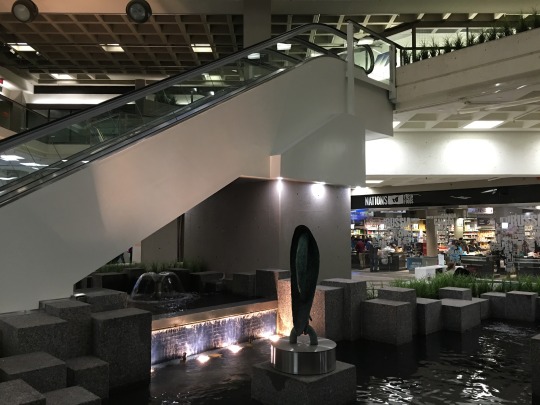
    We then made our way downtown to Jackson Square. Jackson Square is one of two downtown malls (the other is the post-modern City Centre Mall). It has seen a lot of investment in recent years and I was impressed to find a thriving grocery store. 
    image

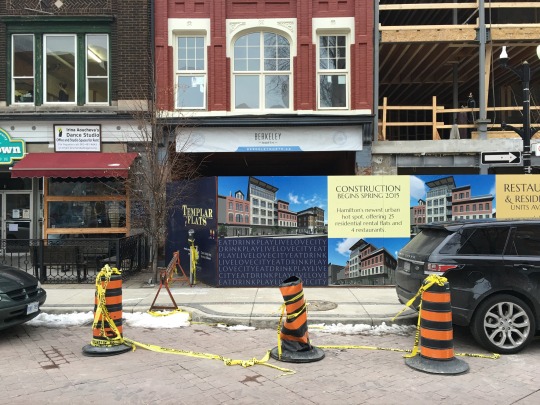
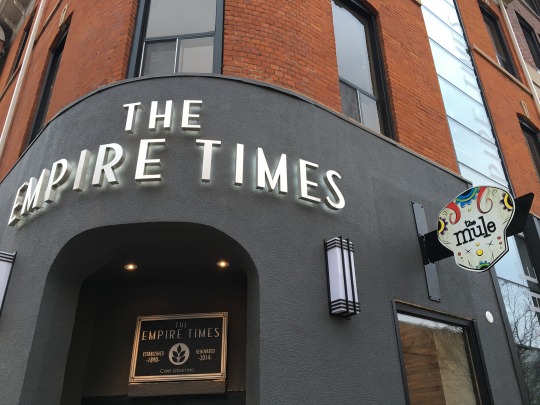
    Then came a taco and craft beer pit stop at The Mule. I would definitely recommend this spot if you happen to find yourself in the area.
    imageimage

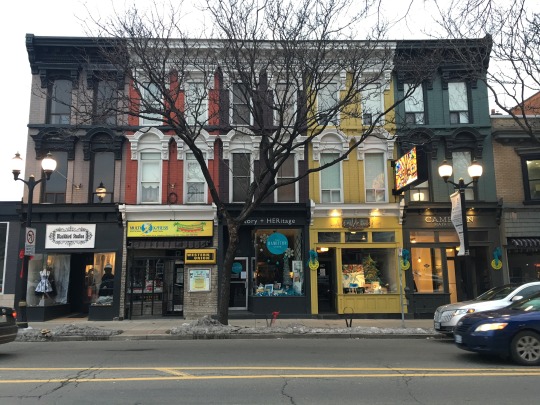
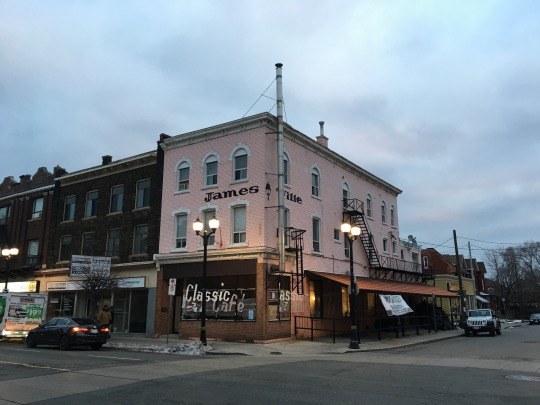
    Following this, we walked James Street North, which we were told has only really come up in the past 5 years or so. And alongside with this resurgence has come the slogan: Art is the new steel. This, of course, is responding to the fact that Hamilton is the steel capital of Canada, but that the industry is facing many challenges. I think it’s a neat slogan.
    imageimage

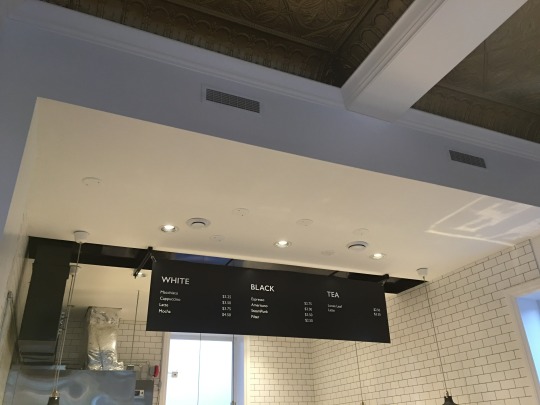
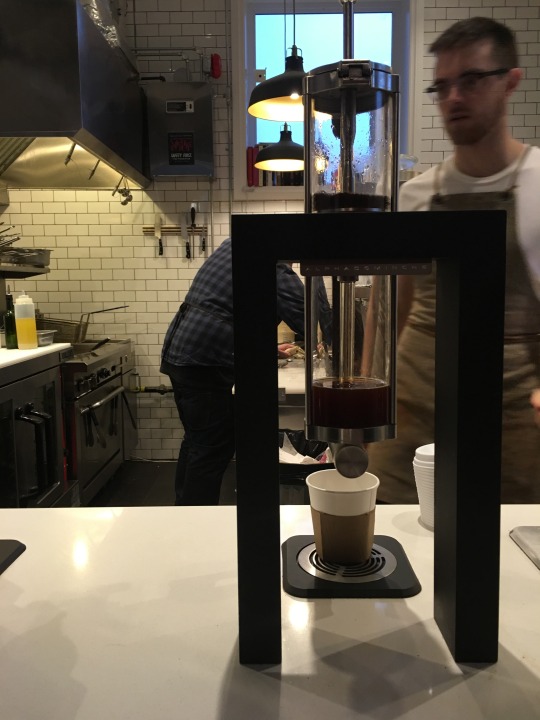
    On James Street we stopped in at Saint James Espresso Bar & Eatery, and it was everything we had hoped for and more. It was more because not only was it a cool space with great coffee, but they had some fancy thing called steam punk coffee.
    imageimage

    After James Street, we then drove around checking out some of the other areas in the city such as Kirkendall and neighboring Dundas.

    All in all, this afternoon was a great reminder that we are truly living in an urban century. It’s not just the Toronto’s, Berlin’s and Shanghai’s of the of the world that are laying down bike lanes, investing in art and culture, and generally reimagining their city centers. It’s also happening in smaller and mid-sized cities such as Hamilton. And that’s really exciting.

  • The Starbucks Effect

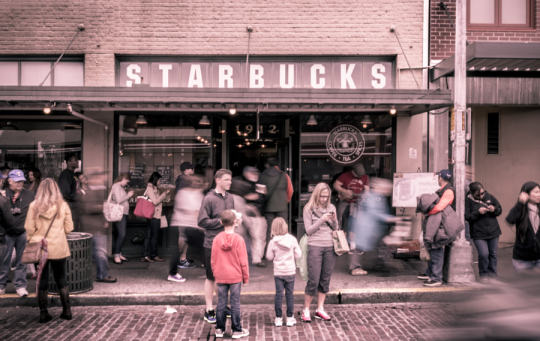
    The Original Starbucks in Motion by Brad Telker on 500px.com

    https://500px.com/embed.js

    This afternoon I was chatting with some friends about Toronto real estate (which is something that happens a lot in this city), and we started talking about “The Starbucks Effect.”

    Basically, we were talking about how this neighborhood just got a Starbucks and how that neighborhood already has one. We were, like a lot of people, using Starbucks as a proxy for neighborhoods that are emerging and neighborhoods that have already arrived.

    There’s been a lot of discussion about the correlation between home prices and the presence of a Starbucks. But the big question is what comes first: the home prices or the Starbucks?

    Earlier this year, the CEO, Spencer Rascoff, and Chief Economist, Stan Humphries, of Zillow.com argued that the mere presence of a Starbucks can cause gentrification. 

    They argued that Starbucks knows the next hot neighborhood before anyone else does and that they are “the fuel, not the follower.” And through their data they demonstrated that homes (in the US) near a Starbucks appreciated significantly faster than homes not near a Starbucks, or even homes near other coffee shops such as Dunkin’ Donuts.

    But I – as well as others – wonder if this isn’t an oversimplification.

    I certainly believe that Starbucks could help fuel home prices in a neighborhood. I think it gives people a comfort level that the neighborhood has arrived and that there are people in the area who are willing and able to spend money on discretionary items.

    But I suspect that for Starbucks it’s a balancing act. They would never want to be late to an emerging neighborhood (and miss that prime corner property), but they also don’t want to be in the business of placing bets on neighborhoods with very few vital signs.

    So I think it’s both. I think Starbucks is analyzing the data and watching home prices like a hawk (the follow) and when it reaches a certain point, they move. And that likely causes a further acceleration of neighborhood change (the fuel).

    What do you think? I would love to learn more about their site selection process.

  • The psychological benefits of third places

    Photograph - by rinatus (rinatus) on 500px

    – by rinatus (rinatus) on 500px

    Today I’m thinking about extraversion and third places within cities.

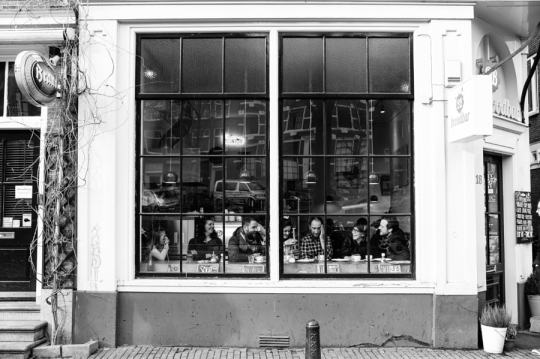
    As many of you I’m sure know, the idea of a third place is that after your home (first place) and your work (second place), cities have what are known as third places. This could be a coffee shop, a barber shop, or a public space (to name only a few examples).

    This, of course, is not a new idea. For decades people have been arguing that third places are essential for establishing a sense of community, place, and belonging. In fact, this emphasis on third place is one of the ingredients that made Starbucks so successful.

    But with the rise of the internet and freelancing, third places are becoming even more important. That’s why coffee shops have become arguably the best example of a third place in today’s cities. They’ve even become the new second place for some (many?) people.

    But beyond just a place to meet and socialize, I’ve been thinking today (while I was at a third place) about the psychological benefits of these spaces.

    For example:

    One of the key differences between extraverts and introverts is where they draw their energy from. For introverts, they tend to draw it from within. In order to recharge, they often feel the need to retreat and be left alone. Extroverts, on the other hand, draw their energy from the outside world. They charge up by being around other people.

    When I was completing my MBA at Rotman, one of the things they had us do at the beginning and at the end of the program was complete the Myers-Brigg personality test

    In both instances, I was as extroverted as they come (I am consistently what is known as an ENTJ). And from experience, I can say that I definitely feed off the energy of other people.

    But the interesting thing about this – to tie both of these topics back together – is that there appears to be a clear correlation between extroversion and a preference for living in urban centers. And given what I just said, that probably makes sense to you.

    So if you too classify yourself as an extroverted person, then third places are more than just a busy coffee shop or a vibrant public space. They are where you derive your energy and where you feel alive. And that’s a pretty powerful thing in my view.

  • Why Dovercourt Village is the next Ossington

    image

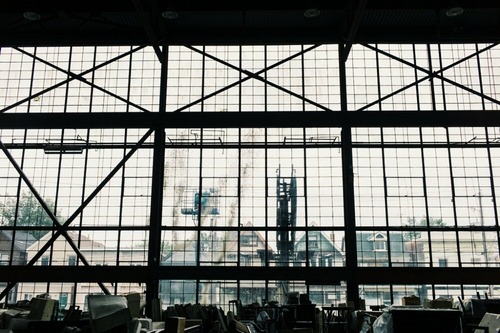
    Back in 2011, blogTO ran an article calling Geary Avenue one of the ugliest streets in Toronto. And it’s certainly up there. It’s an industrial street with a mixture of different building types (lots of autoshops), giant power lines running along the south side of it, and a railway disconnecting it from the city to the south.

    But as somebody who used to live around the corner from this street, I’ve had my eye on it for a number of years. Despite the fact that it was never very pretty, it always felt like an area with lots of potential. And sometimes it’s the areas that seem most unlikely to gentrify, that end up doing exactly that.

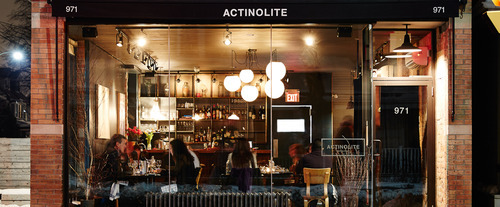
    Probably the first signs of hipness came with the opening of places like Kitch Bar on Geary Avenue and Actinolite on Ossington Avenue. More recently though, it was announced that Dark Horse Espresso will be opening on Geary and that Bellwoods Brewery will be opening their second location on Dupont Street in this incredible building:

    image

    So whether you call it Dovercourt Park, Dovercourt Village, or some other name, I think it’s only a matter of time before Ossington cool moves north and the area in and around Dovercourt Road and Dupont Street becomes one of the hippest areas in the city. Get ready.

    Full disclosure: I own a house very close to this neighborhood.

    Images: Actinolite and Bellwoods Brewery