
Daily insights for city builders, delivered every morning at 6 AM ET. I’m Brandon Donnelly — a Toronto-based real estate developer and founder of Globizen. I’ve been writing here since 2013.

Tag: climate crisis

  • Field Guide to Indoor Urbanism

    A few months ago, one of my old professors from architecture school — Phu Hoang — reached out to me through this blog. That’s one of the benefits of writing publicly — it becomes your calling card. In this case, it had been at least 16 years since I was in his design studio.

    We connected over a call. He told me about his and Rachely’s firm, MODU Architecture. And he let me know that he’s no longer teaching at Penn. He is now the Head of Architecture of the Knowlton School at Ohio State University.

    Then, following the call, he was kind enough to send me a copy of his new book, Field Guide to Indoor Urbanism:
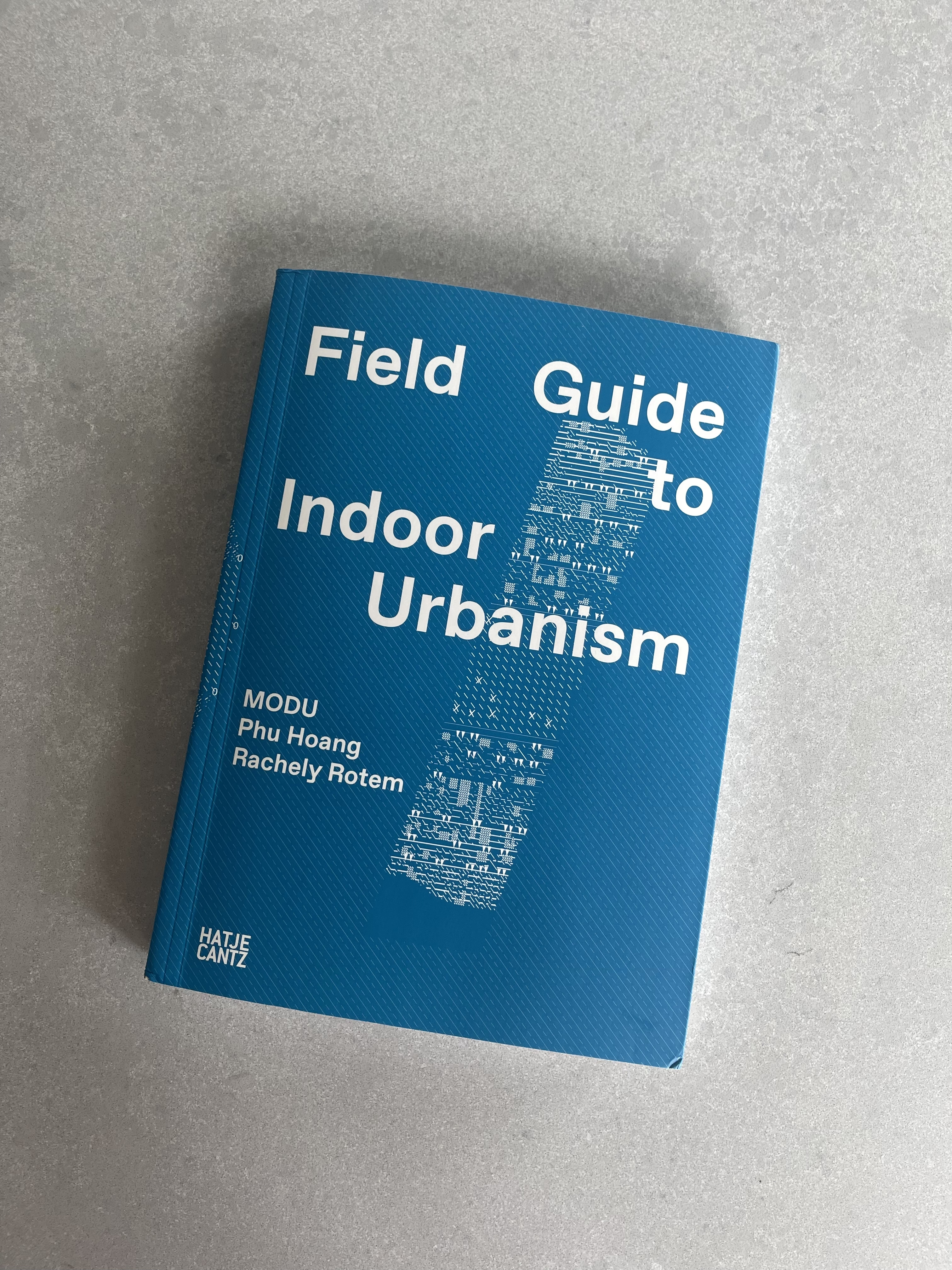
    The typical approach to modern building design is to have clearly defined boundaries between interior and exterior spaces. The outside is the outside. And the inside is a climate-controlled space that is, for the most part, sealed to the outside.

    Most of us spend the vast majority of our lives in these latter spaces. In fact, since the advent of modernism and the International Style over a century ago, the general idea has been that these spaces can and should be mostly the same.

    HVAC systems make it so that you don’t really need to worry about context or the environment. What works in Toronto can work in Phoenix. You just need to dial up your cooling loads.

    This is so much the case that whenever I’m in a city with a fairly benign climate, such as somewhere in California, I always find myself fascinated by the fluidity between interior and exterior spaces. It’s such a foreign concept to me that it stands out: “Wait, how is this not sealed?

    Indoor urbanism, on the other hand, makes the argument that this binary approach is the wrong way to think about spaces. Here’s an excerpt from a recent Metropolis article about MODU:

    They call this approach “indoor urbanism,” which privileges the blurred boundary between what has traditionally been considered interior space and exterior space. This in-between space–straddling open and closed, artificial and natural–deserves architects’ keen attention, especially as the planet warms. “Indoor urbanism recognizes that architecture and cities are situated on an environmental continuum, as a matter of degrees rather than absolutes,” write Hoang and Rotem in Field Guide.

    Examples of this thinking can be found throughout their work. This project in Jackson, Wyoming is one of my favorites both because I love Jackson and because it’s a cold and snowy place. And yet, even in this climate zone, their design includes for several “semi-exterior areas” that serve to connect you to nature.

    This is a decidedly different way to think about architecture and urbanism. But as our climate crisis intensifies, it’s only going to become more relevant.

  • The impact of climate change on the Winter Olympics

    It was pure luck, but we couldn’t have timed this last week any better. It started snowing in the mountains around Salt Lake City on Tuesday, and it felt like it didn’t stop until Saturday. On Wednesday morning, which was peak powder, the main resorts were reporting anywhere between 23″ and 30″ of fresh now. It was the stuff of magical dreams.

    But snowfall is, of course, highly variable. SLC is having a record year, whereas many resorts in Europe weren’t able to open until mid-January because of a lack of snow. And from a macro perspective, things are generally getting worse. According to this report, for every one degree increase in the world’s average temperature, global snow cover is reduced by about 8%.

    What this mean is that, even in low emission scenarios, many of the places that previously hosted the Winter Olympics, may struggle to do so again in the future because of “non-reliable” snow cover. Freestyle ski and snowboard, for example, typically wants a minimum of 1 meter of snowpack as a base, and sometimes more if melting is expected.

    Things do not look positive for Vancouver, Garmisch-Partenkirchen, and even Chamonix in the below chart. (And as a further blow, the authors of the report also don’t know how to spell Vancouver.) Naturally, this is something that you might want to consider when looking at long-term investments that are dependent on fresh snow.

    You can, however, ignore Sochi in the above chart. Because this was never a great place for the Winter Olympics and it’s unclear to me why this place was ever chosen (other than for presumably nefarious reasons). It’s like: “We are one of the largest and coldest countries in the world. We have a lot of snow in Russia. But for fun, let’s choose one of the few places with a sub-tropical climate.”

    Excluding Sochi, though, this is an alarming chart.

  • Redfin experiment shows how home buyers react to flood-risk data

    This is a fascinating little experiment:

    From Oct. 12, 2020 to Jan. 3, 2021, Redfin ran an experiment on 17.5 million of its users across the US. As prospective homebuyers entered the site, Redfin assigned them randomly to either a group that was shown flood-risk information on each property or a group that was not.

    The flood-risk scores came from First Street Foundation, a climate and technology nonprofit that works to make climate hazards more transparent to the public. In June 2020, First Street published the first public maps that revealed flood risk for every home and property in the contiguous US. 

    First Street scores properties on a scale of 1 to 10 based on the likelihood that they will flood in the next 30 years (which is assumed to be a typical mortgage term). A score of 1 means the property has “minimal” risk and a score between 9-10 is considered “extreme” risk.

    So what happens once you start showing people flood-risk information? They, not surprisingly, start systematically looking for safer properties. After one week of users being exposed to this new information, prospective buyers who were previously looking at “extreme” homes started looking at homes that were about 7% safer.

    After 9 weeks, these same “extreme” home buyers were looking at properties that were about 25% less risky. And for some buyers, in particular those working with a Redfin agent or partner, their flood-risk tolerance dropped by over 50%. (Embedded in this data might be a sales pitch for working with a knowledgeable Redfin agent or partner).

    Also interesting is the fact that below “severe” flood risk (a score between 7-8), there was very little change in behavior. “Major” flood risk, it would seem, isn’t all that concerning to most buyers. It needs to be “severe”. Nevertheless, it is noteworthy that people will in fact make behavioral changes when presented with clear climate-risk data.

  • Wineries are a leading indicator for climate change

    We have talked about this before on the blog, but wineries continue to be a great leading indicator for our changing climate. Above is a chart from the Financial Times showing the official start dates of vendange for two wine regions in France. The Champagne region is further north and so the harvest dates naturally tend to be a bit later compared to the Rhône region. But in both cases, we seem to be seeing a shift to about a month earlier: September instead of October and August instead of September. And the turning point, at least according to this data, appears to have been 1987. The winemakers interviewed in this article appear confident that they can continue to adapt and find ways to deliver wonderful bottles of wine. But of course, that is not what you should be worrying about when you see this chart.

    Image: FT

  • My predictions for 2022

    As promised, below is a list of some of my predictions for this coming year. I have tried to be both punchier and more precise in my prognostications; because, well, obvious predictions are boring and precision will allow me to better evaluate my thinking at the end of the year. So here goes.

    1. 2022 will be the year that COVID-19 becomes endemic and finally fizzles out to a point where it no longer factors into our decision making in the same way that it has for most people over the last two years or so. I think this will happen by as early as the summer.
    2. As a result, I think the majority of people will be back in their offices by this September at the very latest, with many coming back much earlier. The whole hybrid/flexible work thing won’t completely disappear, but the majority of people who used to work in offices will be back.
    3. Recreational/fringe residential real estate will soften in 2022 as a result of 1) its tremendous run-up during this pandemic and 2) the renewed pull of urban/office life. Conversely, urban apartment rents will continue to rise and eventually surpass their pre-COVID levels. The SF Bay Area could be one exception.
    4. The explosion of travel that I thought was going to happen in 2021, will truly happen this year. The summer will mark its official return, with European travel volumes (to give just one example) returning to their pre-COVID levels.
    5. We will see meaningful efforts to further breakdown the hegemony of single-family zoning throughout many North American cities. This has been building for a number of years and I think we will see some tipping point-like moments in 2022. Specifically, expanded permissions for multi-unit housing and greater densities.
    6. I wish I could say that autonomous vehicles are destined to do something truly remarkable this year, but I think we are still a few years out (2024-2025?) before a large chunk of us are ride-hailing AVs. But on a related note, I do think that Uber will come into its own this year and finally become profitable (and not just with adjusted profits).
    7. Public transit ridership will, unfortunately, remain depressed and below its pre-COVID levels for this entire year. The beneficiaries of this will continue to be cars (not good), bikes, and micro-mobility solutions like e-scooters.
    8. 2021 was a huge year for NFTs and other fun stuff like digital fashion. Given these trends, I believe there will be growing demand from people to better integrate their digital and physical lives through technologies like augmented reality. Snap has been at the forefront of this space for many years and 2022 will be an important year for its Spectacles (AR glasses). But Apple and others will also make major announcements.
    9. Miami’s ascent as an important tech hub will get interrupted by questions surrounding the climate crisis and its own resilience. At the time of writing this post, the price of carbon on the EU’s Emissions Trading System (EU ETS) is about €80 per tonne. I think we will see it break €125 per tonne this year, and possibly go even higher.
    10. Ethereum, Bitcoin, and Solana (in this order) will be the top three cryptocurrencies according to market cap by the end of the year. At the time of writing this post, their market caps are $446 billion, $895 billion, and $55 billion, respectively. I am also expecting some breakout web3 consumer applications that will push, maybe, 40% of Canadians and Americans into the crypto space.

    Photo by Dave Xu on Unsplash

  • A new $162 million fund dedicated to climate change

    This week, Union Square Ventures, which describes itself as a “thesis-driven venture capital firm,” announced a new $162 million Climate Fund. The thesis for this fund is pretty simple. They want to invest in companies that either provide mitigation for or adaption to the climate crisis. The thinking behind this approach is as follows. They want to invest in companies that directly attack the causes of climate change (mitigation), but they are also recognizing that the climate crisis is not some distant thing. It’s already here, which is why it’s important to also focus on companies that are dealing with the consequences of it (adaptation).

    One of their first investments is in a company called Leap. What Leap does is provide the connective (software) tissue between local energy devices/applications and the broader energy markets. For example, let’s say you have a Leap-enabled smart thermostat. If the grid is in need of power, it might automatically reduce your local energy consumption so as to help with load balancing on the broader network. In exchange for this, you would earn money for your contributions. In effect, Leap acts as a kind of virtual power plant.

    Why does this matter? Well, it matters because two important things seem to be happening with energy production: (1) It’s moving toward renewables and (2) production and storage are both decentralizing. Assuming this trend continues, there will be an increasing need for software to help manage energy consumption, production, load balancing, the broader energy markets, and so on. That’s where companies like Leap come in. It’s also why many are arguing that Tesla is so valuable. More than an EV company, it is creating a new decentralized renewable energy network through its car batteries, powerwalls, and solar panels.

    That does sound valuable.

    Photo by Jason Blackeye on Unsplash