Daily insights for city builders, delivered every morning at 6 AM ET. I’m Brandon Donnelly — a Toronto-based real estate developer and founder of Globizen. I’ve been writing here since 2013.

Tag: cities

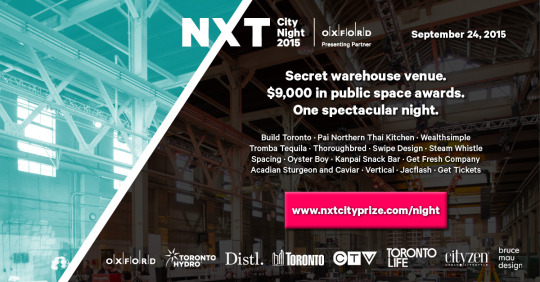
  • NXT City Night 2015

    I just got
    my tickets for NXT City Night,
    happening Thursday, September 24, 2015 at 6:30pm here in downtown Toronto.

    If you’re
    not familiar with NXT City Prize, it’s an annual urban design competition where
    young Canadians (35 years of age or younger) submit ideas to improve the built
    environment. The top submissions win a total of $9,000 in prize money and the winning idea
    gets paired up with the City of Toronto work on actually implementing it. That’s
    the best part.

    The 2015
    finalists have already been announced, here, but the top submissions
    will be announced at NXT City Night. The Chief Planner of Toronto, Jennifer
    Keesmaat
    , will be there, along with the
    competition’s very impressive jury
    .

    I think it’s
    important to keep in mind that a lot of what makes cities great often happens
    through citizen-led grassroots movements.

    The
    High Line in New York
    – which today attracts over 5 million visitors a year
    and is believed to be responsible for over $2.2 billion in new economic
    activity – was really the work of 2 friends who thought that preserving and
    repurposing the High Line was a cool idea. Which is why in 1999 they founded a
    non-profit called Friends of the High line. Amazing things happen when people and
    passion get involved.

    So I would
    encourage you to grab a ticket and join me at NXT City Night next week. Tickets are
    $25, but if you use the coupon code ATHISCITY,
    you’ll get $5 off your ticket 🙂

    The event is
    also taking place in a spectacular old warehouse building at 56 Maud Street
    (formerly St. Andrew’s Market Hall). That alone is reason enough to come. I’ve been inside before. Get your Instagram ready. But
    if that’s not enough, there’s also:

    • Open bar including Steam Whistle beer and Pillitteri Estate wine
    • Catering from Oyster Boy, Kanpai Snack Bar, Thoroughbred and many more
    • Art installations by Wayward Collective
    • Beats by Jesse Futerman and A Digital Needle
    • Local wares from GetFresh, Shopify, Spacing Store and Swipe

    I hope to see
    you there. Make sure to tweet at me
    if you’ll be there so we can connect in person.

  • How to save 8 minutes on Toronto’s highways

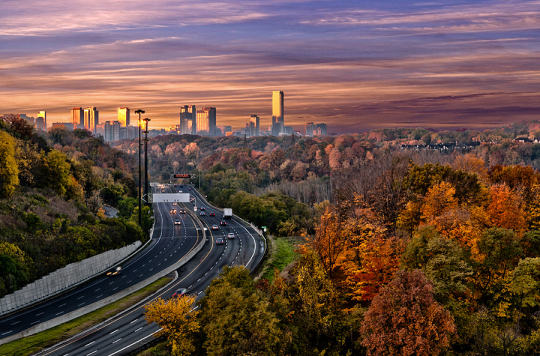
    City in Colour by Greg Patterson on 500px.com

    https://500px.com/embed.js

    Three months ago when Toronto City Council voted
    not to remove the Gardiner Expressway
    East (which in
    my view was a mistake
    ), it did so with a commitment to look at tolling
    options for both the Gardiner Expressway and the Don Valley Parkway (which in
    my view is a positive thing
    ).

    Last week a preliminary report was released
    discussing some of those tolling options. If reading dry city reports is your thing,
    you can do that here.

    The Coles Notes version (CliffNotes for you
    Americans) is that a $3 flat toll on both the Gardiner and the DVP – the same
    cost as riding transit in this city – would be expected to reduce vehicles on the highways by 9% and 12%, as well reduce end-to-end travel times by 3 minutes and 5
    minutes, respectively. There’s obviously a lot more in the report, but these
    figures stood out for me.

    Given how monumental the
    3 minute delay
    was in the Gardiner East debates, it will be interesting to
    see whether people treat a 3 minute time savings in a similar way. I suspect
    they won’t. The cost will be the larger issue.

    I’ve been a
    vocal supporter of tolls and road pricing on this blog
    . One of the main reasons
    for that is because I view the demand for highways as being largely inelastic
    and therefore a potentially great source of transit funding.

    The discouraging part of the above report is
    that its primary goal is to explore tolls for the purpose of “offsetting
    capital, operating, and maintenance costs.” The primary goal is not to come up
    with sustainable sources of transit funding.

    Having these costs paid for by user-fees as
    opposed to general taxes is still a good thing in my view. But an even better thing
    would be to help fund mobility solutions that we know will be far more
    effective at getting people around this region as millions more people move here
    in the coming decades.

    The other discouraging part of the report is
    that near the end it explains that while the City of Toronto Act of 2006 allows
    for toll highways, they cannot be implemented without the Province passing
    regulation.

    It’s a reminder that our governance structures do
    not reflect the current urban reality of this country.

  • The crisis of success

    I’m back and it feels great. I missed blogging the past 2 days. Though, there was something nice about not touching a computer all weekend.

    This morning I got up extra early and listened to a brief conversation between Aaron M. Renn of The Urbanophile and urbanist Richard Florida. The topic is New York’s “Great Reset”, and the impetus was a recent report (of the same name) that was put out by New York University.

    The conversation starts by talking about the resilience of New York City and its ability to accept and then reinvent itself in the wake of “creative destruction.” Destruction such as the financial crisis of 2008/2009. 

    But they then go on to talk about the challenges that New York, as well as many other cities, are now facing. Challenges brought about, not by failure, but by their tremendous success. Challenges such as income inequality and the dwindling middle class.

    The overarching premise is that we are still in the early stages of a new urban and creative economy. And that there’s lots of work to be done in order to figure out how to make it an inclusive one.

    There’s even mention of former Toronto mayor, Rob Ford.

    You can listen to the talk below. If you can’t see the embedded play button, click here.

    [soundcloud url=”https://api.soundcloud.com/tracks/221338706″ params=”color=ff5500″ width=”100%” height=”166″ iframe=”true” /]

  • Where will we live?

    image

    This evening I participated in a roundtable discussion at WORKshop here in Toronto. It was part of an exhibition that they currently have on called, Toronto 2020: Where Will We Live? They are located in the concourse level of 80 Bloor Street West, so go check them out.

    The discussion this evening was all about the dramatic change in Toronto’s urban form over the last decade. In other words, the condo boom. We covered everything from the life cycle of buildings and urban design to demographics and policy. It was a lot of fun and I am certain the group could have continued talking all night.

    But one thing that I was reminded of this evening is how important it is for great city building to be cross-disciplinary.

    Take, for example, architects and (real estate) developers. 

    The stereotypical developer is greedy and only concerned with money. They don’t care about the impact that their buildings have on the built environment. On the other hand, the stereotypical architect is only concerned with design and not with the economic feasibility of projects. (I’m exaggerating here for effect.)

    The point is that neither of these participants in isolation could build a great city. A beautiful design doesn’t have much value if it can’t be financed and built. And a highly financeable project could end up contributing nothing to the city. In some cases it could actually detract from the built environment.

    So if we really want to build truly great cities, I believe it needs to be a collaborative effort. We need to bridge the divides in thinking and leverage each other’s strengths. 

    I have felt very strongly about this since I first started studying architecture as an undergraduate student, which is how I ended up taking business and real estate classes. I felt and continue to feel that the greatest opportunities exist at the intersection of different ways of thinking.

  • Towards a post privacy world — what the Ashley Madison hack could mean for cities

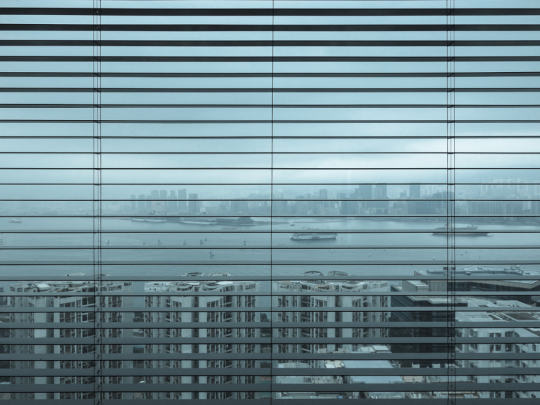
    Blinded View by Markus Jentes on 500px.com

    https://500px.com/embed.js

    Ashley Madison is a website that helps married people have affairs. 

    Recently the website was hacked and over 33 million accounts were exposed. This included full names, email addresses, mailing addresses, and so on. Not surprisingly, this has gotten a lot of press. The site was/is marketed as being private and secure. And clearly that is not what it is right now.

    But there are people in the tech community, such as venture capitalist Albert Wenger, who believe that is merely a glimpse into the future – a “post privacy future.” He even argues on his blog that we as a society should be more accepting of the leak and that the release of this data could lead to a “more measured view of affairs.” (There are many who argue that humans are not intended to be monogamous.)

    For many, or probably most of you, I’m sure this position seems pretty radical. After all, this leak will likely destroy many marriages.

    But Wenger’s position on privacy is a fascinating one and he’s written a lot on the topic. The tension he sees is one between individual privacy vs. collective intelligence. In this part of the world, our society values the former over the latter. But he believes that we are headed towards a world where almost everything, yes everything, will eventually become public. Again, radical position. But consider how much we publicly share about our personal lives today versus 10 or even 5 years ago.

    What’s perhaps more relevant to the Architect This City audience though is what this could mean for many other industries beyond tech.

    I often think about what a “post privacy future” could mean for city building. Imagine if every architect, real estate developer, engineer, and other participant made public all of their work. This would mean that all designs, financial models, sales data, and so on were made widely available to anyone who wanted to see them.

    The thought probably scares many of you in the industry, but consider what it would mean for our collective intelligence. There’s a strong argument to be made that we would all be better off and that the process of building would become far more efficient. In fact, if truly everything were public, it could in theory eliminate most of the market’s concerns about overbuilding, a condo bubble, and all the other stuff that gets talked about.

    The reason people speculate on these market factors is because we don’t have all the data. We don’t actually know what’s going to happen. We have no idea. I know I certainly can’t predict the real estate market.

    So why aren’t we quickly becoming more public?

    Wenger raises the game theory principle known as the prisoner’s dilemma:

    “So one way to think about secrecy is that it leads to lots of prisoner’s dilemma style situations. Individuals (or companies) would be worse off if they were the only ones disclosing, but if everyone disclosed (or at least the majority), then everyone would be much better off. In the language of game theory, we are in a bad equilibrium.”

    In other words, if only one real estate developer disclosed her project’s financial information to the public, then she would probably be worse off against her competitors. But if every developer in the city did it, then the market as a whole would be better off because everyone would then benefit from collective intelligence.

    Using the example of infidelity, if one person is caught having an affair, then that person is more than likely worse off. But if over 33 million people are caught having an affair and it reinforces the statistic that between 30-60% of married people in the United States will have an affair at one point in their lives, then maybe it forces us as a society to rethink what marriage means today. And maybe that makes us all better off.

    This is a pretty far out there argument, though the city building example is probably more palatable than the Ashley Madison one. Regardless, I would love to hear your thoughts in the comment section below. 

    Are we heading towards a post privacy world?

  • Interview with Brad Keast of Osmington

    image

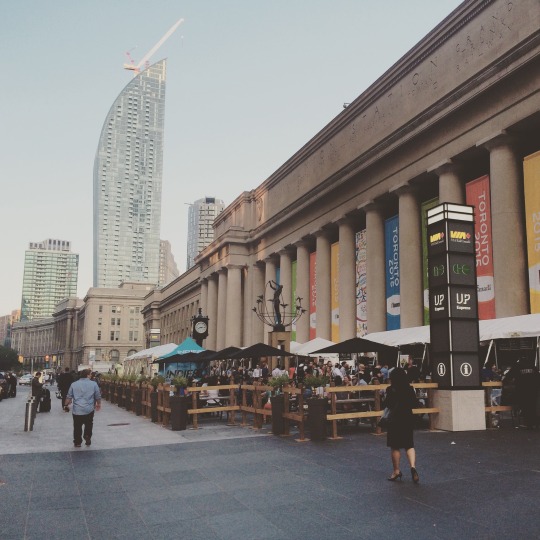
    Given yesterday’s post about Times Square in New York, the timing is perfect to talk about the revitalization of Union Station here in Toronto, its new public spaces, and the programming that’s now happening in and around the station.

    Perhaps the most noticeable is something called Front Street Foods @ Union Summer, which is an outdoor food market set up along Front Street. It’s on this summer from July 6th to September 27th, 2015. 

    However, Front Street Foods is only one part – the food part – of a larger events and programming strategy known as Union Summer. I recently had a quick chat with Brad Keast of Osmington, who is involved in a lot of what’s happening right now at Union Station.

    I found it interesting to learn about how organic the process was. And I thought you all might find it interesting as well.

    ————————————–

    Tell us a little bit about you and your company’s involvement with Union Station. 

    I’ve been with Osmington for over 4 years now and Union Station is a major focus of my waking life. 

    The company won a public RFP with the City of Toronto in 2009 to be the City’s retail partner in the redevelopment. What this means is that while the City owns the building and is doing base building construction, we are overseeing all the retail, advertising, and special events and programming. We are finding all the tenants, doing a bit of overshell work and then turning it over for fit-up.  

    We think the real special part of the project comes in through the special events and programming. We really want to make the station a destination in itself and you’re starting to see that with some of the programming we’ve done this year, be it a contemporary art event like Villa Toronto or something more community-focused like Union Summer – the current animation of the area in front of the station.

    How did the idea for Union Summer come about? 

    This really was a collaborative internal effort. We started by thinking ‘hey, let’s put a bunch of tables and chairs on the new plaza in front of the station and see what happens.’ Then we added in the idea of food. We knew it had to be accessible but didn’t want traditional food trucks, rather something less mobile but still not permanent. 

    That’s when we reached out to Toronto Market Company and they started rounding up the vendors. Then we layered on entertainment – daily music be it live or DJs, as well as a movie night with the Toronto International Film Festival (TIFF). We even have some kids programming on the weekends. Then we worked with the Farmers’ Market being displaced from Nathan Phillips Square due to Pan Am this year to have them here on Wednesdays.

    What was involved in making Union Summer a reality? What was the biggest surprise and/or hurdle that needed to be overcome? 

    There was a tremendous amount of coordination needed. First we weren’t sure when the construction was even going to be finished, all that was certain was it would be before Pan Am started. 

    Then the infrastructure required for the event itself was an exercise in creativity – power, water, and grey water disposal in particular. There was a lot of meetings with City officials for things like building permits, fire code, council approval to apply for a liquor permit, and health and food safety measures. Operationally things like loading in, coordinating with the installation of the Pan Am banners between the columns, interim furniture when our original order didn’t make it onto a ship in Antwerp, and then the first week was so busy that some vendors started losing staff because they were burnt out. 

    Like all things with this project we have to be mindful that this is an operating train station. In fact it’s the busiest building in the country with over 250,000 people per day passing through so we can’t impede those operations. We’ve done our best and have learned some lessons along the way and the reception has been overwhelming. 

    One of the best things about having that many entrepreneurs in close proximity is that some vendors have been pairing up to try experiments. Frozen custard-stuffed churro?

    Toronto is getting much better at designing and programming its public spaces. Given your experience with Union Summer, is there something the city could and should be doing to encourage more of these kinds of urban activations?

    Well, first of all, our contacts at the City, in particular Denise Gendron and Scott Barrett in Real Estate Services have been incredibly supportive of our efforts and we couldn’t have done it without them. If I could make one recommendation it would be to build in the supportive infrastructure for services. Of course that’s only beneficial if there is someone to take charge of the space and program it appropriately. It’s not a part time job.

    What’s next for Union Station?

    Right now the focus is on getting the first retailers open on GO’s new York Concourse. On the programming side we will host art for Nuit Blanche (October 3rd, 2015). That promises to be exciting. And then opening November 30th, 2015 is the Holiday Market. It was a huge success last year so we’re bringing it back for 3 weeks this time.

  • Fun Friday: ATC subscriber map

    When I was very young I went a Montessori school here in
    Toronto. If you’re not familiar with Montessori education, it’s basically a
    very open ended and independent form of learning. Students choose
    what they want to do.

    Because of this, many have argued that a Montessori
    education is actually great training to be an entrepreneur
    . Instead of being
    told what to do, you as a student need to figure it out on your own. See the
    parallel? Both Google founders went to Montessori school.

    When I was there (< grade 4), my absolute favorite thing
    to do was draw maps. I remember them having these large scale maps of the world where you could
    physically remove each country so that you could then trace it and create your
    own maps. I spent a lot of time doing exactly that.

    To this day, I still really love maps. And I remember many
    of my friends in architecture school being the same way. So perhaps it comes
    with the territory.

    In any case, I recently started playing around with a product
    called cartoDB. And one of the things you can easily do with it is connect it
    to Mailchimp (the service that manages the ATC email newsletter) and anonymously
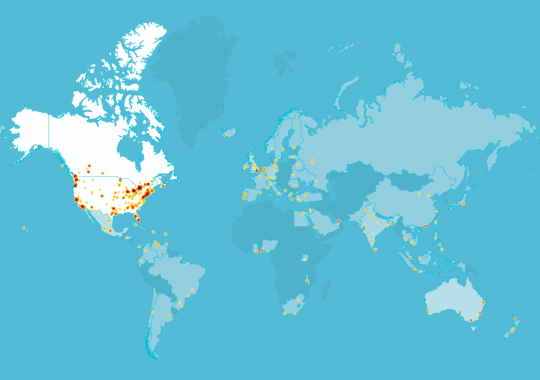
    map the location of each subscriber. I couldn’t resist giving it a try.

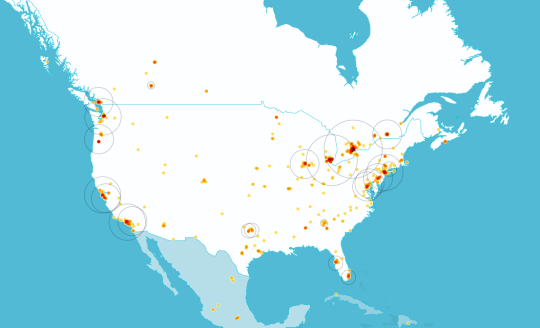
    Below is what that looks like. Not surprisingly, the highest
    concentrations of subscribers to this blog are in Canada and the US.

    image

    So here’s a zoomed in version:

    image

    I’ve been trying to branch out from talking about Toronto
    all the time. And that seems to be working somewhat. But I could still do a better
    job of creating more global content. I’ll try harder.

  • America really is building very few condominiums

    On my way back from Philadelphia
    this past weekend I wrote a post called, The
    Philadelphia (real estate) story
    . It was about how opposite the market is
    in Philly compared to Toronto.

    After writing that post and
    because of a discussion in the comment section, I started thinking about condo
    vs. rental apartment development across the US. Because unlike cities such as
    Toronto and Vancouver, it struck me that – outside of maybe New York and Miami
    – most U.S. cities are really not building a lot of for sale condos. And if
    you’re from Toronto or Vancouver, I bet that feels odd to you.

    But what exactly is that number?

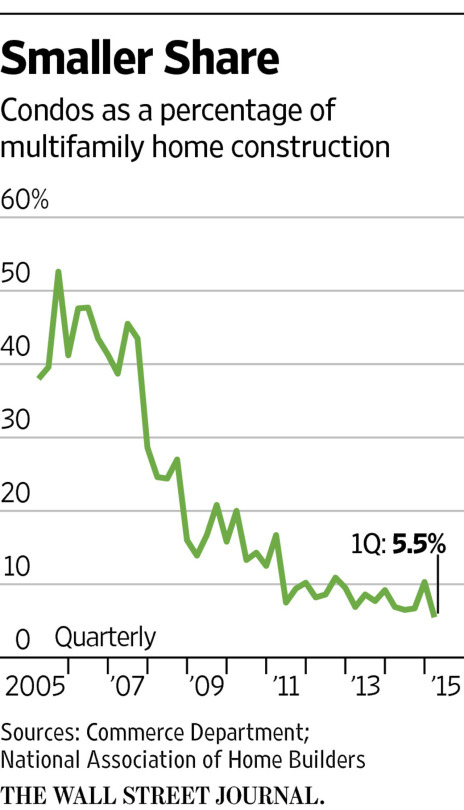
    As of the first quarter of 2015, condos as a percentage of all new
    multifamily (apartment) construction in the US was only 5.5%. That’s a tiny number and is down from
    over 50% before the Great Recession, which means most
    cities in the US really are building mostly rental. Last year the US built 264,000
    multifamily units across 11,000 buildings
    .

    So why is that happening?

    There appears to be a number of
    factors, according to a
    recent article in the Wall Street Journal
    .

    There’s a supply side
    constraint:

    Another obstacle cited by developers: construction loans. Matt
    Allen, chief
    operating officer of the Related Group, a developer based in Miami, said he can
    get a construction loan for roughly 75% of the cost of building an apartment
    complex. But lenders will cover only 50%, on average, of a condo complex’s cost
    because of the greater risk, he said.

    There’s a demand side
    constraint:

    As a result, the Federal Housing Administration, which
    backs mortgages made to low-wealth buyers, tightened its lending standards in a
    series of moves from 2008 to 2012. Under the new rules, in order for the FHA to
    insure mortgages in a given condo complex, at least half of the units must be
    owner-occupied and no more than half can be FHA-insured, among other
    requirements. For condo projects under development, at least 30% of units must
    be under contract for sale before the FHA will start backing mortgages there.
    Mortgage giants Fannie Mae and Freddie Mac tightened
    their standards as well.

    And there are macroeconomic
    factors:

    On the entry-level end, tepid job growth early in the
    recovery and the younger generation’s affinity for flexibility have fueled
    demand for rentals. Apartment rents are up nearly 16% since 2010, according to Reis Inc.

    Notwithstanding
    the above, could this be a post-recession policy pendulum that has swung
    too far in one direction?

  • Photos of the built environment

    image

    One of my absolute favorite things to do is travel to cities, explore, and take lots of pictures. When I’m in a new place, I can’t help but examine everything about the built environment. That’s the architect in me and it’ll never go away.

    When I was in undergrad I had a refurbished digital SLR camera that I used to use. But now I just use my iPhone. As the saying goes: the best camera is the one you have on you.

    Seeing how I was just in Philadelphia, I’ve been posting a lot of new city related photos to my Instagram. And since about 10x more people follow this blog than follow my Instagram, I’m going to plug it here: follow me on Instagram 🙂

  • The global pyramid of wealth

    Every year the London-based property consultancy Knight Frank publishes something called The Wealth Report. And it’s one of those reports that I could go through for hours. 

    It includes a ton of really fascinating stats that speak volumes about where in the world wealth is being created and how it’s moving around. And of course there are a lot of connections between wealth, real estate, and city building.

    Below are 3 diagrams that really stood out for me in the 2015 version. 

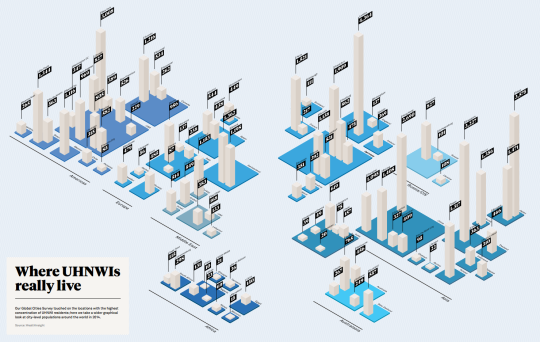
    The first diagram shows which cities have the most Ultra High Net Worth Individuals (UHNWIs). An UHNWI is defined as an individual with assets exceeding US$30 million, but excluding personal assets and property (such as one’s principal residence). Click here to see the full size image (I know the numbers are small).

    image

    Not surprisingly, London (4,364), Tokyo (3,575), Singapore (3,227), New York (3,008), and Hong Kong (2,690) are at the top of the list. But I was a little surprised – albeit happily surprised – to see Toronto (1,216) come in at #2 in North America, beating out Mexico City (1,116), Los Angeles (969), and Chicago (827). 

    The second diagram shows you how many square meters of luxury property (apartment) you can buy for US$1 million in a bunch of different cities around the world. 

    In Monaco (top end), that’ll buy you 17 square meters (183 square feet) and in Cape Town (bottom end), that’ll buy you 208 square meters (2,196 square feet).

    image

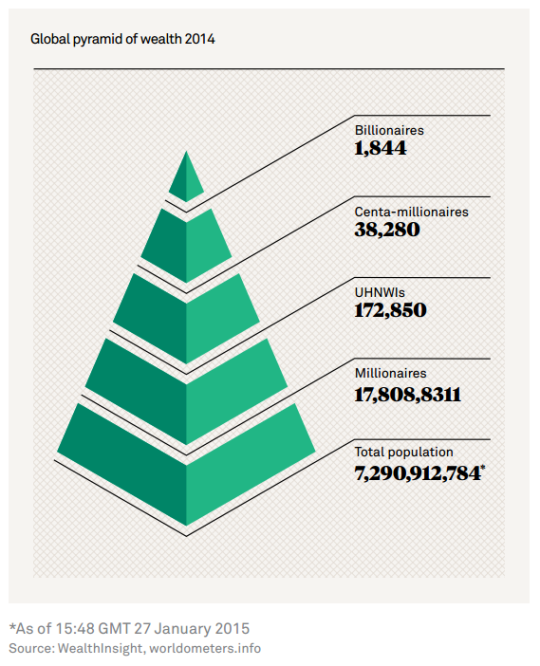
    The third and last diagram is what they call the global pyramid of wealth. It’s a pyramid of everyone in the world and then the number of millionaires, UHNWIs (see above), centa-millionaires, and billionaires. And if you do the math, the top of this pyramid comes nowhere close to 1% of the global population.

    image

    It’s fascinating (and exciting) to see where and how global wealth is concentrating. But it should also make you think about rising income inequality. I know it does for me.