Daily insights for city builders, delivered every morning at 6 AM ET. I’m Brandon Donnelly — a Toronto-based real estate developer and founder of Globizen. I’ve been writing here since 2013.

Tag: cities

  • Share your big idea for Canada’s #Capital2067

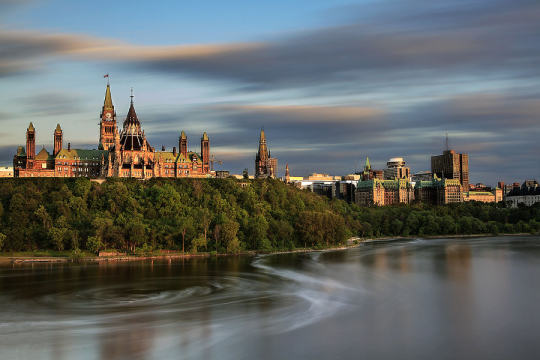
    Parliament Hill by Maryus Bio on 500px.com

    https://500px.com/embed.js

    On Thursday night I spoke at an Urbanism Lab event in Ottawa put on by the National Capital Commission.

    The event was all about the interconnection between the online world of blogging and social media, and the offline world of tangible city building.

    More specifically, one of the goals was to help inspire institutions, such as the National Capital Commission, to better leverage these new channels in order to get their message out.

    Social media and blogging may be ubiquitous, but lots of organizations are still getting their heads around it.

    So today I thought I would do my part and share something with all of you that, truthfully, I didn’t know was underway until I visited Ottawa.

    But first, how many of you (Canadians) are exactly aware of what the National Capital Commission does?

    The NCC is a federal Crown corporation that is focused on 3 specific mandates:

    1. They are the long-term urban planner of federal lands in Canada’s Capital Region. They are also the largest landowner in the region.
    2. They are the principal steward of nationally significant public spaces and buildings, including the Capital’s six “official residences.” Residences such as 24 Sussex Drive.
    3. And they are a “creative partner” on initiatives that tie into both development and conservation.

    To this end, the NCC is now working on a Plan for Canada’s Capital, 2017-2067. This is a 50-year plan that will outline what they do with federal lands, buildings, parks and other symbolic spaces in the Capital. And it will identity which projects would best craft and represent our national identity, as well as strengthen Canada’s influence in the world.

    This is all pretty important and interesting stuff. But unfortunately I didn’t know it was underway. And I also didn’t know what they were looking for “big ideas” from Canadians. These are ideas that will directly shape the 50-year plan.

    So if you have an idea – big or small – for the National Capital Commission, I would encourage you to click here and share it with them. Not only is this city building in the Capital, it’s also nation building.

    Please also feel free to copy and paste your idea(s) in the comment section of this post. These ideas definitely deserve a fulsome discussion. I will post mine once I write it.
  • Additional thoughts on land prices

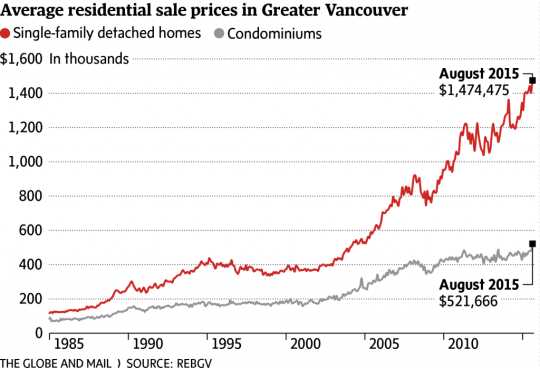
    Daniel Hertz over at City Observatory just published a post talking about why land costs are so important when it comes to home prices. More specifically though, his post is intended to refute a claim that multifamily housing is always going to be more expensive than single family housing.

    The key concept here – which is critical to understanding urban real estate economics – is that home values are essentially made up of two things: the land and the improvements (i.e. the building). 

    When home prices rapidly appreciate, as has been the case in cities like Vancouver (see below) and Toronto, it’s not the building, but the land that’s really driving the price up. 

    And as you can see from the chart below (which Daniel shared in his post), it is possible for multifamily housing to be less expensive than single family housing. 

    image

    So why was someone arguing that multifamily housing is more expensive?

    Well if you look at just construction costs, then this is generally true. Single family housing is typically wood frame construction, whereas multifamily housing is usually reinforced concrete or some other material that allows you to build up. In these latter cases, the price per square foot to build is going to be higher.

    But Daniel’s argument is that when you build multifamily housing, you also begin to amortize the cost of the land over more housing units. So you begin to use land more efficiently and that offsets the higher construction costs.

    However, two thoughts come to mind.

    First, the value of a piece of land is entirely dependent on what you can build on it. And the more you can build on it, the more the land is worth. So as densities increase, so do land prices.

    Second, a big part of why condominiums are so much more affordable is that they’re smaller. In 2014, the average condo size in Metro Vancouver was estimated to be 840 square feet. I couldn’t find the average size of a detached house in the city, but let’s assume for a second that it’s 2,500 sf. 

    If that were the case, then a detached house, despite being more expensive overall, would still be cheaper on a per square foot basis. You would be paying less for every square foot of livable space. True that doesn’t make the house more affordable, but I think it’s a bit unfair to compare apples (small condo) to oranges (large house).

    So what I would really like to see is a graph of all-in low-rise and high-rise per square foot prices over time and for various cities. Because I would be curious to see at what point – if ever – they intersect.

  • How should cities manage their own awesomeness?

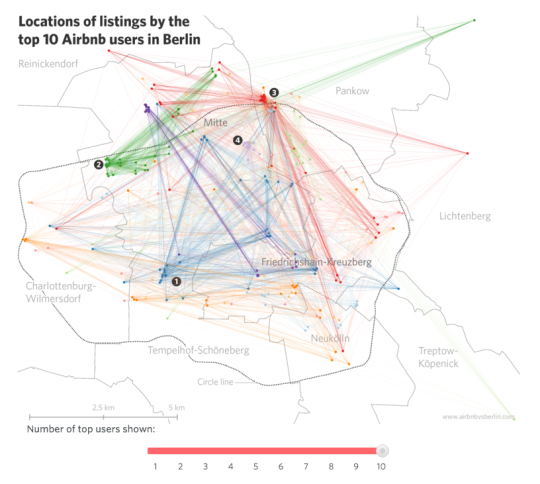
    Conor Maguire introduced me to an interesting site today called Airbnb vs. Berlin. The site does a deep dive into Berlin’s Airbnb market with the hope of answering the question: Is Airbnb contributing to a shortage in affordable housing?

    The site is very well done. It’s filled with lots of great market stats and diagrams such as this one here: 

    Of course, the impetus for a site like this is that cities all around the world, from San Francisco to Berlin, are grappling with rising home prices. If you happen to live in a successful, growing city, that’s probably what is happening.

    But when this happens, we seem to want to look for something or someone to blame. In San Francisco it’s the tech workers. They’re the ones driving up homes prices. In Vancouver, it’s the foreign Chinese buyers. And in Berlin, it’s those Airbnb users who are just out to make a profit. In all of these cases, we like to tell ourselves that if we could just get rid of “X”, everything would be much better. 

    But I think sometimes we forget that this is also the result of doing many things right.

    If Berlin wasn’t a brilliantly cool place to visit, then tourists wouldn’t come. And if tourists didn’t come, then Berlin wouldn’t have, by far, the largest Airbnb market in Germany. If Vancouver wasn’t one of the most enjoyable places in the world to live, you wouldn’t have the same attention from overseas buyers looking to snatch up properties. 

    So in a way, we should be asking ourselves: How do we, as a city, manage our own awesomeness?

    The other thing that Airbnb vs. Berlin reminded me of is the viewpoint that profits are some dirty little secret. I hear it all the time in the real estate development business. People will say: “That developer is just out to make money.” Of course she/he is! They operate a business. And like all for-profit businesses, one of the objectives – it may not be the only one – is to make money.

    I say all this not as a direct response to the website. They remained fairly neutral in their analysis. Instead, I raise it as an alternate viewpoint in the seemingly universal battle against “X.”

    In case you’re wondering about Berlin’s Airbnb market, the site estimates that there are roughly 11,701 Airbnb listings in the city out of a total of about 1.9 million flats. Of these listings, it is estimated that somewhere around 30% are by “professional users” who are only out to make a profit and are not participating in the “sharing economy” in its purest sense. That equates to about 0.18% of all Berlin flats.

    Based on this number, I’d say that Berlin’s cool factor probably has a lot more to do with the city’s rising rents than do the profit seeking Airbnb users.

  • Urbanism Online: #capital

    image

    For those
    of you from Ottawa, I’m going to be in town this Thursday evening talking
    at an event put on by the National Capital Commission called Urbanism
    Online
    . It’s all about how blogging, social media, and online discussions can
    and are contributing to the betterment of cities.

    The other
    bloggers include:

    – Marc-André Carignan, Montreal, Kollectif.net

    – Jillian Glover, Vancouver, This City Life

    – Robert Smythe, Ottawa, UrbSite

    The event is
    now full, but email them or tweet me if you’d really like to come
    and I’ll certainly ask about space availability. I’m sure it’s going to be a great discussion.

    I have a bit of a soft spot for Ottawa. I used to spend a lot of time there when I was working on an office building at 150 Elgin Street. (Key tenants include The Canada Council for the Arts, KPMG, and Shopify.)

    I haven’t been back since the building was completed, so I’m excited to see how it turned out.

    Update: The event will also be streamed on Periscope, here.

  • The search for perfection

    Two of my favorite things are snowboarding and cities. 

    So the 4K GoPro video below, called Japan Snow – The Search for Perfection, really does it for me. 

    The video is the journey of two GoPro athletes as they go from Tokyo to Hakuba (a village near Nagano, host of the 1998 Winter Olympics) to the northern island of Hokkaido in search of untracked powder. If you’re a snowboarder or skier, you’ll of course appreciate that journey.

    For you urbanists, the city shots are incredible. I also love how they describe Tokyo as a “sophisticated web of innovation and tradition.” I often describe Tokyo in a similar way, but I like their wording better.

    Make sure you full screen this video and turn on your sound. It’s about 14 minutes short. Enjoy.

    [youtube https://www.youtube.com/watch?v=tXpXHoDKL64?rel=0&w=560&h=315]

  • Urban infill case study: 1234 Howard Street in San Francisco

    Urban infill developments can be tough. The sites are often small and/or narrow and that creates a lot of design challenges. Access to light is a common problem.

    But constraints can also be beautiful, because they have a way of forcing creativity. 

    When I was in architecture school, I used to find it easier to work when I was given constraints and challenges. It gave me something to latch onto, as opposed to just starting with a blank canvas. A big part of design, at least for me, is about solving problems. So give me a problem to solve!

    One of the ways that architects and designers often deal with the access to light problem is by carving out lightwells or courtyards to bring light down into the building. This can be used when you have a deep site or when you’re building right up against the property line and you can’t have any windows.

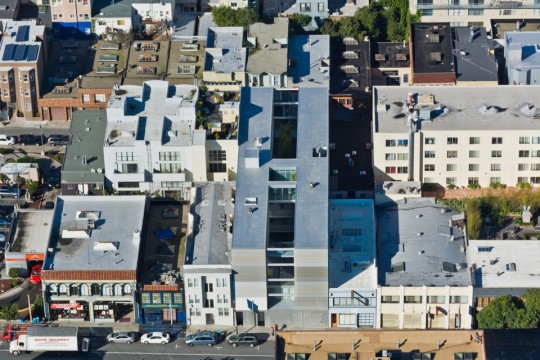
    One project that I’ve always liked for this reason – as well as the fact that it’s beautifully designed – is 1234 Howard Street in San Francisco. It looks like this from above:

    image

    The site is 50′ x 165′ and it spans an entire block. 

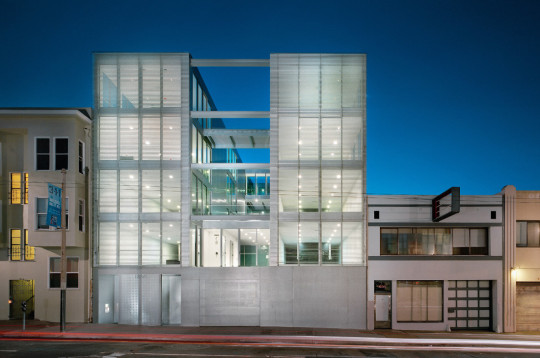
    In order to get lots of light into all of the units, the architects (Stanley Saitowitz | Natoma Architects) split the site up into 3 “bars”, each of which would be somewhere around 16′ x 165′. The middle “bar” was then dedicated to a courtyard that cuts through the entire building.

    image

    The two flanking bars were then further subdivided into 2 units per bar, which translates into 4 units per floor x 4 floors. The ground floor is just common areas and parking.

    The advantage of this design strategy is that the apartments now have windows running the length of the courtyard, where as typically on narrow deep lots you would end up with “bowling alley” units and windows just on one end.

    The disadvantage of this design strategy is that you’re now just over 16′ away from seeing what your neighbor is eating for dinner, among other things. 

    But with the right window coverings, I’m sure we’d all survive in these apartments with their Bulthaup kitchens and Miele appliances.

    image

    I love seeing creative solutions to tight urban sites. And one of the things that I worry about, with things like the Mid-Rise Performance Standards here in Toronto, is that we’re reducing or even eliminating the possibility for these kinds of creative solutions.

    I recognize that 1234 Howard is not the same as an avenue mid-rise site in Toronto with low-rise residential behind it. But the thought still crossed my mind as I was writing this piece.

    All photos via Stanley Saitowitz | Natoma Architects Inc.

  • Education and economic prosperity

    One of the things that I would like to do a bit more of in 2016 is coding. I used to a bit of it in high school and university, and I’ve taken some online classes since then, but I really feel like I should know more. I like making things and tech is clearly an important part of the world today.

    I mention this because I have signed myself up for an intro to web development class this evening at Brainstation. My plan is to do a few introductory web and mobile development courses and then figure out where and what I want to dive into further. I don’t plan on being a software developer – I’m happy being a developer of the real estate varietal – but I want to improve my literacy.

    I also mention this because I think it’s important to be reminded just how critical education is to urban economic success. Here’s an excerpt from Ed Glaeser’s book, Triumph of the City:

    “Human capital, far more than physical infrastructure, explains which cities succeed. Typically in the United States, the share of the population with a college degree is used to estimate the skill level of a place … Despite its coarseness, no other measure does better in explaining recent urban prosperity. A 10 percent increase in the percentage of an area’s adult population with a BA in 1980 predicts 6 percent more income growth between 1980 and 2000.”

    And if you plot education (people with four-year degrees) vs. per capita income levels for the major US metropolitan areas, which City Observatory did, you’ll see that nothing matters more. Here’s how City Observatory described it:

    “This chart is the first, most important thing to remember about urban economic development in the 21st century: if you want high incomes, you need to have a high level of skills. Cities with poorly educated populations will find it difficult to raise living standards in a world where productivity and pay depend increasingly on knowledge.”

    This, of course, isn’t new information. I’m sure I’ve written about it before. But it doesn’t hurt to be reminded.

  • The year of the laneway

    Earlier this week, Metro News published an article saying that it’s going to be a big year for laneways in Toronto:

    “2016 is going to be the year where the evolution of our laneways lands at the forefront of our public realm strategy,” said Downtown Yonge BIA chair Mark Garner, who’s heading up the revitalization of O’Keefe Lane near Ryerson University.

    In addition to the Downtown Yonge BIA, much of this is being spearheaded by the non-profit group, The Laneway Project. This year they are expected to unveil plans for the revitalization of 3 laneways in the city – one of which is right in my backyard.

    I have a lot of respect for what The Laneway Project, the Downtown Yonge BIA, and others are doing in support of rethinking our laneways. And so today I just wanted to publicly thank them for their efforts. Thank you 🙂

  • Should you buy a car or just take Uber?

    Urban dawn by Raymond  on 500px.com

    https://500px.com/embed.js

    My friend Evgeny published a great blog post today called, On Car Ownership And The Future Of Transportation

    And in it he made the argument that instead of buying a car and an expensive downtown Toronto parking spot (average price: $40,000 – 60,000), most of us urbanites would be better of just taking a taxi or Uber.

    This got me thinking: At what point does it really make sense to completely forgo owning a car? (Full disclosure: I own both a car and a downtown parking spot.) So I decided to dig into the numbers a bit more and compare 4 mobility options:

    • Owning a car ($25,000 upfront) + downtown parking spot ($40,000 upfront) and driving yourself everywhere
    • Taking a regular taxi exclusively ($3.25 base + $1.75 per km)
    • Taking an UberX exclusively ($2.50 base + $1 per km)
    • Or, taking a futuristic driverless car everywhere (here I assumed $1.50 base + $0.25 per km)

    With the above numbers, I then assumed 15,000 km traveled per year and an average trip length of 15 km (so 1,000 trips per year). The trip length and number of trips per year matter because of the “base fare” that is charged when you take a taxi or Uber.

    I also assumed that the cost of owning a car is $0.60 per km (estimated from this Globe and Mail article) and that there is an opportunity cost to NOT renting out your downtown parking spot ($200/month). That is, every month that you spend driving yourself around and parking your car, you are forfeiting parking revenue.

    Finally, I looked at a 10 year time horizon and then “discounted” all the costs back to today’s dollars so that I could compare each mobility option.

    So what did I find?

    image

    What this says is that if you’re driving 15,000 km per year (average trip length 15km), then you’re better off taking UberX everywhere, as opposed to going out, buying a car and parking spot, and driving yourself around.

    But does this hold true at different travel distances?

    Based on my model, once you hit around 18,000 km per year, then you’re better of with option 1 (owning a car). That’s because the per km savings associated with driving yourself around are enough to offset the upfront costs of the car and parking spot.

    On the flip side, when you drop below 7,500 km traveled per year, even a regular taxi starts to make sense. That’s because you’re simply not traveling enough to reap the benefits of owning a car/parking spot. Again, high upfront costs; lower per km operating costs.

    Of course, there are a number of things I didn’t consider in my model. For one, most people finance their car and parking spot (it is bundled into their home mortgage). So I’m sure there are ways that you could change the above outcomes using leverage.

    At the same time, I didn’t account for the fact that when you’re being driven around (as opposed to driving around) you have the flexibility of doing work, responding to emails, and so on. If you want to attach a value to your time, then the scale would tip back in favor of taxis and Uber.

    But all of this was really just to make one point: look how cheap it could be to ride around in a driverless car. When that becomes the reality in our cities, which it will, it’s going to completely transform our current beliefs around cars, parking, and many other things.

    I guess that’s why General Motors just invested $500 million in the peer-to-peer ridesharing company, Lyft. They know the shit is coming.

  • Art is the new steel — a photo essay of Hamilton, Ontario

    Today, myself and a few others spent the afternoon urban exploring Hamilton, Ontario with Thomas Allen of the blog, Rebuild Hamilton. If you don’t read his blog, you should. Since he started writing about 3 years ago, he has really emerged as the online voice of Hamilton’s urban resurgence.

    If you’re from Toronto, you’ve probably been hearing rumblings about good things happening west of the city. Rumblings about people leaving overpriced Toronto for greener and more affordable pastures in Hamilton, and even that it was destined to become the Brooklyn of Toronto. That basically means Millennials, trendy coffee shops, and beards. (For the record, Thomas’s beard is very nice.)

    With all this talk of affordable housing and beards, I decided that it was time to make a pilgrimage. Below is a short photo essay of what we saw.

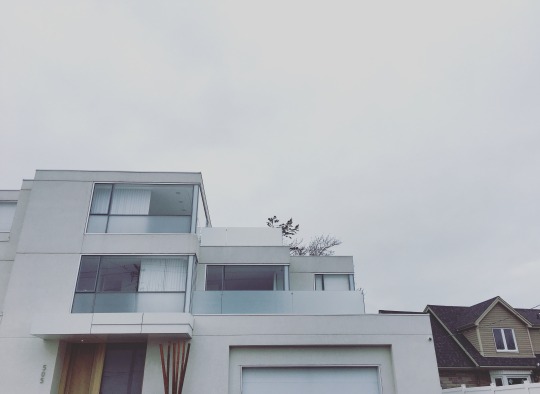
    We started the day east of Hamilton where we found this beauty along the waterfront. I don’t know who designed it, but it’s called the Cube House and it was construction managed by Toms + McNally Design. You’re going to want to click through to their website to see the interior photos. 

    image

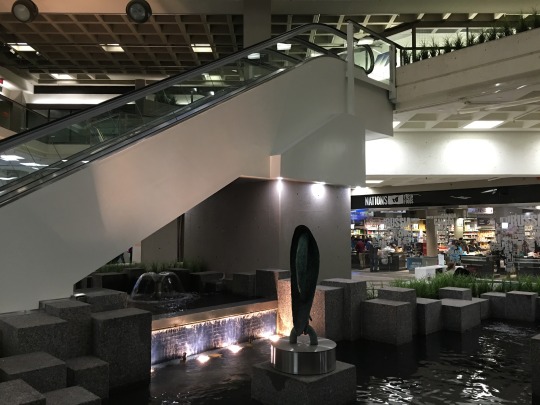
    We then made our way downtown to Jackson Square. Jackson Square is one of two downtown malls (the other is the post-modern City Centre Mall). It has seen a lot of investment in recent years and I was impressed to find a thriving grocery store. 

    image

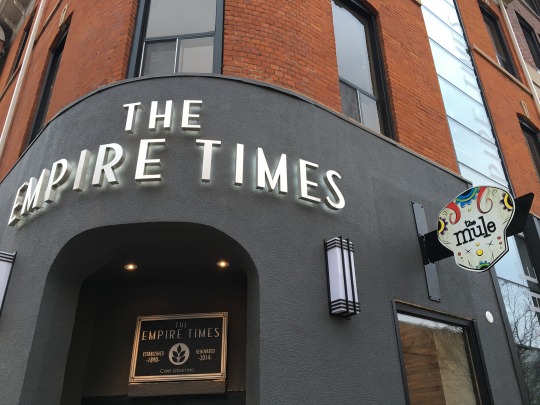
    Then came a taco and craft beer pit stop at The Mule. I would definitely recommend this spot if you happen to find yourself in the area.

    imageimage

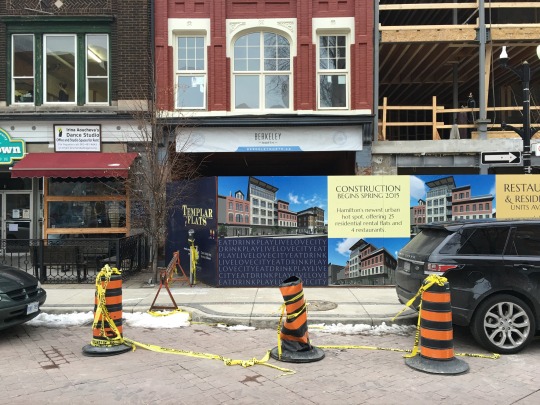
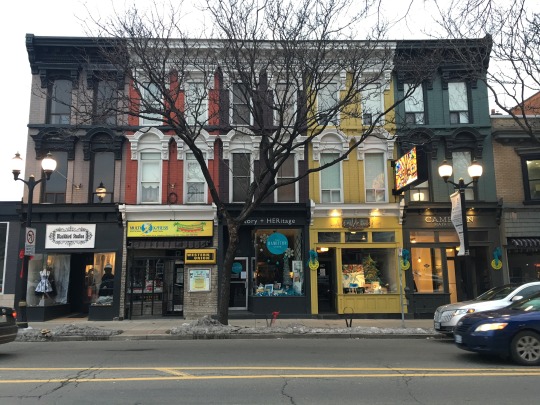
    Following this, we walked James Street North, which we were told has only really come up in the past 5 years or so. And alongside with this resurgence has come the slogan: Art is the new steel. This, of course, is responding to the fact that Hamilton is the steel capital of Canada, but that the industry is facing many challenges. I think it’s a neat slogan.

    imageimage

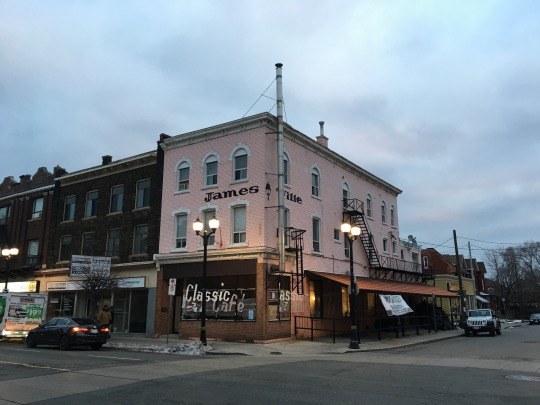
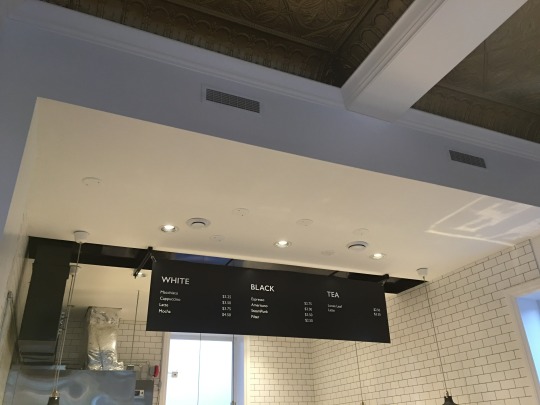
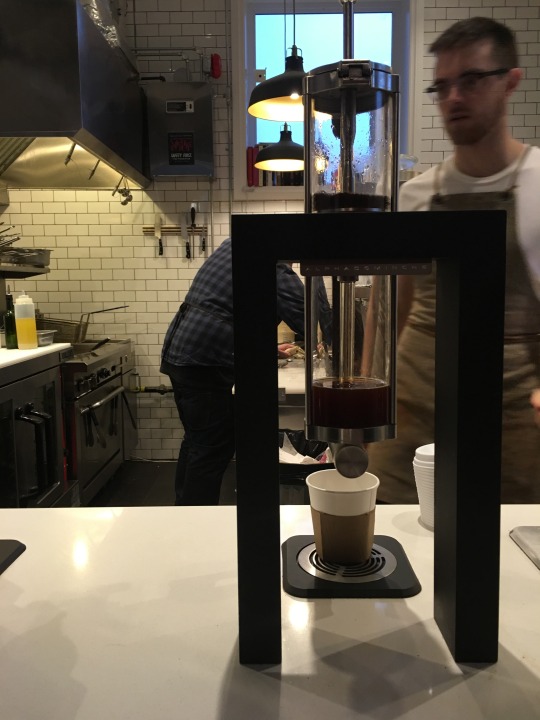
    On James Street we stopped in at Saint James Espresso Bar & Eatery, and it was everything we had hoped for and more. It was more because not only was it a cool space with great coffee, but they had some fancy thing called steam punk coffee.

    imageimage

    After James Street, we then drove around checking out some of the other areas in the city such as Kirkendall and neighboring Dundas.

    All in all, this afternoon was a great reminder that we are truly living in an urban century. It’s not just the Toronto’s, Berlin’s and Shanghai’s of the of the world that are laying down bike lanes, investing in art and culture, and generally reimagining their city centers. It’s also happening in smaller and mid-sized cities such as Hamilton. And that’s really exciting.