Daily insights for city builders, delivered every morning at 6 AM ET. I’m Brandon Donnelly — a Toronto-based real estate developer and founder of Globizen. I’ve been writing here since 2013.

Tag: cars

  • Red streetcar tracks

    A few months ago when I wrote about “Toronto’s great streets” I mentioned that Queens Quay West – while magnificent – has had its share of issues. Cyclists and pedestrians often find themselves battling for space. And drivers are consistently driving in the wrong places.

    Part of the problem, I think, is that the turning radii (among other things) are a bit atypical and unusual compared to the rest of the city. And so if you’re at all in mental autopilot, it can be fairly easy to make a wrong turn. You really have to be paying attention.

    Below is a screenshot from Google Street View showing the foot of Lower Spadina, looking east on Queens Quay West. If you’re making a left turn from the former onto the latter, you need to end up on the left (north) of the streetcar tracks (even though the tracks themselves might be directing you elsewhere).
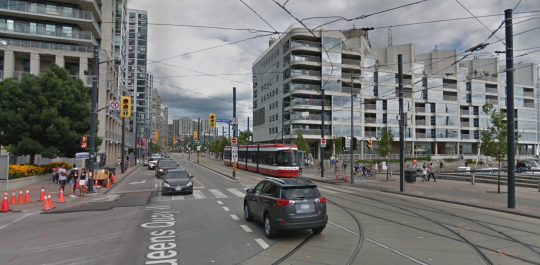
    There’s lots of signage telling you not to drive onto the tracks, but that hasn’t really been working. So the tracks were recently painted in bright red. You can see what that looks like here. Some people are still getting mixed up, but it’s certainly more noticeable.

    What I am wondering today is whether all of this signage and paint should be considered a symptom of poor design. In other words: Should good design require few instructions? Or, is this simply a normal part of iterative city building?

    What do you think?
  • Is Tesla the new iPhone?

    image

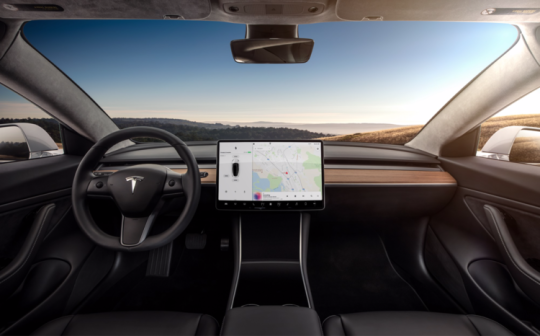
    Benedict Evans just published a great post on his blog about “Tesla, software and disruption.” I recommend a full read. In it, he tries to answer whether Tesla is really “the new iPhone” and if it will be as disruptive to the car landscape as some/many people think.

    In his line of thinking, electric (as opposed to an ICE vehicle) feels a lot more like a sustaining innovation, rather than a disruptive innovation. In other words, it something that incumbents will be able to incorporate. So it will not change the “basis of competition.”

    The more critical aspect is instead autonomy. Here are two snippets from the piece:

    All of this takes us to autonomy. Electric is compelling but will probably be a commodity, whereas Tesla’s improvements on top of electric may not be commodities but are not necessarily decisive. Autonomy changes the world in profound ways (I wrote about this here), and it’s a fundamentally new technology that doesn’t look at all like a commodity. And Tesla is doing this, too. Sort of.

    In this competition, Tesla’s thesis is that the data it can collect from its cars will give it a crucial advantage. The only reason that anyone is interested in autonomy today is that the emergence of machine learning (ML) in the last 5 years probably gives us a way to make it work. Machine learning, in turn, is about extracting patterns from large amounts of data, and then matching things against those patterns. So how much data do you have?

    But even if we are to all agree that autonomy is the “disruptive innovation”, it is not yet clear who will get there first. Maybe it is Tesla. Maybe it is Waymo. Regardless, many or most people seem to agree that it will arrive in 202x.

    Image: Tesla

  • A picture of dynamic road pricing

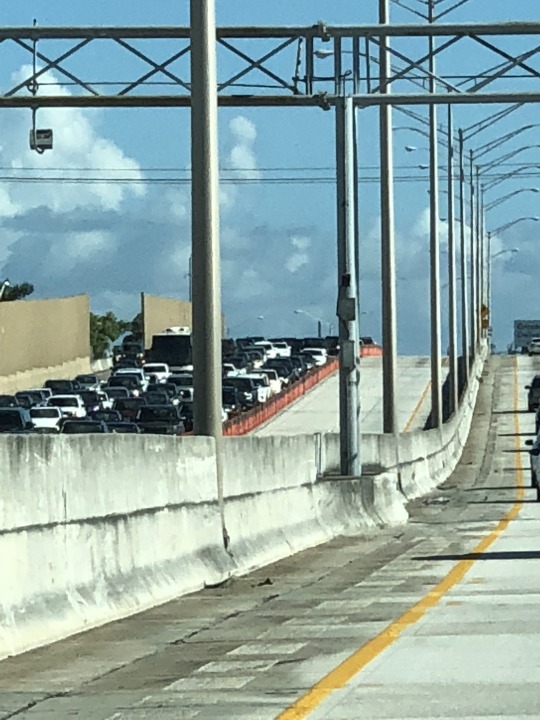
    Below is a photo of Interstate 95 near Miami, which, for the record, I myself did not take while driving.

    image

    The two empty lanes that you see are the “Express Lanes.” The price for using these lanes varies based on demand.

    During periods of low demand, the toll could be around $0.20 per mile. 

    During periods of high demand, such as during rush hour, it might be $1 per mile. 

    And during unusually heavy periods, like when there’s an accident, it could be more.

    We used these lanes while driving around the Miami area on this trip. The pricing always seemed reasonable and the lanes were never congested.

    I think the above picture is a good demonstration of how dynamic road pricing can be used alleviate traffic congestion.

    That’s why many cities, such as Portland, are exploring it as a solution. I wish Toronto would do the same.

  • Current state of autonomous vehicles

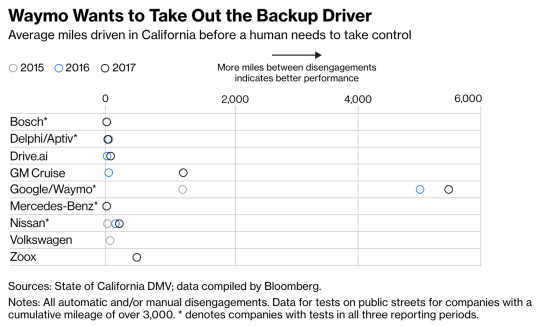
    This is an interesting piece by Bloomberg summarizing the current state of autonomous vehicles and in particular the (supposed) dominance of Waymo (Alphabet’s self-driving vehicle arm). Many believe they will be the first real entrant into the market.

    The company is currently running an “Early Rider” program in 25 cities. But its Phoenix trials are the furthest along, which isn’t at all surprising given the city’s car orientation and suburban fabric. Already Waymo has started offering passenger rides without a backup driver in the car.

    Overall, the company has come forward with four main business priorities:

    • Ride hailing
    • Trucking
    • Personal vehicles
    • Public transit

    But I still think that we’ll see a blurring of these priorities, if not outright cannibalization, as the cost per mile plummets. I mean, why own a personal vehicle if it is flat out easier and cheaper to just hail a robotaxi? 

    Here is an excerpt from the article talking about pricing:

    Tasha Keeney, an analyst at ARK Invest, says that Waymo could choose to offer an autonomous ride-hailing service today at around 70 cents a mile—a quarter of the cost for Uber passengers in San Francisco. Over time, she says, robotaxis should get even cheaper—down to 35 cents a mile by 2020, especially if Waymo’s technology proves sturdy enough to need few human safety monitors overseeing the autonomous vehicles remotely. “You could see software-like margins,” Keeney says.

    I can’t wait to be driven around for cents on the dollar. Click here to read the full article.

  • The most expensive parking spot in the world

    I saw in the news recently that Hong Kong just set a new world record for the most expensive parking spot. I think it also held the previous record.

    Last month somebody paid HKD 6 million for a single stall in the Ultima apartment complex in Kowloon. That’s about USD 765,000 or CAD 1 million based on today’s rates. And the spot is 16.4 feet x 8.2 feet, so that works out to about CAD 7,436 per square foot. 

    What is clear is that supply is not keeping up with demand. Here is the stat from a recent Toronto Star article:

    The number of parking spaces grew just 9.5 per cent to 743,000 from 2006 through 2016 [in Hong Kong], while the private car population surged 49 per cent to 536,025, according to a report by the city’s Transport Department.

    There are a number market forces which are undoubtedly bringing down the ratio of parking stalls to housing units. That same phenomenon is also pretty clear here in Toronto. But it is interesting to note the continued growth in private cars.

  • Traffic signal inequality

    image

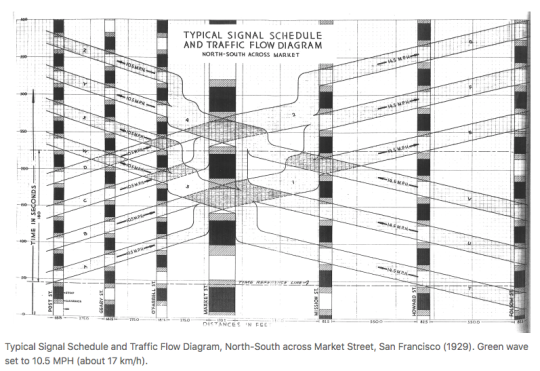
    David Levinson, who is based Sydney and authors the Transportist – a blog you should follow if you don’t – has a recent post up about signalling inequity and “how traffic signals distribute time to favour the car and delay the pedestrian.” In it he provides some background into traffic signal coordination (introduced in New York City in 1922), as well some some suggestions for how we could and should be prioritizing pedestrians.

    Here is an excerpt from the article:

    There is a reason that traffic engineers don’t automatically allocate pedestrian phases. Suppose the car only warrants a six second phase but a pedestrian requires 18 seconds to cross the street at a 1 meter/second walking speed. Giving an automatic pedestrian phase will delay cars, even if the pedestrian is not there. And there is no sin worse than delaying a car.  But it also guarantees a pedestrian who arrives just after the window to push the actuator passes will wait a full cycle.

    Sometimes pressing the walk button appears to do nothing. I suppose that’s why some cities call it the “placebo button.” And in other cases if you don’t press the walk button you’ll never get a walk sign. That’s usually a strong indicator that you are located in an environment not intended for pedestrians. David’s article also has me curious about the relationship between traffic signals/pedestrian phases and urban form. I bet you could tell a lot about the latter simply by understanding the former.

    Image: Transportist

  • Electric vehicles are mostly leased

    At the beginning of this year, Bloomberg published this article talking about how the vast majority of electric car drivers lease, rather than own, their cars. The stats are as follows: In the US, about 80% of electric battery vehicles and about 55% of plug-in hybrids are leased, whereas only about 30% of all vehicles in the country are leased. 

    It is, however, important to note that the above doesn’t include any data points from Tesla. Since they sell their cars direct to customers, as opposed to through dealers, they have no obligation to publicly release this data. And so apparently they don’t.

    Conventional wisdom suggests that if you plan to drive the same car for an extended period of time – the average age of a car on the road in the US is over 11 years – it makes financial sense to buy. But in this case, people seem to be worried about technological obsolescence and the weak resale market for electric vehicles. This may also speak to the type of customers who are currently buying electric vehicles; they are early adopters and don’t want old cars.

    I’ve also seen someone argue that because some states require a percentage of car sales to be zero electric vehicles, it can be more cost effective for manufacturers to sell/lease them at a loss than pay the penalties or buy the ZEV credits. And with a lease, they at least get parts back at the end of the term. But I honestly don’t know much of a factor this plays.

    I hadn’t thought of this before I stumbled across the Bloomberg article, but it all makes sense to me. I find this reversal in ownership interesting because it tells me that how we consume cars can very easily change, and probably will moving forward.

  • Autonomy, sometimes

    Benedict Evans raises a number of good points and asks a bunch of good questions about the “steps to autonomy” in his recent blog post.

    Right now we’re all talking about autonomous vehicles in terms of their level of autonomy – namely 1 through 5. L1 is some degree of autonomy, but in almost all situations, you still need a human driver. L5 is no human driver needed, ever.

    But as Evans points out, the level of autonomy depends on the place, and it is unlikely – at least initially – that L4 or L5 will mean L4 or L5 in all environments. Here is an excerpt from his post:

    It naturally follows that we will have vehicles that will reliably reach a given level of autonomous capability in some (‘easy’) places before they can do it everywhere. These will have huge safety and economic benefits, so we’ll deploy them – we won’t wait and do nothing at all until we have a perfect L5 car that can drive itself around anywhere from Kathmandu to South Boston. And so, if we call a car even L4, we have to say, well, where are we talking about? We might mean ‘most of this country’. But more probably, it will be L4 in one neighborhood, L3 in another and only L2 in a third – and a car might encounter all three of those on one journey. Put your route into the map and it will tell you if today is an L5 day or not.

    Thinking about the Gartner Hype Cycle, there’s often (always?) a “peak of inflated expectations”, as well as a chasm that new technologies need to cross as they are being adopted.

    Benedict’s article reminded me that we’re probably coming off that peak with autonomous vehicles and about to enter the so-called “trough of disillusionment.” 

    Autonomous vehicles represent a monumental shift in mobility, which will in turn impact our cities. That’s going to seem like an insurmountable challenge – until it doesn’t.

  • Great things that happened on transit

    Elon Musk’s apparent distaste for public transit and random strangers prompted a Twitter battle last week. Though for the record, Musk later clarified that he loves trains, most subways and London buses.

    Transit planner Jarrett Walker retorted that Elon’s views are the “essence of elite projection”. What’s good for Elon Musk may not, in fact, be good for the broader society. Elon responded by calling him an idiot.

    All of this prompted Brent Toderian – city planner and former chief planner of Vancouver – to initiate the hashtag: #GreatThingsThatHappenedOnTransit. It then took off and the transit stories started pouring in.

    Not surprisingly, this has been getting a lot of attention. It’s Elon Musk after all. But billionaire celebrities aside, it does serve as a good example of the two sides of this debate.

    Some people seem to think that I am anti-car. I can see why some people might think that, but I am not anti-car. I love nice cars. And I love nice trains. What I value first and foremost is the city. 

    The kind of city you can build on the backbone of transit is very different than the kind of city that gets built around the car. And as a rule of thumb, I prefer the former over the latter.

    But this is not to say that the public transit model is perfect. It’s far from perfect for many reasons. And it can get even more imperfect when we don’t pair it with the right land use policies.

    Deploying heavy rail through low density areas – that are by design inhospitable to car-less humans – will not magically flip the modal split. Public transport alone cannot solve that problem.

    At the same time, if you’re a regular reader of this blog you’ll know that I am enamoured by the possibilities of autonomous electric vehicles. I am not assuming that the “car” of tomorrow will look and perform anything like the car of today.

    Mobility is such an exciting space right now.

  • End of the automotive era

    Bob Lutz is a former vice chairman and head of product development at General Motors. Recently, he had this to say about the future of the auto industry. 

    Here are a couple of powerful snippets:

    It saddens me to say it, but we are approaching the end of the automotive era.

    The auto industry is on an accelerating change curve. For hundreds of years, the horse was the prime mover of humans and for the past 120 years it has been the automobile.

    Now we are approaching the end of the line for the automobile because travel will be in standardized modules.

    Everyone will have five years to get their car off the road or sell it for scrap or trade it on a module.

    Bob is 85 years old. This is somebody who spent his entire life in the auto industry telling us that the old model is now done. 

    It reinforces something that I wrote about here, where the “end of the automotive era” was pegged at around 2021. 

    And it is part of the mental model that I have started relying on today for decision making.

    Photo by Alessio Lin on Unsplash