Daily insights for city builders, delivered every morning at 6 AM ET. I’m Brandon Donnelly — a Toronto-based real estate developer and founder of Globizen. I’ve been writing here since 2013.

Tag: careers

  • 3 ways to get into real estate development

    The most popular post on this blog is this one here called, “What real estate developers do and why I became one.” This post alone has been responsible for a good chunk of the organic traffic that this site receives since I wrote it back in 2014. If you search for “real estate developer” in Google it usually comes up on the first page.

    Probably because of this post, the number one question I receive in my inbox is about how to become a developer or how to transition into development from some other discipline. Usually this comes from someone who is early on in their career and/or is in architecture (which is not surprising given my background as a fake architect).

    I have tried to respond to this question publicly and at scale with a number of different posts. But many of you probably haven’t seen them before, and so I figured it would be a good idea to summarize some of them here (they’re usually tagged with “developer dirt“):

    If you’re looking for a more succinct summary of what to do, here is what I would suggest to you. You basically have three options.

    1) You can convince someone to take a chance and hire you, even though you likely don’t have any development experience. Maybe you have a background in something relevant such as real estate law, architecture, or politics (good). Or maybe you don’t (less good). Either way, the best way to position yourself is to understand what it is that developers do and figure out a way to create value for them from day one. You want to be in a position to say, “Yeah, I know I don’t have any direct development experience, but I can do X, Y, and Z for you starting today and I think that would be helpful to you for the following reasons.”

    2) Get a relevant degree. I’m thinking an MBA in real estate or some sort of master’s in real estate development. The reality is that the development business has, in many ways, become more institutionalized. It has gone, though obviously not entirely, from rich private families developing with their own balance sheets to more institutional capital sources, such as pension funds. Because of this, there are going to be hiring managers out there who need to check off certain boxes. For example, does this person have a real estate degree? This may make it harder for someone to take a chance on you if you don’t have the right experience and/or credentials.

    3) Just go out and do it. Despite becoming more institutional, the development business remains, in my view, a deeply entrepreneurial endeavor. You have to be able to problem solve and you have to be creative. The best developers I know don’t focus on can’t, they focus on how. Because there are too many obstacles in this business. A can’t mentality wouldn’t get you very far. So consider renovating a triplex, building a laneway suite, or doing something else that allows you to take a piece of real estate and create some additional value. Because that’s all that development really is at the end of the day.

    If you found this post useful, please consider sharing it with someone that you think would benefit from it. And if there are other topics that you would like me to cover (or cover in more detail), please feel free to leave a comment below or to at me on Twitter. I prefer Twitter over email because it forces brevity. Happy Canadian Thanksgiving, all.

    Photo by Bernard Hermant on Unsplash

  • I’m writing a book on becoming a real estate developer

    typerwriter closeup by Sean Gladwell on 500px.com

    https://500px.com/embed.js

    One of the most common questions I get from readers of this blog is: How do I become / get into real estate development?

    In fact, I get it so often that I’ve decided to write a book as my response. It may be a short one or it may end up a long one. If you’ve emailed or messaged me with this question and I haven’t responded, I’m sorry. There’s a lot of you out there. But I do want to help and that’s why I’ve decided to take on this hobby book project.

    As part of the book, I’ll be talking about my own journey, as well as the actual nuts and bolts of development. But I would also like to feature some much more established players in the business. In order to do that, I’ve decided to crowdsource some of the content for this book. 

    So here’s my ask to you: If you’re a real estate developer and would like to share your story, please complete this short questionnaire. You can be located anywhere in the world.

    My plan is to select a handful of developers from around the world and then feature their stories, one-by-one. I’m confident that there will be a lot of interest in hearing how successful developers established their careers and/or own businesses.

    I’ve been thinking about doing this for quite awhile now. It feels good to get started. 

  • City building jobs

    I get a lot of emails from readers of this blog. I try my best to answer every single one of them, but sometimes I fall behind and fail spectacularly at that. (The snooze feature in Mailbox and Google Inbox is one of the best inventions ever.)

    One of the most common emails I receive is about careers. Sometimes it’s someone looking for a new job or for advice on how to break into the industry (usually real estate development). And sometimes it’s an employer (or recruiter) with a role they need filled. 

    It’s hard to match up supply and demand when they arrive in my inbox on an ad hoc basis like this, but I have been thinking about ways I might be able to help these people out.

    So today I thought I would try something new. If you have a relevant job listing that you’d like me to distribute to the ATC community (something in architecture, planning, real estate, tech, and so on), email it to me at b@brandondonnelly. 

    If I get enough high quality listings, I’ll send them out in my newsletter. And if everyone finds it valuable, I may make it a regular feature.

  • What you should study to become a real estate developer

    One of the most common questions I receive from readers is about what to study in school in order to become a real estate developer. Here’s one of those questions:

    “Thank you so much for your insight into the real estate development process! I was wondering if you could do a post on what educational degrees you think would best prepare someone for a career in real estate development?”

    I’m not surprised that a lot of aspiring real estate developers have this question on their mind. Compared to many other career options, the path to real estate development has traditionally been pretty informal. It’s much less structured compared to other professions such as law or medicine.

    But as the real estate industry continues to institutionalize (transition from rich families to institutions), I’m sure we’ll see recruitment become more structured as well.

    Already the MBA and Master in Real Estate Development (or some other permutation of that degree) have become — for many large real estate organizations — the prerequisite to getting in the door. So if you’re looking for a simple and safe answer, just get one of these degrees.

    To more fully answer this question though, I thought I would just share my own strategy for getting into real estate development. Because at the end of the day, there’s no one way to become a developer. Lots of people start out in other industries, only to fall into real estate later on.

    The way I started was by first identifying the skills that I thought I would need as a real estate developer and that I felt employers would be looking for. And I assembled this list by going on lots of informational coffee meetings with developers to make sure I was headed in the right direction with my assumptions. 

    In the end, this is more or less what I decided I needed to know:

    Planning: An understanding of local planning policies, zoning, and so on. For this one, it’ll help if you can pick a particular place and commit to learning it (which is what I did with Toronto). There are a lot of local particularities that you’ll need to grasp. Real estate is very much a local business.

    Finance & Economics: The ability to understand markets, build models, and crunch numbers just like a banker. That was my goal before I got an MBA. This includes discounted cash flow analyses, net present value calculations, internal rates of return, and so on.

    Sales & Leasing: There are a lot of people who think that this is the best way to start in real estate (particularly on the commercial side). Learn the nitty gritty of leases and deal negotiations and then figure out where you want to be in real estate. Because at the end of the day, development projects are only viable when you have sales and/or signed leases in place.

    Design & Construction: This was the easy one for me because I was coming from an architecture background. I could “read plans” and I didn’t need to convince people that I understood how buildings worked and how they were built. Instead, I needed to convince people that I had all the other skills.

    And I knew this because that was the feedback I received my informational coffee meetings while I was in architecture school. One CEO (of a large publicly traded REIT in the US) told me flat out: “I need to feel comfortable that you can negotiate and that you won’t fuck up the numbers.”

    And that stuck with me. I realized that I had an image to shed.

    To round out my skill set, I decided to specialize in real estate in my first masters and then get an MBA. And given the chance, I would do it the same all over again. But even if you don’t have the opportunity or inclination to do that, there are a lot of other things you can do to shore up your knowledge base.

    I took a number of ARGUS and Excel classes to learn how to build robust real estate models. You might be surprised at how much you end up learning about the real estate business by doing that. I also became involved in organizations like the Urban Land Institute and started going to every real estate panel I could find. And before committing to doing an MBA, I even thought about taking some accounting classes at a local College.

    So my point is that I think you should identify the skills and strengths that you have today and then figure out some way to acquire the missing ones. Go buy a real estate textbook. Take an online class. Go to industry events. Do whatever it takes to round out your skill set so that you can sit in front a prospective employer (developer) and tell them that you’re able to create value for them and their organization across every facet of the development process. That was my goal when I was trying to get in.

    Of course, those aren’t your only options. 

    You could also just work your way up by taking any job with a real estate developer. One of my closest friends did exactly that and today is doing incredibly well with no formal training in real estate or even a related field. You could also just go out and buy your first property and have a go at it. Many great fortunes have been created by doing exactly that.

    Either way, real estate development is an exciting business to be in. It can often be hard to get your foot in the door given the size of most development teams, but if it’s truly what you want to do and you work on acquiring the skills, I think you’ll eventually find your path.

  • What are your disciplines?

    Photograph sunset drag by Philippe Clairo on 500px

    sunset drag by Philippe Clairo on 500px

    I’m sitting in Calgary International Airport right now waiting for my flight back to Toronto. This marks the end of the 6th Penn Annual (our annual ski and snowboard trip). We all had an amazing time and I can’t wait until next year’s annual. We’ve already (pretty much) decided that it’s going to be in Park City, Utah.

    As you can probably tell, I like traditions and routines. As boring as that might sound, I think there’s a lot of value in doing the same thing over and over again. 

    It’s why I do an annual ski and snowboard trip every February with some of my closest friends (to a mountain we’ve never been to before). It’s why I write something – no matter how short it might be – every day here on Architect This City. It’s why I lift weights 3-4 times every week. It’s why I’m interested in brand building (creating equity takes consistency and time). It’s why I love the permanence of real estate. And it’s also why I like dollar cost averaging when it comes to investing.

    I guess you could say I like the long game. I enjoy having “disciplines.”

    And that’s because I think there are very few substitutes for hard work and sustained efforts. We all love to talk about those overnight success stories, but in reality they’re often the farthest thing from overnight. I know that it takes time to get great at something. And I also know that I’m not always going to be right. But the simple act of not stopping can take you pretty far.

    In any event, I hope you enjoyed all the mountain town talk (I have a few more ideas I want to write about) and my Snapchat stories (if you followed along). I got really into Snapchat on this trip. And that’s because I think the platform is at a tipping point where brands are going to start thinking of it as a legitimate marketing channel – and not just an app for teens.

    Do you have any routines or disciplines? If so, feel free share them in the comment section below. Or if you hate routines, tell us why.

    See you in Toronto 🙂

  • My identity crisis

    If you’re a regular reader of Architect This City, there are many things that you might know about me

    You might know that I was initially trained as an architect, but that I immediately transitioned into real estate development after grad school (where I studied both architecture and real estate).

    After becoming a real estate developer, you might know that I completed an MBA with a focus on innovation and entrepreneurship (which happened by default as a result of the electives I ended up being interested in).

    And finally, you might know, given the content of this blog and my startup history, that I have a significant interest in technology. More specifically though, you might know that my interest is in figuring out how technology will continue to infiltrate and impact “non-tech” industries such as real estate.

    But what you might not know is how I even ended up in architecture and real estate in the first place. Unlike a lot of people who seem to have grown up wanting to be an architect – perhaps because they had a relative who was one – I didn’t decide to study architecture until a bit later on.

    Growing up my primary interests were: art and computers.

    During high school, my art teachers used to tell my parents that I was going to be an artist. And my computer teachers used to tell my parents that I was going to be a computer geek – or maybe they said computer scientist.

    Maybe it had to do with timing and the emergence of the commercial internet in the 1990s, but computers sort of won out during that point in my life. I spent a lot of time building them from scratch, playing with software, and asking my mom not to pick up the phone because I was literally dialed-in to the internet.

    So when it came time to enrol in university, I fairly effortlessly decided on computer science. It just seemed to make sense. But after about a year I realized that it wasn’t for me. I didn’t love programming like my classmates did and the thought of doing it for a living scared me.

    At the same time, I felt like I needed to feed the artist in me. I wanted something both artistic and technical. So I decided to drop out of computer science and give architecture a try. It just seemed like the perfect marriage of my interests.

    I immediately fell in love with architecture. And I spent the next 7 years studying it across 2 degrees.

    But during that time, two things hit me. First, I came to the realization that real estate developers are the ones who really have the most say in terms of how our cities are built. And second, that technology was having a massive impact on business and life.

    This told me that design alone wasn’t going to be enough. I also needed to engross myself in real estate, finance, business, and technology. So that’s what I set out to do. And I really enjoyed it. On the technology side, it felt like I was coming full circle in a way.

    But today, I feel a bit like a 3 legged stool. There’s the design leg. The real estate/business leg. And the technology leg. And oftentimes I feel like life would be a lot simpler if I could just balance on one of those legs – instead of trying to stand on all three. But that’s simply not me.

    These are my passions and I need all of them to stand-up.

  • Fun Friday: Skateboarding city tours (Brisbane & Porto Alegre)

    Some of you told me that yesterday’s post on careers was actually quite sad. That it came across as if I were advocating for people, not to do what they love, but to instead do what makes them the most money. But that was not my intention. 

    There were a lot of reasons why I got into real estate development, and perhaps I oversimplified yesterday. But a lot of it actually came down to the fact that I’m passionate about building great cities (hence this blog).

    And I thought it was ultimately unfair that some investment-banker-turned-developer, who doesn’t really care about cities, might end up having more say over the built environment than me, the architect. 

    So I decided to sacrifice designing individual buildings in the hope that I’d one day be able to give back to cities on a much larger scale. And I still hope to be able to do that.

    In any case, to end the week on a more fun note, I thought I would do a post called Fun Friday and link to 2 city tours: one of Brisbane, Australia, and one of Porto Alegre, Brazil. 

    But these aren’t just any city tours. They are by local skateboarders showing you their city. I posted one for Toronto about 8 months ago, so some of you might be familiar with the series.

    I love how differently skateboarders look at the urban environment. I hope you can appreciate it as well. 

    Brisbane, Australia:

    [youtube https://www.youtube.com/watch?v=KEFQLjnhKT4?rel=0]

    Porto Alegre, Brazil:

    [youtube https://www.youtube.com/watch?v=taF71igPZY0?rel=0]

  • DSCRBD: Curating interesting minds through short video

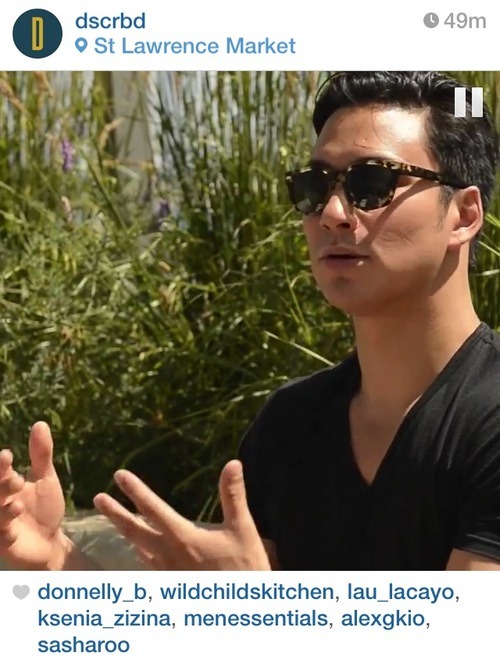
    A good friend of mine recently launched a new project called DSCRBD (pronounced ‘described’). The goal is to “curate interesting minds” through short social video clips. Think Humans of New York but only creative types and only short videos.

    I think it’s a great idea. And I was fortunate enough to be one of the first test subjects. It was conducted as an interview between he and I, and we spoke for probably about 45 minutes on the sun deck of my building.

    He then took that entire interview and distilled it down to only a few seconds, extracting what he found most interesting. Perfect for social media consumption.

    image

    Click the image above for my video. What I’m talking about is my approach to architecture, and how I ended up not becoming an architect, but instead becoming a real estate developer.

    I think he’s on to something here and I would love to see it develop further. He’s using the right mediums and format to get the message out in today’s noisy social world. But there’s also no reason that it couldn’t grow to include more content or simply feed to other content, such as what he did with Architect This City.

    If you’re somebody that you think he should profile or know of someone that would be a good fit, drop him a line at hello@dscrbd.com.

  • MBA

    image

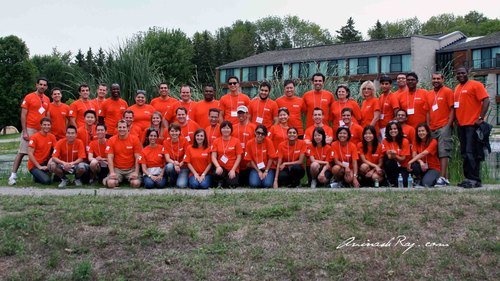
    Today was my MBA convocation at the University of Toronto’s Rotman School. Though I actually finished my degree last year (with a bit of fast-tracking), I had to wait until today in order to formally graduate with the rest of my cohort. I did what’s called the 3-year morning MBA. What that means is that I took most of my classes at 7am.

    The picture above is from our weekend retreat right before we started the program (I’m in the back row in the middle). It was taken in the summer of 2011. That feels like eons ago. It has been a tough slog.

    So today I’m taking the day off from writing about cities. Instead, I’m just going to enjoy the day off and the closing of this chapter in my life. An MBA is something I had been planning on doing even while I was in architecture school–so it’s nice to be able to check it off. But as I told my parents today after convocation: you ain’t seen nothing yet.

  • The future of the architecture profession

    image

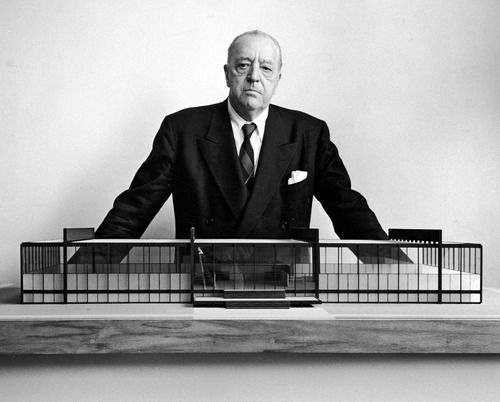
    Yesterday I had a really interesting conversation with somebody about the future of the architecture profession. We spoke about how Joshua Prince-Ramus of REX believes that architects have marginalized themselves as a result of shying away from liability. We spoke about how architecture schools need to teach more about about business and making money. And we spoke about why I decided to never practice architecture and instead become a developer.

    At the end of it all, he came to more or less the same conclusion that I did in this post. He felt that as more and more trained architects choose to become developers, that maybe the future will be firms that vertically integrate both architecture and real estate development. For those of you not in the building industry, this is fairly uncommon practice today. Typically, developers retain the services of an architect to design their buildings and do not handle this in-house.

    But there are firms that do. DDG out of New York and San Francisco is one example. Although there’s a subtlety worth mentioning. According to their website, they say that they often act as the “design architect” for their projects. This means that there would still need to be an “architect of record”, whose name would appear on the building permit and who would ultimately end up shouldering the liability for the design.

    You see, a bifurcation has happened even within the architecture profession itself. You have “design architects” who may or may not be licensed, but do a lot of the fun design work upfront for a project. And you have production oriented firms that actually produce the technical drawings needed for construction. The fees are generally higher in the latter case (unless maybe you’re a starchitect), but the work is less creative.

    The emergence of these two streams of architecture is precisely what Joshua Prince-Ramus is talking about when he says that architects have marginalized themselves by shying away from liability. He believes that architects are reducing themselves to designers and stylists, from master builders. So his argument is that architects need to reinsert themselves into more of the building process.

    What I’ve been suggesting is that architects should become owners. They should insert themselves into the development process. And the reason I feel this way is because I worry about the tendency for production and construction to just be farmed out to the lowest bidder. Design and development, on the other hand, are high value creation items.

    Truthfully though, I don’t really know which option is better for the profession in terms of relevance. I know which one I’m most interested in, but that could just be a personal preference. What do you think?

    Image: The Red List