Daily insights for city builders, delivered every morning at 6 AM ET. I’m Brandon Donnelly — a Toronto-based real estate developer and founder of Globizen. I’ve been writing here since 2013.

Tag: car oriented

  • America’s most and least car-oriented cities

    My partner Kieran sent me this chart this morning:

    It is a summary of the average weekday miles traveled by adults in private vehicles, including taxis and ride-hailing vehicles, for the 50 largest metro areas in the US (data is from the fall of 2023). At the top of the list with the most miles traveled is Raleigh, and at the bottom of the list with the fewest miles traveled is, not surprisingly, New York.

    The other cities on the bottom of this list probably won’t surprise you either. But it’s a good reminder of how built form determines our mobility choices. If you look up which US cities have the highest population densities and the most compact built forms, I think you’ll generally find that it mirrors what you’re seeing here.

  • 25 years of transit-oriented development

    When we build next to transit, we often call this transit-oriented development. 

    What’s interesting about this moniker is that it implies we’re doing something a little special — something out of the ordinary. And I guess that makes sense because, in many cities, it is often out of the ordinary. 

    That’s why you don’t hear people at real estate conferences saying, “check out this new cutting edge car-oriented development that our firm is developing.” That doesn’t need to be specified.

    But at the end of the day, I’m not sure how special transit-oriented development really is; it’s basically just urban development. Meaning, you put density on top of and next to transit stations and then more people take transit. That’s how this works.

    On that note, here is an interesting study from the School of Cities that looked at Toronto’s transit network and how the populations around each station have changed (or not changed) between 1996 and 2021 (census data). 

    If you look at the various transit lines, you’ll see that, in some cases, like downtown, we have added a lot of new transit-oriented development. This is good. Populations increased. 

    But in many/most other cases, populations remained flat; or worse, they declined. This is a serious problem, and it shows how land use restrictions are forcing us to underutilize our existing transit assets.

    Maybe what we need to do is stop thinking about transit-oriented development as something special, and instead remind ourselves that this is standard operating procedure. It’s just what you do next to transit.

    Thanks to Sam Kulendran for sharing the above study with me.

  • SoCal Googie

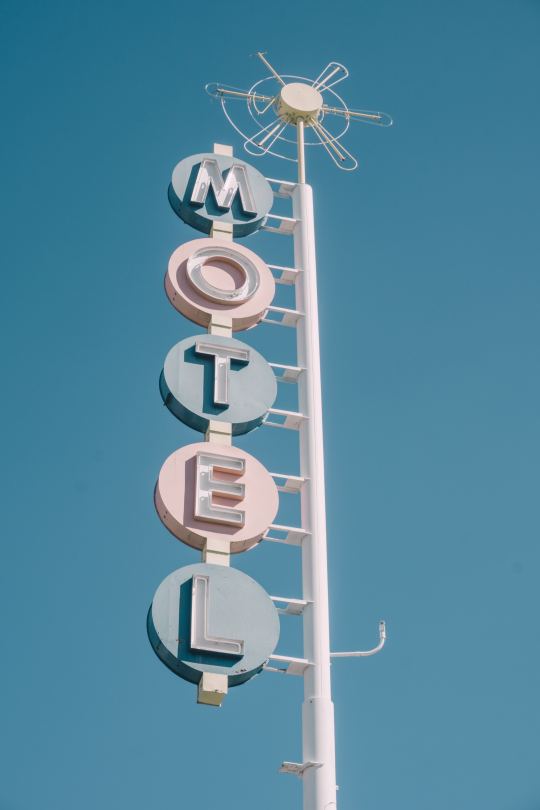
    I must have been sick for this lesson in architecture school, because I just discovered, through Curbed, that there is a subset of mid-century modern architecture known as Googie. It originated in Southern California in the 1940s and was all about the future, car culture, the Space Age, and the many other things that dominated the postwar years. Think starbursts, curvaceous geometric shapes, and bright colors. We all know the architecture. But did you know it was called, Googie?

    Supposedly the Googie movement was given its label by architecture critic Douglas Haskell, who used it in a derogatory way to describe criticize the architectural fashion at the time. Googie was the name of an actual coffee shop in West Hollywood designed by John Lautner. And that’s something that is noteworthy about Googie. It was a form of architecture for average buildings: coffee shops, gas stations, motels, and those sorts of things.

    There will always be critics who eschew that which is fashionable at the time. I suppose one could argue that if you’re being fashionable, then you’re not being timeless. Because fashion is about what’s current. And good architecture should be timeless, right? But there’s something so fascinating about a kind of built form that perfectly captures a particular time and place. Middle of the 20th century. Car-oriented Southern California. 

    Sometimes good architecture and design also needs a bit of time and distance in order to fully appreciate it. What was once garish may one day become treasured. Just give it a generation or two.

    Photo by ian dooley on Unsplash