Daily insights for city builders, delivered every morning at 6 AM ET. I’m Brandon Donnelly — a Toronto-based real estate developer and founder of Globizen. I’ve been writing here since 2013.
Years ago I wrote about a book that venture capitalist Albert Wenger was writing — in public I would add — called The World After Capital. The public bit is interesting. As he was writing the book over the last ten years or so, he did it in public and published drafts along the way. This allowed him to get feedback, learn things, and revise accordingly. He calls this a “knowledge loop” and it ties in nicely with some of the topics that he covers in the book.
The first focus of the book is on explaining that capital (which was a constraint of industrialization) is no longer scarce. This isn’t necessarily true everywhere, but he argues that it is true in the developed world. What is instead scarce today is attention. That is our defining constraint as we continue to move into the Knowledge Age. The second focus of his book is on how he thinks we should best respond to these changes, as well as to the limitations of capitalism.
I haven’t read the book yet (only scanned it), but it’s now in my queue. Normally my queue consists of a stack of partially read books next to my bed. But this one is digital only for the time being. If you’d like to read a digital copy (there’s a downloadable PDF), go here. Apparently there will also be a hard copy available sometime later this year or early next year.
I have stayed at two hotels over the last month where I did not need to interact with a human as part of the check in process. And in one of those two instances I didn’t even need to interact with a computer at the hotel.
My room key was issued to me through an app and I used that (and Bluetooth) to open my hotel room door (after the app, of course, notified me that my room was ready).
This is prediction #2 in Fred Wilson’s annual roundup of what is going to happen next in the world. Automation is reducing the costs associated with operating many businesses. Who is going to be the beneficiary of this consumer surplus?
The other prediction that should interest most of you — because the impacts would be widespread — is this one here regarding climate change:
The looming climate crisis will be to this century what the two world wars were to the previous one. It will require countries and institutions to re-allocate capital from other endeavors to fight against a warming planet. This is the decade we will begin to see this re-allocation of capital. We will see carbon taxed like the vice that it is in most countries around the world this decade, including in the US. We will see real estate values collapse in some of the most affected regions and we will see real estate values increase in regions that benefit from the warming climate. We will see massive capital investments made in protecting critical regions and infrastructure. We will see nuclear power make a resurgence around the world, particularly smaller reactors that are easier to build and safer to operate. We will see installed solar power worldwide go from ~650GW currently to over 20,000GW by the end of this decade. All of these things and many more will cause the capital markets to focus on and fund the climate issue to the detriment of many other sectors.
For the rest of Fred’s predictions, click here. These are always great reads.
“People get income for doing stuff, and they get income for owning stuff. Increasingly the latter. And the ownership share of income goes to a small slice of households that own almost all the stuff.”
This is a quote from a recent article by Steve Roth over at Evonomics, where he breaks down the share of US household income that is derived from “labor” vs. “capital.” In other words, how much money do households make from working (trading their time for money) and how much do they make from their existing wealth (that is, owning stuff)?
If I were to oversimplify how he calculates this (you can read all of the details, here), it is: (Income – Labor Compensation) / Income. Take all of the household income. Subtract the money made from doing stuff. And then divide it by total income to get the percentage made from “unearned property income.” There are gray areas and others things to consider, but that’s the gist of it.
What he discovers and argues is that basically 50% of household income comes from simply being wealthy and owning stuff. He also reminds us that approximately 60% of US wealth is… “earned the old-fashioned away: it’s inherited.”
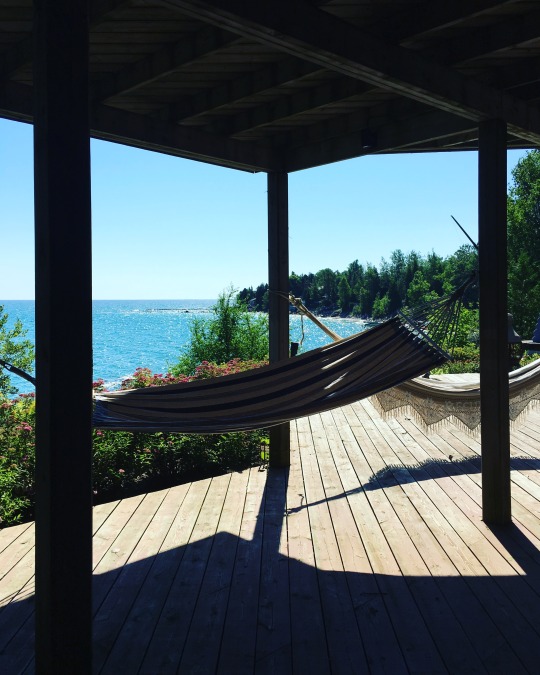
I then went for a swim. The water tends to be on the cooler side in the Georgian Bay, but with the weather we’ve been having it’s pretty perfect right now.
At this point I’m thinking about a beer and some reading. I have Capital in the Twenty-First Century by Thomas Piketty sitting in my car. It’s next in the queue.
I am telling you all of this simply to be transparent.
Recently I had someone caution me that I should be careful about being too public and too open. I won’t get into specifics, but I was told that sometimes it’s better to just fly under the radar.
I recognize that there have to be limits to transparency, but as a rule of thumb I subscribe to the opposite approach. When possible and when appropriate, I would rather be more, rather than less, transparent.
This blog is who I am. It’s indicative of how I think. And it discloses what I’m doing. So I don’t see a lot of downside. What you read is what you get. You’ll know if we should be friends and/or do business together.
After I wrote about what I’m doing next I had a bunch of emails come in from various people telling me what they’re doing and, in some cases, suggesting that we work together. Some people had development sites that they thought I should take a look at. And some people immediately asked if I was hiring.
I am grateful for each of those emails. But I also know that they’re an outcome of openness and transparency.
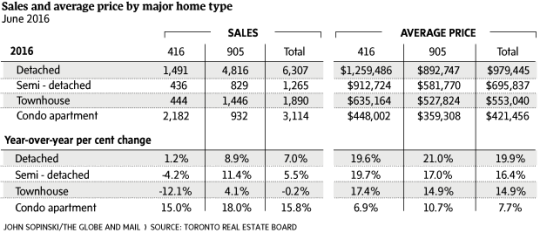
These are staggering numbers. The average price of a detached home in the suburbs (905 area code) increased 21% year-over-year. In the city (416 area code), the increase was 19.6% YOY. These numbers are almost unbelievable.
The article focuses on low supply (decrease in listings) and high demand. And that is certainly a big part of what’s going on here in this city, as well as in many others.
But of course, the backdrop to all of this is our low / zero / negative interest rate environment.
Larry Summers has a great post on his blog (which I discovered this morning via Fred Wilson) that talks about this “remarkable financial moment.” In some instances, real interest rates are actually negative! (You should read his post.)
There are always people threatening that interests rates just have to go up. But Larry, as well as others, continue to argue that natural real interest rates are likely to remain close to zero going forward.
Fred mentions Albert Wenger on his blog this morning and I have written about him before as well, here. In his book World After Capital, Albert argues that capital is no longer the scarce resource of our time. Instead, it has become attention.
If you believe all of this to be true, then perhaps the numbers at the top of this post aren’t so unbelievable after all.
The focus of the article is on inequality; capitalism vs. socialism; Thomas Piketty’s book, Capital in the Twenty-First Century (which is now on my reading list); and on how Modernism lost its social mission and got repurposed as a tool that just serves capitalist interests. It went from an ideology to simply an architectural style.
Here is an excerpt:
“Once discovered as a form of capital, there is no choice for buildings but to operate according to the logic of capital. In that sense there may ultimately be no such thing as Modern or Postmodern architecture, but simply architecture before and after its annexation by capital.”
Given that I am initially trained as an architect, but that I work as a real estate developer, this article hits home for me. But unlike the author, I am not as fussed by this intertwining of capital and architecture. In fact, I have always believed that the more architecture can understand its economic milieu, the more likely it can affect positive change.
Of course, there’s the question of whether that economic milieu is even the right one in the first place. I’ll echo this blog post (on the limits of capitalism), by saying that I consider myself a capitalist, but not an absolute capitalist. Capitalism isn’t perfect.
I like Reinier’s description of income vs. wealth (borrowed from Piketty):
He identifies two basic economic categories: income and wealth. He then proceeds to define social (in)equality as a function of the relation between the two over time, concluding that as soon as the return on wealth exceeds the return on labour, social inequality inevitably increases. Those who acquire wealth through work fall ever further behind those who accumulate wealth simply by owning it.
The index – which is now in its 18th edition – is created using two main ingredients. The first is an analysis of 5 broad areas of competitiveness: 1) business environment, 2) financial sector development, 3) infrastructure, 4) human capital, and 5) reputational & general factors. And the second is an online survey given to financial services professionals. The 2015 edition includes responses from 3,194 professionals.
Below are the top 25 financial centres in the world according to the GFCI (the full list has 84 cities).
Here are a couple of things to note from this year’s index:
London has overtaken New York for the top spot – but both remain more or less at parity if you dig into the numbers.
Dublin is performing particularly well in Western Europe.
The leading centre in Eastern Europe is Warsaw (38th), with Istanbul just behind it.
Toronto is now second in North America, only to New York.
Sao Paulo remains the top Latin American centre.
And, Los Angeles (49th) and Liechtenstein (60th) join as new entrants this year.
If you’d like to see the full report and ranking, click here.
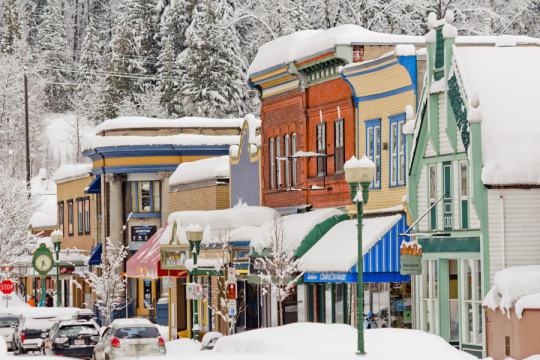
Despite being rainy and unusually warm, I had a great time in Revelstoke, BC. I first heard about the city a few years ago when I told a close friend of mine (who is an avid snowboarder) that I was going to Whistler. He told me: “Forget Whistler. Go to Revelstoke.”
Revelstoke has been on the map for skiers and snowboarders for decades. Some consider it to be the helicopter skiing capital of the world. But there are only so many people who can afford $1,000+ per day skiing, so it wasn’t until 2007 when the first gondola opened up on Mount Mackenzie that people started calling Revelstoke the next Whistler, the next Jackson Hole, the next Zermatt, and so on.
As both a snowboarder and a real estate developer, this is of course exciting. Everybody wants to be a part of the next big thing and they want to call it before anyone else. That’s how you make money – by being right about things before the masses catch on and/or when everyone else thinks you’re wrong.
But 2007 happens to come before 2008. And 2008 wasn’t a kind year to the real estate community. Revelstoke was no exception.
The condos at the base of the mountain weren’t selling (about half of the ones that did sell were sold to Canadians I was told). Expansion plans to become the largest ski resort in the world were scaled back. And the resort teetered on the brink of bankruptcy. But since then, new ownership has taken over the resort and the sentiment on the ground seems to be that Revelstoke – as a real estate play – is somewhere near the bottom.
But something even more interesting is happening in Revelstoke, beyond just luxury condos at the base of a mountain. And since I was on the disabled list for the second half of my vacation, I had time to explore.
I was fortunate enough to meet a local entrepreneur (who happened to also be from Toronto) and his message to me was clear: Ontario is moving in. Both talent and capital from Ontario are starting to flock to this small mountain town of almost 8,000 full-time residents (it’s technically classified as a city). And from my experience at the bars and restaurants in town, he appears to be right.
Now, you might be thinking these people are just ski bums looking for an excuse to live in a mountain town. But is that such a unique and bad thing? Today’s up and coming generation is looking for lifestyle + career. And so if your city or community can offer both, you have a competitive advantage when it comes to attracting talent.
Revelstoke knows they have the outdoor amenities and the “epic pow”, so now all they need to do is bring the businesses. And that’s exactly what Revelstoke wants to do. If you’re an entrepreneur or business owner, Revelstoke wants you to move there. I’m serious. The vision is to create a sustainable live, work, and play mountain community in the BC interior.
I hope that happens.
Drop me a line if you want to talk mountains and business.
Post Update: The beautiful photo of Revelstoke at the top of this post was taken by Ian Houghton out of BC. This is his business website and this is his Facebook page.
An important problem in a market economy, and the one the VC attempts to solve, occurs when an entrepreneur has a good idea, but no money, while investors have money, but no good ideas.
Steven N. Kaplan & and Josh Lerner. “It Ain’t Broke: The Past, Present, and Future of Venture Capital”