Daily insights for city builders, delivered every morning at 6 AM ET. I’m Brandon Donnelly — a Toronto-based real estate developer and founder of Globizen. I’ve been writing here since 2013.

Tag: built environment

  • Living vs. just visiting — do these two things require different built environments?

    Many years ago I was in a community meeting talking about a proposal we had to add retail uses adjacent to a park. Residential was the highest and best use, but we were excited by what retail could do for the project and area. We were imagining something like a Parisian cafe where everyone would sit facing outward toward the park.

    Much to our surprise, the community was vehemently opposed. And when we eventually asked who had been to Europe and sat outside in a nice cafe, the response we generally got was, “yeah, we have, and it’s obviously nice there, when on vacation. But that’s Europe. It won’t work here and it’s not appropriate for the area.”

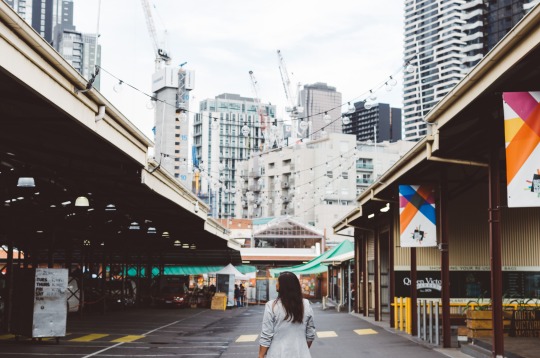
    Hmm. This raises all sorts of interesting questions. But for today, let’s ask this one here: Why is it that some people choose to live in places that are so different than the ones they visit when on vacation?

    Is it because we, as humans, want fundamentally different experiences when we travel? i.e. We want to escape from our current reality. “Oh look how novel this is.” In this case, I guess you could say that our markets are fairly efficient and people are getting the kind of lifestyles that they truly want, both at home and abroad.

    Or, is it because, for a variety of reasons, we’ve created rules and obstacles that force certain built form outcomes? We think the other ways won’t work. I often find myself in this latter camp, meaning that when I travel, I at some point end up thinking: “This is a good idea. I want to both move here immediately, and steal this idea and bring it back to Toronto.”

    How about you?

    Photo by DAT VO on Unsplash

  • The end of private car ownership

    Here is an argument that Philadelphia-based Diana Lind recently made on her blog, The New Urban Order:

    I believe we’re at the beginning of the end of private car ownership in American cities. This idea came from thinking about the next steps when our RAV4 dies in the coming year or so: not only shouldn’t we replace it, but we won’t want to replace it. Right now only about a quarter of Americans do not drive to work, and only 9 percent of Americans do not have access to a car at all. But I think that in the coming decade there’s going to be a ton of potential to convert people living in dense cities and neighborhoods away from private cars.

    There are a number of reasons for why she believes this is going to be the case and, to quickly summarize, they are: remote work, declining birth rates, more old people, Uber and other services, and autonomous vehicles. And generally, I would agree that there is a strong case to be made here.

    But one thing that she does not explicitly talk about is the relevance of built form in this move away from private car ownership. She does mention “people living in dense cities” (see above), but does this mean that we are to assume density will remain a prerequisite, as it mostly is today?

    Urban density dictates so much of how we move around. When I was driving around Paris during the summer, I couldn’t wait to return our car and get back on foot. You should have also seen the gymnastics we pulled off to refill the tank. Driving in the city was annoying. Paris is designed for walking, taking the metro and, now, cycling.

    On the other hand, when I land in Salt Lake City (Park City), the first thing I do is head to the car rental area. The city is getting better at trying to reorient itself, and there is a tram (Green Line) that runs from the airport through downtown, but it very much remains a driving city. And ideally you want something like a Toyota 4Runner that will take you through snow and up steep pitches.

    So while I agree that, directionally, Diana is right, I think the question remains: What does this mean for individual cities and their built environments? In a city like Paris, it is obvious. Private car ownership is highly likely to continue declining. But in a place like Salt Lake City, I think it’s going to be much more challenging and take a lot longer.

    Photo by Chris Henry on Unsplash

  • Harvard announces new Master in Real Estate degree

    The Harvard Graduate School of Design (GSD) just announced a new 12-month degree called the Master in Real Estate (MRE). Here’s a short excerpt about the program:

    The MRE program is designed to train future practitioners to address new and urgent realities facing the built environment and cities today. Whether undertaken by for-profit businesses, not-for-profit organizations, or public entities, real estate occupies a pivotal role in determining how the places where we live, work, and play are equitable, environmentally sustainable, and appealing, in addition to being productive for the economy.

    The key takeaways are that this is a graduate program being designed for aspiring real estate entrepreneurs and that it will live within Harvard’s Graduate School of Design. So there is an implicit recognition that the world of real estate doesn’t need to run counter to the pedagogical goals of a design school.

    Anyone who went to architecture school will tell you that real estate is often viewed as the “dark side.” Either you commit yourself to the pure world of architecture and design, or you sell out and seek profits in the world of real estate. But I have always considered this to be a false dichotomy.

    Real estate is a fundamental component of how we shape our built environment. And so if one’s ambitions are to improve the built environment — which is something that architecture schools do teach you — why should the delivery vehicle matter? Shouldn’t we be encouraging people to optimize for maximum benefit?

    I completed my undergraduate degree in architecture. But very early on I had the feeling that I was only getting one piece of a larger picture. And so I went to the University of Pennsylvania for graduate school and completed a degree that combined both architecture and real estate. My goal was to figure out a way to combine both passions. Maybe I’d become the next Jonathan Segal.

    Penn was very open to cross-disciplinary studies at the time (this was the mid-2000s), but there was still a gaping divide between the school of design and the business school. Walking across campus meant taking off one hat and putting on another. There wasn’t a lot of overlap.

    After school, I returned to Toronto and started working in development. I then decided to pursue my MBA part-time, which really wasn’t necessary for my career, but was probably driven by some sort of insecurity I felt at Penn. I was the outsider design student (with funny glasses I might add) trying to keep up with Wharton MBAs.

    I went back to the University of Toronto for my MBA and thoroughly enjoyed it. But I still couldn’t understand why there was such little overlap between the design school and the business school when it came to matters of the built environment. The real estate courses at Rotman were also extremely limited at the time.

    So I started talking to faculty members: What would it took to create a joint real estate program that lived somewhere between the design school and the business school? I offered to help and I tried to press upon everyone that this was a gaping void and a huge opportunity. Canada was falling behind in terms of real estate education. It was time to step up.

    The answer I got was generally always twofold: (1) Rotman’s real estate courses were already good enough and (2) it’s pretty hard to start a new program at the University. You have to do a bunch of things, one of which includes finding money. So, sorry.

    Harvard’s new Master in Real Estate degree is the kind of program I had in mind. So I’m happy to see others taking action. And I ultimately think it will be a good thing for our cities.

    If you’d like to apply, you can do that starting this fall.

  • The Eiffel Tower and the awful tower

    It was explained to me this week that Paris has two principal towers: The Eiffel Tower and the awful tower. The awful tower is, of course, the Tour Montparnasse. Completed in 1973, the Tour Montparnasse is tall, brown, monolithic, and seemingly out of place with the rest of Paris’ urban context. At the time of its completion it was the tallest building in Paris and it remains the tallest building outside of La Defense (business district).

    But the Eiffel Tower is also tall. In fact, it’s taller. So how is it that the Eiffel Tower became such a symbol for Paris and the Tour Montparnasse became the “awful tower?” Both were intended to represent modernity (at their respective times) and both were controversial at the time of their construction.

    Today people respond to these two towers very differently. Is it because the Eiffel Tower is set in a beautiful park and more separated from its urban context? Or is it because the Eiffel Tower has had almost another 100 years to settle in. It’s not exactly clear. But we do know that as humans we have a bias toward the status quo. And so I like to think of change in the following way:

    – There’s change that people immediately like

    – There’s change that people hate and will always hate

    – And there’s change that people initially hate but will eventually like

    The Eiffel Tower, you could argue, falls into category number three. It was big, modern, and alarmingly different when it was built at the end of the 19th century. But now people seem to like it. I know this based on the number of street vendors selling little replicas. For the record, I have yet to see little replicas of the Tour Montparnasse sitting on blankets on the street. I’m a buyer if I do come across one though.

    But is it really right to place Montparnasse into category number two? Could it be that it just needs more time to settle in and then it will ultimately move into number three? Maybe. In 2017, an international design competition was held to find an architect for the redesign of the tower. Studio Gang submitted an entry. But Nouvelle AOM was ultimately selected.

    I wasn’t part of the selections committee, but I think a good way to evaluate the success of this project will be whether or not it moves the tower into category three. That is, people start to like it. Then maybe Paris will become known as a city of two towers, as opposed to a city with one nice one and one awful one.

  • Margolese National Design for Living Prize

    This landed in my inbox earlier in the week. And since I think it’s important to support Canadian talent and I think it’s important for us to continually nurture a Canadian cultural identity, I’m sharing this design prize with all of you today.

    Hosted by the University of British Columbia’s School of Architecture + Landscape Architecture (SALA), the Margolese Prize is intended to recognize early to mid-career Canadians who are doing outstanding work related to the built environment. This could be in fields like architecture and planning or it could be in adjacent fields.

    Nominations are open until April 10, 2022 and you can both nominate yourself and nominate others. The winner will be announced this September and, in addition to a ceremony and presumably a trophy of sorts, the committee will be giving out $50,000. If you’d like to nominate yourself/someone, click here.

  • ✈️ Off to France and trying something new

    Neat B and I are off to France for the next two weeks. We optimistically booked this trip at the beginning of the year and assumed that the world would be fairly normal and well-vaccinated by now. While there remains uncertainty, things are at least better than they were last winter when we were all caved at home.

    Regular readers of this blog will know that I aim to post 365 days a year, regardless of what may be going on in my life. And that will remain the case for the next two weeks. But I have decided to challenge myself and try something new.

    I’m going to exercise my photography passion a little and instead post a single photo each day. On some days it may have a caption or a short description, but on other days there may be no accompanying text at all. The plan is to shoot entirely on my Fujifilm X-T3. Or at least that’s the thinking right now.

    I’m sure that there will end up being some great content for those of you who are interested in the built environment (architecture, design, planning, real estate). But if travel and beautiful photos aren’t your thing, feel free to check back in two weeks for our regularly scheduled programming.

  • What’s happening in Melbourne?

    image

    I’ve never been to Australia, so take everything I’m about to say in this post for what it’s worth. I also don’t know much about Sydney and Melbourne, other than the fact that I’ve studied the latter’s laneways and the tremendous impact they’ve had on revitalizing the CBD.

    However, recently I’ve had a few close friends visit these cities for the first time and, since then, I have started noticing a trend. All of them come back and tell me the same thing, that they prefer Melbourne to Sydney. They say: “Yeah, Sydney is nice and beautiful and all, but it’s not all that exciting. Melbourne feels way more dynamic. Oh, and have you seen their laneways? You would love them.” That’s what they tell me.

    So that’s what I have in my head when I read that Melbourne is now the fastest growing city in Australia; that it’s one of the most liveable cities in the world; and that by as early as 2031 it could take Sydney’s place as the biggest city in the country. Below is a chart from The Australian. If you can’t see it, click here.

    //platform.twitter.com/widgets.js

    Some argue that this is happening because housing is cheaper in Melbourne (median dwelling price of ~$700,000 versus ~$1 million). And some argue it’s because the jobs are there and the city has become a cultural and sporting destination. Whatever the case may be, net migration is estimated to be somewhere around 100,000 people per year.

    My own view – and I’ve made this argument before on the blog – is that we shouldn’t underestimate the importance of cool shit when it comes to cities. People vote with their feet more than ever today. And for a growing segment of the population, cities are a consumer good.

    Indeed, in 2001, Edward Glaeser, Jed Kolko, and Albert Saiz penned a research paper called the Consumer city, where they argued precisely that. The premise was that historically we have tended to think of cities as being centers of production, but we should also be thinking about them as places of consumption.

    Here’s an excerpt:

    “But we believe that too little attention has been paid to the role of cities as centers of consumption. In the next century, as human beings continue to get richer, quality of life will become increasingly critical in determining the attractiveness of particular areas. After all, choosing a pleasant place to live is among the most natural ways to spend one’s money.”

    This is why those coffee shops and cool laneways matter. Some cities have unfair natural advantages. Los Angeles has weather. Vancouver has mountains. Montreal has poutine. But for the rest of us, the amenities typically form part of the built environment. They are a product of our choices.

  • What’s in a sign?

    The built environment is the environment that we create around ourselves. Signs are a part of that.

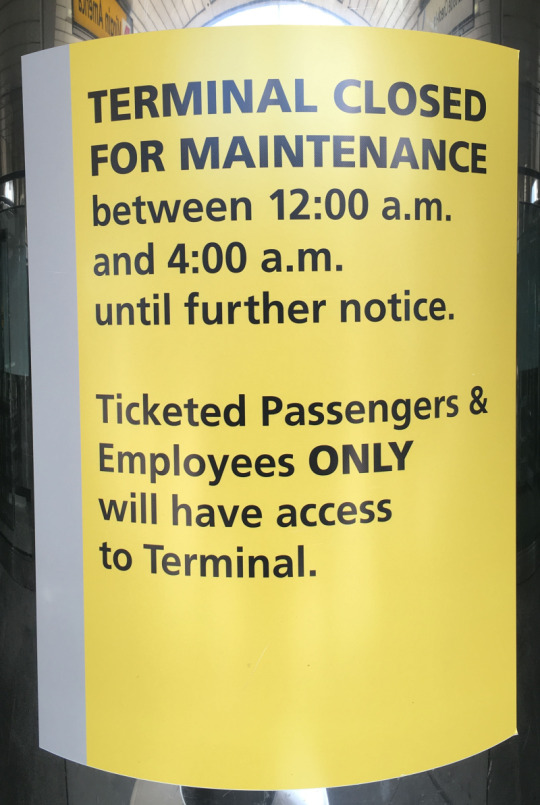
    Seth Godin recently posted this sign on his blog:

    It was seen at LaGuardia Airport.

    He then asked a few pertinent questions, dissecting the signs intent. Finally, he suggested the following reword:

    Hi. To keep this terminal clean, it’s closed to visitors from midnight until 4 a.m. every night. Ticketed passengers are always welcome.

    Which one do you prefer?

    Which one is clearer?

    Which one speaks to you with empathy?

    Dan Pink would call the reword: emotionally intelligent signage.

  • I love neon

    “As the manufacture of storefront signage becomes increasingly standardized,” says a circular from Berlin’s Buchstabenmuseum, “the tradition of idiosyncratic signs created by skilled craftspeople, reflecting regional differences and a firm’s unique character, is dying out.”

    The above quote is from this Globe and Mail article talking about the lost art of sign making and about an exhibition that starts today (until January 27) in Montreal at the Media Gallery of Concordia University’s Communication Studies and Journalism Building. It is called Tel Quel / As Is and it is by the Montreal Signs Project.

    Cities all around the world are facing a decline in distinctive local signage, which is not all that different than the decline in regional architecture. We are living in a global village.

    Montreal has responded with the above project. Berlin has responded with the Buchstaben Museum (letter museum). And here in Toronto, Mark Garner of the Downtown Yonge BIA has been trying to convert one of our laneways into a haven for restored Toronto neon signs. Great idea.

    It can be challenging to repurpose old signs. There are often issues of appropriateness and scale. Sometimes a new or renovated building looks good with its old signage. But in other cases – and perhaps more often than not – it wouldn’t. So then what do you do with it?

    Still, it behooves us to try. Signs, like buildings, are a snapshot of a moment in time. They are part of the environment that we create for ourselves. They are part of our history.

  • Are you T-shaped?

    image

    The world-renowned design firm IDEO is known for hiring people described as being “t-shaped.” Here’s a quote from an interview with CEO Tim Brown explaining what that means:

    “T-shaped people have two kinds of characteristics, hence the use of the letter “T” to describe them. The vertical stroke of the “T” is a depth of skill that allows them to contribute to the creative process. That can be from any number of different fields: an industrial designer, an architect, a social scientist, a business specialist or a mechanical engineer. The horizontal stroke of the “T” is the disposition for collaboration across disciplines. It is composed of two things. First, empathy. It’s important because it allows people to imagine the problem from another perspective – to stand in somebody else’s shoes. Second, they tend to get very enthusiastic about other people’s disciplines, to the point that they may actually start to practice them. T-shaped people have both depth and breadth in their skills.”

    For an interdisciplinary design firm like IDEO, I’m sure you can see why the above would be important. But I also think it’s hugely important for those of us who work in the arena of the built environment.

    City building projects don’t get accomplished by individuals, alone, or “I-shaped people” who don’t play well with others. They get accomplished by people with breadth in their skills and by large cohesive teams with vastly different core competencies. The notion of the individual genius is overplayed.

    New buildings, for instance, typically involve a coming together of the project team (hugely diverse in and of itself), the city, the community, and other stakeholders. You can try and bully your way through that process or you can try and navigate through with empathy.

    Based on the tremendous success of firms like IDEO, one could certainly argue that creativity and innovation seem to thrive more on empathy.