Daily insights for city builders, delivered every morning at 6 AM ET. I’m Brandon Donnelly — a Toronto-based real estate developer and founder of Globizen. I’ve been writing here since 2013.
This October 8th and 9th (2015) in Toronto, CityAge will be hosting a summit at the MaRS Discovery District called, Build the Future. The goal is to explore the future of Canada’s economic powerhouse.
CityAge is a platform for ideas and business development, designed to enable new partnerships among the business, government and societal leaders who are shaping the 21st Century.
Founded in 2012 in Vancouver, Canada, our events have taken place, or are scheduled, in New York City, Hong Kong, Toronto, London, Los Angeles, Seattle, Edmonton, Philadelphia, Kansas City, Ottawa, Vancouver and The Waterloo Region in Canada.
To date more than 4,000 leaders in business, government and society have attended a CityAge event.
I’ve seen the draft agenda and list of speakers for the event, and if you enjoy the content on this blog, I think you’ll also really enjoy this CityAge summit.
But even better is the fact that if you’re a young professional (under 35) and a reader of Architect This City, you can use the code YOUNGPRO to attend for just C$195.
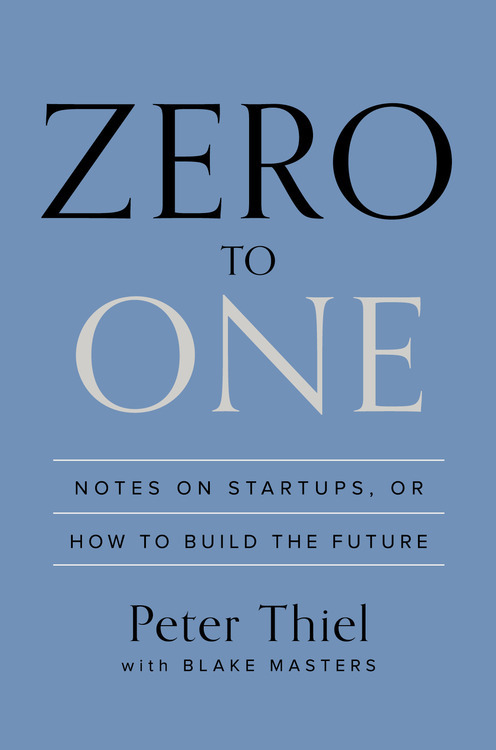
I just finished reading Peter Thiel’s new book, Zero to One: Notes on Startups, or How to Build the Future. For those of you who may not be well-versed in the world of technology geeks, Peter Thiel is an entrepreneur and investor. He was one of the founders of PayPal back in 1998 and was the first outside investor in Facebook in 2004. He invested $500,000 for a 10.2% stake in the company!
While the focus of the book is obviously on technology startups, it’s less about “here’s how you build a startup” (there is no formula) and more about “here’s how to think about the world, humanity, and the future of our civilization.” So even if you’re not a founder, or startup and technology enthusiast, I think you’d still find it really interesting.
As one example, Thiel makes the distinction early on in the book between what he calls “vertical or intensive progress” and “horizontal or extensive progress.” The specific example he gives is of typewriters and word processors. If you take one typewriter and figure out how to make 100 of them, you’ve made horizontal progress. However, if you’ve just replaced typewriters with word processors, you’ve made vertical progress.
In other words, vertical progress is doing new things and horizontal progress is just copying things that we know already work. In the grand scheme of the world, he argues that globalization is really just a form of horizontal progress. The rise of China is a result of them copying what has already worked in developed countries. But the true way to advance our economy and civilization is to not just copy – that’s easy – it’s to do, new, things.
That, of course, is a lot harder to do. But to build the future, you need to build things and do things that haven’t been done before.