Daily insights for city builders, delivered every morning at 6 AM ET. I’m Brandon Donnelly — a Toronto-based real estate developer and founder of Globizen. I’ve been writing here since 2013.

Tag: brownfield

  • Belval: From Luxembourg’s largest steelworks to mixed-use community

    Early this morning, before the sun even came up here in Toronto, I had a video conference call with a sharp and talented entrepreneur in Luxembourg. His name is Fräntz Miccoli and he’s working on an interesting startup called KonnectR.

    The idea is to create a platform to connect with new people at any point in time and wherever you might happen to be. It may sound like a “hook-up” app, but that’s not the intent. He came about the idea while traveling and looking for other smart and engaging people to hang out with.

    When we started the video conference call this morning, I showed him my window so that he could see the sun just starting to rise. He then showed me his coworking space, which made it seem like he is working out of an old industrial steel mill. Turns out, he is.

    The area of Luxembourg he’s working out of is called Belval, which is a neighborhood in the west end of the country’s second largest city, Esch-sur-Alzette. The neighborhood used to consist of the largest steelworks in the country. But with the decline of steel production in Luxembourg, the area fell into decline. Today, it’s being reborn as a 21st century mixed-use community.

    The developer behind the project is called Agora. And the site – equal to about 120 soccer fields – will house everything from residences and offices to shopping and cultural institutions. The University of Luxembourg has also centralized their campus in the new neighborhood. Having institutions “anchor” a community is becoming quite common for urban renewal programs. Here in Toronto, we did a similar thing with George Brown College along the waterfront.

    To give you a better sense of the transformation taking place in Belval, here’s a streetview photo from 2009:
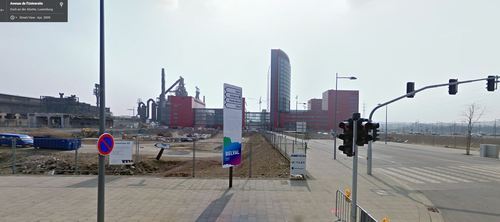
    image

    Here’s another one from the same intersection in 2013 (notice the same tower in the background):
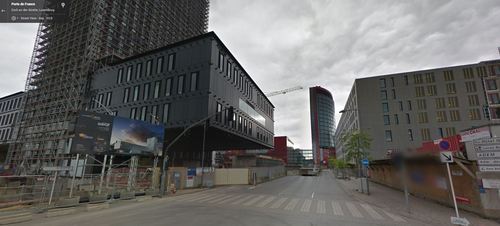
    image

    And here’s an aerial view from 2010:

    image

    I’m always fascinated by urban renewal projects of this scale because it so clearly speaks to the evolutionary nature of cities. Industries die. Businesses disappear. And new uses need to be found. In this case, the area has gone from steel production to tech startups. That’s not surprising.

    But at the same time, I think it’s important that we don’t completely erase the past. Here, I think it’s great that they’re preserving some of the blast furnaces and other industrial structures. It gives the area character and a sense of place – which is oftentimes hard to manufacture and always better when it’s authentic.

  • Developer Dirt: Site selection and acquisition

    I’ve already spoken about why I became a developer and offered some insights into how you might be able to transition from architecture into development. So now I’d like to start focusing more on the day-to-day of what it means to be a real estate developer.

    And since I seem to be getting a lot of questions from readers on career and development related topics, I’ve decided that I’m going to turn these posts into a regular blog series. Right now the working name is “Developer Dirt”, but if you have a better name I’m all ears (let me know in the comments below).

    So let’s start with step 1.

    You’re ready to develop a new project and you’re now in the market for some land (also known as a site). It could be a greenfield site (meaning it’s virgin land that hasn’t yet been tainted by humans) or, on the other end of the spectrum, it could a brownfield site (meaning it probably once housed industry, it’s contaminated as all hell, and you’re going to need to clean that puppy up before you build).

    Without going into further detail about all the different kinds of sites you could potentially buy (which is a post in itself), here are 3 high level things to keep in mind as you move forward.

    Land is the residual claimant

    What this means is that you want to start with your top line. You want to start with revenue. What can I build on this site (use and square feet) and how much can I ultimately sell or lease that space for?

    Let’s say, for example, that you think you can build 100,000 square feet. If it were office space, you’d want to know that rents in your area are $30 per square feet and that that’s going to render you $3M a year in rental income. If it were residential condos, you’d want to know that the market is absorbing $500 per square foot and that if you sold 100,000 square feet worth of condo, that your revenue would be $50M. But remember this is top line.

    Once you know your top line, you then need to figure out what it’s going to cost to bring you that revenue stream. In other words, what are the hard costs (construction costs), the soft costs (consultant fees and other non-construction costs), the return my investors are going to demand, the money I need to keep the lights on in my business, and so on.

    Hopefully, once you’ve calculated all of these numbers, you’ll have some money left over from that original top line number. That residual money is what you can reasonably afford to pay for the land, which is why it’s often referred to as the residual claimant. But even though it comes last in this example, it comes first in development. If you overpay at the onset, it’ll be an uphill battle the rest of the way.

    You often don’t know what you can build

    But here’s the rub: You often don’t know exactly what you can build. When developers buy land they often consider what they can build “as-of-right” and what they think they can build as a result of variances, rezoning and other discretionary actions.

    As-of-right basically refers to what the current zoning permits. It’s what you could go out tomorrow and build (after you get the requisite permits of course). Unfortunately though, as-of-right uses and densities are not often inline with what’s actually happening in a neighborhood. So you need to go into the city for things like a zoning by-law amendment.

    Similarly, vendors want the most for their land and so they’re going to be aggressive on this front. As a developer, this is the point where you surround yourself with a team of smart people who can help you figure out what’s reasonably attainable for the site in question. And sometimes you have to worry about the politics as much as the planning.

    Approvals are uncertain

    During the due diligence phase, the goal is obviously to mitigate as much of your risk as possible. Nobody wants to get stuck with a piece of land that they overpaid for that they now can’t (profitably) develop. But sometimes shit happens.

    It may seem like a no brainer. You could have a site that’s surrounded by transit with lots of great precedences (this matters) for the height and density that you’re hoping to obtain and that you feel will be appropriate for the neighborhood. But sometimes the stars don’t align.

    And that’s why development is a risky game.