
We are staying in our 6th hotel of this trip right now. And only 50% of these hotels have had air conditioning. This had led to a few restless sleeps where it was simply too hot. In one of our hotels, we had to ask them to bring a fan up to our room. But hey, this is Europe. I’m sure everyone thought we were spoiled North Americans. Interestingly enough, not having AC forces you to be more aware of the environment around you. Very quickly you learn that if you don’t shut the blinds or shutters when the afternoon sun is shining in, you are going to end up with a room that is too hot to sleep in. I try to be mindful of this back home in Toronto, where we do have AC, but there really isn’t the same imperative to both design and then operate around climate and local conditions. Active mechanical systems do much of this for us.
Tag: blogging on the road
-
Shoes follow built form

I have remarked this before, but I’ll say it again anyways: sneakers are very popular in Paris. Everybody seems to be wearing cool and colorful sneakers, regardless of what the rest of their outfit happens to look like.
Full business suit? Why yes, you should be wearing cool sneakers.
But why is that?
Paris is a famously walkable city. At any given time, you’re on average just about 500m from the closest subway station. So my entirely unproven sneaker theory is this: shoes follow built form.
If you build a city around people walking everywhere, one will ultimately choose the most appropriate kind of footwear.
Photo: Rosa Bonheur sur Seine
-
My first dockless scooter ride

I now know what all the fuss is about. Yesterday I rode a dockless (Lime) scooter for the first time. I took in lieu of an Uber in order to get to the Museum of Art, Architecture, and Technology (MAAT) on Lisbon’s waterfront.
Here’s another photo from my ride:

We don’t have these scooters in Toronto, but I understand they are imminent. And now that I’ve used one — and learned how shockingly fun they are — I can see why they are proliferating across so many cities.
They’re a solution to the last mile problem, but they’re also fast enough (20 km/h) that they can be a substitute for other forms of urban mobility, as was the case for me yesterday. I can also see myself using one to get to the office when I would rather not sweat through my suit.
Of course, there is the much talked about problem of scooters as urban litter. It’s a real thing and I am seeing that firsthand here in Lisbon. Because they are dockless, people leave them anywhere and everywhere. At the same time, part of what makes them so convenient is that, well, you can leave them anywhere and everywhere.

I’m confident there’s a tidier solution that doesn’t involve fixed docking stations. Geofencing, perhaps? Cars are “dockless” and we’ve sort of figured that out. Many cities are already working on and experimenting with different solutions. Here’s an example from Tel Aviv. I have also noticed a natural clustering effect.
I’m not sure how good of a business they will prove to be. The barriers to entry seem fairly low right now. You just need some Chinese scooters and an app, which is why I am noticing so many competing companies. But as the market matures, increased regulation could change this.
We are going through a period of growing pains and it’s not particularly elegant. However, I believe we’ll get there. So I am looking forward to riding these scooters when they do finally land in Toronto.
-
A visit to BMW World

Today we visited BMW Welt (World) and the BMW Museum in Munich.
BMW Welt was designed by COOP HIMMELB(L)AU out of Vienna. It is the result of a design competition that the BMW Group held in 2001. Construction of the ~73,000 square meter facility was completed in 2007.
The project is centered around a great hall and an elevated vehicle delivery area known as Premiere. It was designed — and this includes the HVAC system — to handle 40 car deliveries per hour, or 250 per day. I guess they don’t work a full 8 hours.
Below are two photos that I took of the delivery area. The circles you see on the floor in the second picture are rotating platforms. This is where you want to pick up your new car.


And here is a plan of the entire Welt space via COOP HIMMELB(L)AU:

I also really enjoyed the BMW Museum, which is housed in a separate building adjacent to the BMW Tower (the one that looks like engine cylinders).
The “art cars” were a lot of fun. I’m sure that many of you will be able to guess the artist behind this one:

But what I enjoyed most were the classics like this one here:

The least interesting cars for me were the ones that weren’t old enough to be “classic”, but also weren’t new and shiny. This can happen with architectural styles as well. Designs sometime need time to settle in.
For more photos of BMW Welt and the BMW Museum, follow me on Instagram.
Drawings/Isometrics: COOP HIMMELB(L)AU
-
Apple and the humanities
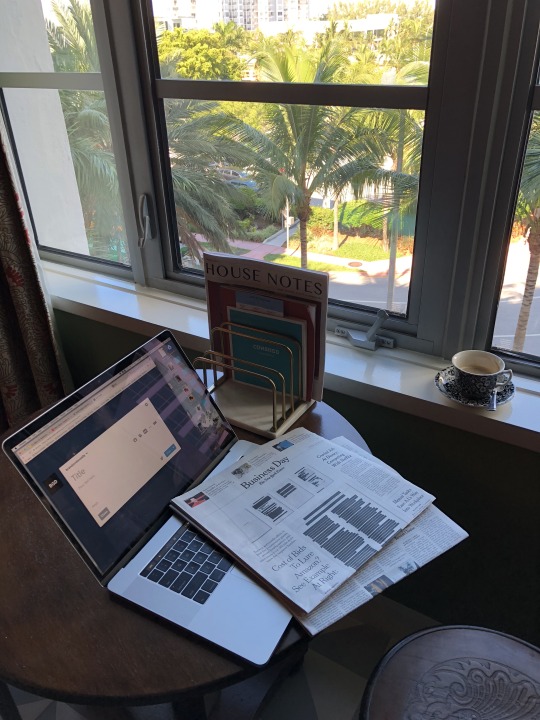
This morning I came across two news item that are interesting in their own right, but also have a noteworthy relationship.
$AAPL now has a market cap that exceeds $1 trillion. And not surprisingly, everyone, from the New York Times to Bloomberg (photo essay), is talking about it.
But the one thing that continues to stand out for me about this story is what Steve Jobs said back in 2011 when he unveiled iPad 2.
He said that fundamental to Apple’s DNA is its ability to marry technology with the liberal arts and the humanities. Its secret sauce is not technology alone.
Now let’s move on to the second piece of news that caught my attention.
As of 2017, less than 5% of college and university students in the US were studying one of the big four humanities majors – a sharp cliff-like drop from 2011 according to this data.
That’s almost certainly because business degrees and STEM degrees are thought to be more valuable and in demand in the labor market. And I’m sure they are right out of school.
But perhaps we shouldn’t forget Apple’s trillion dollar lesson. And I think this goes for both the tech space and the real estate industry, as well as others.
-
Before & After — Miami Beach
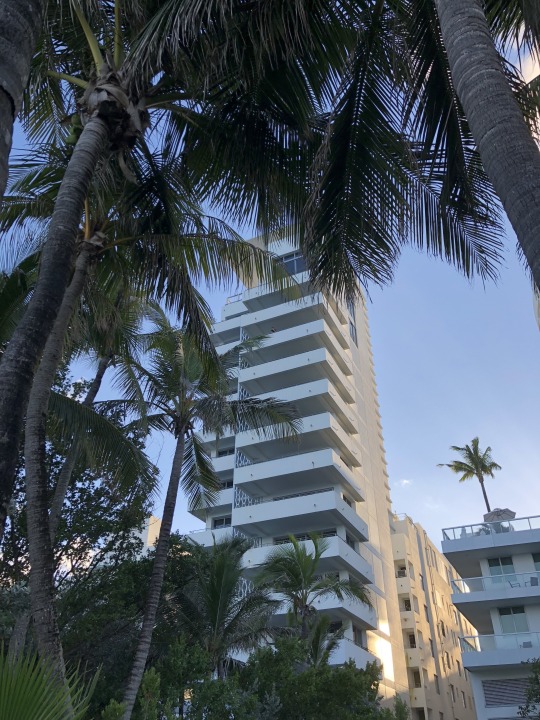
We switched coasts today. Here is a photo of our Miami Beach hotel taken from the boardwalk with my iPhone:
And here is the after:
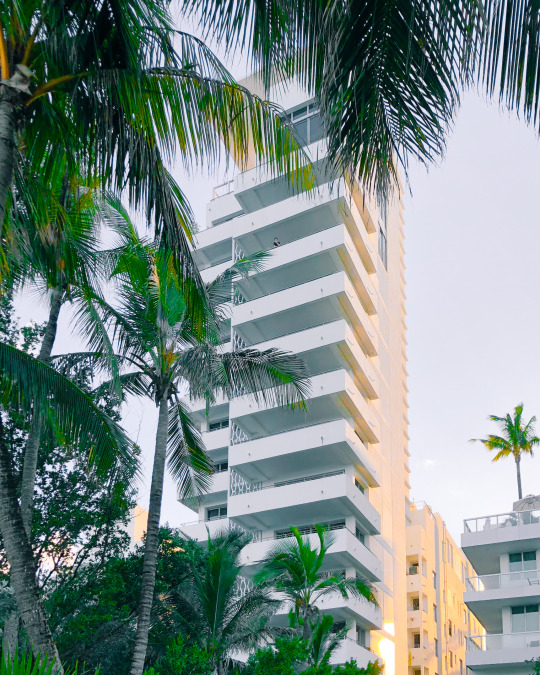
I took it into Lightroom. Fixed the alignment of the building. Whitened it, but brought out the beautiful warm sunset light on the north elevation. And I took the greenery in the foreground out of the shadows.
The balconies remind me of one of Donald Judd’s “Untitled” pieces. He was one of my favorite artists. I also like the one dude leaning over that upper balcony. It gives the photo a tranquil feel, which is not usually how one would describe Miami Beach.
-
Melting lollipops

I’m out of office for the next week and so I’m going to try a bit of photoblogging. Here is a photo that I took this afternoon at Elena Bulatova Fine Art Gallery on St. Armand’s Circle. I really liked the art, and especially the melting lollipops and popsicles. They certainly felt climate appropriate.
-
Hello Boston
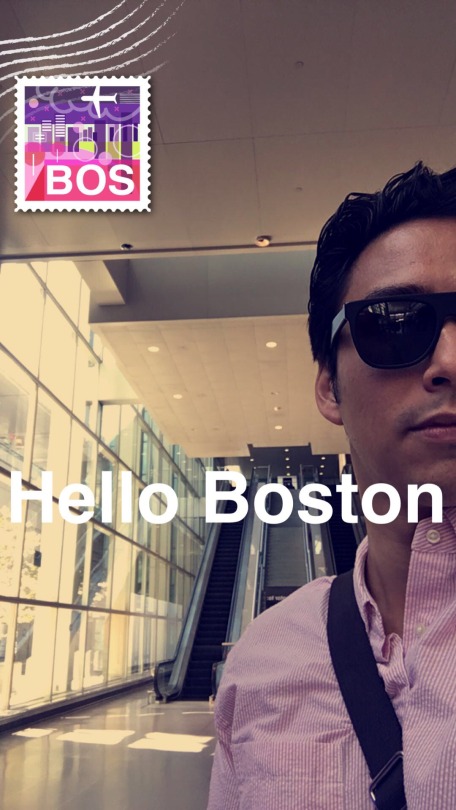
I arrived in Boston early this morning. It has been about a decade since I was last here.
I took the subway in from the airport, which is typically what I like to do when I visit a city. It’s such a great way to get a feel for a place. And in the case of Boston, Logan Airport is only a few stops away from downtown.
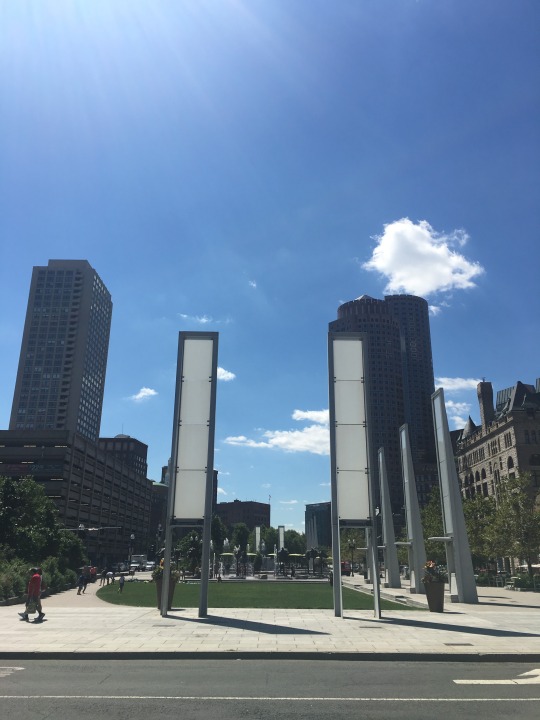
As soon as I got in, I walked over to see the Rose Fitzgerald Kennedy Greenway (above image). It’s a linear park that was made possible by burying the city’s elevated waterfront expressway – the infamous “Big Dig.”
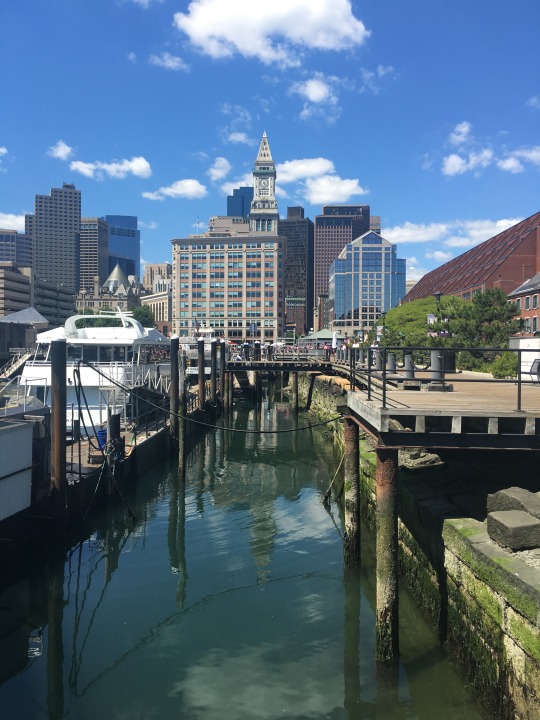
I recognize that it was a lavishly expense infrastructure project that went many times over budget, but walking across the greenway to get to the water was rather pleasant. Will Toronto’s The Bentway achieve a similar result at a fraction of the cost?
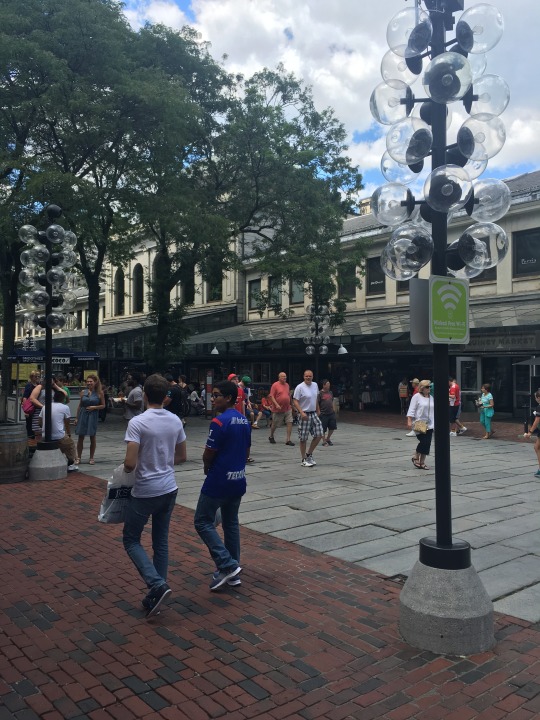
With that out of the way, I went for a lobster roll. It had to happen. I then walked around Faneuil Hall and Quincy Market (above image). It felt a bit touristy, but what a remarkable pedestrian-only area.

And now I’m on a boat heading over to Provincetown (Cape Cod) for a wedding. I’m writing this blog post over a spotty wifi connection, so out of fear that I may spontaneously lose it, I am going to end here. See you all tomorrow.
-
Cities aren’t the only places struggling with housing affordability
We already know that many successful cities are struggling with housing affordability. But what you may not know is that a similar phenomenon is happening in many ski towns. Supply is constrained and demand is high.
Here is an excerpt from a recent New York Times article:
Local officials and housing experts say it is a symptom of widening economic inequality, one that is especially sharply felt in tiny resort towns hemmed in by beautiful but undevelopable public land. While the wealthiest can afford $5 million ski homes and $120-a-day lift tickets, others work two jobs and sleep in shifts to get by.
“It’s so much worse today than it’s ever been,” said Sara Flitner, the mayor of Jackson, Wyo., where the median single-family home price rose 24 percent last year to $1.2 million, according to the Jackson Hole Report.
It’s for reasons like this that some ski towns have strict criteria around who is an eligible resident. For example, Banff, Alberta does this to ensure, “that housing remains available for those whose primary objective is to live and work in the community.”
In small landlocked ski towns – where it’s difficult or almost impossible to increase supply – there are only so many options.