
Daily insights for city builders, delivered every morning at 6 AM ET. I’m Brandon Donnelly — a Toronto-based real estate developer and founder of Globizen. I’ve been writing here since 2013.

Tag: bloggers

  • Home prices and negative interest rates

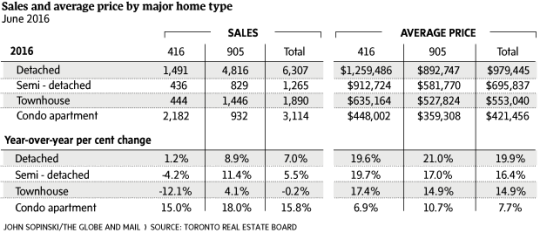
    This morning, I am looking at the following chart of average home prices in the Greater Toronto Area:
    It’s from this Globe and Mail article.

    These are staggering numbers. The average price of a detached home in the suburbs (905 area code) increased 21% year-over-year. In the city (416 area code), the increase was 19.6% YOY. These numbers are almost unbelievable.

    The article focuses on low supply (decrease in listings) and high demand. And that is certainly a big part of what’s going on here in this city, as well as in many others.

    But of course, the backdrop to all of this is our low / zero / negative interest rate environment.

    Larry Summers has a great post on his blog (which I discovered this morning via Fred Wilson) that talks about this “remarkable financial moment.” In some instances, real interest rates are actually negative! (You should read his post.)

    There are always people threatening that interests rates just have to go up. But Larry, as well as others, continue to argue that natural real interest rates are likely to remain close to zero going forward.

    Fred mentions Albert Wenger on his blog this morning and I have written about him before as well, here. In his book World After Capital, Albert argues that capital is no longer the scarce resource of our time. Instead, it has become attention.

    If you believe all of this to be true, then perhaps the numbers at the top of this post aren’t so unbelievable after all.

  • Design, technology, and culture

    Every now and then I’ll come across a website, a product, or something that immediately resonates with me. Usually that means I’ll immediately subscribe to it, buy it, follow it, or do whatever the action is supposed to be. It doesn’t happen all that often – though I think it should be a goal of companies and organizations to delight – but that’s exactly what happened to me this morning when I stumbled upon Subtraction.com.

    Subtraction is a blog about design, technology and culture (all things I love) and it’s written by Khoi Vinh. Khoi is Principal Designer at Adobe. Prior to this, he was Design Director of The New York Times and co-founder of the design studio Behavior, LLC. Fast Company also named him one of the 50 most influential designers in America. But enough of all that. His blog is great.

    Whenever I write about blogging, I tend to get questions about other blogs I might recommend. So today I’m recommending Subtraction.com. I’ve also added it to my working reading list, which I don’t think many of you are aware of because you probably just read this blog in your inbox. But it exists and I’m happy to add to it if you have interesting suggestions. (Please leave a comment below.)

    P.S. Because of Subtraction, I now have the movie High-Rise on my watch list. Have any of you seen it? Because I don’t have cable or Netflix, I tend to be painfully out of the loop on these sorts of things. It’s based on a book by J.G. Ballard and it’s the story of a 1970s suburban London apartment building that starts to socially degrade. How could I not want to watch that?

  • [Video] The Skyline Forum: Architect or Developer?

    I recently had a discussion with Ben Stevens about architecture and real estate development for his video blog, The Skyline Forum. I’ve posted about his blog before because I think it’s a great idea and a great forum for the industry. I sure hope he keeps it up.

    Here’s what we talked about in Ben’s words:

    “In Episode 6, I caught up with Brandon Donnelly of the very popular blog Architect This City. Brandon has degrees in both architecture and real estate development and as such has a unique perspective on the two disciplines. In this episode, I was interested to hear about the rationale behind his decision to pursue development over architecture, his definition of “real estate developer,” and his suggestions for pursuing the kind of work in real estate development which he does (currently in Toronto). It was a great conversation and confirmed for me a lot of things I’d learned through reading his fantastic blog.”

    And here’s the video discussion:

    [youtube https://www.youtube.com/watch?v=_-o_gT9czfM&w=560&h=315]

    A big thanks to Ben for inviting me to participate – he has chatted with some big names. As a published author himself, I also appreciated him encouraging me to write a book. I’ve been thinking about doing that. Oh, and a big thanks to my mom for providing the Christmas poinsettia that ended up being prominently featured in the background 😉

    I haven’t watched the full video yet, but one thing is clear: I’m quite the hand talker.

  • Without trust, you have nothing

    I was reading Fred Wilson’s AVC.com blog this morning (as I do every morning), and I thought his post on trust was a really important one. He was talking about it in the context of building successful web applications, but I don’t think it’s only applicable to internet businesses.

    As marketer Seth Godin wrote on his blog earlier this year, the most important questions are not:

    Is my price low enough?

    Is it reliable enough?

    Do I offer enough features?

    Am I on the right social media channels?

    Is the website cool enough?

    Am I promising enough?

    No, the most important question in marketing something to someone who hasn’t purchased it before is,

    “Do they trust me enough to believe my promises?”

    Without that, you have nothing.

    I thought this was such an awesome, yet simple, post that I actually circulated it to a bunch of people in the office after I read it. Because whether you’re marketing widgets, marketing private cloud storage, marketing to investors, or marketing new condominiums, that question of trust is paramount.

    And it’s for that reason that I think social media and mediums such as blogging have become so important. Customers want to feel like they trust you before they buy your product. The best brands know this and forge “relationships” with their customers. And with the tools at our disposal today, it’s become a lot easier for companies to do that.