Daily insights for city builders, delivered every morning at 6 AM ET. I’m Brandon Donnelly — a Toronto-based real estate developer and founder of Globizen. I’ve been writing here since 2013.

Tag: biking

  • We need far better urban data

    The divisive debate over bikes lanes in Toronto continues to remind me that we need far better urban data. People and politicians keep touting “evidence-based decisions,” but what exactly is that evidence? The high-level figure being thrown around by the anti-cycling side is that only something like 1% of residents use bike lanes. So obviously it only makes sense to focus on the 99% and not give up any space to this small minority group.

    But this is highly aggregated data. It also doesn’t speak to any of the externalities associated with introducing new bike infrastructure. Looking at 2021 Census data, the number of cyclists was actually around 5% for the old City of Toronto and in some areas it was between 15-20%. However, it’s absolutely critical to note that this is only the people who selected cycling as their “primary mode of commuting” when submitting their responses to the last census.

    Meaning, it excludes people who maybe only cycle 1-2 days a week, or who ride for leisure and/or for exercise, or who ride to their French class in the evenings (like me). I would also assume that these numbers have generally grown since 2021 given the overall investments that have been made in biking infrastructure. So overall, this is weak data. It’s a few years old. And it excludes many types of users. We need to get more granular.

    Like, it’s great to see local business owners speaking out about the benefits that they have seen as a result of the Bloor bike lanes, but in the end, this is also anecdotal. We need real-time data, precise modal splits, the throughput of every major street, and much more. Then maybe we’ll be able to better optimize around the fact that we are a city divided by built form and by politics. That’s the thing about evidence-based decisions, they tend to get stronger with accurate evidence.

  • May we have a bike lane?

    Today, the government of Ontario announced legislation that, if passed, would require municipalities to receive approval from the province before installing any bike lane that would result in the removal of lanes for traffic. And in order to receive such an approval, municipalities would need to demonstrate that the proposed bike lane(s) won’t have a negative impact on vehicle traffic. To be clear, municipalities should still be free to remove lanes for other purposes — such as on-street parking — but not for bike lanes.

    There’s a lot that can and will be said about this announcement. I’m also aware that I have my biases. I’m an urbanist. I live in a walkable neighborhood. And I enjoy biking, a lot — both to get around and for fun. So I think it’s clear that this announcement was designed to appeal to a specific audience: those that drive in from the suburbs and who are deeply frustrated. This is somebody doing something. Never mind that the new Eglinton LRT line isn’t open yet and nobody knows when it will actually open, look over here at these annoying cyclists.

    The problem with this line of thinking is that it’s not going to fix our traffic. The way you make things better in a big global city with lots of demand for road space is to reduce car dependency. This is not a popular thing to say, but it’s the reality. And broadly speaking, this is done in two ways. One, you provide great alternatives. And two, you price roads accordingly, through things like congestion charges. Incidentally, this also creates a virtuous cycle, because the latter raises money for the former.

    In many ways, we’ve been getting better at number one. In 2015, Bike Share Toronto recorded 665,000 trips. Since then, ridership has increased every year. In 2023, the network recorded 5.7 million trips. And this year, the number is expected to exceed 6 million. This is not nothing. This is a lot of people riding around on bikes, some of whom may have instead opted to drive or take an Uber. And I think there’s no question that this continual increase in ridership is at least partially supported by the fact that we’ve been creating more bike lanes.

    That said, I think it’s clear that to continue to move forward as a city we’re going to need to start collecting far better urban data. We need to know things like how many cars and bikes are on every street and how fast they’re moving. (AI can do this, right? ) This way we can continually optimize for moving the most number of people as efficiently possible. And if it turns out that I’m wrong, and clamping down on bike lanes and having more people drive is the most efficient, I’ll of course accept that. Just show me the data.

  • Leslie Lookout Park

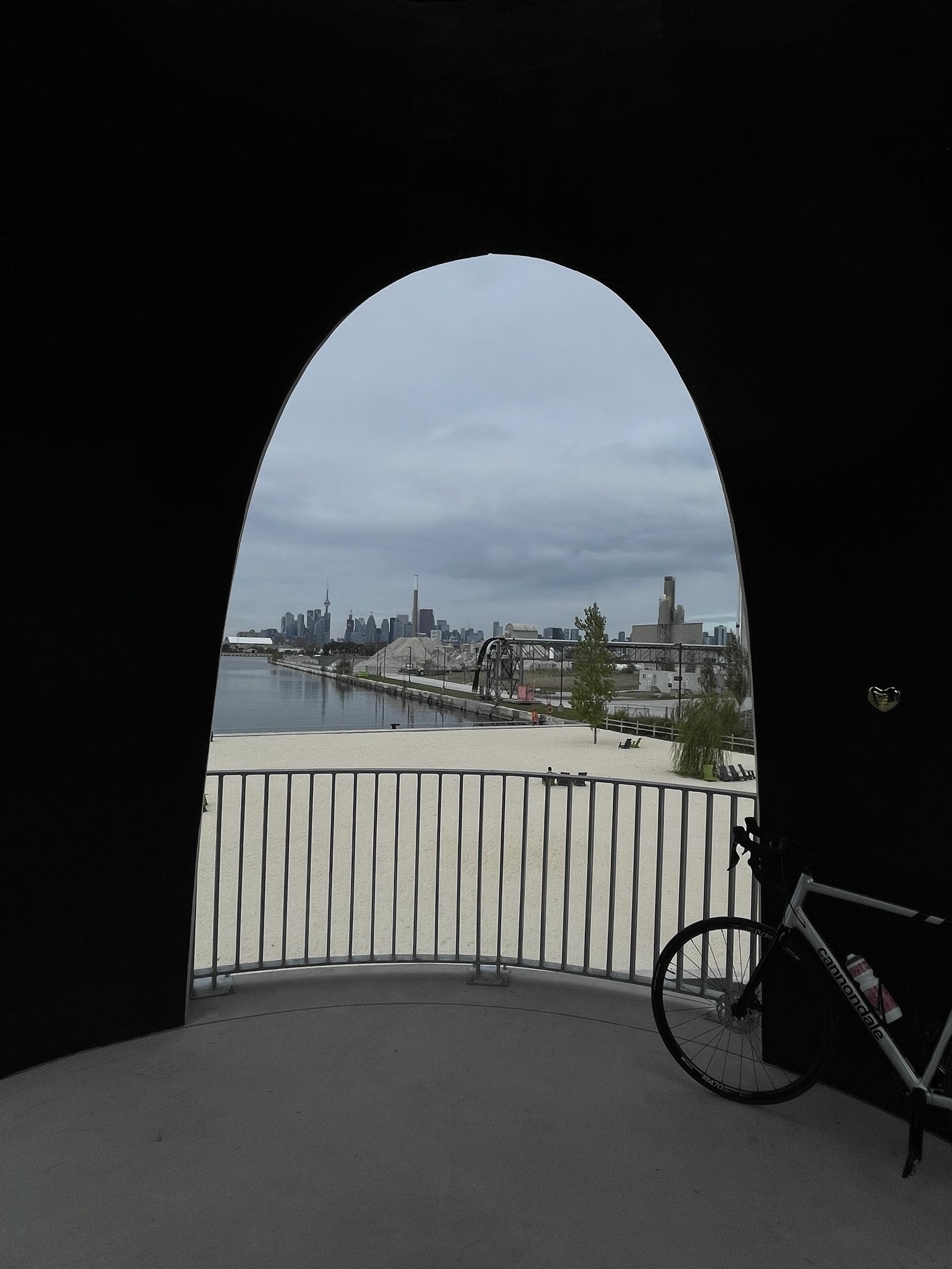
    This morning I rode out to Toronto’s new Leslie Lookout Park, which opened two weeks ago. I came down Cherry Street, crossing the new north bridge, and then I went all along Commissioners Street, crossing its new bridge.

    It’s great to see the Port Lands area continue to develop. Every time I’m down there, it feels more and more real — like an extension of the city. Now we just need to start developing within the blocks.

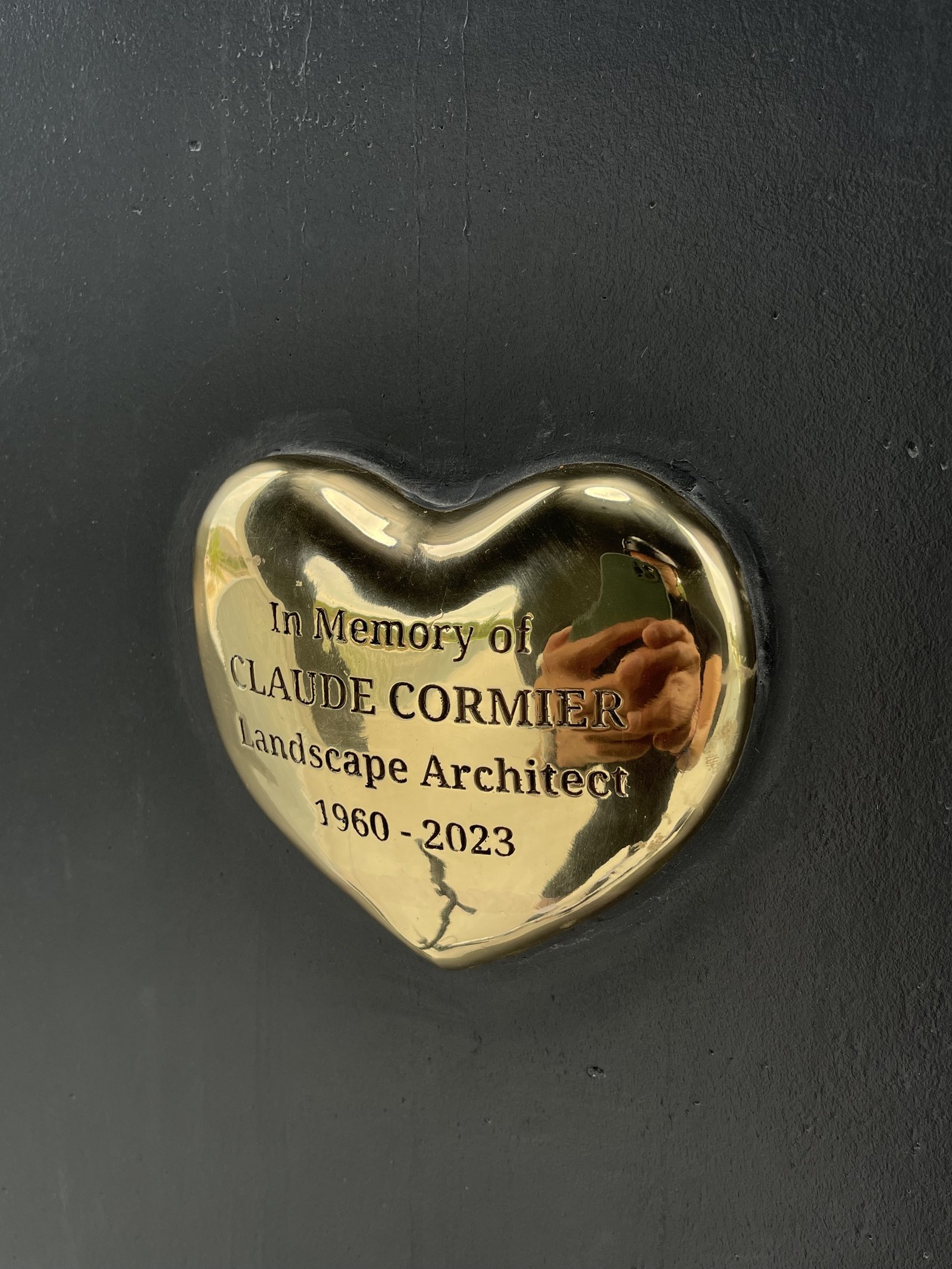
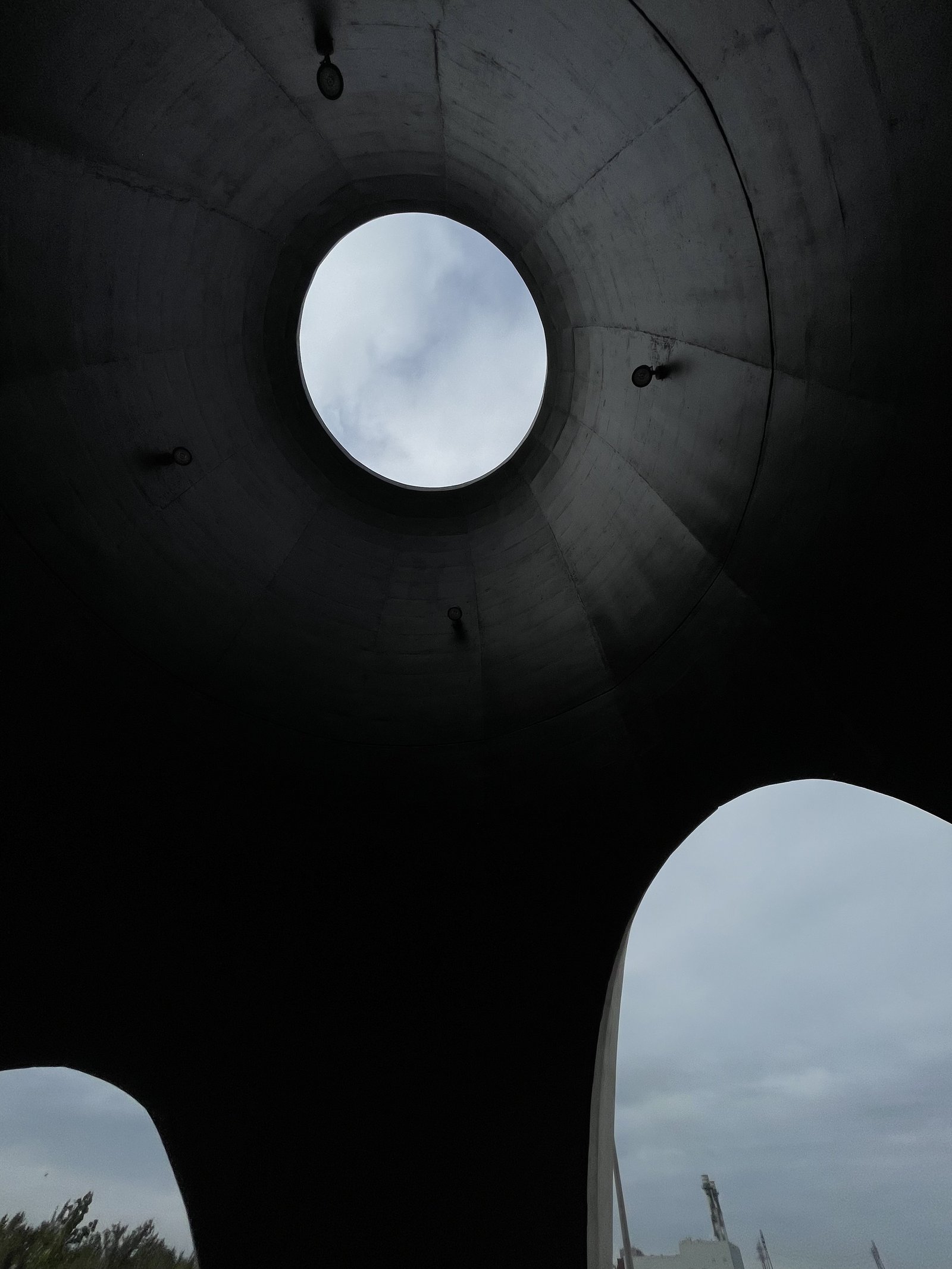
    If you find yourself at Leslie Lookout, make sure you locate Claude Cormier’s heart up in the tower. Claude’s firm CCxA was the landscape architect behind the project; but sadly, he passed away last year.

    Exactly 1 year before the opening of this park.

  • Just give me the fastest option

    I had a dinner in the suburbs this evening. And so in the afternoon today, I opened up Google Maps to figure out how I was going to get there.

    I didn’t have my car with me — because I hate driving into the office — so in my mind, I was either going to take transit or take an Uber.

    These are the time estimates that Google gave me:

    It was going to take me over 4 hours to walk there. Over an hour to drive there. And 47 minutes to take the train there. Interestingly enough, cycling was also going to be faster than driving.

    As soon as I saw this, I shut down the app and decided I would take the train. All I was interested in was the absolute fastest option. And for me at that moment, it was the train.

    I recognize that this isn’t always the case. Sometimes driving is much faster than taking transit. It depends on a number of factors.

    But as a general rule, when it comes to big and dense cities, you really can’t beat trains and bikes for moving the greatest number of people, as quickly as possible.

  • More people are cycling in Chicago

    One of the common criticisms of bike lanes is that most people don’t want to cycle in the winter. I mean, just look at Montreal’s winter cycling retention ratio.

    But that doesn’t mean that you shouldn’t invest in cycling infrastructure. Chicago, for instance, has been building out cycling infrastructure over the last few years (2020-2023) at an average rate of approximately 30 miles per year. This is double its rate from 2011-2019. And the results show.

    According to recent data from Replica and the Chicago Department of Transportation (CDOT), Chicago saw the highest growth in cycling among the 10 largest cities in the US between fall 2019 and spring 2023.

    Biking overall was up 119%. Crosstown trips were up 180% (bike trips that spanned across four or more neighborhoods). Trips related to shopping were up 117%. And notably, zero-car households were up 207%.

    Remember, this is a city that basically has the same weather as Toronto. It gets cold in the winter. And sometimes it snows. But clearly if you build good cycling infrastructure, people will use it.

  • What tribe are you part of?

    This satirical piece in the Beaverton about “biking everywhere” is hilarious because it touches on so many cycling stereotypes:

    “It’s a great way to get around while also staying in shape,” said McFarlen as he biked through a red light. “From tattoo shops to my job at VICE to even the best Banh Mi in the city – I just hop on my bike and I’m there. Why does anyone drive ever? Gross!”

    But the other thing it does is speak to the trade-off between location and transportation costs. Brian McFarlen, the fictional protagonist from the article, is able to bike everywhere (low cost) because he allegedly lives in a central neighborhood (high cost):

    McFarlen, whose parents paid for him to go to film school and has no mortgage, kids, or debt, condemns people who drive in the city. “I hate cars – we should just get rid of all roads and replace them with bike lanes. Isn’t everyone able to live downtown and spend hours of their day biking around the city hitting up all the best micro breweries?”

    I think it’s natural for us humans to form tribes with others that are similar to ourselves. We have two wheels and you all have four wheels. We live in the city and you all don’t. All of these things make us different.

    But there’s certainly something to be said for having a bit of empathy for those outside of our particular tribes.

  • Minimalist smart biking device

    I just came across this smart biking device on Kickstarter. It is the next generation of their original SmartHalo, which did very well and is now sold in Apple Stores. The company is based in Montréal.

    Here’s how it works:

    https://www.kickstarter.com/projects/smarthalo/smarthalo-2-make-your-bike-smarter

    I know that a lot of you are cyclists, so I figured some of you might appreciate this. It looks pretty awesome. Delivery of SmartHalo 2 is expected by December 2019.

    Their Kickstarter campaign ended on July 2. The project got funded with about CAD 1.7 million from over 10,000 backers. But you can still pre-order a device, here.

  • The passage of a few people through a rather brief moment in time

    My friend Eric Roseman, who lives in Los Angeles, just sent me this, knowing that I would almost certainly like the idea and want to write about it on the blog. This, is called The Passage of a Few People Through a Rather Brief Moment in Time.

    It’s over now. But from 2009 to earlier this year (2019), it was a collection of people who would meet every Wednesday night at 9pm at California Donuts #21 in Koreatown in order to cycle the city, see new things, and “see old things anew.”

    Given that each Wednesday night ride was about 20-35 miles, the group has covered a lot of ground over the last decade. Here is a cumulative map of their routes. You can also see an animated version, here.

    I like the idea of traditions and doing things repeatedly, because I think that grit is an important characteristic and I believe in compounding. It’s part of the reason why I write a daily blog and why I do an annual snowboarding trip.

    But I also think that biking is one of the best ways to experience a city. So, yeah, Eric, you were right. I do like this.

  • Inaugural meet-up: Planners on bikes getting coffee

    Remember my post from a few weeks ago about “planners on bikes getting coffee?” Well it happened. That’s the potential of blogging and Twitter. (I sold $TWTR too early.) 

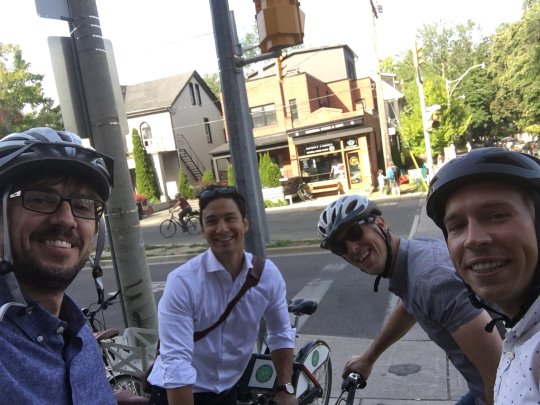
    Here is the selfie to prove it:

    Jason Thorne and I met up with Gil Meslin and Liam Hanebury (Liam needs Twitter) of Artscape and they toured us around a few of their projects, including one of their first artist live/work projects on Queen West.

    I do, however, have to confess that we didn’t have any coffee. I can’t drink coffee in the evening because it keeps me up at night. I already have too many things on my mind.

    Trying to hold a group conversation on a bike is also not as easy as talking in a car, but I would still label the inaugural session a success, even if I was posing as a planner without a bicycle helmet.

    If any of you have any suggestions for the next meet-up or I would like to join, drop me/us a line on the Twitter machine.

  • Planners on bikes getting coffee

    Over the weekend, Jason Thorne, who is the General Manager of Planning and Economic Development at the City of Hamilton, tweeted this out. He said, if Jerry Seinfeld can do Comedians In Cars Getting Coffee, then he was going to do Planners On Bikes Getting Coffee. And that’s exactly what he did in Barrie with their Chief Planner, Andrea Bourrie.

    I immediately responded by asking: Is this really a thing you are doing? Because if not, it is something you should absolutely start. He was kidding but I think the response he received on Twitter got him reconsidering if he should make it a thing. I think this is a great idea, and so I hope he does consider it. If you agree, maybe send him a tweet.

    I have a GoPro, gimbal stabilizer, and a bicycle. So if this doesn’t become a thing, maybe there needs to be a Developers On Bikes Getting Coffee.