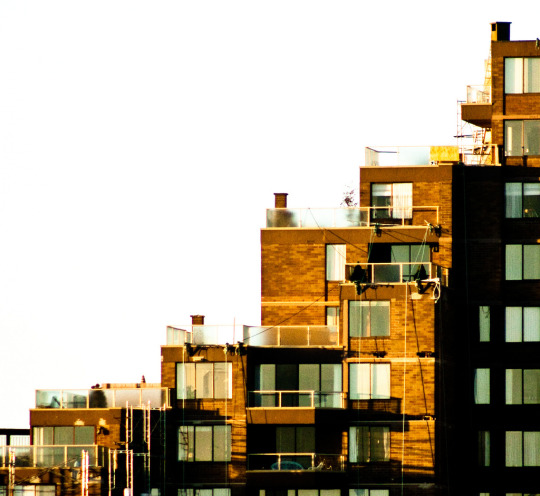
One of the things I try to be aware of is the language that I use to describe things. Because the words and conventions we use can impact how we perceive things and they can also reinforce certain inherent biases. (I have a good friend who is an expert on this topic, so he has heightened my awareness.)
For instance, I find that we tend to equate home and house. In other words, we’ll use the descriptors detached house and detached home interchangeably. And when we say that someone is a homeowner, it can sometimes, or often, mean that they have purchased a house.
The same does not seem to be true for apartments and condominiums. Rarely do I hear people say that they live in an apartment home or a condominium home. It’s just an apartment or condo.
This is meaningful because the emotionally charged word is home. It signifies a subjective (and usually comforting) experience, whereas the word house, I would argue, represents a building typology. And so by conflating the two, I often feel that we’re promoting a cultural bias that privileges houses as the ideal building typology. A true home is a house.
The other word that I often think about in my business is unit. When we talk about multi-family buildings we often – and I’m definitely guilty of this – refer to each suite as a unit. We’ll say things like: “This is a 200 unit building and the unit mix is as follows…”
Again, I am absolutely guilty of this. But at the same time, I often think about how this word, unit, is probably the furthest thing away from a home. Who wants to live in a unit? That doesn’t sound very pleasant. In fact, it sounds clinical. People want to live in a home. Now that’s a word with positive psychological associations.
And so by reducing each home to a unit, I think it could be making us lose sight of the fact that each suite will eventually be lived in by someone who will then make it their home. Yes they can be considered a customer who are paying for a product (a great place to live), but I don’t think that should take anything away from its homeyness.
I live in a condominium and it is my home. What about you?
Image: Flickr