Daily insights for city builders, delivered every morning at 6 AM ET. I’m Brandon Donnelly — a Toronto-based real estate developer and founder of Globizen. I’ve been writing here since 2013.

Tag: banff

  • Cities aren’t the only places struggling with housing affordability

    We already know that many successful cities are struggling with housing affordability. But what you may not know is that a similar phenomenon is happening in many ski towns. Supply is constrained and demand is high.

    Here is an excerpt from a recent New York Times article:

    Local officials and housing experts say it is a symptom of widening economic inequality, one that is especially sharply felt in tiny resort towns hemmed in by beautiful but undevelopable public land. While the wealthiest can afford $5 million ski homes and $120-a-day lift tickets, others work two jobs and sleep in shifts to get by.

    “It’s so much worse today than it’s ever been,” said Sara Flitner, the mayor of Jackson, Wyo., where the median single-family home price rose 24 percent last year to $1.2 million, according to the Jackson Hole Report.

    It’s for reasons like this that some ski towns have strict criteria around who is an eligible resident. For example, Banff, Alberta does this to ensure, “that housing remains available for those whose primary objective is to live and work in the community.”

    In small landlocked ski towns – where it’s difficult or almost impossible to increase supply – there are only so many options. 

  • A year in review — 2015 on Architect This City

    Thanks to this blog, it’s pretty easy for me to go back and look at what I was doing and thinking throughout the year. That’s one of the benefits of writing a daily blog/journal. And as is usually the case, 2015 was a year of ups and downs.

    For my annual ski and snowboard trip with the guys, we went to Banff (Alberta) and Revelstoke (BC). But we got stuck with unseasonably warm weather in the west (the opposite of what’s happening this winter) and I got injured on day 3. That put me in the emergency room and knocked me out of snowboarding for the rest of the season – as well as from the gym for a number of months.

    Shortly after that I also got struck with some family health issues. That was pretty scary for a good solid month, but in the end, everything seems to have worked out. What a relief.

    Towards the end of March, I did a brand partnership between Architect This City and Porter Escapes, which brought me to Quebec City for a weekend. That was a lot of fun and gave me the opportunity to be a real flâneur in one of the most interesting cities in Canada.

    In April, I left my real estate development job at TAS and shortly after I joined CAPREIT (TSE: CAR.UN) to help build out their (real estate) development platform. Previously their/our focus had just been on acquiring existing rental assets. But now it is time to build.

    Later this month I also participated in the Toronto filming of a documentary called Waterfront Cities of the World. That was a lot of fun. But come to think of it, I don’t think I ever watched the final video.

    In May, I started lobbying hard for the removal/replacement of the eastern portion of the Gardiner Expressway East here in Toronto. If you’ve been reading this blog since the summer, I am sure you remember this period. With the help of a colleague of mine, I even started a petition that ended up getting presented at City Council.

    But in June, Toronto City Council voted to demolish and then rebuild the elevated expressway along our waterfront. I am still surprised by that. What a shame.

    In July, we (CAPREIT) announced our first joint venture development project. A mixed-use project – 506 rental apartments on top of about 160,000 square feet of retail – in Toronto’s Liberty Village. 

    In August, I went back to Philly to relive my Penn days. I do that every couple of years just to make sure that Bob and Barbara’s is still offering up “The Special.” The Special is a can of PBR and a shot of Jim Bean for $3. It’s famous in Philly, but it always sounds like a far better idea the night before, as opposed to the morning after.

    In this same month I also hit the 2 year mark here on Architect This City. That’s 2 years of getting up every single day and staring at a blank blog post screen and thinking of something insightful to say. 

    The following month on September 11 (I’ll never forget this date), I got laser eye surgery. More specifically, I got custom wavefront LASIK. And today it’s pretty hard to imagine that I used to have to reach for my coke bottle glasses as soon as I woke up every morning.

    Later in September, I also gave a talk at my alma mater, the Rotman School of Management, to a delegation of about 70 urbanists from Portland. It was an honor to be invited alongside rockstars such as Richard Florida and Jennifer Keesmaat.

    In October, I featured a guest post from the former mayor of Toronto, John Sewell. I don’t often do guest posts on my blog, but John had just published a new book and I thought it would be a good way to change things up here. John and I aren’t necessarily on the same page with many urban issues, but we did agree on the Gardiner East.

    For the remainder of October, it was basically just the Jays.

    In November, I spoke at a Product Hunt event focused on real estate + tech. It was incredibly encouraging to see so many entrepreneurs here in Toronto focused on the intersection of real estate and tech. There are lots of opportunities in this space and I am sure that there are many success stories in the making right now. Toronto is the perfect place for real estate + tech innovation.

    And finally, in December, I crossed something off my bucket list and attended Art Basel Miami Beach. I have wanted to go for well over a decade; pretty much since I started studying art history in undergrad. I don’t know what took me so long.

    Oh, I also announced that I was writing a book on becoming a real estate developer

    What a year. I can’t wait for 2016. 

    What do you have on your to-do list for next year?

  • What are your disciplines?

    Photograph sunset drag by Philippe Clairo on 500px

    sunset drag by Philippe Clairo on 500px

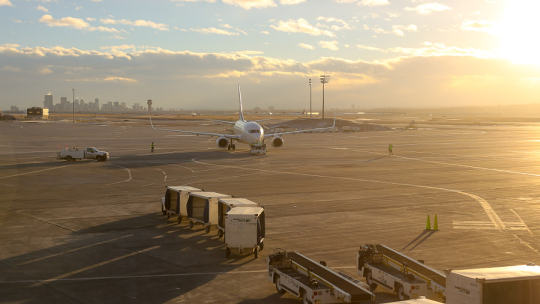
    I’m sitting in Calgary International Airport right now waiting for my flight back to Toronto. This marks the end of the 6th Penn Annual (our annual ski and snowboard trip). We all had an amazing time and I can’t wait until next year’s annual. We’ve already (pretty much) decided that it’s going to be in Park City, Utah.

    As you can probably tell, I like traditions and routines. As boring as that might sound, I think there’s a lot of value in doing the same thing over and over again. 

    It’s why I do an annual ski and snowboard trip every February with some of my closest friends (to a mountain we’ve never been to before). It’s why I write something – no matter how short it might be – every day here on Architect This City. It’s why I lift weights 3-4 times every week. It’s why I’m interested in brand building (creating equity takes consistency and time). It’s why I love the permanence of real estate. And it’s also why I like dollar cost averaging when it comes to investing.

    I guess you could say I like the long game. I enjoy having “disciplines.”

    And that’s because I think there are very few substitutes for hard work and sustained efforts. We all love to talk about those overnight success stories, but in reality they’re often the farthest thing from overnight. I know that it takes time to get great at something. And I also know that I’m not always going to be right. But the simple act of not stopping can take you pretty far.

    In any event, I hope you enjoyed all the mountain town talk (I have a few more ideas I want to write about) and my Snapchat stories (if you followed along). I got really into Snapchat on this trip. And that’s because I think the platform is at a tipping point where brands are going to start thinking of it as a legitimate marketing channel – and not just an app for teens.

    Do you have any routines or disciplines? If so, feel free share them in the comment section below. Or if you hate routines, tell us why.

    See you in Toronto 🙂

  • How unlikely neighborhoods change

    image

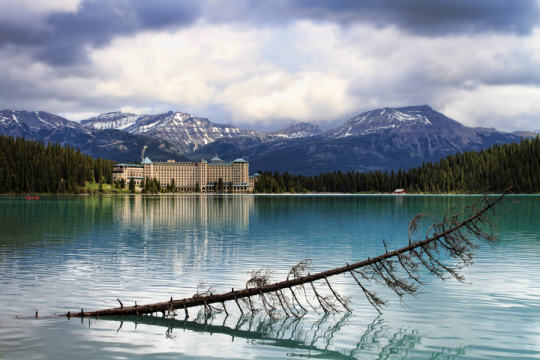
    I’m writing this post from the Lakeview Lounge at the Fairmont Chateau Lake Louise. The view of the (frozen) lake and mountains is absolutely stunning (see above). I can totally see why people move to the Rockies and never leave. Frankly, I’m not sure how I’m going to ever go home 😉

    This Chateau was first built up in the late 19th century by the Canadian Pacific Railway. Developed as a way to encourage ridership and fund railway expansion, its position on the eastern edge of Lake Louise was probably a fairly obvious choice (although only when accompanied by rail). It’s designed to take full advantage of the views of the lake and the mountains.

    Photograph Chateau Lake Louise ~ by Carmen Brown on 500px

    Chateau Lake Louise ~ by Carmen Brown on 500px

    But it’s not always this easy to predict or select where development should happen and will happen next.

    Yesterday I was quoted in a Torontoist article talking about the rise of Dovercourt Village in Toronto – which is a topic I covered here on ATC about a month ago.

    The interesting thing about Dovercourt Village – and specifically Geary Avenue – is that they seem like unlikely places for new investment. Many of the buildings aren’t particularly beautiful. And there’s a rail line and a set of power lines running through the middle of it.

    But if the buzz around Dovercourt Village proves to be true, then it could very well end up as a new yuppy enclave in the city. I’m not going to debate the merits of gentrification today, but I think it’s interesting how change can seemingly emerge out of nowhere.

    If you rewind 10 years to before Ossington Avenue became the hotspot that it is today, many of you would have probably classified it as an unlikely place for gentrification. Located beside the Centre for Addiction and Mental Health (CAMH), the area wasn’t considered desirable at the time. (CAMH has since undergone a lot of change.)

    But oftentimes change can come out of nowhere. It just takes few enterprising pioneers who see something that nobody else does.

  • Banff’s second floor

    image

    I have good news and bad news.

    The bad news is that I took a gnarly spill yesterday afternoon on the mountains. The nose of my snowboard got stuck in deep snow and I fell forward onto my shoulder and then compressed my back. I tore a shoulder ligament and possibly fractured two ribs. So snowboarding season is over for me this year.

    The good news is that I now have more time to relax and enjoy the town of Banff, and then Revelstoke this weekend.

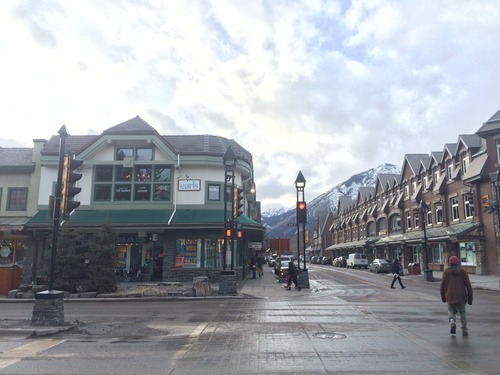
    Banff is a beautiful town. It’s compact, walkable, and surrounded by snow capped mountains. How could you not love it?

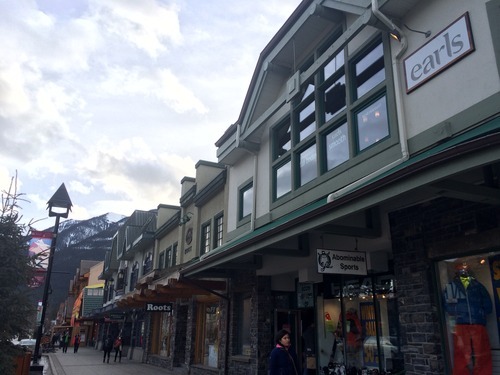
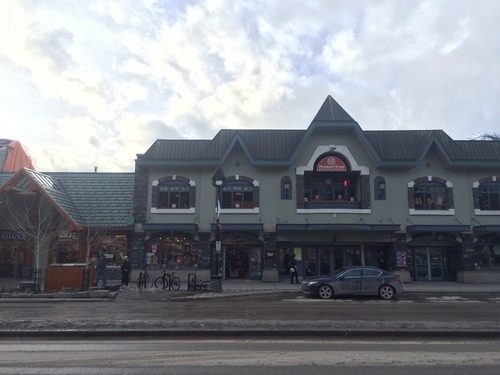
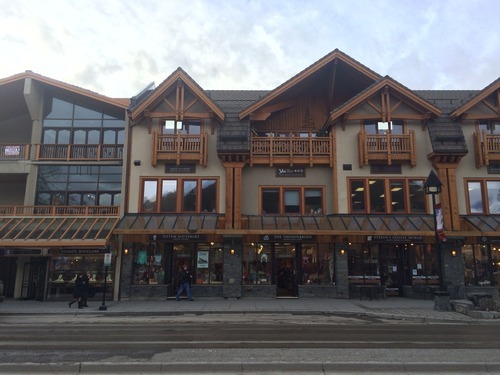
    One of the more subtle things that stands out for me though is the ubiquity of second level retail and restaurants. There’s a lot people in the (North American) real estate industry that will tell you that second floor retail just doesn’t work (you want ground floor). And indeed, it can be hard to pull off. As I’ve said before, getting retail right in general can be difficult.

    But in Banff, many of the bars and restaurants are up top. Here are a few examples (there’s an Earls, Boston Pizza, and a Korean restaurant, respectively):

    image
    image
    image

    So why does it work here?

    Given the town’s small footprint and location within Banff National Park, the market is supply constrained. That’s why Parks Canada imposes a number of restrictions on residency. They’re trying to ensure that the people who actually work in the community can find housing and it all doesn’t become second homes.

    So my gut tells me that in order to get enough retail/commercial space to serve the area and its tourists, they had no choice but to go up. They simply ran out of ground floor space. Because if the town was able to instead sprawl outward, I suspect that’s exactly what it would have done. And then more ground floor space would have been created.

    To be fair, most of the second floor examples I came across were bars and restaurants, which is arguably easier to pull off than straight retail. But it’s still something. 

    If any of you are familiar with real estate and planning in Banff or just have a better hypothesis, I’d love to hear from you in the comment section below.

  • Cities and mountains

    image

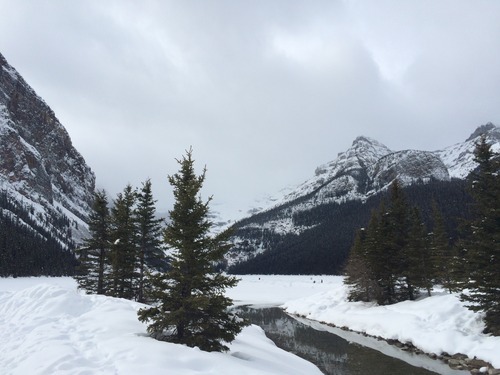
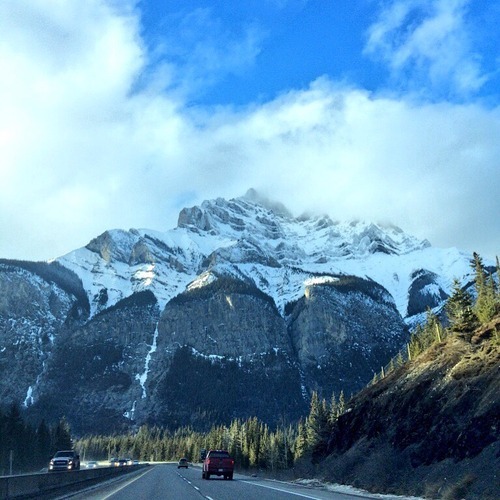
    Having just spent the weekend in Calgary and Banff, I’ve been thinking a lot about importance of picking the right city in which to live. I’m not saying that I don’t love Toronto. Because I do. But I am incredibly envious of cities – like Calgary, Vancouver, and Denver – that have such easy access to incredible mountains.

    The photo at the top of this post was taken on the drive from Calgary to Banff.

    Now, this might not matter to a lot of people, but it does to me. It’s a personal thing. There’s something really nice about landing in a city and seeing people leaving the airport with skis and snowboards in hand. And there’s something really nice about a city where so many people are active, outdoorsy, and fit.

    This, of course, is the topic of Richard Florida’s book, Who’s Your City?: How the Creative Economy Is Making Where You Live the Most Important Decision of Your Life. But it’s still something that I’m not sure many of us give a lot of thought to. Are you living in the right city for you?

    I’ve lived in cities that weren’t right for me and I know that it can have a profound affect on your happiness.

  • 10 days in the mountains

    I’m off this evening to Banff (and then Revelstoke) for a 10 day snowboarding trip. If you’ve been reading Architect This City since this time last year, you’ll know that this is an annual tradition that I started with a group of close friends from grad school. It’s our annual retreat to the mountains and it’s our 6th year doing. I hope we never stop.

    So what happens to ATC?

    Regular scheduled programming will continue as usual. But don’t be surprised if I change things up and make the content a bit more personal on some of the days. I’ve also decided to try out something new and video blog throughout the trip using Snapchat Stories. If you’d like to follow along, my username is donnelly_b. There will also be a more traditional video to follow.

    Finally, if you happen to know Banff and/or Revelstoke well, or happen to be from out west, I’d love to hear from you. It’s always great to get local insights.

    Image: Revelstoke via Flickr

  • GoPro city tours

    This past week was Toronto’s first real snowstorm of the season. It was awesome. I love snow. And part of the reason I love it, is because it means snowboarding season is here. Yes, the “mountains” in Ontario suck, but Quebec and Vermont aren’t too far away and every February there is The Annual.

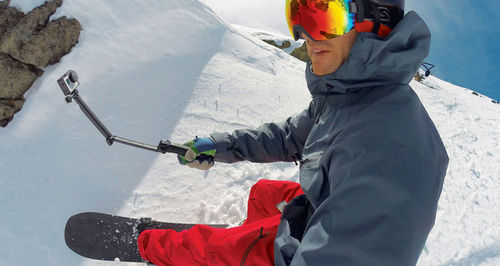
    This year in preparation for the season I decided to splurge on a GoPro camera. We had a lot of fun filming last year in Jackson Hole and, since it looks like we’re going to have close to 10 people at this season’s Annual, I wanted to throw another camera into the mix. Expect another ski and snowboard video sometime in February 2015. We’re heading out to Alberta and British Columbia.

    I also ordered this mount for the camera:

    image

    But as I was ordering the camera, I started to think about what else I could use it for. And then it hit me: city tours. One of the things I love to do in the summer is ride my bike around the city and explore. I like to find areas I don’t know very well, find new developments I may have missed, and generally just get to know the city more intimately.

    Being on a bike is really the perfect way to do this. You don’t cover enough ground walking and with driving you simply miss too much of the city. So what I want to do is strap my GoPro to my handle bars and bring you along for these exploratory bike tours. I think it could be a unique way to show you the city – even if you happen to also be from here.

    How does that sound?

    It likely won’t happen until the spring, but if you’re interested in joining me, let me know. I think this could be a lot of fun with a group of city geeks.

    Image: GoPro

  • Avoiding driving

    If you’ve been reading Architect This City since last winter, you might know that every year I go on one big snowboard trip with a group of guys I went to grad school with at Penn. Last year we went to Jackson Hole and Vail, and this year the plan is to go to Banff and Revelstoke.

    We start planning it by the fall and so already we’ve been trying to sort out the details for this winter’s trip. But as we finalize the plans, one thing I’ve noticed is how I’ve automatically been trying to minimize the amount of driving that we’ll need to do. In fact, in a perfect world, we wouldn’t have to rent a car at all.

    Now, small mountain towns aren’t usually the best for public transit, but there are often ways to get around that. When we were in Jackson, we took the public bus to get to the mountain every day, as did most people who lived or stayed in town.

    This winter, the plan is to fly into Calgary and stay in Banff for the first leg of the trip. So I’ve been trying to figure out if there’s a train that can get us from Calgary to Banff and which hotels offer shuttle buses to the mountains. Because I’d rather not drive, and I know many of my friends feel the same way. It’s an added cost and it gets in the way of après ski.

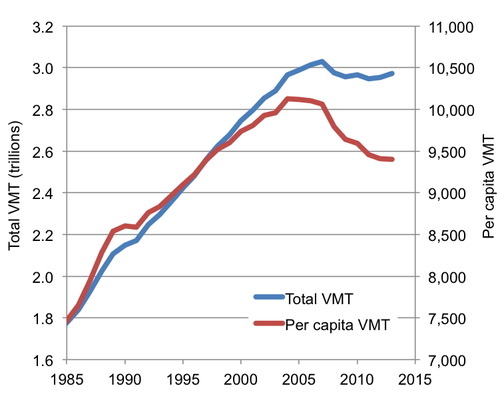
    What’s interesting about this, is that not only do I try and minimize the amount of driving I do here in Toronto, but I do it when I travel as well. And if you’ve been following the macro trends, you might know that many other people feel the same way. That’s why total Vehicle Miles Traveled in the US has been in falling since about the mid-2000s:

    image

    People are falling out of love with driving, and many believe that this shift is permanent. Here’s a recent report from the US PIRG Education Fund talking about just that:

    //platform.twitter.com/widgets.js

    I also think this shift is permanent – until maybe the nature of driving changes and cars start driving themselves. But at that point, it won’t be called driving anymore and there will probably be many other changes. So on this rainy Wednesday morning, my big bold prediction is that future generations will no longer drive.

    What do you think?