Daily insights for city builders, delivered every morning at 6 AM ET. I’m Brandon Donnelly — a Toronto-based real estate developer and founder of Globizen. I’ve been writing here since 2013.

Tag: autonomous vehicles

  • Clean disruption of energy and transportation

    I just came across the below talk by Tony Seba about the coming “clean disruption” of energy and transportation. The talk follows his book of the same name. Click here if you can’t see it below. It runs about an hour, but I would encourage you to give it a watch. 

    [youtube https://www.youtube.com/watch?v=2b3ttqYDwF0?rel=0&w=560&h=315]

    The first few minutes will be things I’m sure many of you have heard before, such as the failure of Kodak to embrace digital cameras (film business considered too valuable), Moore’s Law, and so on. But he then moves on to cost curves, battery storage, solar power, and autonomous electric vehicles (A-EVs).

    You all know that I am fascinated by these topics, so here’s one piece that stood out for me: 2021 is his prediction for the year in which A-EVs become real and disrupt both internal combustion engine (ICE) vehicles and individual car ownership.

    Obviously this won’t happen overnight, but Tony’s belief is that 2021 will be the year that the economics of A-EVs become so compelling (10x) that it will crush our current business models.

    The argument is that on-demand ride hailing/sharing and A-EVs will converge and that Transportation as a Service (TaaS) will provide our mobility needs at a fraction of today’s costs. We’ve talked about this prediction before on the blog, but never has a timeline been attached to it.

    All of this reinforces two thoughts that I’ve been having over the past few years. One, I will probably never buy another combustion engine vehicle. And two, I should probably avoid buying another vehicle, period, until the next wave of business models becomes clearer. Leasing likely makes more sense at this stage if you need a car.

    In fact, Tony believes that with the collapse of individual car ownership, the resale value of cars could become negative. That is, you’d have to pay people to take a car off of your hands, because everyone will recognize the cost advantage of just using TaaS.

    We are doing everything we can to future proof our development projects so that they are ready for electric vehicles. But if A-EVs and TaaS completely erase individual car ownership within the next 5 years, then all of us in the industry are going to need to do much more to ready our buildings and cities.


  • Network effects for autonomous vehicles

    In my recent post about why I write about tech on this city building blog, I made a pithy comment about autonomous vehicles and why it is “largely a software challenge.” 

    The argument I was trying to make was that the hardware, similar to smartphones today, will likely become a commodity. More of the value will end up flowing to the firms that control the software.

    Benedict Evans has an excellent deep dive into this topic on his blog. The post is called: Winner-takes all effects in autonomous cars.

    Here’s an excerpt about hardware:

    To begin with, it seems pretty clear that the hardware and sensors for autonomy – and, probably, for electric – will be commodities. There is plenty of science and engineering in these (and a lot more work to do), just as there is in, say, LCD screens, but there is no reason why you have to use one rather than another just because everyone else is. There are strong manufacturing scale effects, but no network effect. [My link, not his.]

    And here’s his conclusion:

    So, the network effects – the winner-takes-all effects – are in data: in driving data and in maps.

    That said, it is still early days for autonomous vehicles. Who knows if these network effects will end up being highly defensible or weak. There are still lots of assumptions and questions at this stage.

    From a city building perspective, one of the major concerns with autonomous vehicles is that they could tempt us back to car-centric city planning. That would be a shame.

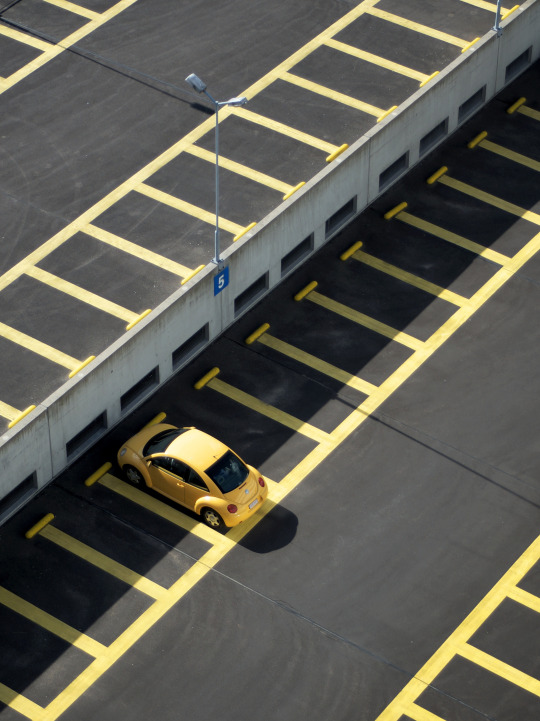
    Photo by Zachary Staines on Unsplash

  • Why I write about tech on my city building blog

    I had a friend ask me this week about how I decide what to write on this blog. His comment was that I tend to write about a variety of different topics. He wondered: Isn’t it better to focus on one particular niche?

    The simple answer is that I write about what interests me. And secondary to that is any concern around what will get the most clicks. In fact, I try not to fall into the trap of worrying about the latter. Sometimes it can be paralyzing to fixate on what will appeal most to the tens of thousands of people who read this blog on a regular basis.

    The reality is that my interests are much broader than, say, just design and real estate; though these two topics are clearly central. 

    I learned a long time ago while studying architecture and art history that what we make as a society is generally a product of the cultural milieu at the time. In other words, the built environment doesn’t happen in a vacuum. It is the physical manifestation of what we believe to be true at a particular moment.

    Today, it’s pretty hard to ignore the importance of tech. Think of some of the most valuable companies in the world right now: Apple, Google, Amazon, Facebook, and so on. Now, technology has always shaped our cities, but what makes this moment different is the decisive shift toward software.

    It’s arguably no longer about who can build the best mousetrap. It’s about who can build the best software layer on top of that mousetrap.

    In 2011, venture capitalist Marc Andreessen (previously the co-founder of Netscape) published a widely shared essay called, “Why Software Is Eating the World.” And over the past 6 years he has been proven to be very right.

    The 3 main points he aimed to make with that essay are as follows:

    1. Every product or service that can become software will become software.
    2. Every company will have to become a software company.
    3. The winning companies will be the best software companies.

    Depending on your industry, this may sound ludicrous to you. Certainly in 2011 it probably seemed that way. 

    But a perfect example of this phenomenon is the iPhone. The phone itself is manufactured in China, albeit where a lot of great hardware innovation is taking place. 

    But at this point, phones have become fairly commoditized. The profits that Apple makes from the iPhone disproportionately come from the software layer and the app ecosystem it has developed.

    You could make a similar argument with Tesla. Autonomous navigation – which most of us can agree will have a profound impact on cities – is largely a software challenge. 

    And so if you believe that autonomous vehicles will be a fundamental part of the future of mobility, then it’s not that hard to believe in point number three: the winning car company will also have to be the best car software company.

    Some industries have been less touched by tech and software – real estate being one of them. But if Andreessen is right and it’s not a question of if, but a question of when, then it behooves all of us to think about the potential impacts.

    I love how Andreessen ends this podcast discussion with Barry Ritholtz of Bloomberg and so I’m going to repeat it here to close out this post. He says: “There are no bad ideas. There are only early ideas.” 

    And that’s why I write about tech on my city building blog.

    Photo by Michal Pechardo on Unsplash

  • Autonomous vehicles will strengthen the case for road pricing

    Joe Cortright of City Observatory recently published a post about the types of policies that cities should be looking to adopt in response to autonomous vehicles. It’s called: Pricing roads for autonomous vehicles.

    Many have argued, including urban economist Edward Glaeser, that autonomous vehicles are going to be positively disastrous for cities. Once you remove the labor costs associated with the driver and the overall price per kilometer plummets because of pooling/technological advances, we are going to see an huge surge in demand – well beyond the capacities of our roads.

    Of course, there are solutions. We can accurately price the roads, which is something that more cities should be doing today even before autonomous vehicles arrive. Here is an excerpt from Cortright’s article:

    “With modern electronics, and especially with autonomous vehicles, position and speed is monitored with great precision. There is no reason why they [drivers] should not pay for exactly the amount of roadway that they use. And we know that the cost of the city’s roadway varies substantially across space and over time. Use of road capacity in less dense neighborhoods at off-peak hours imposes nominal costs on the city’s road budget. In contrast, peak hour use of city streets and arterials, particularly in and near the city center, imposes huge costs on the city and its residents. Those who use the system at peak hours in congested locations should pay the costs associated with creating, maintaining, and where necessary expanding that infrastructure.”

    This isn’t a novel concept, which is why when Toronto was looking at a flat road toll I argued here on the blog that it was a step in the right direction but that it was too blunt a tool. 

    It’s a moot point now because sadly the province ended up pandering and rejecting the plan, but we should have been considering something that could achieve the above objectives. It needed more finesse.

    But in all likelihood our cities will have to face that reality sooner rather than later.

  • The death of Big Oil

    Designing a building for 5+ years into the future can be tricky. The pace of change in the world today is astounding.

    Last month Seth Miller published a Medium article called: This is how Big Oil will die. His argument is that the cost of running an electric self-driving vehicle will be so low – simpler technology and no labor cost – that the personal vehicle as we know it will come to an end. People are inevitably going to give up their cars, which will result in a peaking of oil consumption.

    We’ve talked about this future many times before on the blog. But Miller’s argument ties it back to oil and also comes with a set of predictions taken from a report prepared by the consulting company RethinkX:

    – Self-driving cars will launch around 2021.
    – A private ride will be priced at 16¢ per mile, falling to 10¢ over time.
    – A shared ride will be priced at 5¢ per mile, falling to 3¢ over time.
    – By 2022, oil use will have peaked.
    – By 2023, used car prices will crash as people give up their vehicles. New car sales for individuals will drop to nearly zero.
    – By 2030, gasoline use for cars will have dropped to near zero, and total crude oil use will have dropped by 30% compared to today.

    If all of these predictions prove to be true, then what should we be doing today to prepare our cities for this future?

  • Technology and the city

    Embedded at the bottom of this post is a great rapid-fire talk by Edward Glaeser about technology and the city. 

    Technology has always been a fundamental driver of change within our cities and I like how Glaeser starts by referring to these forces as either centripetal and centrifugal. The car was an example of the latter. It spread us out.

    At the same time, Glaeser points out that the car was really the first time that urban mobility patterns shifted from hub-and-spoke to point-to-point. Transit systems rely on hubs and some walking, which in a world of cars has led to something we call the last mile problem.

    Also worth noting is the fact that Glaeser is terrified about what autonomous vehicles will do to our cities. His point is that the fundamental law of highway traffic has shown that vehicle miles traveled increases basically 1:1 with highway miles built.

    So if all of a sudden AVs are able to decrease the cost of mobility, provide capacity benefits, and increase rider enjoyment (because you’re no longer a driver), vehicle miles traveled are going to go through the roof. This makes a strong case for some form of road pricing.

    But it also means that unlike traditional cars, which were a centrifugal force, AVs could in fact turn out to be a force that further centralizes us within dense urban centers.

    When you listen to Glaeser’s talk, you will quickly understand why so much attention (this blog included) is being paid to autonomous vehicles. They are one of – if not the – next great technology bound to reshape our cities.

    If you can’t see the video below, click here.

    [youtube https://www.youtube.com/watch?v=lbGwhWbuhfg?rel=0&w=560&h=315]

  • Autonomous vehicles are the new big box store

    I would like to pull out one more idea from Derek Thompson’s article, What in the World Is Causing the Retail Meltdown of 2017? It is this prediction that self-driving cars could maybe become the new retail store:

    “Once autonomous vehicles are cheap, safe, and plentiful, retail and logistics companies could buy up millions, seeing that cars can be stores and streets are the ultimate real estate. In fact, self-driving cars could make shopping space nearly obsolete in some areas. CVS could have hundreds of self-driving minivans stocked with merchandise roving the suburbs all day and night, ready to be summoned to somebody’s home by smartphone. A new luxury-watch brand in 2025 might not spring for an Upper East Side storefront, but maybe its autonomous showroom vehicle could circle the neighborhood, waiting to be summoned to the doorstep of a tony apartment building. Autonomous retail will create new conveniences and traffic headaches, require new regulations, and inspire new business strategies that could take even more businesses out of commercial real estate. The future of retail could be even weirder yet.”

    It’s an interesting idea. And perhaps not as far fetched as it may seem. Delivery timelines are constantly being compressed. And as the purchasing data gets better, it may be possible to anticipate sales before they even happen such that you’re minimizing the amount of unsold product being hauled around.

    I’m going to end here because it’s now time for some Raptors playoff basketball. But what are your thoughts?

  • Betting on electric and autonomous

    On Monday, Tesla surpassed GM in market value, making it the most valuable U.S. automaker. It’s also the first time in modern history that this title was held by a car maker not based in Detroit. The gravitational pull to Silicon Valley is immense, today.

    I subscribe to Alan Murray’s CEO Daily newsletter and his overarching comments were as follows: GM sold 10 million cars last year. Tesla sold 76,230 cars (albeit high value cars – my 2 cents). And Tesla lost three quarters of a billion dollars last year. Are we partying like it’s 1999?

    This is an expectations game.

    Elon Musk crafted an electric sports car that was actually cool and Tesla is certainly one of the leaders when it comes to autonomous vehicle technology. If Tesla is the company that transitions our economy to both electric and autonomous vehicles, then is a current market cap > $51 billion justified?

    I don’t know.

    But given how often we talk about electric and autonomous vehicles on this blog (in the context of city building), I thought it would be worthwhile to also talk about where Wall Street is putting its money and placing its bets.

  • Downstream effects of electric and autonomous vehicles

    I speculate a lot on this blog about what electric and autonomous vehicles will mean for the future of our cities. The reason it’s speculation is because it’s phenomenally difficult to know with any sort of certainty what the downstream effects of these technologies will be.

    I’ve seen some people claim that a car is still a car. That is, all of the same rules will apply even if they’re powered completely by renewals and we manage to make drivers obsolete (5-10 years?). But I fundamentally disagree with this line of thinking. There will be both positive and negative consequences. They are just yet to be seen.

    Benedict Evans recently wrote a post where he started to think about where some of these changes might happen. And so I thought it might be valuable to throw a few of these into the discussion mix. Here are some of his ideas:

    • About half of car maintenance spending in the US goes to things directly related to the internal combustion engine. Electric takes that away.
    • There are about 150,000 gas stations in the US. They go, along with their associated convenience stores, which is where the margins are made. Interestingly enough, more than half of all US tobacco sales happen at gas stations. Where does that go?
    • It is estimated that electric vehicles will increase overall electricity demand by 10-20%. But this could disappear with the battery storage and off-peak power.
    • Globally, about 1 million people die every year from car accidents. In the US, something like 90% of all accidents are thought to be caused by human error and about 1/3 of fatal accidents involve alcohol. Autonomy has the potential to take most of this away. Personally, I think we’ll look back and think about how dangerous driving used to be and wonder how/why we all did it.
    • A complete rethink of parking. This obviously gets talked about a lot. ~14% of LA’s land is thought to be used for parking. My guess is that parking ratios/requirements go way down (we’re already in the 0 to 0.3 per residential unit territory here in Toronto) and parking garages transform into yards for AVs.
    • Autonomous vehicles once again rewrite the retail real estate landscape. Benedict believes they will create more billionaires in real estate and retail than in tech or manufacturing. I like how he describes big box retailing as an arbitrage of land costs, transportation costs, and people’s willingness to drive and park. This point is likely about AVs + e-commerce. See yesterday’s post about Amazon.
    • Finally, his last point is that autonomous vehicles could become a kind of mobile Panopticon. The Panopticon was an institutional building typology conceived of by Jeremy Bentham in the late 18th century. It was based on the idea that inmates could all be monitored by a single watchman, without any of the inmates knowing if they were, in fact, being watched. It was a way of trying to impose strict obedience in prisons, and so on. Since virtually all autonomous vehicles require some sort of computer vision, Benedict argues that they could become the 21st century watchmen. Move over CCTV.

    The other big question is about decentralization. New transportation technologies have consistently promoted greater suburbanization – think streetcar suburbs to car suburbs. The fact that you’ll be able to use your time more productively in an autonomous vehicle is continually floated as an argument for this trend to continue. But I haven’t made up my mind about this one.

    Do you have any other thoughts on the downstream effects of electric and autonomous vehicles?

  • Tesla is winning the arms race

    “If we have data, let’s look at data. If all we have are opinions, let’s go with mine.” – Jim Barksdale, former Netscape CEO

    Fred Wilson wrote a post yesterday about Tesla’s data advantage in this self-driving car arms race that we are currently living through. (I found the above quote in the comment section of the post.)

    In their Q3 2016 update, Tesla claims to have logged more than 1.3 billion miles on its vehicles equipped with Autopilot hardware. This is important because the more data it collects – across diverse road and weather conditions – the better the vehicles get at driving without human intervention. As Fred Wilson put it: “more data is better than more software engineers.” So that places Tesla ahead of Google, Uber, GM, et al.

    I spent a lot of time driving over the past week, certainly more than usual, and I couldn’t help but think about how much better it would have been to instead sit in the backseat and read a book (or mindlessly scroll through Instagram).

    I always try and use cruise control on long drives, but unless the road is fairly empty, I find it doesn’t work very well. Everyone is driving at different speeds and so I usually end up having to reset it / adjust it every so often.

    The big question in my mind is still: How does the world look when driving longer distances doesn’t suck so much? What changes when you can get into your / a car (important distinction) at bedtime, fall asleep, and then wake up in a new place?

    A lot, I think.