Daily insights for city builders, delivered every morning at 6 AM ET. I’m Brandon Donnelly — a Toronto-based real estate developer and founder of Globizen. I’ve been writing here since 2013.

Tag: automobile

  • Current state of autonomous vehicles

    This is an interesting piece by Bloomberg summarizing the current state of autonomous vehicles and in particular the (supposed) dominance of Waymo (Alphabet’s self-driving vehicle arm). Many believe they will be the first real entrant into the market.
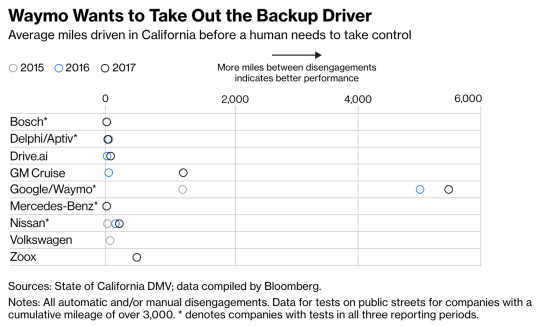
    The company is currently running an “Early Rider” program in 25 cities. But its Phoenix trials are the furthest along, which isn’t at all surprising given the city’s car orientation and suburban fabric. Already Waymo has started offering passenger rides without a backup driver in the car.

    Overall, the company has come forward with four main business priorities:

    • Ride hailing
    • Trucking
    • Personal vehicles
    • Public transit

    But I still think that we’ll see a blurring of these priorities, if not outright cannibalization, as the cost per mile plummets. I mean, why own a personal vehicle if it is flat out easier and cheaper to just hail a robotaxi? 

    Here is an excerpt from the article talking about pricing:

    Tasha Keeney, an analyst at ARK Invest, says that Waymo could choose to offer an autonomous ride-hailing service today at around 70 cents a mile—a quarter of the cost for Uber passengers in San Francisco. Over time, she says, robotaxis should get even cheaper—down to 35 cents a mile by 2020, especially if Waymo’s technology proves sturdy enough to need few human safety monitors overseeing the autonomous vehicles remotely. “You could see software-like margins,” Keeney says.

    I can’t wait to be driven around for cents on the dollar. Click here to read the full article.
  • The ROI of cycling infrastructure

    Toronto can’t make up its mind right now as to whether it would like to invest in additional cycling infrastructure. 

    Of course, we have a history of vacillating on topics like this. And I think it’s because we’re at a tricky inflection point. We are weaning ourselves off of the car, but most parts of the city remain underserved by transit and heavily dependent on the car.

    So today I thought I would share some numbers from a research study that was published last year by Stefan Gössling of Lund University and Andy S. Choi of the University of Queensland. It’s called, Transport transitions in Copenhagen: Comparing the cost of cars and bicycles.

    Much of the focus of the paper is on the cost-benefit analysis that the City of Copenhagen uses to make its cycling investment decisions. Here is an excerpt from ScienceDaily:

    “If the costs to society and the costs to private individuals are added together, the impact of the car is EUR 0.50 per kilometre and the impact of the bicycle is EUR 0.08 per kilometre.

    The study by Stefan Gössling and his colleague also shows that if we only look at costs/benefits for society, one kilometre by car costs EUR 0.15, whereas society earns EUR 0.16 on every kilometre cycled.

    “The cost-benefit analysis in Copenhagen shows that investments in cycling infrastructure and bike-friendly policies are economically sustainable and give high returns,” says Stefan Gössling.”

    So there you have it. Now I thought we could debate this in the comment section. Your thoughts?

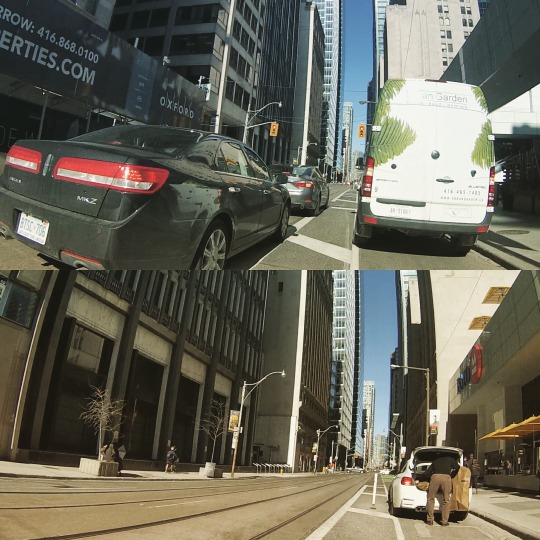
    P.S. The images at the top of this post were taken by me using my new GoPro bicycle handlebar mount.

  • Automobile vs. tram

    In grad school, I was fortunate enough to be a teaching assistant for a class called Urban Real Estate Economics, which was taught by Dr. Richard Voith. It was one of my favorite classes. So if you ever find yourself at the Wharton School, I would highly recommend it.

    Richard is also the President of a consulting firm in Philadelphia called Econsult Solutions. And I think a lot of what they focus on would be of interest to the audience of this blog. Their focus is on urban economics, real estate economics, transportation, public policy, and – you get the idea.

    Recently, he wrote a post called, Moving Cities: Berlin, where he outlines some of the transportation decisions that West and East Berlin made in the second half of the 20th century. 

    What I found most interesting was how the trams of East Berlin were stigmatized to represent communism and a centrally planned economy. On the other hand, West Berlin was all about the free market, and the symbol for that was none other than the automobile. That meant that the trams had to go. 

    Here is a quote that he shares from B.R. Shenoy, first published in August 15th, 1960:

    “The main thoroughfares of West Berlin are near jammed with prosperous looking automobile traffic, the German make of cars, big and small, being much in evidence. Buses and trams dominate the thoroughfares in East Berlin; other automobiles, generally old and small cars, are in much smaller numbers than in West Berlin. One notices cars parked in front of workers’ quarters in West Berlin… In contrast with what one sees in West Berlin, the buildings [in East Berlin] here are generally grey from neglect, the furnishings lack in brightness and quality, and the roads and pavements are shabby…”

    My favorite line: “…jammed with prosperous looking automobile traffic.”

    Of course, Berlin wasn’t the only city to eschew trams in the 20th century. Detroit and Los Angeles both did exactly the same thing. But in Berlin, this philosophy wasn’t applied equally across the urban fabric. And that’s what makes it a particularly interesting case study.

    I don’t know Berlin well enough to comment specifically, but Richard writes about how parts of East Berlin remained quite pedestrian friendly compared to West Berlin. That makes intuitive sense, given that it didn’t reorient itself towards the car in the same way that the West did. That being the case, I am curious to what extent those parts of the city may be benefiting today.

    In any event, you should also give Richard’s article a read. You can do that here.

  • What will driverless electric cars mean for cities?

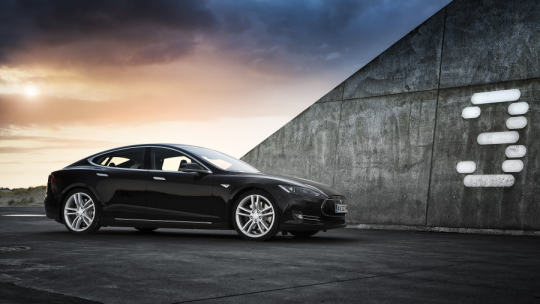
    Photograph T E S L A by Thomas Juel on 500px

    T E S L A by Thomas Juel on 500px

    Yesterday I posted a video about the career of Elon Musk. And it reminded me of something that’s been on my mind as I think about transportation, cities, and the future.

    Elon’s story for why he founded SolarCity, Tesla, and SpaceX is incredibly compelling. He chose problems and industries that he felt would move humanity forward. He felt that we needed sustainable forms of energy production (SolarCity), sustainable forms of transport (Tesla), and a way for humans to occupy other planets (SpaceX). That’s incredible ambition.

    Today though, I just want to focus on the transportation piece.

    Electric and driverless vehicles, I believe, are a step in the right direction. I honestly believe that at some point in the not too distant future we’re going to look back at that time when people used to drive their own cars and wonder how we ever allowed that to happen.

    But fundamentally, I think there still remains a question of how best to plan our cities. 

    There’s lots of talk today about peak car and the death of the automobile. Certainly within planning and urbanist circles, there’s an almost universal belief that planning (most of) our cities around the car, as opposed to people, was a huge mistake. Multimodal solutions with a public transit backbone are now the way forward.

    But will that always be the case as the notion of the “car” evolves?

    Intuitively, driverless vehicles feels like a massive opportunity to leverage data and better optimize our private transport assets. We know that the utilization rate for most private cars is incredibly low and so there’s lots of room to improve how we use and share private vehicles and how we move people around cities.

    But how big is that opportunity? Does a city filled with driverless electric vehicles and with networks like Uber mean that public transportation now becomes less important? And if so, how much less important?

    I can’t help but feel like private and public transport are on a collision course right now. I suppose that isn’t anything new. But this time around I wonder if private transport won’t figure out a way to achieve similar efficiencies to large scale public transport.

  • A revolution in personal mobility

    In the spirit of Startup Weekend, I thought it would be interesting to go back in time and pretend to pitch one of the most disruptive innovations of the 19th century: the automobile.

    Typically pitches start by first outlining the problem. The idea is to make your audience aware of the pain point, so that they feel excited when you ultimately pitch your solution.

    In the case of cars, the incumbent technology would have been horses. So I can imagine somebody standing up and talking about how horses are slow and how they drop stinky poo all over our city streets. And that the time has come for a revolution in personal mobility! Enough of this crap! 🙂

    But while many of us probably can’t imagine a world without cars, try and put yourself in the shoes of somebody at the end of the 19th century who can’t imagine a world without horses. And then think about all the things we have subsequently done to make cars thrive:

    • We paved roads and created networks of freeways.
    • We invented rules of the road to ensure that people were operating these new devices properly.
    • We created a licensing system to ensure that anybody who was operating a car was doing so relatively safely and following the rules that had been created.
    • We created schools that taught people how to be better drivers.
    • We started insuring cars for when accidents inevitably happened.
    • We started having to accept fatal car accident and pedestrian deaths.
    • We built networks of gas stations. As of 2004, there were 168,000 retail locations selling gas in the United States.
    • We had to give over large land masses to parking. In fact, we reorganized entire cities so that the car could be better accommodated.
    • And we setup government transportation divisions to make sure the needs of the car were always being met.

    This is a long list of things we had to do to make cars possible and I’m sure there are many others that I have missed. Today, we all know how disruptive cars have been and we’re certainly questioning many of the things we have done. But we also accept this list as being largely normative.

    However, before they were the norm, they were insurmountable challenges. How will we teach everyone how to drive these new cars? How will we minimize accidents? How will we make it easy for people to refuel their cars? Where will people store them when they’re not using them?

    There were a lot of moving parts to figure out. 

    Which is why people like Paul Graham have argued that the best ideas almost have to live in your unconscious mind. Because your conscious mind would simply reject them as viable options as soon as you started thinking about all the required moving parts. I guess that’s why they say there’s a very fine line between crazy and brilliant.

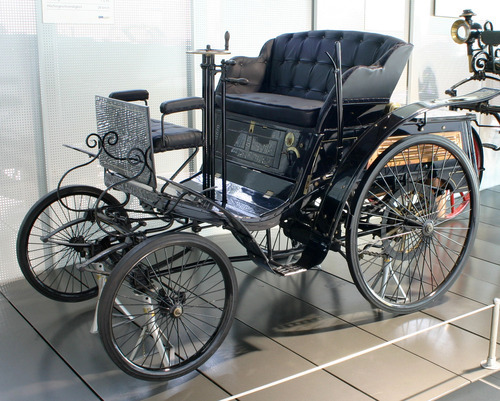
    Image: Benz Velo

  • Riding an escalator for the first time

    image

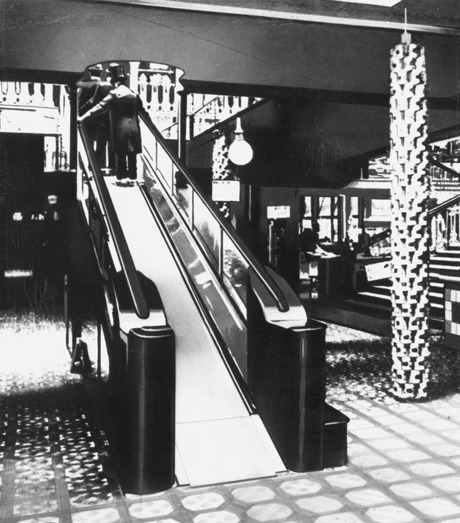
    On Wednesday, November 16th, 1898, Harrods department store in London opened up the first escalator – or moving staircase as it was called – in England. The first escalator-like machine in the world had actually been patented many decades before in the US, but this was the first real application in England and likely one of the first in the world.

    At the end of the 1800s, this was a big deal. Victorian England had never seen or experienced anything like this before and people were genuinely concerned about its use. More specifically, people worried what such a rapid change in elevation would do to the body. It was believed that it could discombobulate your inner workings. People were unnerved.

    Which is why when it was first introduced at Harrods, people were offered brandy and other substances at the top of the escalator in order “to revive them after their ordeal.” Riding an escalator was no small feat for these people.

    Now to us today, this sounds ludicrous. Most of us probably ride a few escalators a day. They’re ubiquitous. But I tell this story because I think it clearly underlines how disruptive the new and unknown can feel, and how difficult it can be for us to accept sometimes.

    If you go back throughout history, you could easily replace escalators for many other new technologies: the printing press, the automobile, the internet, and so on. And in some cases we were wrong to worry, and in other cases we were right to worry.

    Cars, for example, have had a pretty dramatic impact on our lives and the way we build our cities. And since the very beginning, they had no shortage of critics. But does that mean we should have never invented the car? I don’t think so.

    As I said earlier this week week, the goal in my mind is to find the right balance between preservation and progress. Just as we shouldn’t be so quick to erase our architectural history, we shouldn’t be so quick to erase our way of life.

    But at the same time, it’s important to remain open minded to what’s coming. I’m optimistic about the future. Change can be a great thing, even if it may feel as uncomfortable as riding an escalator for the first time. Maybe you just need a bit of brandy to calm your nerves.

    Image: Pinterest