Daily insights for city builders, delivered every morning at 6 AM ET. I’m Brandon Donnelly — a Toronto-based real estate developer and founder of Globizen. I’ve been writing here since 2013.

Tag: authenticity

  • Scarcity in a world of AI

    As someone who collects NFT art, I now see a lot of AI-generated images. Usually I can tell when an image was generated by a computer, but sometimes it’s hard to tell and I’m sure eventually I won’t be able to tell. But if I’m being honest, today I find that I have a bias toward art that was created without any AI prompts. Maybe that changes in the future, or maybe it doesn’t.

    Either way, the marginal cost of producing new content, such as images and videos, has now gone down to zero as a result of AI tools. (Here are some of my crappy creations.) That means that, if you aren’t already, you’re soon going to be faced with a deluge of things created in this way. This will almost certainly become the dominant form of content that we consume.

    I don’t think that we need to be scared by this future, but I do agree with Ben Thompson and others that it’s going to make authenticity and human-content more valuable. In other words, we’re probably going to need to know what is digitally scarce and what is just another thing generated by AI. Thankfully we have a suitable technology for this: it’s called a blockchain.

  • Winter Wonderland (and 3 things to read)

    This is what it looks like in Mont-Tremblant right now:

    It’s currently -11 degrees celsius and it’s expected to snow for most of the day. It’s starting to come down right now. But this evening it’s supposed to warm up to +1 degrees celsius, which means it may turn into (freezing) rain. I hope we see a lot more snow than rain. Nobody wants an icy mountain.

    If you’re looking for things to read this morning, here are 3 pieces:

    1. In American Towns, Private Profits From Public Works. It’s a NY Times article talking about how cash-strapped towns are turning to private equity firms to pay for their infrastructure. 

    2. How Zoning Laws Shaped New York City Over the Last Century. This is about an exhibition being held at The Museum of the City of New York right now. The rules we make shape our built environment. Thanks John for the link.

    3. Authenticity, and how Snapchat is banking on it. I am very fascinated by Snap Inc.’s ability to think differently and adopt counterintuitive business strategies. There’s also a cultural dimension to all of this.

  • Value creation, transparency, and authenticity

    https://500px.com/embed.js

    I started writing this blog a year and 10 months ago. 

    At that time, I had no real title for it (it was just called “Cities”) and I had no idea where it was going to take me. All I knew was that I enjoyed the discipline of writing every day and that I wanted to talk about cities and city building. It was a way for me to neatly organize all of my passions – which span everything from architecture and real estate to technology and transportation.

    Since that time, this blog got a name (Architect This City). It was named by the Guardian (UK) as one of the best city blogs in the world. I’ve met an incredible array of different people (send me an email if you like coffee and are doing cool things). I get invited to comment on city building issues on a regular basis. And an incredible community of almost 10,000 daily readers has emerged (you can email subscribe here).

    A big thank you to everyone who reads and contributes to ATC.

    But over the course of writing this blog, something else unexpected happen. I started getting referred to as a “brander, marketer, and content creator.” Now, I’ll admit that I’ve become increasingly interested in these fields over the years, but it was certainly not something I thought of or could have predicted at the outset.

    What really happened though is that I simply started riding a wave that arguably took hold sometime around the mid-2000s and then focused my attention on an industry that has historically been slow to change (real estate). And that wave is the shift towards inbound marketing (as opposed to outbound or interruption marketing).

    If you’re a marketer, this is old news. You already know this. But I think there’s still lots of room for this to take hold in the real estate industry. So let’s talk about it a bit.

    To give you an example from outside real estate, take a look at Five O’ Clock magazine by Harry’s. Harry’s is a shaving company out of New York that offers moderately priced well-designed shaving supplies for men. It’s simple model that works very well.

    Their positioning has been around the idea of “Own Your AM”, which makes sense given that they are a shaving company. And so what they often do in their Five O’ Clock magazine is profile the mornings of interesting people, such as professional skier Jimmy Chin (who happens to live in one of the best places on earth).

    But if you do a search for the word “shave” in that Chin article, you won’t find it. Because it’s not about just creating content so that you can plug your business at every opportunity; it’s about creating value for your customers and building a relationship.

    And that’s really fundamental to the change I’m talking about. 

    Today, the marginal cost of reaching your customers has dropped to almost zero (even if you’re reaching out to them on a one-on-one basis over, say, social media). And so the opportunity exists for companies, brands, and individuals to do things that simply weren’t feasible before.

    Because of this, it is now possible for everyone to easily establish their own personal brand. I think we’re going to see more, not less, of that. And it has changed how we message and communicate – whether it be via blogs, social media, or online magazines.

    In my view it comes down to 3 considerations: value creation, transparency, and authenticity. If you can create value for your target audience and be transparent and authentic, you’re going to naturally draw people in. I try and do all of that on this blog and hopefully it comes through.


  • Does urban authenticity matter?

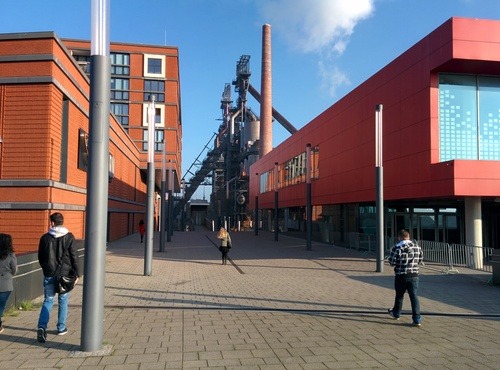
    After yesterday’s post on Belval in Luxembourg, I started thinking more about authenticity. I ended the post by talking about some of the industrial elements – blast furnaces and so on – that will be preserved in the neighborhood and argued that those types of things are great for creating a sense of place. But I also said that it’s always better when those things are authentic.

    But what does it mean to be authentic? What if some savvy developer created new blast furnaces and inserted them into their new neighborhood in order to simulate the feel of an old industrial steelworks? Would that change how you felt about the space and area?

    Another example is Intrawest’s ski resorts. Intrawest is quite famous for creating attractive ski villages that give you the impression of being in some old European mountain village. They include a mix of uses and many people visit them even if they don’t intend to ski. But does it matter that it’s not really an old European ski town or that many of them look the same?

    Clearly, in both of these examples, one is more “authentic” than the other. But all that really changes is the story. In one case, you get to tell yourself, and others, about an old steel mill that used to be where you now have your Scandinavian desk and Retina display MacBook. And in the other case, all you get is a simulacra or imitation of some blast furnace thing.

    While this may seem immaterial to some, I don’t think it is. I’m not saying that customers always demand 100% authenticity. We don’t. But let’s not forget how much we all love a great story.

    Image: Belval (Fräntz Miccoli)

  • justthedesign:

    Living Room Interior Design By Nikita Borisenko