Daily insights for city builders, delivered every morning at 6 AM ET. I’m Brandon Donnelly — a Toronto-based real estate developer and founder of Globizen. I’ve been writing here since 2013.

Tag: atc

  • Are we becoming more or less entrepreneurial?

    Aaron M. Renn of The Urbanophile, recently wrote an interesting article in Governing called, Where’s America’s Entrepreneurial Economy? In it, he argues that despite the fact that there’s a perception that entrepreneurship is on the rise, overall rates are actually declining.

    The Brookings Institution found that so-called “firm entry rates” have declined since the 1970s and that they suffered a steep fall post-2005. And though millennials are often seen as an entrepreneurial generation, The Wall Street Journal reports that business ownership among those under the age of 30 recently hit a 24-year low. Self-employment has seen a similar downward trend. A study by Economic Modeling Specialists International found that both the total number of self-employed and their share of jobs have fallen since 2006.

    His argument is that outside of tech — where yes, the barriers to entry have fallen significantly over the years — it has actually become harder to start a company in a lot of other cases. And he specifically mentions two industries where he believes that is very much the case: construction and real estate.

    Why is that?

    Well, he cites a number of possible factors, one of which is increased licensing requirements for many industries. But the two most interesting for me are slow disruption cycles and the presence of large dominant firms.

    Real estate has both of those. 

    It’s also a capital intensive industry. And it’s becoming harder for smaller private players to compete with larger institutions and pension funds who struggle with “moving the investment needle”, not with access to capital. Real estate is no longer the fringe asset class it once was.

    In contrast, you have the tech space with fast disruption cycles and low barriers to entry. Yes, you also have large dominant players (Apple, Google, Facebook, Amazon, and so on), but even they don’t have complete immunity in an environment where new ideas frequently trump access to capital.

    A culture of entrepreneurship across all industries is important for our society. I hope we never lose that.

  • The value of cheap housing

    Photograph Houston Sunrise by Cliff Baise on 500px

    Houston Sunrise by Cliff Baise on 500px

    Urbanists generally don’t like to talk about cities like Houston. It sprawls. It’s car oriented. It’s over air-conditioned. In other words, it’s the antithesis of the dense and walkable cities that urbanists today like to tout as being exemplary. 

    But despite all this, Houston is one of, if not the, fastest growing city in America. According to The Economist, the population of the Houston metro area grew faster than any other city in America between 2000 and 2010. And between 2009 and 2013, its real GDP grew by 22%.

    So why is that? Here’s a snippet from that same Economist article (“Life in the sprawl”):

    Paradoxically, perhaps the city’s biggest strength is its sprawl. Unlike most other big cities in America, Houston has no zoning code, so it is quick to respond to demand for housing and office space. Last year authorities in the Houston metropolitan area, with a population of 6.2m, issued permits to build 64,000 homes. The entire state of California, with a population of 39m, issued just 83,000. Houston’s reliance on the car and air-conditioning is environmentally destructive and unattractive to well-off singletons. But for families on moderate incomes, it is a place to live well cheaply.

    So while Houston may not check off all of Jane Jacobs’ boxes, it does provide one important thing: cheap housing. And that’s clearly valuable for a huge number of people.

    But the other interesting thing about the snippet above, is that it starts to illustrate how frequently supply constrained markets operate with housing deficits. 

    The fact that the entire state of California issued only about 30% more building permits than the Houston metro – which you could easily argue is closer to a “perfect market” – tells me that there’s probably a lot of people bidding for the same housing in California.

    That’s less so the case in Houston.

  • Project Profile: Fashion House in Toronto by CORE Architects

    image

    As Architect This City continues to grow in readership, I’m starting to get pitched more and more. People email me with something they want promoted and they try and convince me to write about it. Everybody is looking for distribution. I get it.

    I have no qualms about people and companies reaching out. In fact, I welcome the suggestions. But the vast majority of these “pitches” don’t make it onto ATC. 

    When it comes to these sorts of things, I have two simple rules: (1) I have to like it myself. If I don’t think what you’re pitching is interesting or cool, I’m not going to write about it – even if you’re offering up money. (2) I need to be able to be transparent about it. More on this second point in the coming weeks.

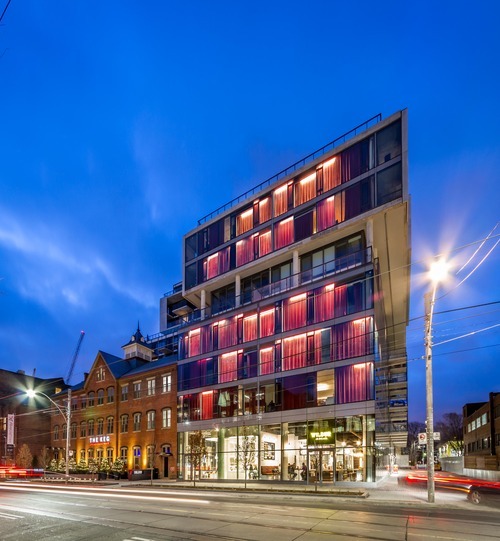
    Recently I was asked to do a post about the Fashion House Condos in Toronto’s King West neighborhood. 

    Here’s why I decided to do it:

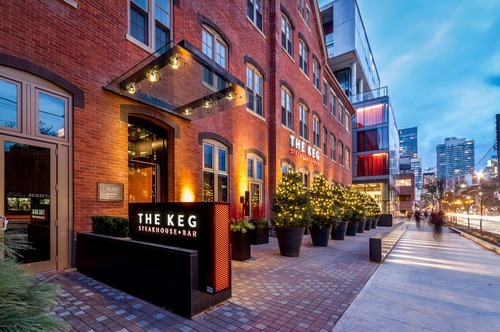
    I like that the existing Silverplate heritage building was preserved and integrated into the base of the condo. It’s now tenanted to The Keg, which has gone into the base of a number of new condo buildings in the city. They’re a successful chain.

    image

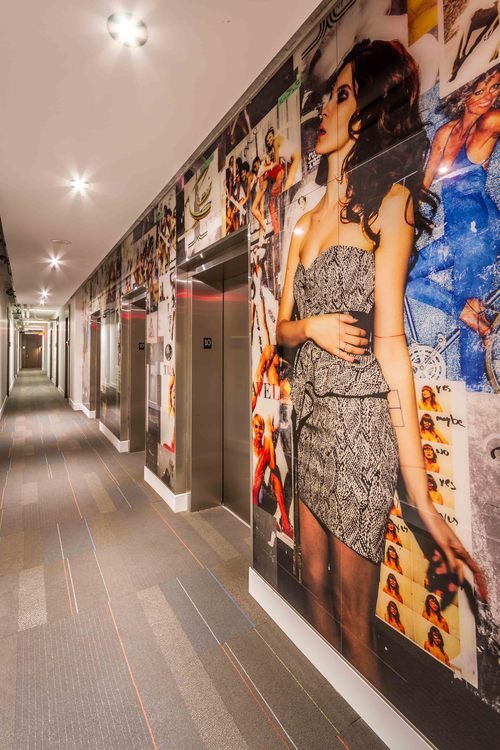
    Each elevator lobby within the building has a unique mural designed by a different fashion designer – most of which are Canadian. The whole Fashion House theme is meant to speak to the area’s history as Toronto’s Garment District.

    image

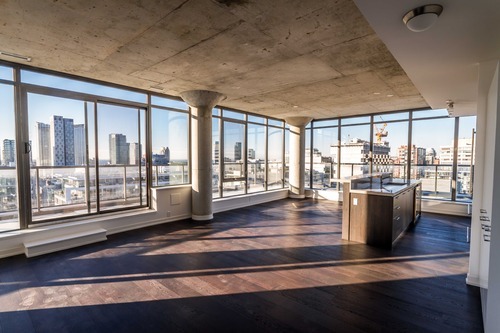
    Many of the residential suites have red curtains (which are white on the interior). They form a “common element” and have to stay in the condo. It gives the building a dramatic and unique feel, though it means you have to be a fan of curtains.

    image

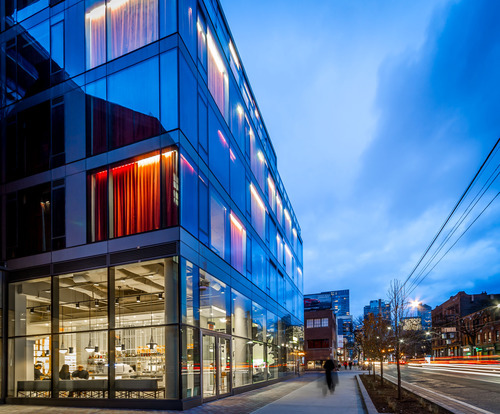
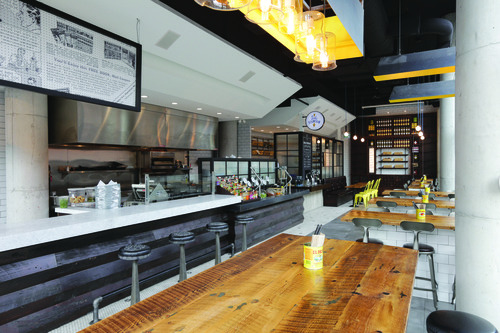
    My good friend designed the Mexican restaurant at the base of the building (Wilbur Mexicana). His firm is called Reflect Architecture.

    It’s also an example of cool startup businesses going into the base of a new development. As far as I know, Wilbur Mexicana is the group’s first venture.

    image

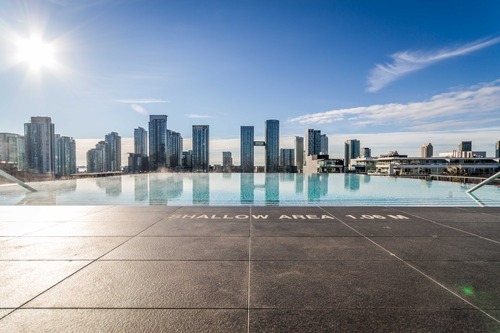
    There’s a rooftop pool that I’m hoping somebody will invite me to this summer.

    imageimage

    And finally, because I think the King West neighborhood is such a great example of urban renewal.

    image

    To end off, here are some stats on the project:

    • Address: 560 King Street West, Toronto
    • Developer: Freed Developments
    • Architect: CORE Architects
    • Project Timeline: 2008-2014
    • Construction Costs: $60M (estimate)
    • Site Area: 4,887 square meters / 52,603 square feet
    • Gross Floor Area: 27,107 square meters / 291,777 square feet
    • Floors: 11 and 12 storeys
    • Building Heights: 33m and 39.7m
    • Residential Suites: 334

    And here are the fashion designers responsible for each elevator lobby mural:

    • 2nd Floor – Beckermans
    • 3rd Floor – Dean Davidson
    • 4th Floor – Jeremy Laing
    • 5th Floor – Adrian Wu
    • 6th Floor – Jenny Bird
    • 7th Floor – Ashtiani
    • 8th Floor – Peach Berserk
    • 9th Floor – Smythe
    • 10th Floor – Jay Godfrey
    • 11th Floor – Bustle
    • Penthouse – Greta Constantine

    What do you think of Fashion House?

    Images: CORE Architects

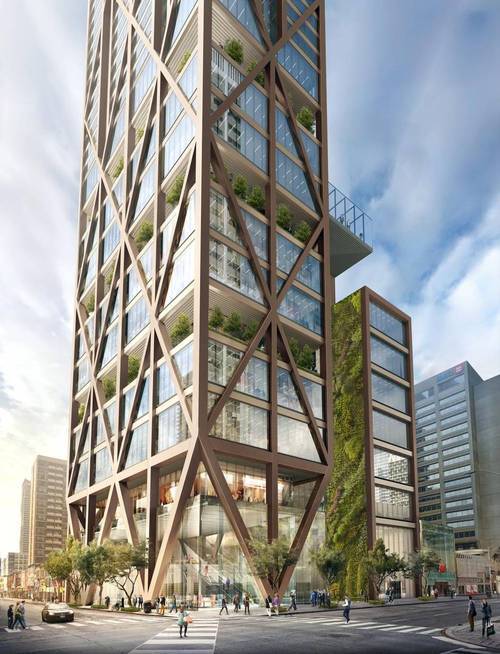
  • What do you think of 1 Bloor West? [Poll]

    image

    Over the past few weeks I’ve been running a little experiment on Twitter where I tweet about a new development project in Toronto and I ask people to vote on it. If they like the project, I ask that they retweet (RT) it. And if they don’t like it, I ask that they favorite it (FAV).

    Here’s what it looks like in tweet form:

    As you can see from this experiment, about 69% of the people who participated seemed to be in favor of this project (at least at the time of writing this post). That said, the discussion following this tweet was a lot more negative than I would have expected.

    Somebody also pointed out that in my experiment I’ve created a bias towards supporting the project, since a retweet means the project gets shared, whereas a favorite doesn’t do that. I would argue that the more distribution the better for an accurate consensus, but point taken.

    So today I thought I would do this same experiment here on Architect This City. 

    At the bottom of this post, I’ve featured a comment from myself asking if you support the 1 Bloor West project. If you like the project, I ask that you “up vote” my comment. And if you dislike the project, I ask that you “down vote” it. You can do so by using the up and down arrows towards the bottom left of the comment.

    Hopefully this hack will create a more neutral voting framework. I hope you will participate. If you’re reading this via email, you’ll need to open up the post in your browser by clicking “read more” at the bottom.

    If you’d like to learn more about the project before voting, check out this article from the Globe and Mail. Happy voting!

  • Incubating new ideas in cities

    A couple of days ago I wrote about a documentary series called Real Scenes. It’s a fascinating series that examines the electronic music scene in a bunch of different cities from New York to Berlin to Tokyo. 

    What’s fascinating about these films is the inside look it gives you into how these “scenes” develop. Berlin, for example, is absolutely on fire right now. It has a thriving startup scene and a reputation for being a major force in the world of electronic music.

    How did that happen?

    The documentary leads you to believe that Berlin was able to establish itself as, arguably, the techno music capital of the world by having lots of empty buildings and nobody cracking down on squatters after the Berlin Wall fell. Quite literally, the scene appears to have started as a result of illegal techno parties being thrown in abandoned buildings. 

    It’s a perfect and perhaps extreme example of Jane Jacobs’ famous line that new ideas require old buildings. The rents are simply too high in new buildings for anything experimental. Landlords naturally prefer to rent to triple-A tenants who will pay the highest rents. And who can blame them. 

    But just like there’s tremendous value in incubating new startups before they’re even close to turning a profit, there’s obviously value in empowering new ideas, new concepts, new retailers, and new businesses to flourish within cities. 

    I’m not exactly sure how that could be done in the context of new developments, but it’s on my mind right now as a result of some discussions I’ve been having with some incredibly smart and ambitious people in this city.

    So today I’d like to turn it over to you. How could we make it so that new ideas flourish even in new buildings? Since investment naturally drives up rents, does that mean it will always put pressure on those crazy instigators who just need cheap space?

  • 3 architects operating as developers

    image

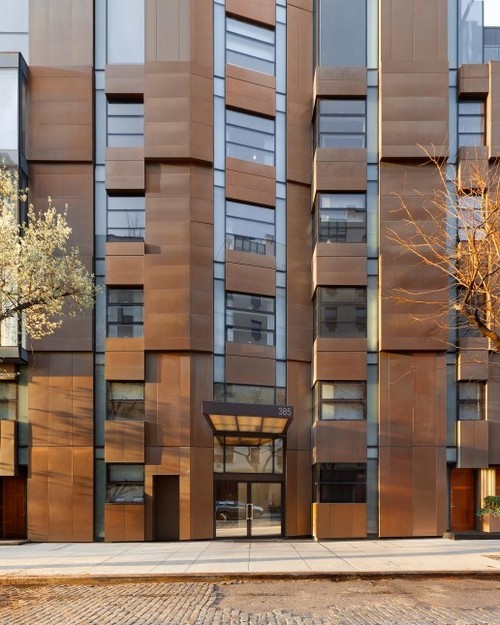
    A reader recently shared with me an interesting article from Crain’s New York (2013) profiling three “architects as developers.” The three firms are DDG Partners (which I’ve mentioned before here on ATC), FLAnk, and Alloy.

    I’ve written a lot about these emerging business models and I continue to think that we’re going to see more of them in the coming years.  As evidence for that claim, I thought it was really interesting to read in the article that Vishaan Chakrabarti – who is director of the real estate program at Columbia University – made specific mention that there’s growing interest among his students to wear multiple hats. In other words, they don’t want to be just an architect or just a developer. They want do it all.

    In a lot of cases, these firms are made up of partners who have those diverse skill sets. There’s only so much that one person can do. But that doesn’t negate the fact that vertically integrated companies are being formed that handle everything from design and construction to property management and development.

    And if an increasing number of students today are interested and thinking about those models, then I think it’s a pretty safe bet that many of them will get out into the workforce and eventually create those companies in the future.

    Ultimately, I think that’s a great thing for cities. Developers tend to have a bad reputation for thinking only about money. But when you bring design and other disciplines in-house, you create tensions in the process. And tension can be a great thing for innovation and creativity.

    Image: 385 West 12th by Flank

  • What you should study to become a real estate developer

    One of the most common questions I receive from readers is about what to study in school in order to become a real estate developer. Here’s one of those questions:

    “Thank you so much for your insight into the real estate development process! I was wondering if you could do a post on what educational degrees you think would best prepare someone for a career in real estate development?”

    I’m not surprised that a lot of aspiring real estate developers have this question on their mind. Compared to many other career options, the path to real estate development has traditionally been pretty informal. It’s much less structured compared to other professions such as law or medicine.

    But as the real estate industry continues to institutionalize (transition from rich families to institutions), I’m sure we’ll see recruitment become more structured as well.

    Already the MBA and Master in Real Estate Development (or some other permutation of that degree) have become — for many large real estate organizations — the prerequisite to getting in the door. So if you’re looking for a simple and safe answer, just get one of these degrees.

    To more fully answer this question though, I thought I would just share my own strategy for getting into real estate development. Because at the end of the day, there’s no one way to become a developer. Lots of people start out in other industries, only to fall into real estate later on.

    The way I started was by first identifying the skills that I thought I would need as a real estate developer and that I felt employers would be looking for. And I assembled this list by going on lots of informational coffee meetings with developers to make sure I was headed in the right direction with my assumptions. 

    In the end, this is more or less what I decided I needed to know:

    Planning: An understanding of local planning policies, zoning, and so on. For this one, it’ll help if you can pick a particular place and commit to learning it (which is what I did with Toronto). There are a lot of local particularities that you’ll need to grasp. Real estate is very much a local business.

    Finance & Economics: The ability to understand markets, build models, and crunch numbers just like a banker. That was my goal before I got an MBA. This includes discounted cash flow analyses, net present value calculations, internal rates of return, and so on.

    Sales & Leasing: There are a lot of people who think that this is the best way to start in real estate (particularly on the commercial side). Learn the nitty gritty of leases and deal negotiations and then figure out where you want to be in real estate. Because at the end of the day, development projects are only viable when you have sales and/or signed leases in place.

    Design & Construction: This was the easy one for me because I was coming from an architecture background. I could “read plans” and I didn’t need to convince people that I understood how buildings worked and how they were built. Instead, I needed to convince people that I had all the other skills.

    And I knew this because that was the feedback I received my informational coffee meetings while I was in architecture school. One CEO (of a large publicly traded REIT in the US) told me flat out: “I need to feel comfortable that you can negotiate and that you won’t fuck up the numbers.”

    And that stuck with me. I realized that I had an image to shed.

    To round out my skill set, I decided to specialize in real estate in my first masters and then get an MBA. And given the chance, I would do it the same all over again. But even if you don’t have the opportunity or inclination to do that, there are a lot of other things you can do to shore up your knowledge base.

    I took a number of ARGUS and Excel classes to learn how to build robust real estate models. You might be surprised at how much you end up learning about the real estate business by doing that. I also became involved in organizations like the Urban Land Institute and started going to every real estate panel I could find. And before committing to doing an MBA, I even thought about taking some accounting classes at a local College.

    So my point is that I think you should identify the skills and strengths that you have today and then figure out some way to acquire the missing ones. Go buy a real estate textbook. Take an online class. Go to industry events. Do whatever it takes to round out your skill set so that you can sit in front a prospective employer (developer) and tell them that you’re able to create value for them and their organization across every facet of the development process. That was my goal when I was trying to get in.

    Of course, those aren’t your only options. 

    You could also just work your way up by taking any job with a real estate developer. One of my closest friends did exactly that and today is doing incredibly well with no formal training in real estate or even a related field. You could also just go out and buy your first property and have a go at it. Many great fortunes have been created by doing exactly that.

    Either way, real estate development is an exciting business to be in. It can often be hard to get your foot in the door given the size of most development teams, but if it’s truly what you want to do and you work on acquiring the skills, I think you’ll eventually find your path.


  • Spring forward with Apple’s new watch

    image

    Today was Apple’s big “Spring Forward” event. We already knew the Watch was coming, but now we know that it’ll be available for sale on April 24, 2015 and that their high-end “Edition” line will start at just $10,000.

    Within the tech community, there are mixed opinions when it comes to the Apple Watch. Some think it’ll be a total flop. Some think it’ll be the next iPhone. And some think it’ll do reasonably well, but that it just won’t be the next category killer for Apple.

    I personally think it will do really well. 

    I think there are enough use cases for which looking at your wrist is a better experience than pulling out your phone – particularly for quick glance activities. Think payments, transit fares, airline tickets, location-based notifications, and so on. 

    However, one of the big challenges for Apple Watch will be that they’re trying to replace an entrenched fashion piece. So not only is Apple trying to solve a problem that most people didn’t know they had, but they’re also trying to get people to give up their Movado or Patek Philippe – which is why they created a super high-end line.

    Whatever the case may be, I plan to pre-order a Watch next month (just the regular one, not the $10,000 one).

    I’m excited to try the health features (it’s a passion of mine). I’m excited to see what kind of data this new device generates both for me personally and in aggregate. And I’m excited to see what clever software developers end up creating for this new platform. Because that’s where the real potential lies.

    It might not seem like a big deal to move a computer from your pocket to your wrist (assuming people are willing to do that). But I think we’ll all be surprised at what kind of new ideas that generates.

    Hopefully I’ll soon be able to board a Toronto streetcar and tap my wrist to pay the fare. That would certainly be a civilized way to travel.

    What about you? Do you plan on buying an Apple Watch?

  • Real Scenes Documentary — a look at New York’s electronic music scene [Video]

    image

    I just stumbled upon a fascinating documentary series called Real Scenes. Each film explores “the musical, cultural and creative climate” within a particular city. 

    Below is Real Scenes: New York (click here if you can’t see it below). It’s an inside look at the underground music scene that has developed in Brooklyn, but that is at the same time being threatened by development and rising rents. Disclaimer: There’s a lot of f-bombs and a lot of hating on gentrification.

    [youtube https://www.youtube.com/watch?v=LDtf0uIUPuE?rel=0&w=560&h=315]

    I’ve only watched the New York video from this series, but I plan to watch each and every one of them. The other cities are Tokyo, Johannesburg, Paris, Berlin, Detroit, and Bristol.

    What’s fascinating about these short documentaries is that they give you a glimpse into a particular undertone within each city – one that would otherwise be hard to get if you weren’t living there and engrossed in the scene.

    It’s also interesting to see how some people view change within cities. 

    To some, transforming a neighborhood from one that looks like a “bomb went off” to something more pristine, is a good thing. But to others, it’s the worst possible outcome. It all depends on your frame of reference.

    Now, how do I get them to make a Real Scenes: Toronto? 🙂

    Image: Resident Advisor

  • Google’s new Mountain View campus [Video]

    Google wants to build a new campus in Mountain View, California. Their objective is to create a space where “people, nature and ideas” can thrive. The architects on the project are Bjarke Ingels and Thomas Heatherwick.

    Last week Google released a video talking about the ambitious project. It is a good watch and only 10 minutes. Click here if you can’t see the video below.

    [youtube https://www.youtube.com/watch?v=z3v4rIG8kQA?rel=0&w=560&h=315]