Daily insights for city builders, delivered every morning at 6 AM ET. I’m Brandon Donnelly — a Toronto-based real estate developer and founder of Globizen. I’ve been writing here since 2013.

Tag: art

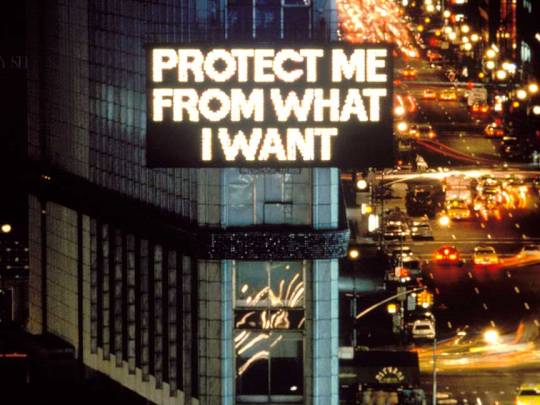
  • Protect me from what I want

    The title of this post is a line from one of the works of Jenny Holzer. It feels appropriate right now.

    On Wednesday, Toronto saw a large scale anti-Uber protest involving as many as 2,000 taxis. It involved a bunch of taxis driving real slow around downtown, some altercations, and lots of people who want to see Uber completely shut down.

    This, of course, isn’t a new thing for cities. 

    Many cities around the world have seen similar kinds of protests. But many of you will probably also agree that this is not the most effective response from the taxi industry. It casts a negative light on them at a time when people are already switching to Uber for better service. It also ignores the fact that – in my view – Uber ain’t going anywhere.

    I’ve been a vocal supporter of Uber on this blog and I continue to believe that it will continue to prove to be a good thing for both consumers and for cities. In fact, famed startup investor Paul Graham once tweeted that because Uber is so clearly a good thing, you can tell how corrupt a city is by how hard it fights against it. This has become the truism among today’s urbanites.

    At the same time though, I am trying to take a balanced view on this issue, which is what got me thinking about the work of Jenny Holzer. Protect me from what I want. Today, I want Uber. But I am trying to think of where that want might lead me.

    Like a lot of private companies, the goal of Uber is monopoly profits. They would love to control the market. And that’s not a knock against them. It is just business. But I am imagining a market where only Uber exists.

    When I was in Miami last week I switched back and forth between UberX and regular taxis. Because Art Basel was going on, Uber was frequently in surge pricing. Sometimes as high as 4x. So in those cases, I just hailed a regular cab. Thankfully the cabs there are pretty reasonably priced and easily to hail. The driver didn’t ask me if I liked the electronic music playing on the satellite radio, but that’s not a big deal.

    But what if I didn’t have the option of hailing a regular cab? What if Uber was my only option and I had to put up or shut up when prices were 4x? That would be suboptimal in my books.

    So what does this all mean? 

    I am an Uber customer. I do not want and I do not believe it will go away. But I also believe that our public policy should encourage competition in the taxi marketplace. Competition holds people and companies accountable. It means that if you stop creating value, you will go out of business.

    It’s for that reason that I think the taxi lobby is wrong in trying to force Uber to shut down. And it’s for that reason that cities are going to have to work very hard at crafting the right kind of public policy. I am optimistic that Toronto will make that happen. But as we’ve seen today, there will be bumps along the way.
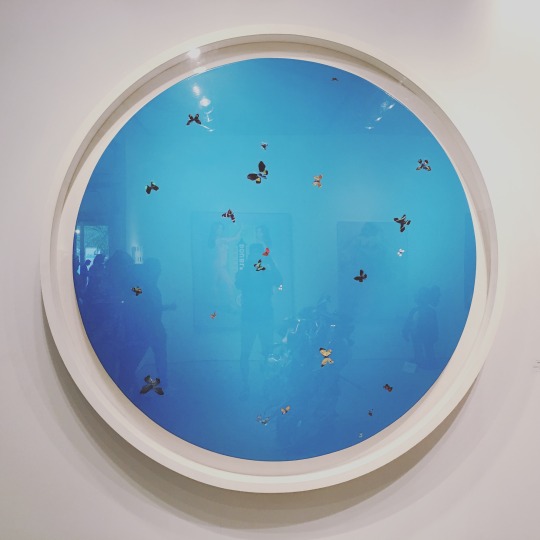
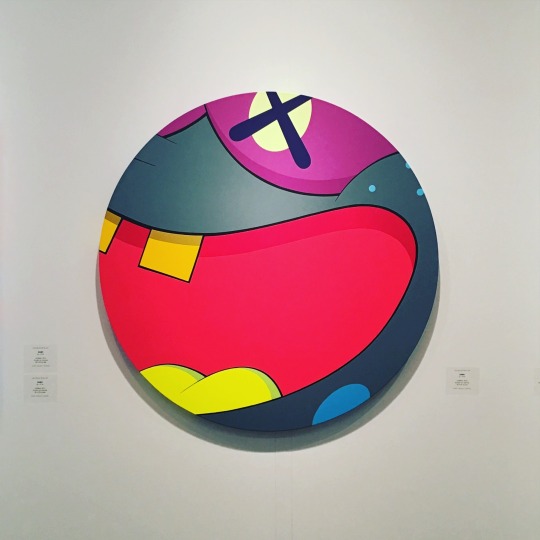
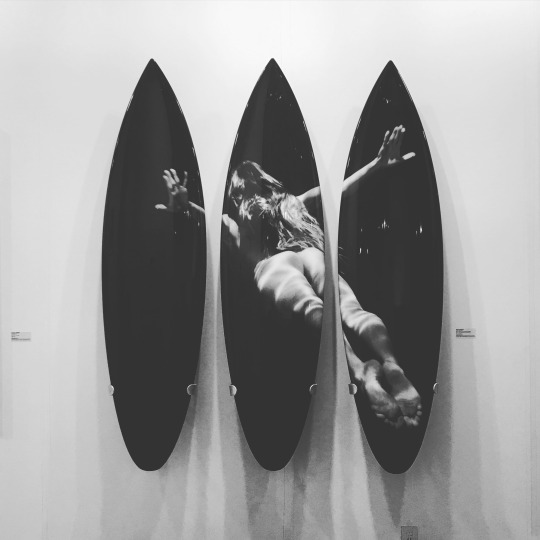
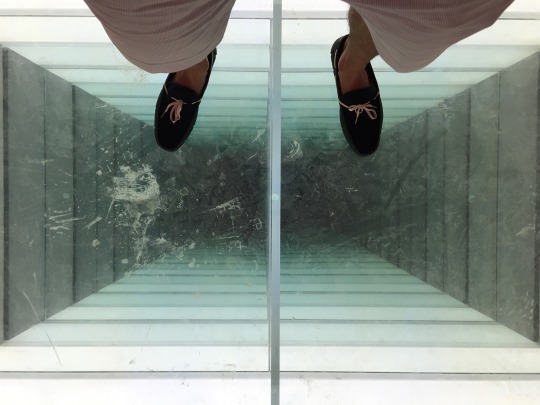
  • A few photos from Art Basel

    It’s raining here in Miami Beach this morning. But the city is still buzzing with Art Basel and everything else that is going on right now.

    It’s been interesting to learn about some of the measures that Miami Beach is taking to deal with flood risk. The city is highly vulnerable to rising sea levels.

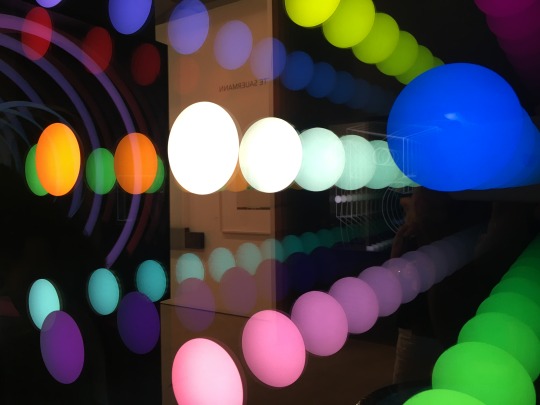
    A post on that topic is in the works, but I don’t have time for it this morning. So instead, I’d like to share some of my photos. Many of them are already on my Instagram.

    I particularly liked the work of South Korean artist Chul Hyun Ahn. He works primarily with light and the perception of depth.

  • City-to-country colonization

    Lately I’ve been feeling that we’ve been having some pretty serious conversations here on Architect This City. Everything from condominium reserve funds to housing/tax policy. So today I thought we could change it up and talk about something a bit more fun: farmhouses.

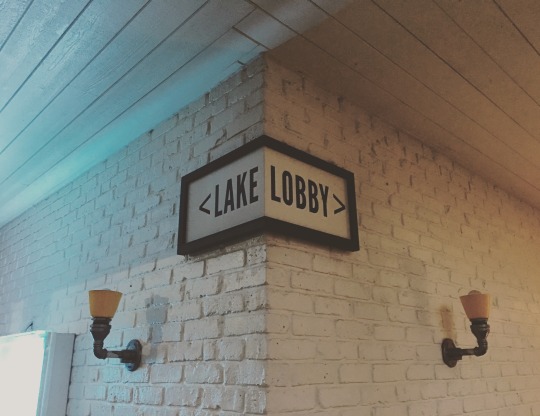
    Last weekend when I was in Prince Edward County, one of the places that I visited was the Drake Devonshire Inn. It’s been on my list for awhile, so I’m glad I finally got to experience it. It’s an outpost of the Toronto-based Drake Hotel (no relationship to Hotline Bling Drake) and they refer to it as their “contemporary farmhouse.” 

    It was stunning.

    As soon as I walked on the grounds, I couldn’t stop looking around, taking pictures, and examining all the art that they have sprinkled around the inn. Those are the sorts of things I do when I get excited by a building or place. I’m like a kid in a candy store.

    I was so impressed that after I left I had to message my friend – who worked on the project and who I went to architecture school with – to tell her that she did an amazing job. Want to see for yourself? Click here for photos of the farmhouse. And click here for information on the design firm behind the farmhouse (+tongtong).

    But beyond just a great space, the Drake Devonshire is also symbolic of something greater than seems to be taking place. Almost everybody I met in PEC seemed to be a Toronto transplant. They were done with life in the city and decided take off for the country. But along with them is coming pieces of the city. (The Hayloft Dancehall is another example.)

    I used to think that this kind of city-to-country colonization was bound to happen in Niagara-on-the-Lake, which is only about an hour west of the city. But it turns out I was wrong. It seems to be happening to the east of the city in Prince Edward County.

  • Introducing The Spaces

    image

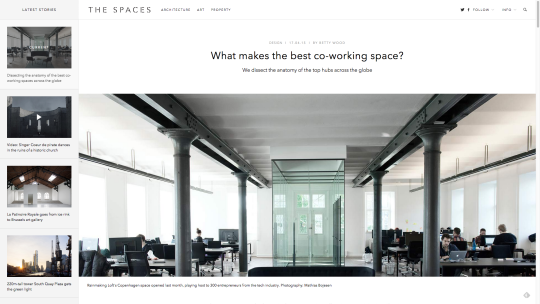
    At some point in the past, I preregistered for a site called The Spaces. I don’t remember doing it, but I’m sure that the site seemed promising when I landed on it and so I gladly handed over my email address. I’m always on the lookout for new and interesting things.

    Today that site has (soft) launched. And if you like architecture, design, art, and/or property, I am certain you will love it. I am already a fan.

    Based in London, The Spaces is about exploring the new ways in which are we living and working. Spaces ranging from residences to coworking spaces and everything in between. It’s about unique and progressive spaces and the people behind them. I love the concept.

    Since this is still a soft launch, I am sure the team is looking for feedback from the market. So if you have some, please share it in the comment section below. I will make sure they read it.

    Click here to check out The Spaces. Happy Friday all 🙂

  • STEM + Art = STEAM

    image

    Most of you have probably heard of the STEM subjects. STEM stands for Science, Technology, Engineering, and Mathematics. These academic fields have been the focus of many federal governments around the world as they have been seen as the key to driving innovation.

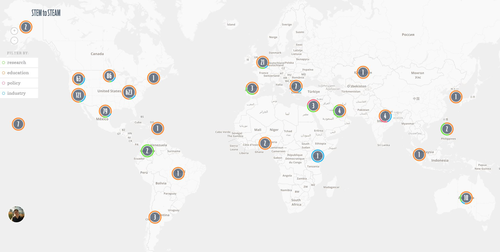
    But what you may not have heard of is something called STEAM. I hadn’t heard about it until this morning. STEAM is an initiative being led by the Rhode Island School of Design to integrate art and design into national agendas pertaining to STEM. STEM + Art = STEAM.

    Here’s a snippet from RISD:

    The goal is to foster the true innovation that comes with combining the mind of a scientist or technologist with that of an artist or designer. RISD offers endless examples of how art and design education teaches the flexible thinking, risk-taking and creative problem solving needed to solve today’s most complex and pressing challenges – from healthcare to urban revitalization to global warming.

    I couldn’t agree more with this initiative. As somebody who thought a lot about how to combine design and technology in my own career, I believe that there are huge benefits to a multidisciplinary approach to problem solving and innovation. In fact, it’s one of the reasons I decided to go to Rotman for my MBA (see Business Design).

    So if you feel the same way, I would encourage you to add yourself and/or your company to the “STEM to STEAM map” that RISD has created. Click here to do that.

  • My identity crisis

    If you’re a regular reader of Architect This City, there are many things that you might know about me

    You might know that I was initially trained as an architect, but that I immediately transitioned into real estate development after grad school (where I studied both architecture and real estate).

    After becoming a real estate developer, you might know that I completed an MBA with a focus on innovation and entrepreneurship (which happened by default as a result of the electives I ended up being interested in).

    And finally, you might know, given the content of this blog and my startup history, that I have a significant interest in technology. More specifically though, you might know that my interest is in figuring out how technology will continue to infiltrate and impact “non-tech” industries such as real estate.

    But what you might not know is how I even ended up in architecture and real estate in the first place. Unlike a lot of people who seem to have grown up wanting to be an architect – perhaps because they had a relative who was one – I didn’t decide to study architecture until a bit later on.

    Growing up my primary interests were: art and computers.

    During high school, my art teachers used to tell my parents that I was going to be an artist. And my computer teachers used to tell my parents that I was going to be a computer geek – or maybe they said computer scientist.

    Maybe it had to do with timing and the emergence of the commercial internet in the 1990s, but computers sort of won out during that point in my life. I spent a lot of time building them from scratch, playing with software, and asking my mom not to pick up the phone because I was literally dialed-in to the internet.

    So when it came time to enrol in university, I fairly effortlessly decided on computer science. It just seemed to make sense. But after about a year I realized that it wasn’t for me. I didn’t love programming like my classmates did and the thought of doing it for a living scared me.

    At the same time, I felt like I needed to feed the artist in me. I wanted something both artistic and technical. So I decided to drop out of computer science and give architecture a try. It just seemed like the perfect marriage of my interests.

    I immediately fell in love with architecture. And I spent the next 7 years studying it across 2 degrees.

    But during that time, two things hit me. First, I came to the realization that real estate developers are the ones who really have the most say in terms of how our cities are built. And second, that technology was having a massive impact on business and life.

    This told me that design alone wasn’t going to be enough. I also needed to engross myself in real estate, finance, business, and technology. So that’s what I set out to do. And I really enjoyed it. On the technology side, it felt like I was coming full circle in a way.

    But today, I feel a bit like a 3 legged stool. There’s the design leg. The real estate/business leg. And the technology leg. And oftentimes I feel like life would be a lot simpler if I could just balance on one of those legs – instead of trying to stand on all three. But that’s simply not me.

    These are my passions and I need all of them to stand-up.

  • Rotterdam reinvents the urban food market

    image

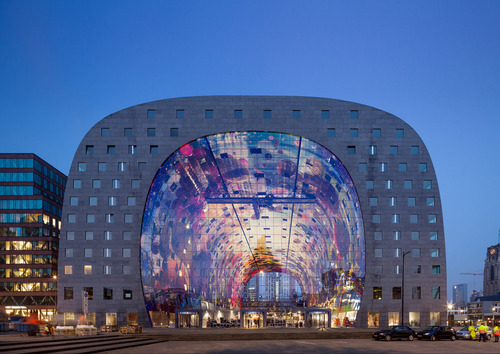
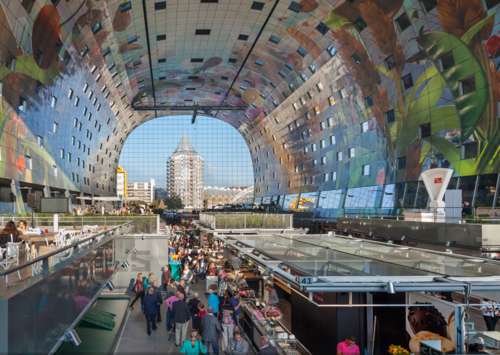
    Every now and then a piece of architecture comes along that makes you feel like your city should be more beautiful – or at least very least: bolder. In this case, it’s the new Market Hall in Rotterdam, which has been making the rounds on the internet since it opened last week. It may not be everyone’s cup of tea, but I find it really exciting.

    Designed by Dutch architecture firm MVRDV, the Market Hall is a 1.1 million square foot mixed-use building consisting of residences (102 rental apartments and 126 for sale apartments), a food market, a supermarket, a public space, and a 1,200 stall parking facility. But before I say anymore, here’s the money shot:

    image

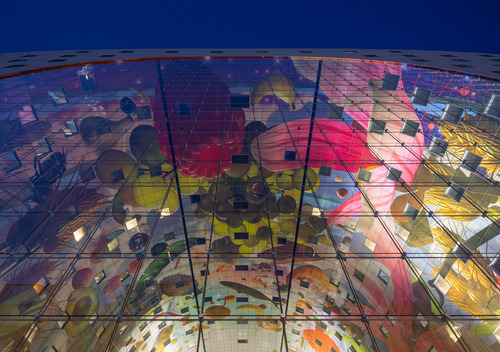
    And here’s what it looks like from the inside of the market:

    image

    In the middle of the building is the food market. At night when it closes up, it then becomes a well-lit public space. The entire central area is enclosed, but well connected visually to the outside through a big and fancy glass facade.

    The apartments wrap the central market and were constructed using standardized modules (despite the unique form). The spaces that require natural light face outward and all the spaces that do not require natural light (by Dutch law), such as the kitchens, face inward towards the market. 

    There’s a grocery store 1 level below grade (to help supplement the market) and all parking and loading is done underground. This means that the building itself has no real backside. Most buildings typically have an ugly loading and “back of house” area – the building’s ass if you will. In this case, the entire perimeter of the building is urban and accessible.

    Finally, on the ceiling of the market is a massive mega-mural designed by Dutch artists Arno Coenen and Iris Roskam. Click here for a 360 degree panorama. It’s wild. 

    So what do you think of this building? Would you like to have it in your city? And would you consider living in one of its apartments? I would.

    Images: MVRDV

  • What’s a bean worth?

    Yesterday I tweeted this picture out from Chicago:

    //platform.twitter.com/widgets.js

    Many of you, I’m sure, have seen this public sculpture before, either in person or somewhere online. It’s called Cloud Gate and it’s by Anish Kapoor – though its nickname has become, quite simply, the bean.

    Given that it’s been a hugely successful piece of public art, I asked what people thought the ROI of it might be. Obviously I wasn’t expecting any sort of number, but I wanted to draw attention to the fact that the right kind of investment in public art can pay huge dividends. Oftentimes we, developers and others, don’t think of it in this context though.

    And it’s probably because it’s so hard to figure out what those dividends might be. What’s the value of a big recognizable bean that everyone around the world associates with your city? But if you think about it, it’s not that different than a corporate logo that everyone knows is yours, which is why I’m interested in the branding of places.

    However, as Gil Meslin rightly pointed out in his tweet storm response to my tweet, it’s hard to consider the bean investment in isolation. I mean, the whole point of the bean is to reflect the surrounding urban landscape. So if it wasn’t for the larger Millennium Park investment and the beautiful historic buildings along Michigan Avenue, maybe that bean wouldn’t be the bean that it is today.

    Ultimately, that just makes coming up with any sort of defensible ROI even more difficult. But that shouldn’t deter us. Because as I’ve said before, just because you can’t measure or prove it (right now), doesn’t mean it isn’t a good idea. In this case, I think it’s pretty clear that this bean has been a hugely successful investment.

  • Telling Toronto’s story

    If you’re a regular reader of ATC, you’ll know that I often talk about cities in the same way that many people talk about products and services. (See: The business of cities.) And I do that because cities are our new economic unit and so I find it helpful to think of them as businesses fighting to attract and retain the best talent and win over customers (i.e. residents and businesses).

    Which is why I’m intrigued by Jason Logan’s pitch to invent the position of Creative Director at the City of Toronto. Here’s his pitch:

    “This is an open challenge to the all the mayoral candidates. In the past 10 years, Toronto has undergone a cultural, artistic, and technological renaissance: The ROM, the AGO, and OCAD U all underwent architectural makeovers; TIFF rose to prominence as one of the most prestigious film festivals in the world; Nuit Blanche was unleashed in 2006, and Luminato in 2007, both to huge acclaim; the high-tech industry has created 30,000 new jobs; and The New York Times admitted that Toronto’s culinary scene is more ethnically diverse than the five boroughs. But here’s the thing: The story we tell ourselves and the world about our remarkable city needs an overhaul. Toronto Needs a Creative Director is a campaign committed to building a better story by better mobilizing the arts, culture, and technology sectors to enhance civic engagement. The CDTO (the office of Creative Direction for the City of Toronto) would function as a lab for incubating ideas where art, culture, politics, science, and technology intersect.”

    Truthfully, I’m not yet sure if a Creative Director is the ideal approach. I haven’t had a chance to give it enough thought. But I am certain that Toronto would benefit from a bunch of smart people who were focused on telling our story to the world, crafting our brand and identity, and honing the experience of living or visiting this great city.

  • Berczy Park and the importance of public art in cities

    image

    Earlier this week a friend of mine was live tweeting a public consultation meeting for the revitalization of Berczy Park in the St. Lawrence Market neighborhood of Toronto. And since I live in the neighborhood, it’s a project that I’ve been following particularly closely–although anything related to the built environmental generally fascinates me.

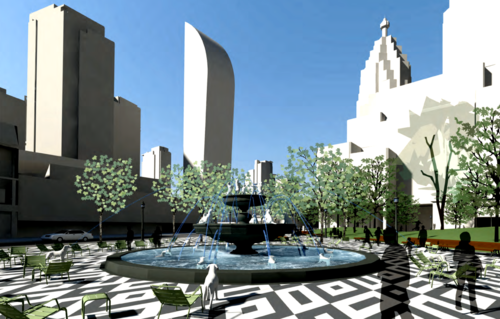
    As soon as I saw the pictures he was tweeting out, I was immediately excited. And after reviewing the full design package (which you can download here), I must say that I think it’s going to be a brilliant change for the neighborhood. 

    image

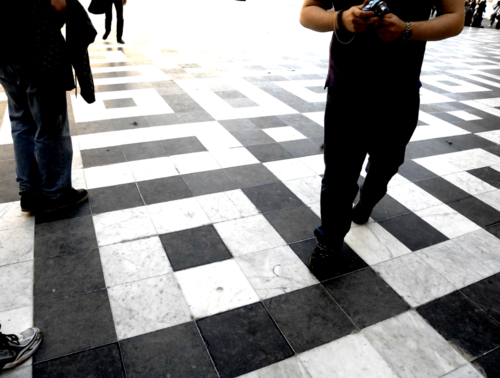
    On an entirely superficial level, I like the paving motif they’ve chosen; even if it does appear to be be a copy from somewhere else (see above photo). I don’t think one should underestimate how small details, like paving, can have a huge impact on how one feels in a space, whether inside or out. It all counts.

    But beyond just cosmetic changes, there are a couple of significant design changes being proposed.

    First, a larger kid-friendly green space is being proposed on the west side of the park. And what was interesting to see was how the community overwhelmingly expressed a need for this play area. I’d like to believe that this speaks to the growing acceptance of raising kids downtown. There are certainly lots of families in the St. Lawrence.

    Second, the south portion of the park is being “opened up” with a much larger hardscape area. The result will be a bigger promenade along Front Street, as well as, what I hope, will become an “urban stage” for people to hang out, breakdance, busk or try and sell me things I don’t need.

    But equally exciting is the fact that along with the revitalization of Berczy Park will come a public art competition. It’s already in the works, but there aren’t any pretty images to share, just yet. Regardless, I think the topic of public art is an interesting discussion.

    In a lot of cities around the world, there are mechanisms in place to encourage or mandate public art. Commonly, it comes in the form of a “Percent for Art” program, which means that, in the case of a new construction project, 1% of the construction costs would or should go to public art.

    But the fact that we, at least in some cities, have programs to mandate it, should immediately signal to you that public art is not something universally believed in. And certainly it’s one of those things where it’s hard to measure the return-on-investment. 

    But that doesn’t mean it doesn’t or can’t exist.

    In fact, I would argue that in today’s information and digital age it’s only going to become more important. We are living in a world of too much information and too little time. We’re living in a noisy world and, whether you’re a corporation or a city, the only way to stand out is to be remarkable. You need to bring delight to people.

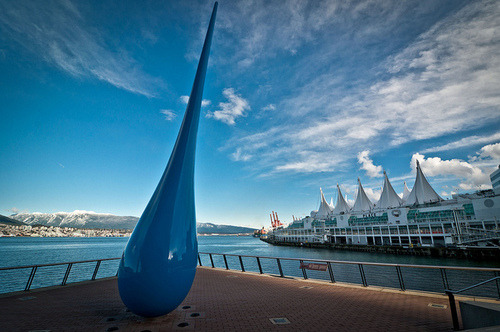
    Because when you do, you get noticed (and probably shared on Facebook, Twitter, Instagram, Tumblr, Snapchat, Vine, 500px, Flickr and maybe even Google+). As one example, how many of you recognize the public art piece below? It’s in Vancouver and I’ve seen it pop up a number of times in my social news feeds. It’s something that brings delight to people. 

    image

    But at the same time, it’s something that speaks to and creates a sense of place. What could be more Vancouver than a giant blue raindrop along the waterfront? And that’s really one of the ironies of today’s digital world. Despite the fact that, no matter where we are, we’re all hyper connected through technology, more and more of us are gravitating back towards cities. We want to live close to other people and we want to feel a sense of place.

    When done properly, public art can help cities achieve that. Whether it’s the famous LOVE sculpture or Richard Serra’s controversial Tilted Arc, public art can make you stop and take notice of your environment. It can give you that sense of familiarity or it can take you by surprise. Either way, it gives you a sense of place.