Daily insights for city builders, delivered every morning at 6 AM ET. I’m Brandon Donnelly — a Toronto-based real estate developer and founder of Globizen. I’ve been writing here since 2013.

Tag: art basel miami beach

  • Latin American architecture and Miami’s influence

    Art Basel Miami Beach was cancelled this year for obvious reasons. It had originally been scheduled to kick off on December 3rd. But Design Miami is still hosting some physical exhibitions and naturally a lot of online programming. They also partnered up with Dezeen (and others) to host a series of online talks as part of the festival. Here is one about Latin American architecture and its symbiotic relationship with Miami. For some, Miami is known as “the capital of Latin America.” This talk explores that idea, but also how the relationship really runs both ways. It’s with architects Tatiana Bilbao and Carlos Zapata, and developer Joseph Schwarzkopf.

    If you can’t see the video, click here.

  • The new Rubell Museum

    This December 4 (2019) — the day before Art Basel starts — the Rubell family will open a new 100,000 square foot museum in Miami’s Allapattah district. (For years people have been calling Allapattah the new Wynwood.)

    A former industrial space on a 2.5 acre lot, the building was renovated by New York-based Selldorf Architects. Just over half of the building has been allocated to exhibition space and about 65% of this will be for permanent/longer-term collections.

    The Rubell family started collecting contemporary art in 1965. At the time, they were living in New York City. In 1990 they moved to Miami and in 1993 they opened up the “Rubell Family Collection” in Wynwood, which was a depressed neighborhood up until probably the early 2000s.

    With over 7,200 works, it is now one of the largest privately owned and publicly accessible contemporary art collections in the world. If you live in Miami or you happen to find yourself there this winter, you may want to check out the new Rubell Museum.

    Rendering: Selldorf Architects

  • Miami in the 21st century

    I started reading a new book this weekend called, The Global Edge: Miami in the Twenty-First Century.

    When many (or perhaps most) people think of Miami/Miami Beach, they think of its beaches and resorts. And that is certainly a mainstay of the region’s offering. But over the past few decades, Miami has also emerged as an important global city (albeit at a more regional scale) and as a center for art and culture. Miami has the second largest concentration of international banks in the United States after New York, which begins to speak to the region’s importance for Latin America.

    New York City is what it is today because it was the port of entry for new immigrants coming to the United States. This same phenomenon is what reshaped the Miami economy, starting first with Cuban exiles. Today, the city remains a refuge for Latin Americans searching for greater political and economic stability. As my friend from Miami likes to tell me, “the best thing about Miami is that it’s so close to the United States.”

    I’m enjoying this book and I bet some of you will as well.

  • Three nights only

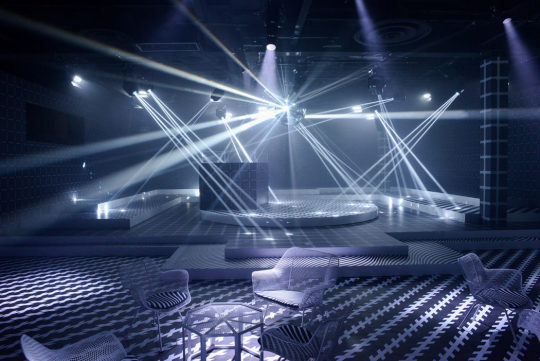
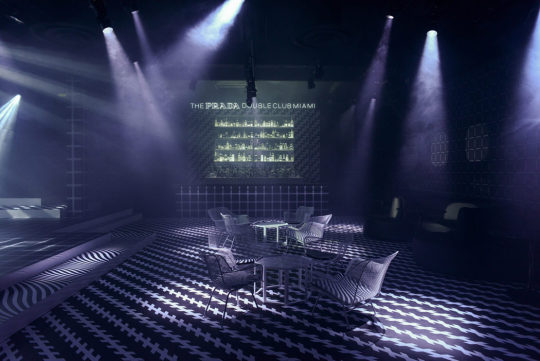
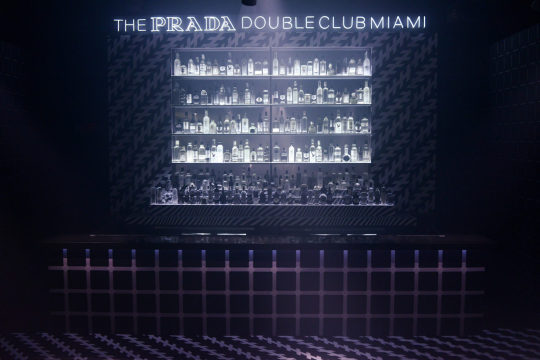
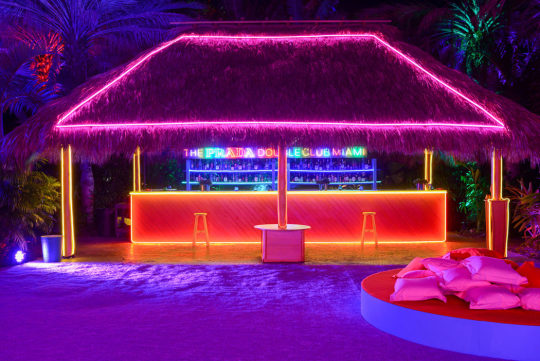
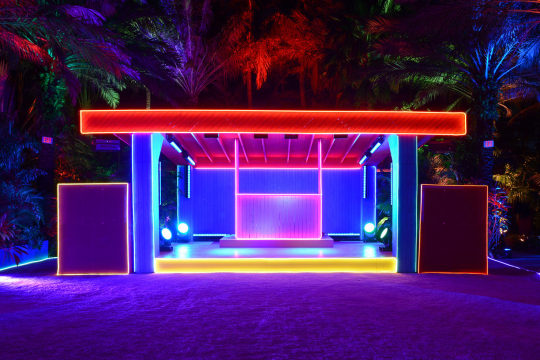
    For this year’s Art Basel Miami Beach, artist Carsten Höller collaborated with Fondazione Prada to create a 3-night-only pop-up club called, The Prada Double Club Miami.

    By time you read this post, the pop-up is likely to be over. But it is an interesting space nonetheless.

    The installation made use of an old 1920s film studio and was comprised of two distinct spaces – hence the double club reference. 

    The interior bar and dance floor were entirely monochromatic.

    Höller wanted all color to instead come from participants within the space. 

    The exterior bar, on the other hand, was “hyper-polychromatic.”

    Perhaps some of you might find inspiration here for your next condo sales office. That would be fun.

    Photography: Casey Kelbaugh, courtesy of Fondazione Prada and via The Spaces

  • Insecure cities

    Miami city by night by beatrice preve on 500px.com

    https://500px.com/embed.js

    I am back in Toronto and ready to resume my normal routines. I am definitely a creature of habit.

    But boy is Miami an incredible city.

    The interesting thing that I noticed about Miami though is that – despite its reputation as a global capital of glam – it still shares the same kinds of insecurities that many other cities experience.

    I was reading the December 2015 / January 2016 issue of Surface this past weekend and there was an interview with billionaire real estate developer Jorge Pérez. He’s the CEO of The Related Companies and worth somewhere over $3 billion. In the interview he said that his biggest focus these days is on “Miami becoming a world-class city.”

    I love that. Cities need strong proponents. And he is doing a lot. To give one example, he donated $40 million (half in cash and half in art) to create the new Pérez Art Museum Miami.

    But for the Torontonians reading this post, how many times have you also heard the words world-class? At this point it makes me cringe when I hear someone say it. Usually it accompanies a sentence such as: “If we do (insert thing here), we will then be world-class.”

    I also attended a talk at Design Miami, where some of the panelists were going on about how Miami’s restaurant scene was pretty pitiful about 10 years ago, but how that’s not the case today. Now, it is finally becoming remarkable.

    That struck home for me because I’ve said similar things about Toronto: “10 years ago Toronto was like that, but now we are like this.” Makes me think that I’ll be saying the same thing about Toronto 10 years from today.

    So it seems like many, or perhaps most, cities have an insecure side to them. And that can be a powerful motivator for driving growth and change. Cities, like people, need that fire in the belly.

    But at the same time, there’s something nice about being grateful for what you have. And Miami certainly has a lot going for it. See you soon, Miami.

  • A few photos from Art Basel

    It’s raining here in Miami Beach this morning. But the city is still buzzing with Art Basel and everything else that is going on right now.

    It’s been interesting to learn about some of the measures that Miami Beach is taking to deal with flood risk. The city is highly vulnerable to rising sea levels.

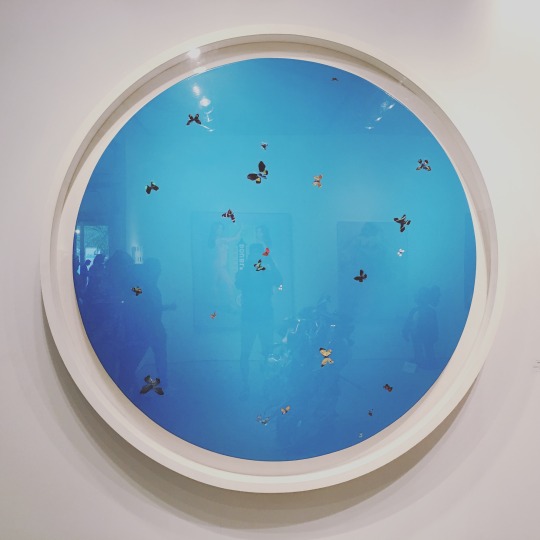
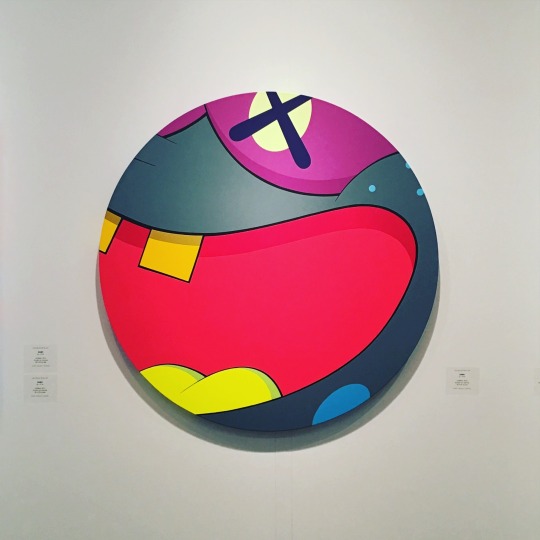
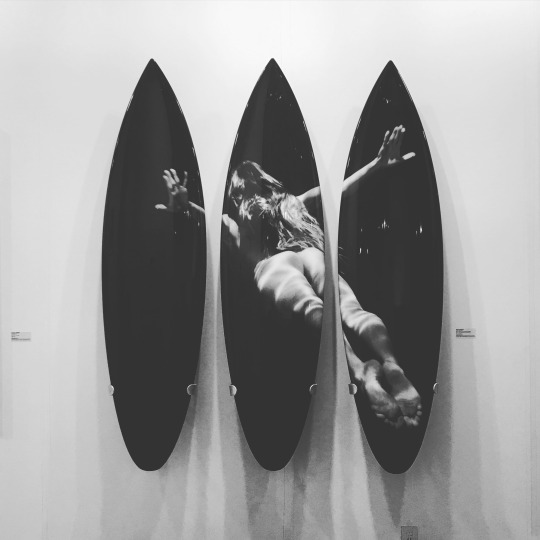
    A post on that topic is in the works, but I don’t have time for it this morning. So instead, I’d like to share some of my photos. Many of them are already on my Instagram.

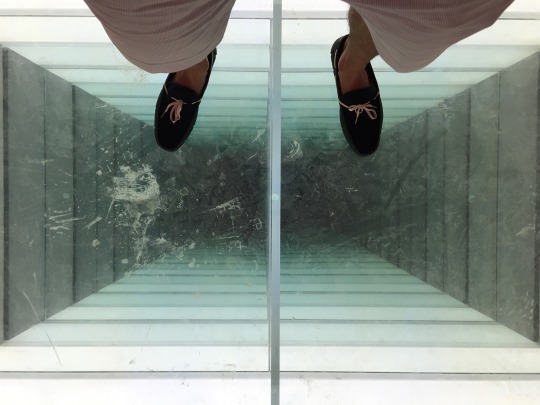
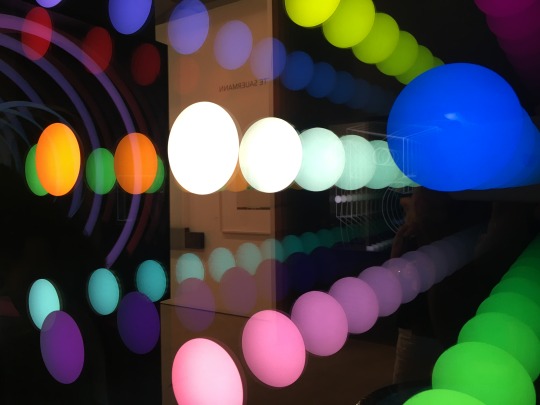
    I particularly liked the work of South Korean artist Chul Hyun Ahn. He works primarily with light and the perception of depth.

  • The Monocle Travel Guide Series — Miami

    I’m off this week to South Florida to check out Art Basel (among other things). This week isn’t a great week to be leaving the city since it’s the Toronto Real Estate Forum and lots of people are coming to the city for that. But I’ve wanted to go to Art Basel for over a decade, so it was about time I did that.

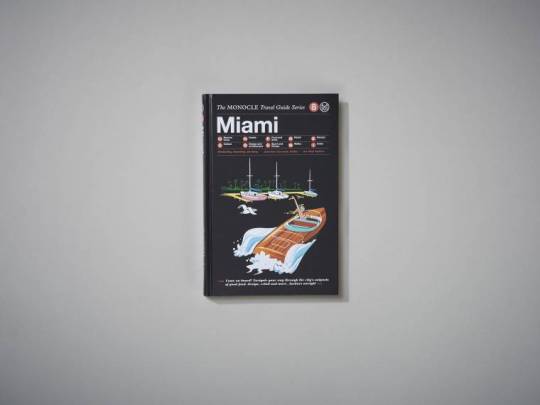
    I also decided to pick up the new Monocle Travel Guide to Miami. This is the 8th city that they’ve covered and, as you might know from reading this blog, I’m a big fan of Monocle. (I’m still waiting for the Toronto edition, guys.)

    As part of this guide launch – which was timed to coincide with Art Basel Miami Beach – they also released a short video that is worth watching.

    When most people think of Miami they probably think of sun and flash. And that is certainly part of the DNA of the city. But Miami has also grown into a global city with important and extensive connections to Latin America. It’s also an incredible place for those who love art, architecture, and design. If you watch the Monocle video, I’m sure you’ll feel that. 

    Miami is absolutely one of my favorite cities.