Daily insights for city builders, delivered every morning at 6 AM ET. I’m Brandon Donnelly — a Toronto-based real estate developer and founder of Globizen. I’ve been writing here since 2013.

Tag: architecture

  • City building jobs

    I get a lot of emails from readers of this blog. I try my best to answer every single one of them, but sometimes I fall behind and fail spectacularly at that. (The snooze feature in Mailbox and Google Inbox is one of the best inventions ever.)

    One of the most common emails I receive is about careers. Sometimes it’s someone looking for a new job or for advice on how to break into the industry (usually real estate development). And sometimes it’s an employer (or recruiter) with a role they need filled. 

    It’s hard to match up supply and demand when they arrive in my inbox on an ad hoc basis like this, but I have been thinking about ways I might be able to help these people out.

    So today I thought I would try something new. If you have a relevant job listing that you’d like me to distribute to the ATC community (something in architecture, planning, real estate, tech, and so on), email it to me at b@brandondonnelly. 

    If I get enough high quality listings, I’ll send them out in my newsletter. And if everyone finds it valuable, I may make it a regular feature.

  • Blogging as city building

    This past week I received 2 separate invitations to talk at events about blogging as a form of city building.

    The first is a Pecha Kucha talk being held here in Toronto on Tuesday, October 20th, 2015. If you’ve never heard of the Pecha Kucha movement, it’s basically all about rapid fire presentations. Each person gets 20 slides and 20 seconds for each one. 

    Here are the details for the upcoming Toronto event:

    image

    The second event is being held in Ottawa in the new year. I’ll write more on that closer to the date when I have more information to share.

    I haven’t yet figured out exactly what I’m going to talk about at each event, but I am starting to think about a few things.

    When I started writing this blog, it was intended simply as an outlet for my own city-related – and also personal – thoughts. Ultimately, the blog evolved into having its own mission, which is to promote the building of beautiful, sustainable, and globally competitive cities. And so clearly in my mind blogging was and is in fact a form of city building.

    But writing is vastly different than the kind of city building I do for a living. During the day I worry about things like rental rates, building setbacks, bulkhead locations, parking counts, and a bunch of other fun stuff.

    The two are certainly related, but the latter feels a lot more tangible. The result is spaces that people will occupy and buildings that will have some sort of impact on the overall built environment.

    But as you all know, city building is a lot more than just bricks-and-mortar. It is political. It is emotional. It is subjective. It is ego-driven. And it is so many other things. Because of this, words do have a role to play in shaping the cities we live in. And hopefully my words are having some kind of positive impact.

    At the same time, I see myself as simply part of a larger set of trends that are happening in both city building, as well as in many other sectors. Trends around transparency, decentralization, and the democratization of information.

    Technology today allows us to connect at zero marginal cost. And that is empowering people like me to self-publish, people to crowdfund real estate development projects, people to crowdsource community feedback for projects, and to do many other exciting things that weren’t possible before. Without this blog, most of you reading this right now would have absolutely no idea who I am.

    So I guess I kind of do know what I’m going to talk about.

  • Toronto housing — where we came from and where we’re probably headed

    This morning I’m working on a presentation that I’m going to be giving one evening next week to a delegation coming in from the US. The title of the presentation is the title of this blog post: Toronto housing – where we came from and where we’re probably headed.

    My plan is to start in and around the 50s and 60s and talk about Toronto’s first tower boom following the war. For this time period, I’m relying a lot on the work of Graeme Stewart of ERA Architects, who is one of, if not the, expert on post war towers in this city.

    image

    I’m then going to move onto our current high-rise condo boom and compare the two.

    Because the interesting thing about the first boom is that, after it finished, we basically returned to the typical North American housing model: building single-family homes. And it wasn’t until this recent boom of the early 2000s that we once again resumed building more high-rise than low-rise housing. That is still the case today.

    But the question I want to address is really, what’s next? Where are we headed? Is history going to repeat itself or is – dare I say – this time different?

    I’ll eventually get to those questions here on Architect This City, but first I want to hear from you. So here’s what I’m proposing: leave your thoughts in the comment section below and I will feature the best ones in my presentation next week as the voices of Toronto. I’m sure many of you know that I’m a big fan of crowdsourced information.

    So here goes. Where is Toronto housing headed and how will we be living in the next 10+ years? Will we be raising families up in towers or not? Please comment by Sunday, September 27, 2015 at 6pm (ET) to make sure I have time to feature you in the presentation. 

    Thanks for participating 🙂

  • The day modern architecture died

    image

    In 1956, a large 57 acre urban renewal project was completed in St. Louis. It consisted of 33 apartment buildings, each 11 storeys tall. The entire complex was known as Pruitt-Igoe.

    Early residents seemed to really like the buildings. The first tenant, Frankie Mae Raglin, called it the “nicest place she’d ever had.” 

    But 16 years later in 1972, the first 3 buildings within Pruitt-Igoe were demolished. And in 1977, architectural historian Charles Jencks proclaimed that the day Pruitt-Igoe was demolished was the day that modern architecture had officially died.

    The modernist dream had failed. Architecture had failed us. Segregated “towers in a park” was not the way to socially engineer away poverty and slums from our cities. 

    This is the narrative that we have told ourselves, not only in St. Louis, but in cities all around the world.

    But was it really all architecture’s fault?

    Stuyvesant Town in New York (80 acres) shares many of the same architectural ideals that Pruitt-Igoe embodied and it seems to be holding up just fine. The same could be said for Lafayette Park in Detroit (46 acres), which is probably more telling given what the city witnessed in the years following 1956 – the year Lafayette Park was completed.

    So the reality is far more complex.

    Between 1950 and 1970, St. Louis lost about 30% of its population. Coming on the end, Pruitt-Igoe had a vacancy rate of 88%. Racial tensions were also surging. Here’s how the American Institute of Architects put it back in 2012:

    Pruitt-Igoe was built during a tumultuous time in U.S. race relations in a city with an intense history of racial segregation. Pruitt and Igoe were designed as separate, racially segregated projects: Pruitt for African-American residents, Igoe for whites. As the towers were going up, the Supreme Court’s Brown v. Board of Education decision banned segregation. Faced with the possibility of living next to African-American neighbors in an integrated Pruitt-Igoe, white residents moved out en masse, exacerbating Pruitt-Igoe’s vacancy problems.

    So while most cities rightfully would’t dare build in the spirit of Pruitt-Igoe today, this was not a strictly architectural problem. There is always an underlying social, political, and economic environment. And unfortunately architecture, alone, cannot solve everything. 

    If you’re interested in this topic, I recommend you check out a paper by Katharine G. Bristol called, The Pruitt-Igoe Myth.

    Image by Bettmann/Corbis via The Guardian

  • Products people love

    Ruler, compasses, eraser, protractor, pencil and tracing paper r by Alexander Melnikov on 500px.com

    https://500px.com/embed.js

    I recently heard someone say, in a pejorative way, that all real estate developers think of what they build as “products.” I imagine this is in contrast to thinking in terms of buildings as spaces for people to live, raise a family, do their life’s work, and so on.

    When I heard this I immediately thought to myself, yeah, we (or at least I) do think of our spaces as products. But I also didn’t see it as a negative thing.

    In my view, there’s no reason that classifying something as a “product” has to make it any less beautiful, functional, and/or filled with design intent. My iPhone is a product. The wine on my shelf that somebody labored over is a product. The chair I’m sitting on right now is a product. All of these items were produced by people and then I consumed them because I liked what those people had made.

    When I was completing my first master’s in architecture and real estate, I used to walk back and forth across campus between the design school and the business school. And in these two places, we talked about bricks-and-mortar in very different ways.

    In the business school, buildings were the proverbial widget. How much does this widget cost to produce? How much can I sell or rent this widget for in the market? And how do I scale up my business so that I can sell/rent more widgets?

    On the other hand, in the design school we weren’t all that concerned with the cost of the widget or even what people would pay for it. Instead we were concerned with making it something so much more than just a plain old widget. These weren’t buildings. This was capital “A”, Architecture.

    I don’t think either school was wrong in their thinking. I just think they were missing each other. 

    Business is business. If you don’t make a profit then you’re not going to be around for very long. And while many companies can survive by making shitty products, those aren’t great businesses. The best businesses also deliver products that people absolutely love.

    So whether we call it architecture, a product, or even a widget, the goal should be to delight people. (Am I allowed to say “customer”?) Make people so happy that they have to tell their friends about it. If we’re doing that, then frankly I don’t care what we call it.

  • The life expectancy of buildings

    Geisel Library by Angie McMonigal on 500px.com

    https://500px.com/embed.js

    We tend to think of buildings as being very permanent structures. After all, our cities are filled with buildings that are hundreds of years old. And in some cases, much older.

    But the reality is that buildings, just like everything else, depreciate over time. They have life cycles and they need to be regularly maintained and periodically renovated in order for them to survive.

    This morning I was reading the blog of Witold Rybczynski, who is an author and architecture professor at the University of Pennsylvania. A few months ago he wrote a post talking about the short life cycle of modernist buildings.

    According to a recent colloquium at the Getty Center, the average life span of a conventionally built building (masonry and wood) is about 120 years. But for modernist buildings (reinforced concrete and glass curtain wall) it’s half that: 60 years.

    And if you are to consider the typical big box retail store, the life expectancy is probably a third of that – if even that. Usually it is cheaper to just tear down the old box and build a new one when needs change. That’s part of the reason why the leases usually have clauses that try and prevent the retailer from just “going dark” and stopping operation.

    So we are literally not building them like we used to. And there’s a lot of debate in architecture and building circles about whether or not this poses a serious problem for cities. It is clear that Witold is unhappy about this shift.

    I am a strong believer in heritage preservation. I believe wholeheartedly that cities are far richer with layers upon layers of history. But I also acknowledge that in our world of 6 second Vine videos, we seem to be less worried about whether something will last 60 or 120 years.

    Perhaps that’s a problem. Or perhaps the times are just changing.

  • How high are your ceilings?

    I’ve been having a lot of discussions lately about ceiling heights. The clear height from the top of the floor to the underside of the ceiling.

    In Toronto there has been a bit of an evolution in ceiling heights. Older apartment and condo buildings often have 8’ ceilings. Newer buildings today often have 9’ ceilings. And we’re now seeing 10’ ceilings creep into the market, though I wouldn’t say it’s close to becoming the standard. It’s more at the top end. Of course there are also loft buildings with even higher ceilings.

    I am personally big on ceiling height. But I would be very curious to hear from the Architect This City community on this one.

    How high are your ceilings? What do you consider ideal? Do you even care? And is there a ceiling height where it would become a deal breaker for you when it comes to buying/renting a new place? I also think your actual height might have an impact on preference, so it would be great to also hear how tall you are.

    I have 10’ ceilings in my place. Not because my place is all that special, but because my suite is on the same floor as the building amenities. So the higher ceiling height is carried through (the rest of the building is 9’). I think it makes a big difference, particularly since my place isn’t all that big. I’m 6’3".

    Let me know your thoughts in the comment section below. This is great market feedback that will certainly be taken to heart.

  • The relationship between architecture and film

    There has always been a strong relationship between architecture and film. Next to actually being there, video is one of the best ways to experience architecture.

    And that’s because space is not static. A big part of how we experience space has to do with what it feels like as you move through it.

    For example, American architect Frank Lloyd Wright was notorious for his sprawling horizontal houses and low ceiling heights. In his Fallingwater House (which is stunning), I swear that my head was rubbing on the ceiling in certain rooms (I’m 6’3").

    But he did this to purposefully create a feeling of compression. Because then as you exited the room (in this case to go outside onto a terrace) the feeling of openness and expansion is all that more powerful. The contrast creates awareness.

    In honor of the cinematic nature of architecture, below is a magnificent video of the Casa del Acantilado (House on the Cliff) by Fran Silvestre Arquitectos. Pay attention to the sliding planes and framed views throughout.

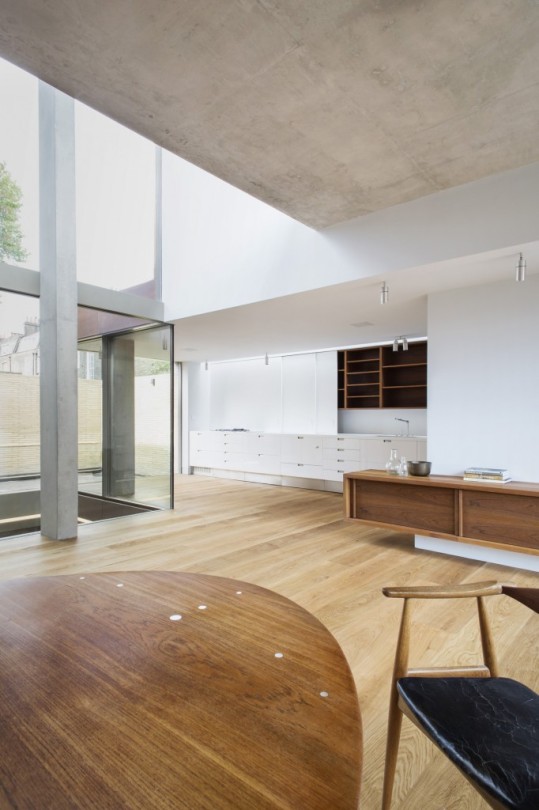
    The image shown at the top of this post is from Architizer.

    [vimeo 52162380 w=500 h=281]

    Casa del Acantilado | House on the Cliff by Fran Silvestre Arquitectos from Fran Silvestre Arquitectos on Vimeo.

  • Towards a post privacy world — what the Ashley Madison hack could mean for cities

    Blinded View by Markus Jentes on 500px.com

    https://500px.com/embed.js

    Ashley Madison is a website that helps married people have affairs. 

    Recently the website was hacked and over 33 million accounts were exposed. This included full names, email addresses, mailing addresses, and so on. Not surprisingly, this has gotten a lot of press. The site was/is marketed as being private and secure. And clearly that is not what it is right now.

    But there are people in the tech community, such as venture capitalist Albert Wenger, who believe that is merely a glimpse into the future – a “post privacy future.” He even argues on his blog that we as a society should be more accepting of the leak and that the release of this data could lead to a “more measured view of affairs.” (There are many who argue that humans are not intended to be monogamous.)

    For many, or probably most of you, I’m sure this position seems pretty radical. After all, this leak will likely destroy many marriages.

    But Wenger’s position on privacy is a fascinating one and he’s written a lot on the topic. The tension he sees is one between individual privacy vs. collective intelligence. In this part of the world, our society values the former over the latter. But he believes that we are headed towards a world where almost everything, yes everything, will eventually become public. Again, radical position. But consider how much we publicly share about our personal lives today versus 10 or even 5 years ago.

    What’s perhaps more relevant to the Architect This City audience though is what this could mean for many other industries beyond tech.

    I often think about what a “post privacy future” could mean for city building. Imagine if every architect, real estate developer, engineer, and other participant made public all of their work. This would mean that all designs, financial models, sales data, and so on were made widely available to anyone who wanted to see them.

    The thought probably scares many of you in the industry, but consider what it would mean for our collective intelligence. There’s a strong argument to be made that we would all be better off and that the process of building would become far more efficient. In fact, if truly everything were public, it could in theory eliminate most of the market’s concerns about overbuilding, a condo bubble, and all the other stuff that gets talked about.

    The reason people speculate on these market factors is because we don’t have all the data. We don’t actually know what’s going to happen. We have no idea. I know I certainly can’t predict the real estate market.

    So why aren’t we quickly becoming more public?

    Wenger raises the game theory principle known as the prisoner’s dilemma:

    “So one way to think about secrecy is that it leads to lots of prisoner’s dilemma style situations. Individuals (or companies) would be worse off if they were the only ones disclosing, but if everyone disclosed (or at least the majority), then everyone would be much better off. In the language of game theory, we are in a bad equilibrium.”

    In other words, if only one real estate developer disclosed her project’s financial information to the public, then she would probably be worse off against her competitors. But if every developer in the city did it, then the market as a whole would be better off because everyone would then benefit from collective intelligence.

    Using the example of infidelity, if one person is caught having an affair, then that person is more than likely worse off. But if over 33 million people are caught having an affair and it reinforces the statistic that between 30-60% of married people in the United States will have an affair at one point in their lives, then maybe it forces us as a society to rethink what marriage means today. And maybe that makes us all better off.

    This is a pretty far out there argument, though the city building example is probably more palatable than the Ashley Madison one. Regardless, I would love to hear your thoughts in the comment section below. 

    Are we heading towards a post privacy world?

  • Fun Friday: ATC subscriber map

    When I was very young I went a Montessori school here in
    Toronto. If you’re not familiar with Montessori education, it’s basically a
    very open ended and independent form of learning. Students choose
    what they want to do.

    Because of this, many have argued that a Montessori
    education is actually great training to be an entrepreneur
    . Instead of being
    told what to do, you as a student need to figure it out on your own. See the
    parallel? Both Google founders went to Montessori school.

    When I was there (< grade 4), my absolute favorite thing
    to do was draw maps. I remember them having these large scale maps of the world where you could
    physically remove each country so that you could then trace it and create your
    own maps. I spent a lot of time doing exactly that.

    To this day, I still really love maps. And I remember many
    of my friends in architecture school being the same way. So perhaps it comes
    with the territory.

    In any case, I recently started playing around with a product
    called cartoDB. And one of the things you can easily do with it is connect it
    to Mailchimp (the service that manages the ATC email newsletter) and anonymously
    map the location of each subscriber. I couldn’t resist giving it a try.

    Below is what that looks like. Not surprisingly, the highest
    concentrations of subscribers to this blog are in Canada and the US.

    image

    So here’s a zoomed in version:

    image

    I’ve been trying to branch out from talking about Toronto
    all the time. And that seems to be working somewhat. But I could still do a better
    job of creating more global content. I’ll try harder.