Daily insights for city builders, delivered every morning at 6 AM ET. I’m Brandon Donnelly — a Toronto-based real estate developer and founder of Globizen. I’ve been writing here since 2013.

Tag: architect

  • A labor of love

    image

    We’ve taught generations of architects to speak out as artists, but we haven’t taught them how to listen.

    This is a line from a recent New York Times op-ed that has been making the rounds online today called: How to Rebuild Architecture

    The premise of the article is that architects have marginalized themselves by being pompous elitists who increasingly serve only the rich and don’t respond to public opinion about architecture.

    For too long, our profession has flatly dismissed the general public’s take on our work, even as we talk about making that work more relevant with worthy ideas like sustainability, smart growth and “resilience planning.”

    The author’s recommendation is that architects need to get better at listening to their clients and listening to the public. 

    Reconnecting architecture with its users — rediscovering the radical middle, where we meet, listen and truly collaborate with the public, speak a common language and still advance the art of architecture — is long overdue. It’s also one of the great design challenges of our time.

    What’s interesting about this viewpoint is that it’s precisely the sort of thing that entrepreneurs and business people are trained to do today. The mantra is that you should never build your product or service in isolation. Get out of the building. Talk to customers. Get feedback. Adjust. And iterate.

    But architects don’t like to do this. Why is that?

    The answer, at least partially, comes down to taste. As the author correctly pointed out, the kinds of buildings that architects like are often not the same ones that the general public likes.

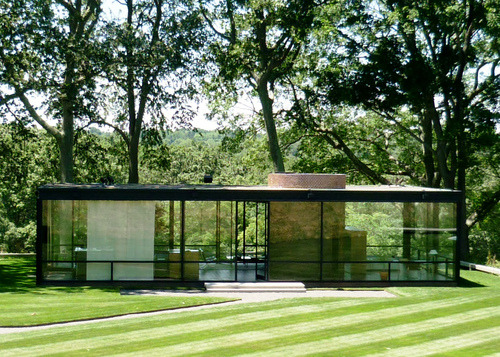
    I don’t have any hard data to support this claim, but I suspect that most people out there – particularly those with money – would prefer their home to look like something that Robert Stern designed as opposed to a glass box designed by Philip Johnson.

    And yet the latter is what architects and architecture students make pilgrimages to. I certainly did when I was in architecture school. 

    In fact, I think you’d have a difficult time getting into any architecture school right now with a portfolio of work as traditional as the work of Robert Stern. It’s simply not part of the architectural discourse at this stage.

    So to many architects, it can be difficult – even painful – to listen to what the public wants. Architects are not trained in terms of market size and profit maximization. It’s about passion. It’s a labor of love. And when you’ve already fallen in love, it can be hard to change your mind.

    Image: Flickr

  • How are you being shaped?

    image

    “We shape the cities, and then our cities shape us.” That’s one of my favorite lines from the documentary The Human Scale, featuring Danish architect and urban designer Jan Gehl. I like it because I don’t think many of us think enough about the way in which the built environment – that we create – ultimately goes on to influence the way we live our lives.

    One of the most interesting connections for me is the link between urban form and public health. There’s been a lot of talk over the years about how suburban sprawl is, or might be, making us fat (among other things). We’ve created environments that are only navigable by cars and that has forced many of us into sedentary lifestyles. We sit in our cars, and then we sit in our offices.

    So today I’d like to conduct a bit of a poll. If you’d like to participate, please share the following 3 things in the comment section below: 1) your city, 2) the type of neighborhood you live in (urban, suburban, rural, etc.), and 3) the amount of time you spend walking or doing something active on an average day.

    Here’s me:

    I live downtown Toronto in the St. Lawrence Market neighborhood (urban). I take the subway to work and the station is a 10 minute walk from my place. So as a bare minimum, I spend at least 20 minutes a day walking. But since I also walk to do most of my regular errands, and since my gym is another 10 minute walk from my place, I’d say I average a good 30-45 minutes of walking each day.

    Now it’s your turn 🙂

    This is a pretty crude survey, but with the advent of things like smartwatches and health monitors, I think we’ll soon have lots of great data on the ways in which our cities might shape our health.

    Image: The Economist

  • Why I didn’t go work for my favorite architect

    As a result of writing Architect This City, I’m fortunate enough to receive a lot of emails from random people. But I’m always open to meeting new people, and so I enjoy this very much.

    One of the most common questions I get is from architects, and students of architecture, who want to know about transitioning over to real estate development. (Posts related to this topic also happen to be some of my most popular.)

    So today I thought I would share a story with all of you about the one decision that ultimately lead me into real estate development.

    When I started graduate architecture school, I already had inklings that I was going to get into development. That’s one of the main reasons why I went to Penn. I knew that I could concentrate in real estate and I knew that I could take courses over at the business school. And that’s exactly what I wanted to do.

    But during my first year, I still wasn’t exactly sure how I was going to reconcile this dual interest. In fact, I remember feeling really conflicted. I loved architecture and design, but I also really enjoyed business and entrepreneurship. I was also interested in making money, and architecture isn’t often the best place to do that.

    So for my first summer internship, I decided to apply to both architecture firms and to real estate developers. I was fortunate enough to be offered jobs in both. And on the architecture side, I actually got my top choice, which was the Bjarke Ingels Group in Copenhagen. To this day, Bjarke remains one of my favorite practicing architects.

    But when I looked at the numbers, I quickly realized that real estate developers were prepared to pay me about 3x more than any architect would and that, if I were going to take an architecture job, I was going to end up going more in debt just to live throughout the summer.

    While internships are often career loss leaders, I took this as a sign of things to come. This was a 10 or 20 year decision in my mind. And even though I loved architecture, I figured I would quickly fall out of love with it if I couldn’t pay my bills or live the lifestyle that I wanted.

    So I accepted a real estate job and I moved to Dublin, Ireland for the summer to work for a small consultancy called Urban Capital (no relationship to the Toronto firm of the same name). And I haven’t looked back since.

    This may not have been the right decision for some of you, but it was for me. So if you’re at a crossroads, my advice is always to think about where you’d ideally like to be in 10 or 20 years. Because once you establish that, it’ll become much easier to make that decision today.

  • DSCRBD: Curating interesting minds through short video

    A good friend of mine recently launched a new project called DSCRBD (pronounced ‘described’). The goal is to “curate interesting minds” through short social video clips. Think Humans of New York but only creative types and only short videos.

    I think it’s a great idea. And I was fortunate enough to be one of the first test subjects. It was conducted as an interview between he and I, and we spoke for probably about 45 minutes on the sun deck of my building.

    He then took that entire interview and distilled it down to only a few seconds, extracting what he found most interesting. Perfect for social media consumption.

    image

    Click the image above for my video. What I’m talking about is my approach to architecture, and how I ended up not becoming an architect, but instead becoming a real estate developer.

    I think he’s on to something here and I would love to see it develop further. He’s using the right mediums and format to get the message out in today’s noisy social world. But there’s also no reason that it couldn’t grow to include more content or simply feed to other content, such as what he did with Architect This City.

    If you’re somebody that you think he should profile or know of someone that would be a good fit, drop him a line at hello@dscrbd.com.

  • The future of the architecture profession

    image

    Yesterday I had a really interesting conversation with somebody about the future of the architecture profession. We spoke about how Joshua Prince-Ramus of REX believes that architects have marginalized themselves as a result of shying away from liability. We spoke about how architecture schools need to teach more about about business and making money. And we spoke about why I decided to never practice architecture and instead become a developer.

    At the end of it all, he came to more or less the same conclusion that I did in this post. He felt that as more and more trained architects choose to become developers, that maybe the future will be firms that vertically integrate both architecture and real estate development. For those of you not in the building industry, this is fairly uncommon practice today. Typically, developers retain the services of an architect to design their buildings and do not handle this in-house.

    But there are firms that do. DDG out of New York and San Francisco is one example. Although there’s a subtlety worth mentioning. According to their website, they say that they often act as the “design architect” for their projects. This means that there would still need to be an “architect of record”, whose name would appear on the building permit and who would ultimately end up shouldering the liability for the design.

    You see, a bifurcation has happened even within the architecture profession itself. You have “design architects” who may or may not be licensed, but do a lot of the fun design work upfront for a project. And you have production oriented firms that actually produce the technical drawings needed for construction. The fees are generally higher in the latter case (unless maybe you’re a starchitect), but the work is less creative.

    The emergence of these two streams of architecture is precisely what Joshua Prince-Ramus is talking about when he says that architects have marginalized themselves by shying away from liability. He believes that architects are reducing themselves to designers and stylists, from master builders. So his argument is that architects need to reinsert themselves into more of the building process.

    What I’ve been suggesting is that architects should become owners. They should insert themselves into the development process. And the reason I feel this way is because I worry about the tendency for production and construction to just be farmed out to the lowest bidder. Design and development, on the other hand, are high value creation items.

    Truthfully though, I don’t really know which option is better for the profession in terms of relevance. I know which one I’m most interested in, but that could just be a personal preference. What do you think?

    Image: The Red List

  • The Human Scale

    Earlier today I stumbled upon a documentary called “The Human Scale.”  I haven’t watched it yet, but I’m planning to rent it from iTunes later this weekend. Here’s the trailer. Click here if you can’t see it below.

    [youtube https://www.youtube.com/watch?v=5CyLNS_ljHw]

    One of the things that’s so fascinating about studying cities right now, is that it feels as if we’re at a major turning point with respect to how we think about them. We’re coming off a long period (decades) of infatuation with the car, where planners and engineers predominately cared about one thing and one thing only: efficiently moving cars in and around cities.

    But having now fully built out cities around the car, we’ve come to realize two important things. First, that it’s virtually impossible to keep up with the demands of the car. No matter how many highways and roads you build, there always seems to be gridlock. And second, by focusing so closely on the car, we’ve built cities that aren’t great places for people.

    If you take a look at this short clip from The Human Scale (featuring Siena, Italy), I think you’ll immediately see how differently we used to build our cities and how disruptive the car has been to them. 

  • A new model for the architecture profession

    Last week I provided a few suggestions for how architects might be able to transition over to real estate development. And I ended by saying that I loved architecture school, but that it could use a few more business and entrepreneurship classes. Today, I’d liked to expand on that idea.

    When I was doing my Master of Architecture at Penn, I spent a lot of time thinking about hybrid models for the architecture profession. I was trying to figure out a way to reconcile my love of design with my desire to be more of a building entrepreneur.

    I was interested in what Jonathan Segal was doing down in San Diego with his “architect as developer” approach. And I was really taken by a lecture that Joshua Prince-Ramus (formerly of OMA, now REX) gave where he talked about how architects have marginalized themselves (away from being the master builder) by shying away from liability.

    Out of all the models, conflating architecture and development seems to me like a real possibility. I believe that good developers understand good design and that good architects understand what’s good for the market. So why not merge the two?

    We know that the architecture profession is facing significant challenges; fewer and fewer architecture school grads are getting licensed and actually become a bona fide architect. Some think this calls for licensure reform, but I’m also interested in revisiting the model in its entirety.

    Imagine if every architecture school taught students how to design a building and then go out and actually get it leased up and built. Is this too much to ask of one discipline?

    I can see firms naturally splitting up roles between those who prefer the design side and those who prefer the selling and business side, but is there any reason why the same firm couldn’t be handling both?

  • Transitioning from architecture to development

    A few years ago during a class at the Rotman School when we were all introducing ourselves, I had a professor ask why all architects seem to want to become developers. He asked it because there were 3 architects (or at least architect-trained) in the class who were either currently working in development or planning to move into development following their MBA.

    Indeed, it is pretty common for architects to make this jump. So much so that I’m often asked (as recently as last night) about how I made the transition from architecture to development. Given the frequency of this question, I figured it would be worthwhile to turn my response into a blog post—particularly since I did make the decision to write more about what it means to be a developer.

    The first thing I should say is that I’ve never really worked as an architect. I interned at an architecture firm one summer, but that’s about it. I’m not licensed as an architect and I have no plans of ever becoming licensed. Therefore, I’m technically not allowed to call myself one, which is why I often say “architect-trained.”

    However, this doesn’t mean that I didn’t face a certain degree of stigmatization while I was completing my Master of Architecture and looking for my first real estate job. The real estate community often perceives architects as being impractical, fanciful and generally poor with money and business.

    Part of this, I think, has to the with the fact that design schools often don’t like to talk about making money. It’s taboo. Design is supposed to be something purer and grander than money. Maybe that’s why it’s not uncommon for even the most famous of architects—such as Louis Kahn—to die deeply in debt.

    But I think this perspective is bullshit. Which is why I spent every single one of my electives during my Master of Architecture over at the business school taking finance, economics and real estate classes. I was determined to be just as good as the MBAs at “the numbers.” And even became a teaching assistant for a real estate economics class.

    So my first piece of advice to architects looking to make the transition to development is that you need to overcome the perception that you don’t understand money and business. You need to demonstrate that you can crunch numbers and that you know how to make money for investors.

    This could mean getting an MBA or Master of Real Estate Development, taking extracurricular classes, starting a blog, or just convincing somebody in real estate to give you a chance so that you have it on your resume. Whatever it is, you need to reposition your personal brand so that it no longer says architect.

    This is important because, from my experience, if a real estate company is used to hiring people with business degrees, then it’s going to be tough to get them to pay attention to you and your architecture degree. They just don’t understand the value that you might be able to bring to the organization (and you do bring value).

    My second piece of advice is to find developers who have an architecture background and specifically reach out to them. There are lots of us. They’ll be sympathetic to your background and will probably give you more time of day. But you’ll need to come prepared with the right tool chest. Demonstrate to them that you have the skills necessary to be a developer (see above).

    As I’ve said before, developers are, in many ways, a jack of all trades. So the more you can master all of those trades, the more likely you’ll get some hiring manager to take a risk on you. But when you do finally make that transition, I believe that you’ll be better for it.

    Not only because architects understand the building process, but because architects are trained to have an inherent sense of responsibility for the built environment. We get upset when building are ugly and public spaces suck. But we also know what will make them better.

    The way I see it, by becoming a developer you’re really just learning how to execute on your ideas. It’s one thing to know what makes a building beautiful, but it’s another thing to go out and raise the capital and build the damn thing.

    So I don’t regret any of my architecture degrees. I got so much out of them. And I firmly believe that design is only going to become more important. Designers, after all, are the new rock stars. We just need a few more business and entrepreneurship classes in architecture schools.

  • What real estate developers do and why I became one

    I met up with a friend yesterday after work and the topic of my blog came up. He said he loved the content, but that he would like to learn more about the inner workings of what it means to be a real estate developer. His belief was that there are lots of city blogs out there, but rarely do you get the candid perspective of a developer.

    I immediately thought this was a good idea for one simple reason: When I’m at a party and I tell someone that I’m a real estate developer, oftentimes they have no idea what that means. They usually think I’m a real estate agent. Or they ask me to explain a typical day. Either way, I’ve found it generally smoother (and more impressive) to just lie and say I’m an architect.

    So I’m going to do just what my friend suggested. I’m going to make an effort to talk more about what it means to be a real estate developer. And to kick it off, I thought I’d start with some of the basics and then talk about how I got into the business.

    Real estate developers are effectively the entrepreneur that make a new building happen. They go out and buy the land, they put a team in place (architect, engineers and so on), they get the necessary approvals to build (with the help of the team of course), they finance the deal, and then they get a builder to actually construct the project.

    Developers are like an orchestra conductor. They don’t play any instruments, they just direct the performance.

    But at the same time, developers assume 100% of the risk of the project. If the building fails (because you can’t sell the condo units or lease out the space), that all falls on the developer (and his/her investors). All of the other team members are getting paid based on the services they provide. They’re consultants.

    This distinction is what (can) make real estate development so lucrative—with risk comes reward. And I’ll be completely candid in saying that this is part of the reason I decided to get into development. I was training to be an architect and I started realizing that I could make more money as a developer.

    But I also came to the realization that as a developer I would likely end up having more say over the built environment. That’s the unfortunate reality of my industry. Even though architects spend far more time than your average developer thinking about what makes buildings and cities great, I would argue that they don’t have nearly the same amount of say. Because if they did, we probably wouldn’t have so many crappy buildings in our cities. But it’s this way because architects aren’t assuming the risk.

    Part of me used to actually feel bad about switching over to the dark side, which is how some architects refer to the development game. But the best way to summarize how I feel today is through what an architect friend told me a few years ago: “Brandon, cities don’t need more architects that care about design. We have lots of those. Cities need more developers that care about design.”

    And so that’s what I became. A developer who loves design and cares deeply about one of our greatest assets—cities.

  • Mirvish+Gehry and the story of 4 heritage buildings

    I am a real estate developer and I believe in progress. But I also fundamentally believe in balancing progress and preservation. I’ve said this before.

    This morning, Alex Bozikovic of the Globe and Mail, published a piece on the epic Mirvish + Gehry proposal for Toronto’s Entertainment District. It’s called, “Frank Gehry and David Mirvish’s tall order in Toronto.

    Now, I’ve said before that I like this project. I don’t mind the height and I don’t buy the argument that there aren’t enough public spaces in the area. There’s David Pecaut Square directly to the south that could use a few more warm bodies in it.

    But as I also said before, I think the key concern here is one of heritage. There are 4 heritage designated buildings on the site dating back to as early as 1901. Here’s where they sit:

    image

    The Anderson Building (1915) is particularly unique. Here’s a larger photo (via blogTO):

    image

    So while I’m excited by the prospect of a real Gehry project in Toronto, I think we need to figure out a way to find a balance. Preserve the facades, build on top, or relocate them. Do something besides wipe the slate clean.

    As Bozikovic rightly points out in his article, “Toronto has a sophisticated culture of working with heritage buildings.” There are lots of great examples of how we managed to move forward as a city, without erasing our past.

    And in many ways, I see this ability to work with and build upon heritage buildings as an emerging Toronto vernacular. I mean, what could be more appropriate for the most diverse city on the planet than an architectural style—of our own—that blends and layers history with disparate design ideologies.

    I sense an opportunity.

    We could have Gehry’s white sinuous curves drape over the heritage buildings. Make them become a literal unveiling of Toronto’s past and a metaphor for the sophisticated way in which we build upon legacy.

    It’s too easy to just demolish everything. We’re better than that.