Daily insights for city builders, delivered every morning at 6 AM ET. I’m Brandon Donnelly — a Toronto-based real estate developer and founder of Globizen. I’ve been writing here since 2013.

Tag: apple computers

  • Sleeping well at night

    I get that real estate developers don’t always have the best of reputations. We build buildings that cast shadows. We invest in (or gentrify) neighborhoods. And yes, like every other for-profit business, the goal is to make a bit of money along the way.

    But believe it or not, there are developers out there who care deeply about the work that they do. They care about their craft. And they want to do the right thing.

    Perhaps the best way for me to start to explain what I’m getting at here is to quote the late Steve Jobs. An obsessive perfectionist, Jobs was known for focusing on every little detail in the projects that he worked on. Here’s an excerpt from an interview he did for Playboy back in 1985:

    We just wanted to build the best thing we could build. When you’re a carpenter making a beautiful chest of drawers, you’re not going to use a piece of plywood on the back, even though it faces the wall and nobody will ever see it. You’ll know it’s there, so you’re going to use a beautiful piece of wood on the back. For you to sleep well at night, the aesthetic, the quality, has to be carried all the way through.

    As a developer and a fake architect, this paragraph really resonates with me. But here’s the thing. One of the differences between making a beautiful chest of drawers (or a computer) and making a beautiful building, is that buildings have an inordinate amount of rules that tell you what you can build where and then how you need to build.

    Some of these rules, of course, make a lot of sense. Life safety is no joke. But some of these rules also make no sense. And sometimes these rules — that don’t make sense — prevent you from putting what I would metaphorically consider to be that beautiful piece of wood on the back.

    The beautiful piece of wood isn’t about money. In fact, it’s going to cost you more compared to just using a piece of plywood. It’s about giving a shit and caring about your craft, even if nobody else does. It’s so you can sleep well at night.

    Photo by Michał Kubalczyk on Unsplash

  • Working from home: then and now

    In 1987, Apple thought working from home should look something like this:

    Cool studio apartment with killer view. Hard disk that stores over 10,000 pages. Curious photoshoot-type lamp facing your bed. And fascimile machine capable of sending hard copies to anyone in the world. All while being steps from your refrigerator.

    But over three decades later, it instead turned out to be more like this:

    https://youtu.be/6_pru8U2RmM

    Isn’t technology liberating?

  • What did Benjamin Franklin, Albert Einstein, and Steve Jobs all have in common?

    According to Walter Isaacson – the bestselling author of their biographies – it is this:

    I started with Ben Franklin, and then Einstein, and then Steve Jobs—[they were all] innovative and creative. And I said, “Well, what pattern [leads to] that?” The pattern wasn’t that they were smart, because you’ve met lots of smart people, and they don’t usually amount to much. The pattern tends to be curiosity across disciplines.

    This excerpt was taken from a conversation between Isaacson and Adam Grant, which you can read or watch here

    Here is another excerpt that speaks to the way in which Jobs prided himself on working at the intersection of technology and the humanities:

    I’ll give you a tiny example. The Mac that came out in 2000 had a handle on it, and they say, “This is a desktop machine. We don’t need the handle—people aren’t really supposed to move it around. It’ll cost us another sixty dollars [per computer].” And Steve said, “The handle is there because it makes the machine approachable. My mom is afraid of her computer, but if there’s a little thing [where] she can put her hand, where she can touch it and she knows it won’t break, that makes her connect emotionally to the computer better.” And he was right. But it cost money, and the Mac didn’t make as much.

    The entire conversation resonated with me partly because I think of development as being a career that, by necessity, requires you to work across disciplines. 

    I also sometimes wonder if I have too many broad-ranging interests. It can be overwhelming. But apparently that’s a good thing for innovation and creativity.

  • Sidewalk Labs, Amazon HQ2, and the Milanese Leonardo

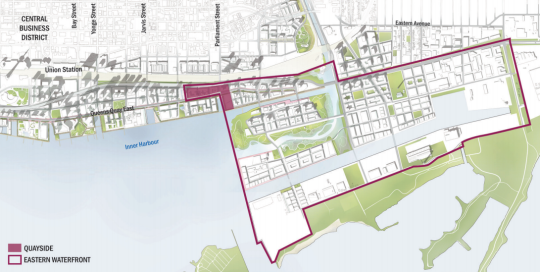
    Earlier this week the WSJ announced that Sidewalk Labs (Alphabet Inc.’s urban innovation organization) is close to a deal with Waterfront Toronto to develop a new 12-acre section of the eastern waterfront. Sidewalk Labs would be their innovation and funding partner. It’s not final yet and it’s still subject to board approval, but the sentiment is that it should go.

    There aren’t a lot of details about the project – other than the fact that it will be fairly big, up to 3 million square feet – but the overall intent is digital city building. It’s about imagining what a city could be if you built it today “from the internet up.” More info about Sidewalk Labs, here.

    I thought of this project as I read Seth Godin’s daily blog post this morning in bed. Here are two snippets from that post:

    When a new technology arrives, it’s often the nerds and the neophiliacs who embrace it. People who see themselves as busy and important often dismiss the new medium or tool as a bit of a gimmick and then “go back to work.”

    There’s never a guarantee that the next technology is going to be the one that moves to the center of the conversation. But it’s certain that a new technology will. It always has.

    Openness matters.

    I’m anxious to learn more details about the project, but this is obviously very exciting. It also creates momentum and strengthens the case for Amazon HQ2 in Toronto. The above 12-acre Quayside area is only the tip of the iceberg. There’s the rest of the eastern waterfront and also East Harbour.
    image

    Some people have been critical of this city’s push for Amazon HQ2. Anthony Lacavera, chairman of Globalive Capital, called this “the biggest Trojan Horse of all time.” His view is that Amazon would simply use HQ2 Toronto as a mechanism for cheaper labor (USD > CAD) and to siphon the best and brightest down to the US.

    Now, I agree that it would be more impactful to create the next Amazon then to simply lure in its second headquarters. Big entrepreneurial successes are what fuel the darwinian evolution of startup hubs. The founders, early employees and investors make boatloads of money and then they start reinvesting that back into the ecosystem by, among other things, backing the next generation of entrepreneurs.

    But does this necessarily mean that an Amazon HQ2 would be detrimental to Toronto by acting as a conduit to the US? Will it discourage entrepreneurship? Should we eschew all US firms out of fear that this may in fact happen? I don’t think so.

    There’s tremendous value in concentrating smart people in one place – ideas build on ideas. And I don’t think technology has been able to disrupt that, at least not yet. One example of this is a theory that Paul Graham calls the Milanese Leonardo:

    You can see how powerful cities are from something I wrote about earlier: the case of the Milanese Leonardo. Practically every fifteenth century Italian painter you’ve heard of was from Florence, even though Milan was just as big. People in Florence weren’t genetically different, so you have to assume there was someone born in Milan with as much natural ability as Leonardo. What happened to him?

    And his reasoning is as follows:

    Nothing is more powerful than a community of talented people working on related problems. Genes count for little by comparison: being a genetic Leonardo was not enough to compensate for having been born near Milan instead of Florence. Today we move around more, but great work still comes disproportionately from a few hotspots: the Bauhaus, the Manhattan Project, the New Yorker, Lockheed’s Skunk Works, Xerox Parc.

    Xerox Parc (Palo Alto Research Company) is a great example of the kind of positive externalities that can happen as a result of smart people being in close proximity to each other while they wrestle with similar problems. It has been well documented that it was Steve Jobs’ visit to Xerox Parc that inspired many of Apple’s early innovations.

    So my view: let’s increase Toronto’s urban metabolism and make it the Florence of 1450.

    Ed Clark – who is leading the charge for HQ2 in Toronto – has been clear that large taxpayer subsidies are not on the table for Amazon. That would not be fair to the existing companies in this city. If that is what it is going to take, then we are not going to win. We will win based on our city, our human capital, and our openness to the rest of the world. That feels right.

    Welcome Sidewalk Labs. Welcome Amazon. This city is open for business and to new ideas. 

    Image: Waterfront Toronto
