Daily insights for city builders, delivered every morning at 6 AM ET. I’m Brandon Donnelly — a Toronto-based real estate developer and founder of Globizen. I’ve been writing here since 2013.

Tag: amazon hq2

  • Amazon reveals spiraling building design for HQ2 office campus

    Amazon unveiled the design for part of its new HQ2 campus in Arlington today. The plan is a cluster of new office and retail buildings that will accommodate some 13,000 employees. When fully built out, its HQ2 is expected to house upwards of 25,000 employees.

    The centerpiece of the proposed campus is something that is being called the Helix, which is a spiraling building with outdoor walkways housing native trees and plants from the Virginia area. The idea is that it will become a place for people to go for walks and hikes “outside.”

    Here’s what that looks like (image from architecture firm NBBJ):

    In addition to a cool spiraling building, it’s of course also noteworthy that Amazon (along with many other companies) is continuing to forge ahead with its plans to build and occupy more office space in important urban centers.

    Here’s a quote from a recent WSJ article talking about the HQ2 announcement:

    While numerous tech firms have pledged to allow employees to work from home even after the coronavirus pandemic is contained, Amazon, Facebook Inc., Alphabet Inc.’s Google and others have continued to expand their urban office footprints. By investing heavily in big city real estate, they are betting that office space will be an important part of their corporate culture after the pandemic is over.

    “We have to think about this as a long-term investment,” said John Schoettler, Amazon’s vice president of global real estate and facilities. “These buildings will begin to deliver in 2025. And so we believe that the world will be a much improved place than it is currently.”

    Like most companies, they are naturally questioning to what extent some employees won’t be going into the office every weekday. But even still, the above announcement is yet another great example of why office space — and spiraling outdoor spaces — will continue to form an important part of the future of work.

  • Open letter to Amazon

    Today the Partnership for New York City took out a full-page ad in the New York Times with an open letter to Amazon chief executive Jeff Bezos, asking him to reconsider the decision to pull out of NYC. The letter was signed by a long list of prominent leaders in the city. Here is a copy (a PDF version can also be found, here):

  • Detroit. Move here. Move the world.

    As part of the Amazon HQ2 bid process, a number of cities produced videos. I only discovered them today and so maybe some of you also missed them when they were released last fall. There are videos from Detroit, Boston, Pittsburgh, Philadelphia, Dallas-Fort Worth, Las Vegas, Louisville, Atlanta, and maybe others that I am still missing. 

    Some of the videos are bad. (I’ll let you make your own judgement calls.) I like the idea behind Atlanta’s video, which is the journey of someone named Georgia physically delivering their bid to Seattle. And Philadelphia’s video made me feel really nostalgic about my time there. Those were some great years. 

    But my favorite video is Detroit’s video. It feels authentic. The footage is outstanding. And it feels powerful. Though it is probably too long. It was a good reminder that I’m overdue for a visit. So here is Detroit’s video. If you can’t see it below, click over to YouTube.

    [youtube https://www.youtube.com/watch?v=DO4J_PC1b5M&w=560&h=315]

  • A global hub for urban innovation

    Dan Doctoroff, the CEO of Sidewalk Labs (and the former deputy mayor of New York City), was recently interviewed by BNN Bloomberg about the company’s plans and ambitions for Quayside here in Toronto. 

    He talks about the project; their interest in timber construction; how the company, Sidewalk Labs, might ultimately make money; and how their mission is to create a global hub for urban innovation.

    This last point is, of course, the most exciting opportunity – both for Sidewalk Labs/Alphabet and for Toronto. And it’s why many people believe that Quayside will end up a far greater (economic development) coup compared to HQ2.

    The interview is only 10 minutes. If you can’t see it embedded below, click here.

    https://webapps.9c9media.com/vidi-player/1.5.1/share/iframe.html?currentId=1461888&config=bnn/share.json&kruxId=InSaVlLc&cid=%5B%7B%22contentId%22%3A1461888%2C%22ad%22%3A%7B%22adsite%22%3A%22ctv.bnn%22%2C%22adzone%22%3A%22ctv.bnn%22%7D%7D%5D

  • My even shorter Amazon HQ2 shortlist

    Amazon released its shortlist of HQ2 cities this morning. Below are the 20 metropolitan areas. They were selected from 238 bids, so this shortlist represents 8.4% of the original pool.

    • Atlanta, GA
    • Austin, TX
    • Boston, MA
    • Chicago, IL
    • Columbus, OH
    • Dallas, TX
    • Denver, CO
    • Indianapolis, IN
    • Los Angeles, CA
    • Miami, FL
    • Montgomery County, MD
    • Nashville, TN
    • Newark, NJ
    • New York City, NY
    • Northern Virginia, VA
    • Philadelphia, PA
    • Pittsburgh, PA
    • Raleigh, NC
    • Toronto, ON
    • Washington D.C.

    I saw some people on Twitter say that they were surprised to see Toronto and Miami on this list. I was not. If you remember, I publicly predicted on this blog that Toronto would be selected for Amazon HQ2.

    That said, I thought it would be fun to guess at an even shorter list from Amazon’s shortlist. I have no knowledge of Amazon’s actual selections process, but if I had to guess, here is who I would cross off the list:

    • Atlanta, GA
    • Austin, TX
    • Boston, MA
    • Chicago, IL
    • Columbus, OH
    • Dallas, TX
    • Denver, CO
    • Indianapolis, IN
    • Los Angeles, CA
    • Miami, FL
    • Montgomery County, MD
    • Nashville, TN
    • Newark, NJ
    • New York City, NY
    • Northern Virginia, VA
    • Philadelphia, PA
    • Pittsburgh, PA
    • Raleigh, NC
    • Toronto, ON
    • Washington D.C.

    That leaves us with a list that looks like this:

    1. Boston, MA
    2. Miami, FL
    3. Montgomery County, MD
    4. Newark, NJ
    5. Northern Virginia, VA
    6. Toronto, ON
    7. Washington D.C.

    So why this list? I’m probably wrong, but my reasons are as follows:

    – I think Amazon will opt for a metro area on eastern time.

    – There seems to be a predilection for areas around Washington D.C., so I left Montgomery County and Northern Virginia. 

    – As wonderful as it is, New York City feels too center ice for Amazon – at least in my view. But maybe Newark places them in the catchment area.

    – The area needs to be of a certain scale so Amazon doesn’t overpower it and they have enough human capital to draw from.

    – Miami is my sleeper bet. Most people think of it simply as a resort town, but there’s a huge percentage of foreign born residents and powerful arts/design scene.

    – Talent is number one, which is why I left Boston and Toronto and why I continue to believe in Toronto. Toronto is more dynamic than Boston.

    If I had to pick just three from the above shortlist, my bets would be, in alphabetical order: Boston, Toronto, and Washington D.C. What are yours?

  • Amazon orange

    This week (Thursday) was the deadline to submit proposals for Amazon HQ2. About 100 cities across North America are thought to have a bid in. 

    New York lit up every single landmark in the city with “Amazon orange” in an “embarrassing attempt” to try and win this thing. That’s how bad cities want this.

    I already think that Toronto has won an incredible prize with Sidewalk Toronto. Arguably, it may turn out to be more impactful to this city than Amazon HQ2. It’s an opportunity to define the future of, not just this city, but all cities. It’s an opportunity to lead.

    At the same time, I continue to believe that there’s no better place for Amazon HQ2 than here in Toronto. Not surprisingly, our bid emphasized the point that I’ve been hammering home on this blog since Amazon first announced the RFP. Toronto’s key competitive advantage: talent. 

    Below is an excerpt from the submission cover letter. The entire letter emphasizes our ability to grow, attract, and retain top talent.

    Thirty-nine percent of the Toronto Region—and 51% of Toronto proper—are born outside of Canada. We welcome more new immigrants each year than New York, LA, and Chicago combined. We speak over 180 languages and dialects. Toronto is heralded as the most multicultural city in the world, and our labour force and economy benefit directly from our diversity and inclusivity. We build doors, not walls. And those doors open to highly-skilled economic immigrants and international students who can easily become permanent residents and citizens.

    For the full Toronto region submission, click here

    Okay, enough about Sidewalk Labs and Amazon. Regular scheduled programming will resume on the blog starting tomorrow.

  • Sidewalk Labs, Amazon HQ2, and the Milanese Leonardo

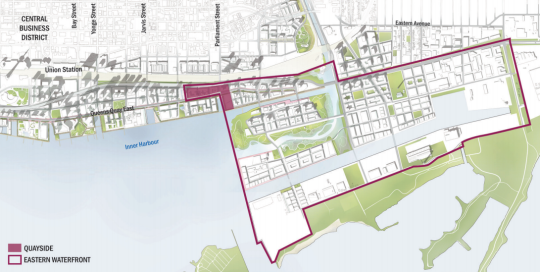
    Earlier this week the WSJ announced that Sidewalk Labs (Alphabet Inc.’s urban innovation organization) is close to a deal with Waterfront Toronto to develop a new 12-acre section of the eastern waterfront. Sidewalk Labs would be their innovation and funding partner. It’s not final yet and it’s still subject to board approval, but the sentiment is that it should go.

    There aren’t a lot of details about the project – other than the fact that it will be fairly big, up to 3 million square feet – but the overall intent is digital city building. It’s about imagining what a city could be if you built it today “from the internet up.” More info about Sidewalk Labs, here.

    I thought of this project as I read Seth Godin’s daily blog post this morning in bed. Here are two snippets from that post:

    When a new technology arrives, it’s often the nerds and the neophiliacs who embrace it. People who see themselves as busy and important often dismiss the new medium or tool as a bit of a gimmick and then “go back to work.”

    There’s never a guarantee that the next technology is going to be the one that moves to the center of the conversation. But it’s certain that a new technology will. It always has.

    Openness matters.

    I’m anxious to learn more details about the project, but this is obviously very exciting. It also creates momentum and strengthens the case for Amazon HQ2 in Toronto. The above 12-acre Quayside area is only the tip of the iceberg. There’s the rest of the eastern waterfront and also East Harbour.
    image

    Some people have been critical of this city’s push for Amazon HQ2. Anthony Lacavera, chairman of Globalive Capital, called this “the biggest Trojan Horse of all time.” His view is that Amazon would simply use HQ2 Toronto as a mechanism for cheaper labor (USD > CAD) and to siphon the best and brightest down to the US.

    Now, I agree that it would be more impactful to create the next Amazon then to simply lure in its second headquarters. Big entrepreneurial successes are what fuel the darwinian evolution of startup hubs. The founders, early employees and investors make boatloads of money and then they start reinvesting that back into the ecosystem by, among other things, backing the next generation of entrepreneurs.

    But does this necessarily mean that an Amazon HQ2 would be detrimental to Toronto by acting as a conduit to the US? Will it discourage entrepreneurship? Should we eschew all US firms out of fear that this may in fact happen? I don’t think so.

    There’s tremendous value in concentrating smart people in one place – ideas build on ideas. And I don’t think technology has been able to disrupt that, at least not yet. One example of this is a theory that Paul Graham calls the Milanese Leonardo:

    You can see how powerful cities are from something I wrote about earlier: the case of the Milanese Leonardo. Practically every fifteenth century Italian painter you’ve heard of was from Florence, even though Milan was just as big. People in Florence weren’t genetically different, so you have to assume there was someone born in Milan with as much natural ability as Leonardo. What happened to him?

    And his reasoning is as follows:

    Nothing is more powerful than a community of talented people working on related problems. Genes count for little by comparison: being a genetic Leonardo was not enough to compensate for having been born near Milan instead of Florence. Today we move around more, but great work still comes disproportionately from a few hotspots: the Bauhaus, the Manhattan Project, the New Yorker, Lockheed’s Skunk Works, Xerox Parc.

    Xerox Parc (Palo Alto Research Company) is a great example of the kind of positive externalities that can happen as a result of smart people being in close proximity to each other while they wrestle with similar problems. It has been well documented that it was Steve Jobs’ visit to Xerox Parc that inspired many of Apple’s early innovations.

    So my view: let’s increase Toronto’s urban metabolism and make it the Florence of 1450.

    Ed Clark – who is leading the charge for HQ2 in Toronto – has been clear that large taxpayer subsidies are not on the table for Amazon. That would not be fair to the existing companies in this city. If that is what it is going to take, then we are not going to win. We will win based on our city, our human capital, and our openness to the rest of the world. That feels right.

    Welcome Sidewalk Labs. Welcome Amazon. This city is open for business and to new ideas. 

    Image: Waterfront Toronto

  • My prediction for Amazon HQ2

    “Now the trick is that we gotta look like we don’t need this shit and they give us the shit for free.“ –Mike Peters

    This is a line from one of my favorite movies, Swingers. Short video clip here. Mikey and Trent are in a Las Vegas casino trying to play it cool. They’re looking to make a scene at a table and Mikey throws out this gem of a line. He knows that people want what they can’t have and that confidence matters.

    I was reminded of this line today after Amazon announced its HQ2 Request for Proposal (full RFP document here) and every city, from Chicago and Toronto to Philadelphia and Dallas, started swooning over the prospect of housing Amazon’s second headquarters in North America. 

    But to be clear, I do not think this is a bad idea. I actually think Amazon HQ2 is an incredible city building opportunity that would generate countless positive externalities for the selected city. I’m thrilled that Mayor John Tory will be personally “leading the charge” with respect to Toronto’s response.

    Over $5 billion in construction and as many as 50,000 employees making on average over $100,000 per year. Amazon is looking for about 500,000 sf of space in phase 1 (2019) and up to 8,000,000 sf in total. Based on the RFP, they seem to be pegging their capital investment at somewhere around $600 per square foot.

    If I’m being as objective as possible, I honestly believe that Toronto is the city to beat in his competition. I think it will come down to access to talent. Human capital is the lifeblood of a company and Trump’s immigration policies simply put U.S. cities at a disadvantage in this regard.

    Of course, Toronto is also awesome. So that’s my prediction: Amazon HQ2, Toronto.