Daily insights for city builders, delivered every morning at 6 AM ET. I’m Brandon Donnelly — a Toronto-based real estate developer and founder of Globizen. I’ve been writing here since 2013.

Tag: alleys

  • The year of the laneway

    Earlier this week, Metro News published an article saying that it’s going to be a big year for laneways in Toronto:

    “2016 is going to be the year where the evolution of our laneways lands at the forefront of our public realm strategy,” said Downtown Yonge BIA chair Mark Garner, who’s heading up the revitalization of O’Keefe Lane near Ryerson University.

    In addition to the Downtown Yonge BIA, much of this is being spearheaded by the non-profit group, The Laneway Project. This year they are expected to unveil plans for the revitalization of 3 laneways in the city – one of which is right in my backyard.

    I have a lot of respect for what The Laneway Project, the Downtown Yonge BIA, and others are doing in support of rethinking our laneways. And so today I just wanted to publicly thank them for their efforts. Thank you 🙂

  • Laneways and ravines

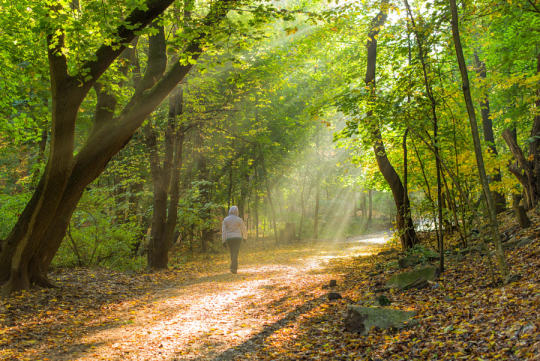
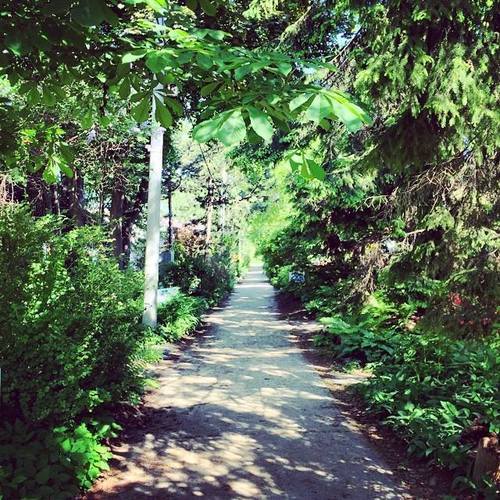
    Solitude by Lionel Linton on 500px.com

    https://500px.com/embed.js

    I have a new mission for this summer: To explore more of Toronto’s ravines.

    Last week I had a fascinating conversation with Steve Heuchert of the Toronto and Region Conservation Authority (TRCA). Most developers in this city would probably cringe when they hear those words. Because often when the TRCA gets involved it means your project is about to get more complicated.

    But if you take a step back and look at the larger city building equation, our ravines are a remarkable and unique feature of the Toronto area landscape.

    And unless you live near one or are fortunate enough to have a home that backs onto one, I suspect that for many of us this city’s ravines are a somewhat forgotten layer of the urban fabric. We drive by them. We pass through them on the subway. But they don’t really register in the way that they should.

    And so if you think about it, our ravines actually share many similarities with our laneways (alleys). We know they exist, but we could be doing a lot more to truly celebrate and integrate them into the rest of the city. They are missed opportunities.

    The challenge with our ravines though is finding the right balance between preservation and increased usage. But this isn’t something that a great landscape architect couldn’t help solve.

    So today’s thoughts are: How do we increase ravine awareness? How do we improve access and expand their uses? How might we craft our ravines to become an interconnected open, green, and cultural network within the city? And how do we better position the ravines as part of Toronto’s overall city brand?

    If you’re interested in this topic, check out this talk that Steve Heuchert did last year. It was part of an event that Megan Torza of DTAH organized called RavinePortal.

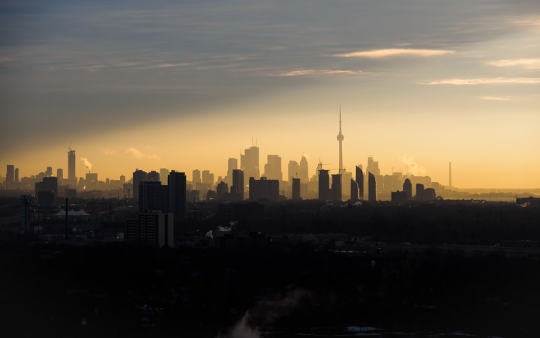
  • 10 reasons to visit Toronto right now

    https://500px.com/embed.js

    Next weekend a good friend of mine from architecture school will be visiting Toronto from Philadelphia. And I’m really excited to show him the city. (Next month it’s my turn to go to Philadelphia.)

    He’s a fellow city geek. He hasn’t been to Toronto in a number of years. And I haven’t seen him since our trip to Detroit 2 years ago.

    For those of us living and working in Toronto, there’s a lot to celebrate. Sure the Gardiner Expressway East decision didn’t go as I – as well as many other urbanists, including our Chief City Planner – had hoped. But there’s no shortage of other things to brag about.

    So here are 10 reasons to visit Toronto right now:

    1. We’ve created an entirely new business district south of Union Station called South Core. Now the region’s primary mobility hub is in the middle of the country’s most important business district, as opposed to on the edge of it. It’s a better use of infrastructure.

    2. We now have a dedicated train (the Union Pearson Express) that takes you from the country’s busiest airport directly to downtown in 25 minutes. You’ll find local retailers at the stations and a brand created by the brain behind Monocle Magazine. You can even use a smart card to ride it and our local transit system.

    3. We didn’t shut down Uber. Instead our mayor wants to create new policy that will allow these services to coexist with conventional taxi services. We don’t yet know how this will turn out, but I believe it’s a step in the right direction. It’s Toronto taking a leadership approach to innovation as opposed to trying to stomp it out.

    4. We are about to host the largest sporting event in Canadian history. The 17th Pan American Games will have double the number of athletes competing as the 2010 Winter Olympics in Vancouver.

    5. We created an entire neighborhood from scratch in order to house all of these athletes (Canary District). And I think it’s destined to become one of Toronto’s great neighborhoods. I’m saving my first visit for next weekend, so expect a follow-up post on this.

    6. We are dramatically rethinking this city’s public realm. From the plaza out front of Union Station to the new Queens Quay Boulevard along the waterfront, we are prioritizing people and creating more complete streets. It has given Toronto an entirely new urban feel.

    7. We are slowly starting to embrace our forgotten laneways and alleys through the help of organizations like The Laneway Project. And this is going to eventually lead to a further rethink of our pubic spaces and urban fabric.

    8. We continue to be one of the fastest growing cities in the world (certainly in the developed world). As a result, we are building some really exciting buildings by some of the top architects in the world. This includes everyone from Norman Foster to Frank Gehry.

    9. According to a recent report coming out of the Martin Prosperity Institute, Canada is one of the most creative and globally competitive countries in the world, as well as the most open to “ethnic and religious minorities and gay and lesbian people.”

    10. The ATC community is in the process of identifying a new, quintessentially Toronto food dish. But since we have every type of imaginable cuisine here, we’re struggling to pick just one. When you visit, you can help us identify the best and most Toronto dish.

    So there’s a lot to be excited about. I for one can’t wait for us to host the Pan Am Games, starting tomorrow. It’s a chance to show off this great city. 

    So if you’re also in town next weekend and want to geek out about cities, drop me a line.

  • How Melbourne reinvented itself one block at a time [Video]

    https://500px.com/embed.js

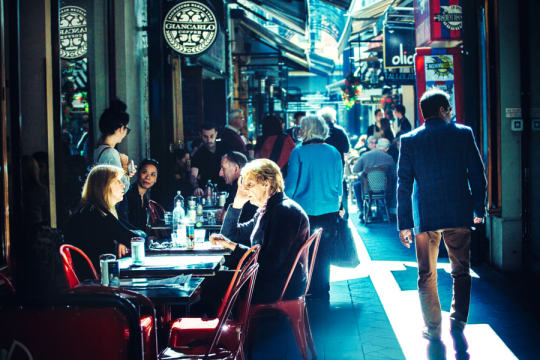
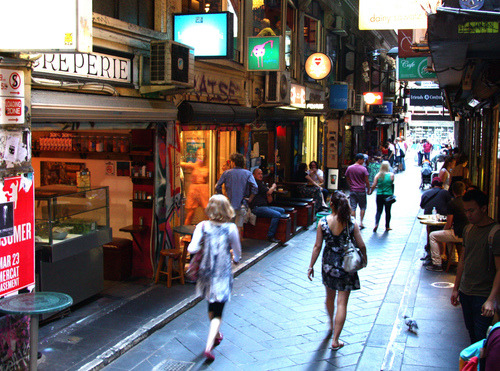
    Melbourne is famous in urbanist circles for the revitalization of its central area. In 1992, 40% of the buildings were empty above the first floor and only 5 (yes five) residents actually lived in the core. Everyone had fled to the suburbs and the city had hollowed out.

    Today, there are over 29,000 residents in the central area and Melbourne has become revered around the world for its vibrant public spaces and innovative laneway repurposing. 

    Here’s a quick 11 minute video that explains how they did it (via The Urbanist). Click here if you can’t see it below.

    [vimeo 131396094 w=500 h=281]

    What is clear from the video is that it took a lot of work convincing property owners and getting them to buy into the vision. Being able to repurpose the laneways often meant punching through blank walls at the base of buildings. And so there was pushback.

    Here in Toronto I’ve heard people say that we’re not Melbourne and we shouldn’t expect to have similar kinds of urban spaces. Well guess what, neither was Melbourne in the 1980s and 1990s. It was a dying city. But they made it happen.

  • Name your laneway

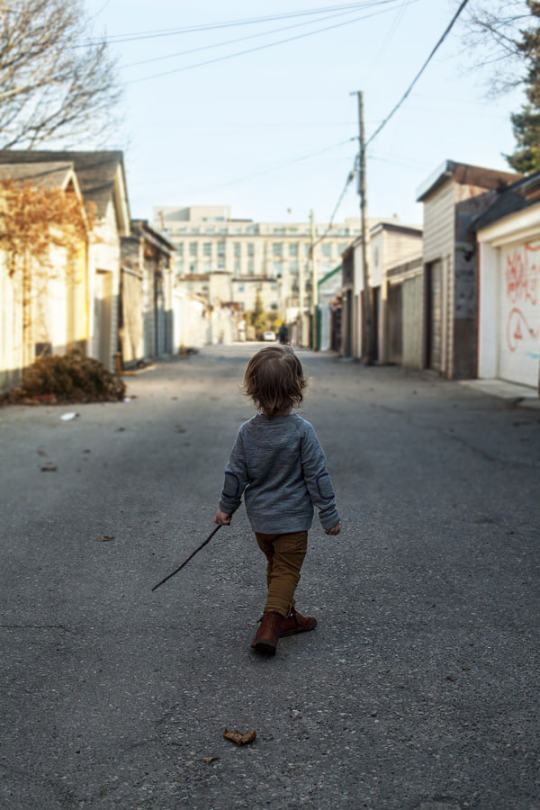
    Photograph Urban Explorer by Andrew B. on 500px

    Urban Explorer by Andrew B. on 500px

    Laneway housing is becoming an incredibly popular topic here in Toronto. Lots of people seem to be interested in building, or least living in a compact ground-related laneway dwelling. 

    A big part of this, I think, has to do with affordability (or the perception of affordability). A lot of people want to live in a central urban neighborhood, but it has simply gotten both expensive and difficult to secure low-rise housing. Here’s an example of a young couple in Toronto who went door-to-door in their desperation to find a house.

    I believe that laneway housing has the potential to be a more affordable low-rise housing solution in this city, as well as in many other cities around the world who have a similar urban condition. But today, at least here, it’s not that way.

    Since the City of Toronto does not officially support laneway housing, it would be an uphill to get one approved and you need to be willing to put a significant amount of money at-risk in order to try. It’s unfortunate, but that’s the reality today.

    I’m certain that will change. But it will take a bit more pioneering. The Laneway Project, which I advise, is working to change the way Toronto thinks about its laneways and I know that there are many other small entrepreneurs working on doing the same.

    One of the first things that will need to happen is that we’re going to need to name our laneways. Some of them are already named, but many of them are not. And while this may not seem like a big deal, it is. For laneway housing to become a reality, they will need to have addresses and we will need to think of our laneways as legitimate streets.

    Recently The Laneway Project published a how-to guide called: How to Name Your Laneway. So if you’re interested in laneways and laneway housing here in Toronto, I would encourage you to give it a read and then try and get your local laneway named.

  • Nominate your laneway for transformation

    image

    Some of you might be aware that I’m involved with a non-profit group here in Toronto called The Laneway Project

    Our mission is to transform the city’s under-utilized laneways into safe, vibrant, and people-friendly spaces – which is something that has been done with a lot of success in other parts of the world (see Melbourne above).

    Today I’m excited to announce two things.

    First, the group has received funding from the Ontario Trillium Foundation. This is great news because it’s obviously a lot easier to execute on a mission when you have some resources behind you.

    And that ties into the second announcement. 

    The funding received from the OTF is going to be used for 2 laneway transformation projects here in Toronto. Think of them as pilot projects that will help to reorient Torontonians into thinking about laneways as viable public spaces and to demonstrate that this group is about real action.

    Once the 2 laneways have been chosen, The Laneway Project will work with those local communities to come up with a vision and then an implementation plan. But before that can happen, there needs to be 2 laneways.

    So if you’re a community group, resident association, business improvement area, or some other passionate group, now is your chance to nominate your laneway. Get in touch with The Laneway Project before February 7th, 2015 by clicking here.

    Image: Melbourne Laneway via Flickr

  • A video and conversation about laneways

    Two weeks ago I gave a brief presentation at The Laneway Project’s inaugural summit here in Toronto. I then wrote about it here on ATC.

    At the time, I wasn’t sure if the event was being filmed or not, but it turns out it was. So here is my presentation from the event. It’s just over 7 minutes. Click here if you can’t see it below.

    [youtube https://www.youtube.com/watch?v=vdMNC1BtUz8]

    If you’d like to see the other 5 presentations and the Q&A session, click here

    Following the event, I was also interviewed by a radio show out of Calgary called Space + Place. If you are really into laneways and would like to listen to that as well, go here.

    I’ve said this before, but I’ll say it again: I continue to be amazed by how much interest there is — both here in Toronto and elsewhere — in laneways. They may be overlooked today, but that’s going to change. It’s inevitable.

  • Toronto already has a laneway community on the islands

    image

    It feels really good to have shared the details about my laneway project yesterday. It’s a project I’ve been working on for a few years now, and – though I’ve spoken to architects, engineers, and city staff about the project – I hadn’t really gone public with it. And I’m happy I did.

    I got a lot of great feedback from the twittersphere. In fact, I didn’t receive one negative comment about the idea of a laneway house in Toronto. Everyone seemed to think it was a great idea and many expressed their dismay with the city’s reticence to formally support them.

    I also received a number of encouraging emails, one of which was from a resident of the Toronto Islands. And he raised a really great point: Toronto already has a very successful community of laneway-like houses and it’s called the Toronto Islands.

    The streets are no wider than the laneways we have here on the mainland (and even smaller in some cases) and yet there are about 250 houses serving a population of roughly 750. He went on to mention that they even have “downsized garbage trucks”, which are used to navigate the small, car-free streets of the Toronto Islands.

    What this reinforces is that our aversion to laneway housing is not because we can’t figure out the logistics of how to service them. We can and are already doing that. If we can figure out how to do that on the islands, I’m pretty sure that we could also figure out how to do it on the mainland. 

    So what this really comes down is that there isn’t the political will to make this happen. And there isn’t that will, I’m guessing, because there’s a fear of upsetting the established neighborhoods. That’s why Ontario’s Places to Grow Act (2005) was deliberate in concentrating growth in specific areas of the city – it meant that we could say that the rest of the city would receive little to no growth.

    We’ve since revised that position with the push to intensify our Avenues with mid-rise buildings. But just as we went from high-rise to mid-rise intensification, I think it’s only a matter of time before low-rise intensification starts to also happen.

    I firmly believe that the demand is already there for laneway housing (the Lanehouse on Bartlett pretty much sold out in one evening). It’s simply a matter of now figuring out the supply side of this equation.

    Image: Ward’s Island (Toronto Islands)

  • From bicycles to cars in Beijing

    image

    Earlier this week, a friend of mine shared this TED talk on my Facebook wall talking about the state of climate change in the world. The talk is by Nicholas Stern. And at one point he talks about the incredible urban transformation that has taken place in Beijing over the last couple of decades; specifically, the shift from a bicycle oriented city to a now automobile oriented city.

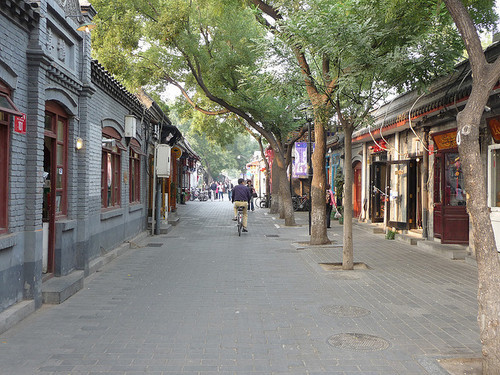
    I knew that this was the case, but it got me thinking. Because alongside this mobility change, there’s also been – not surprisingly – pronounced changes to the urban fabric of the city. The most significant is perhaps the demolition of the city’s hutongs and siheyuan. Hutongs are basically narrow alleys (see above photo) and siheyuan are the traditional Chinese courtyard houses.

    For centuries, these alleyways and courtyard houses have defined Beijing. And while I realize that not all of them were as glamorous as Melbourne’s laneways, only about 1,000 of Beijing’s original 6,000 hutongs remain (according to Time). Which makes me wonder: Is China making the same mistakes that we made in the 20th century?

    Because as the developed world moves toward transit oriented development, bike lanes, heritage preservation, and compact urban living, China has seemingly gone and done the exact opposite. They got everyone off bicycles and into cars, and they went and erased a scale of urbanism that has been in place for centuries.

    This is not to say that China doesn’t deserve to have the same standard of living as the developed world. It absolutely does. It just seems a bit ironic to me that the things we’ve become sharply critical of, are exactly what China seems to want to recreate.

    Image: Flickr

  • Rise of rental

    image

    Last month Oxford Properties submitted a site plan application for the redevelopment of the rundown Cumberland Terrace in Toronto’s Yorkville neighborhood. If you’d like to browse the full application (including all the drawings), you can do that here.

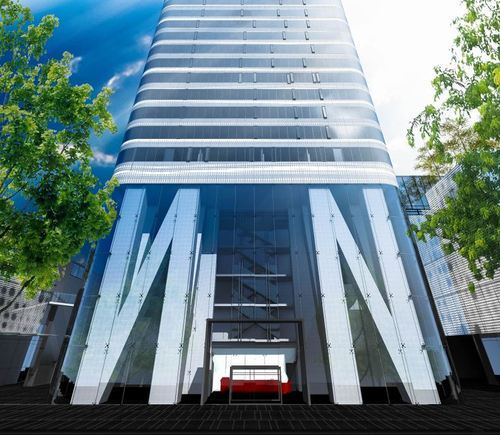
    The proposal is a departure from previous plans and now includes 3 buildings: a 4.5 storey building, a 2.5 storey building, and a midblock 54 storey residential tower (the lobby is shown above). There will be both retail and residential uses.

    For those of you familiar with the mall, it should go without saying that Cumberland Terrace is in desperate need of redevelopment. So I’m not going to talk about that today. Instead, I’d like to mention 2 other points that stood out to me about the application.

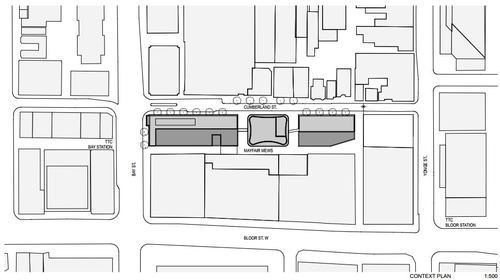
    The first is the 2 midblock connections on either side of the tower, running from Cumberland Street to Mayfair Mews in the rear (see below). Yorkville has a history of intimate laneways, and so it’s nice to see some of this being carried through in a new development. It also opens up the opportunity for an improved Mayfair Mews.

    image

    Secondly, it’s somewhat surprising to see that the 54 storey residential tower is being proposed as rental. Toronto doesn’t build a lot of purpose-built rental apartment buildings. There are some (from the likes of Morguard and Concert Properties), but we haven’t done it at scale for decades. And that’s largely because the demand for condos has been so great.

    But recently I’ve been noticing a renewed interest from the real estate community in multi-family rental assets. Cadillac Fairview also proposed a 65 storey rental building at the north west corner of Yonge Street & Queen Street last year – though they later withdrew their application.

    image

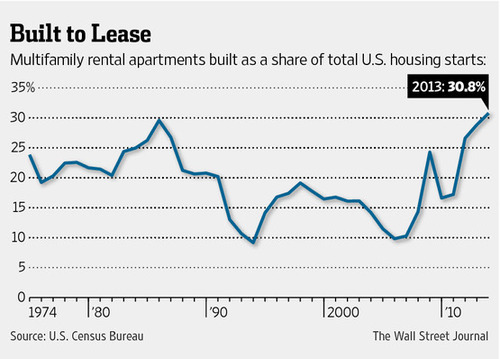
    In the US, rental apartments as a share of all new housing is also at record highs – over 30%. And that’s partly because credit remains tight (certainly compared to pre-2008) and economic growth has been tepid. But also because of demographic changes. People are having fewer children, later in life, and so many are putting off buying.

    So I think we’re going to see even more rental apartments being built in Toronto in the coming years.