Daily insights for city builders, delivered every morning at 6 AM ET. I’m Brandon Donnelly — a Toronto-based real estate developer and founder of Globizen. I’ve been writing here since 2013.

Tag: alberta

  • Project Profile: New Central Library, Calgary

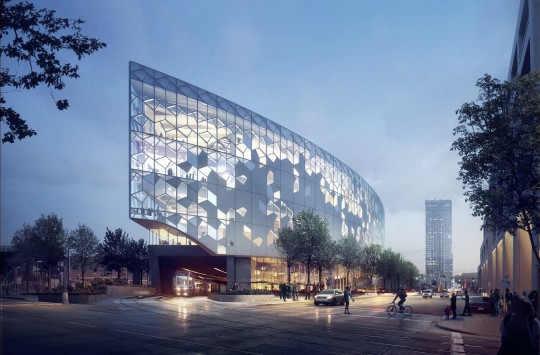
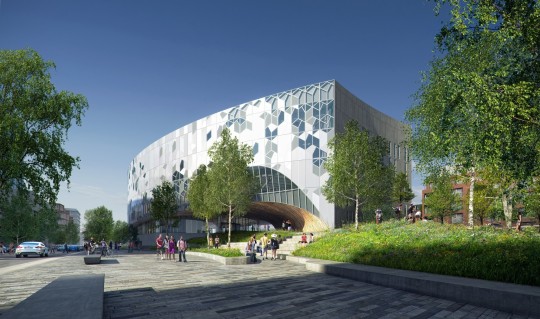
    The City of Calgary opened up its New Central Library this past week on November 1st, 2018, after a five-year construction process. 

    Designed by Snøhetta (design architect) with Dialog (architect of record) and Entuitive (structural engineer), the building was previously named one of “the 12 most anticipated buildings of 2018″ and one that will surely serve as a landmark for the city.

    One of the most interesting things about this project, for me, is how it both gives back and integrates with the broader urban fabric. 

    It is both a library and public plaza, and it sits atop the city’s busiest LRT line. About 40% of the site area is taken up by tracks (and probably setback), which means that the structural system of the building was forced into 12m (~40 foot) clear spans (done in concrete). It is the first time in the city’s history that an active LRT line has ever been encased and built over.

    It is a magnificent building and reason enough to visit Calgary, if you aren’t already there. I am hoping to get out there and photograph this project sometime soon.

    Images: Snøhetta and Entuitive 

  • Bowling Lane House, Calgary

    I just finished going through the work of Studio North. My friend Peter introduced me to them through this Globe article

    They are a Calgary-based design-build practice that have completed a number of laneway houses, as well as bigger projects such as this 34 unit townhouse project in Canmore, Alberta.

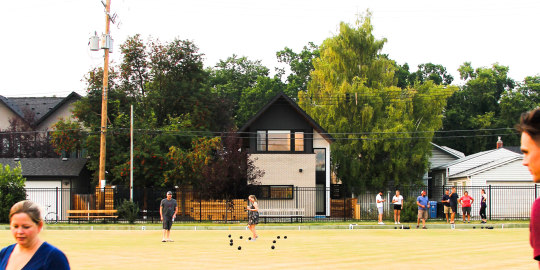
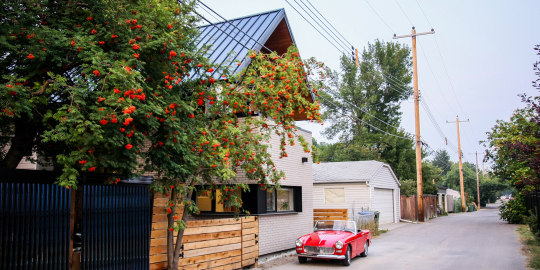
    What (not surprisingly) caught my attention was their focus on laneway/accessory dwellings. Pictured above is their Bowling Lane House in Crescent Heights, Calgary. 

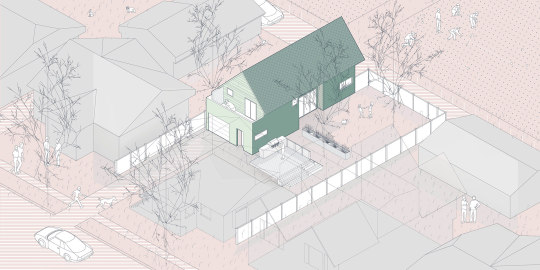
    It’s a 700 sf one-bedroom house that sits behind a 1920′s heritage house. Here is an axonometric of that relationship (the existing house was made transparent):

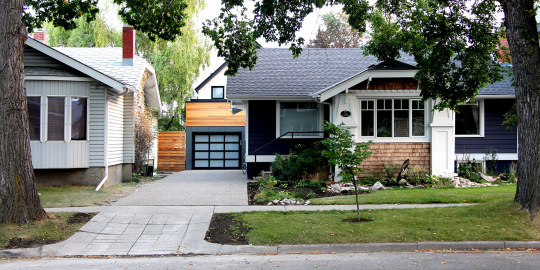
    Here is an elevation from the main street. Look at how neatly it tucks behind the existing house. All you really notice is the garage of Bowling Lane House.

    Here is how Bowling Lane House fits into its laneway.

    And here are two images of the double height space that they managed to create within this 700 sf house.

    Notwithstanding that this is a wider lot than what you might typically find in Toronto, it is precisely the kind of housing – both in terms of design quality and scale – that I was trying to create with Mackay Laneway House. It’s also where I was planning to move.

    Kudos to the Studio North team for driving this initiative in Calgary. You can check out the rest of their projects here. They have a number of other laneway houses within their portfolio. And all of them are beautiful.

    All images from Studio North.

  • Canada’s 1%

    The Globe and Mail recently published an article about Canada’s highest paid workers. It uses census data spanning 2005 to 2015.

    There’s a feature that allows you to enter your before tax income, your location, and your gender to see how you compare to “the 1 percent.”

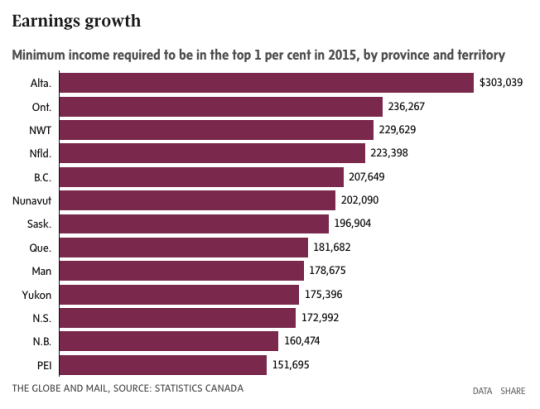
    But in case you don’t feel like doing that, here’s the minimum income required to be in the top 1 percent as of 2015 for each province/territory:

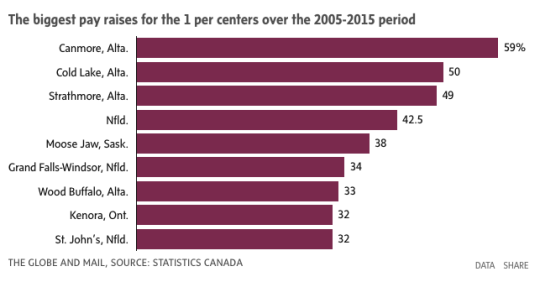
    And here are the communities where the 1% saw the biggest pay increases:

    The data certainly underscores how important commodities have been for growing individual incomes. Alberta, Newfoundland, and Saskatchewan are resource-rich provinces.

    However, the above data doesn’t capture the collapse of oil prices in 2014. So it would be important to also consider what this data looks like outside of a commodities boom.

    Charts: The Globe and Mail

  • Balancing oil and ideas

    Colorado Sunset by Travis Bredehoft on 500px.com

    https://500px.com/embed.js

    Canada is a resource rich country. And one of the things that commonly happens to countries with a lot of resources is that they begin to myopically focus on the immediate gains from resources at the expense of long term innovation and economic development. 

    This is known as the “resource curse.”

    The Martin Prosperity Institute here in Toronto recently published a report that looks at this exact topic: Canada’s urban competitiveness through the lenses of its resource economy and its knowledge economy. In the end, Richard Florida and Greg Spencer conclude that two can and should work together, but that we need to stop neglecting our cities:

    “The oil and gas industry is not necessarily a constraint on the creative economy, but in the past decade or so it has come to dominate thinking around economic development policy-making. It is time to use the resources from the energy economy to build a more secure future as an urban knowledge economy. We can also use
    talent and technology to deepen and expand the resource economy.”

    And one of their key recommendation is something I have argued for many times here on Architect This City:

    “A New Federalism for Cities: It is time to give cities the taxing and spending powers they require. Cities must be given more control over their own destinies if they are to prosper
    in the 21st century.”

    Now, here are a few interesting charts from the report.

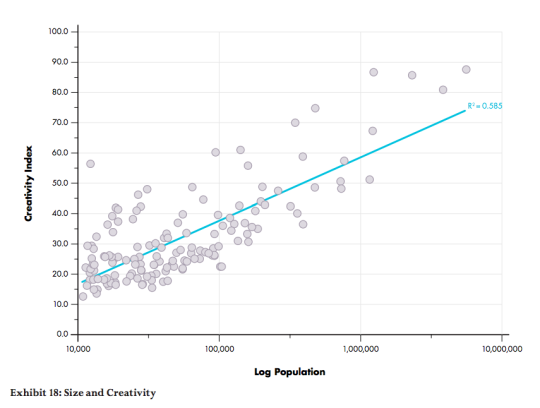
    This first one looks at the relationship between a city’s population and its creativity levels. The two are positively correlated, which means that, in this context, bigger is better.
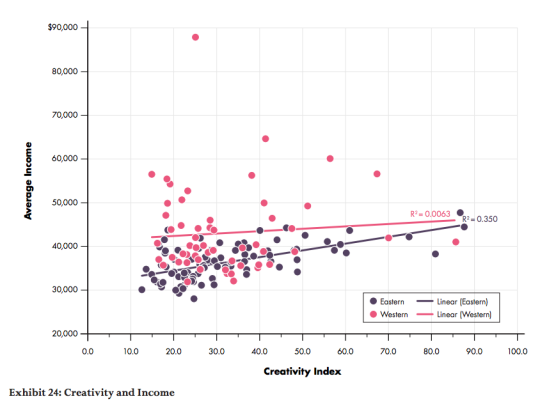
    This second one splits Canada in half – east and west – and then looks at how average income levels are affected by creativity levels (the knowledge economy). Here we see that in eastern cities, income levels are positively correlated with creativity levels. But in western cities, changing creativity levels have almost no impact on income levels. 
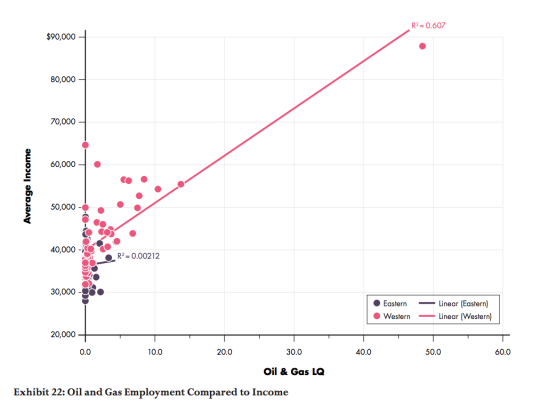
    Finally, this third chart compares the relationship between oil and gas employment (LQ = location quotient) and average income levels. What it finds is that income levels and oil and gas employment are positively correlated in the west, but there’s almost no relationship in eastern cities. 

    The way to read this chart is to think of the LQ as the employment multiple relative to the national average. So for example, a LQ = 10 means that the oil and gas employment levels are 10 times the national average. As you probably guessed, the pink dot way out on the right is Fort McMurray.
    If you’d like to read the entire report, you can do that here. I hope that our new Prime Minister, Justin Trudeau, will read reports like this and spend more of his efforts investing in our knowledge economy – which means investing in our cities.

  • How unlikely neighborhoods change

    image

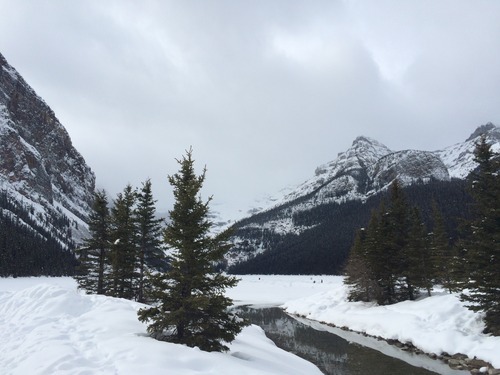
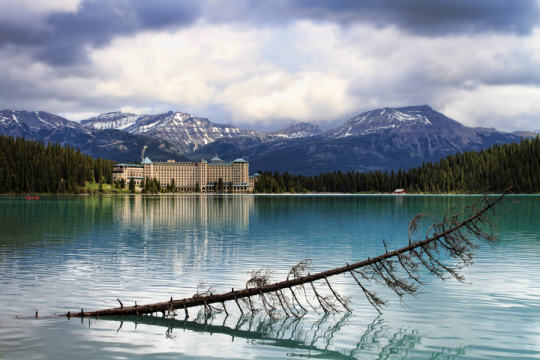
    I’m writing this post from the Lakeview Lounge at the Fairmont Chateau Lake Louise. The view of the (frozen) lake and mountains is absolutely stunning (see above). I can totally see why people move to the Rockies and never leave. Frankly, I’m not sure how I’m going to ever go home 😉

    This Chateau was first built up in the late 19th century by the Canadian Pacific Railway. Developed as a way to encourage ridership and fund railway expansion, its position on the eastern edge of Lake Louise was probably a fairly obvious choice (although only when accompanied by rail). It’s designed to take full advantage of the views of the lake and the mountains.

    Photograph Chateau Lake Louise ~ by Carmen Brown on 500px

    Chateau Lake Louise ~ by Carmen Brown on 500px

    But it’s not always this easy to predict or select where development should happen and will happen next.

    Yesterday I was quoted in a Torontoist article talking about the rise of Dovercourt Village in Toronto – which is a topic I covered here on ATC about a month ago.

    The interesting thing about Dovercourt Village – and specifically Geary Avenue – is that they seem like unlikely places for new investment. Many of the buildings aren’t particularly beautiful. And there’s a rail line and a set of power lines running through the middle of it.

    But if the buzz around Dovercourt Village proves to be true, then it could very well end up as a new yuppy enclave in the city. I’m not going to debate the merits of gentrification today, but I think it’s interesting how change can seemingly emerge out of nowhere.

    If you rewind 10 years to before Ossington Avenue became the hotspot that it is today, many of you would have probably classified it as an unlikely place for gentrification. Located beside the Centre for Addiction and Mental Health (CAMH), the area wasn’t considered desirable at the time. (CAMH has since undergone a lot of change.)

    But oftentimes change can come out of nowhere. It just takes few enterprising pioneers who see something that nobody else does.

  • Banff’s second floor

    image

    I have good news and bad news.

    The bad news is that I took a gnarly spill yesterday afternoon on the mountains. The nose of my snowboard got stuck in deep snow and I fell forward onto my shoulder and then compressed my back. I tore a shoulder ligament and possibly fractured two ribs. So snowboarding season is over for me this year.

    The good news is that I now have more time to relax and enjoy the town of Banff, and then Revelstoke this weekend.

    Banff is a beautiful town. It’s compact, walkable, and surrounded by snow capped mountains. How could you not love it?

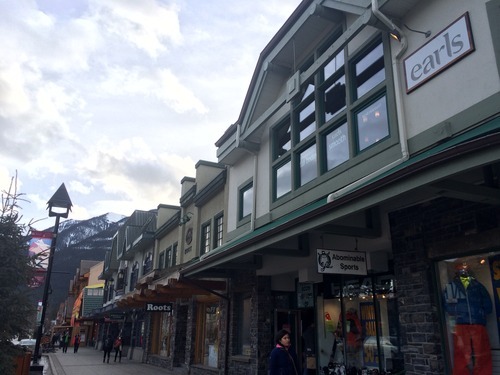
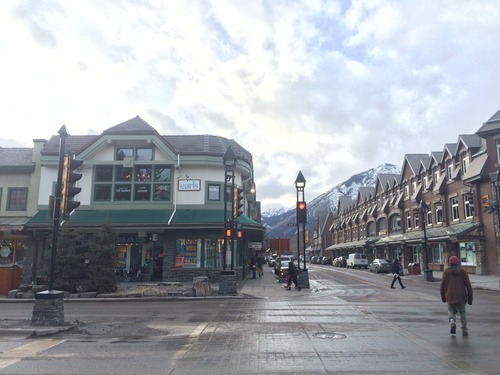
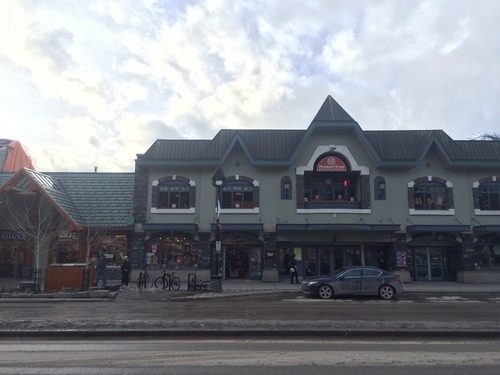
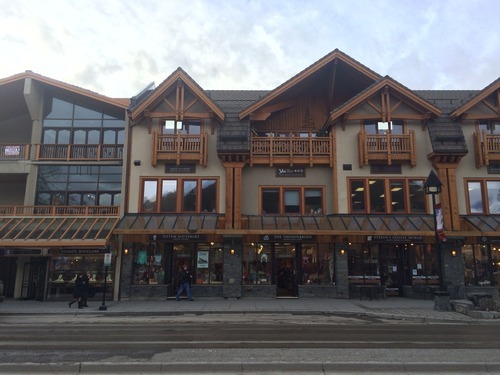
    One of the more subtle things that stands out for me though is the ubiquity of second level retail and restaurants. There’s a lot people in the (North American) real estate industry that will tell you that second floor retail just doesn’t work (you want ground floor). And indeed, it can be hard to pull off. As I’ve said before, getting retail right in general can be difficult.

    But in Banff, many of the bars and restaurants are up top. Here are a few examples (there’s an Earls, Boston Pizza, and a Korean restaurant, respectively):

    image
    image
    image

    So why does it work here?

    Given the town’s small footprint and location within Banff National Park, the market is supply constrained. That’s why Parks Canada imposes a number of restrictions on residency. They’re trying to ensure that the people who actually work in the community can find housing and it all doesn’t become second homes.

    So my gut tells me that in order to get enough retail/commercial space to serve the area and its tourists, they had no choice but to go up. They simply ran out of ground floor space. Because if the town was able to instead sprawl outward, I suspect that’s exactly what it would have done. And then more ground floor space would have been created.

    To be fair, most of the second floor examples I came across were bars and restaurants, which is arguably easier to pull off than straight retail. But it’s still something. 

    If any of you are familiar with real estate and planning in Banff or just have a better hypothesis, I’d love to hear from you in the comment section below.

  • Cities and mountains

    image

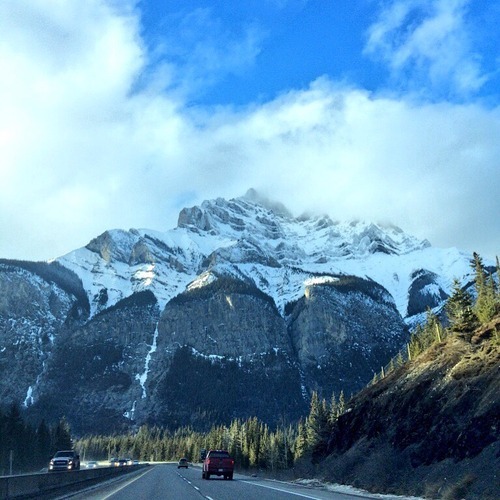
    Having just spent the weekend in Calgary and Banff, I’ve been thinking a lot about importance of picking the right city in which to live. I’m not saying that I don’t love Toronto. Because I do. But I am incredibly envious of cities – like Calgary, Vancouver, and Denver – that have such easy access to incredible mountains.

    The photo at the top of this post was taken on the drive from Calgary to Banff.

    Now, this might not matter to a lot of people, but it does to me. It’s a personal thing. There’s something really nice about landing in a city and seeing people leaving the airport with skis and snowboards in hand. And there’s something really nice about a city where so many people are active, outdoorsy, and fit.

    This, of course, is the topic of Richard Florida’s book, Who’s Your City?: How the Creative Economy Is Making Where You Live the Most Important Decision of Your Life. But it’s still something that I’m not sure many of us give a lot of thought to. Are you living in the right city for you?

    I’ve lived in cities that weren’t right for me and I know that it can have a profound affect on your happiness.

  • GoPro city tours

    This past week was Toronto’s first real snowstorm of the season. It was awesome. I love snow. And part of the reason I love it, is because it means snowboarding season is here. Yes, the “mountains” in Ontario suck, but Quebec and Vermont aren’t too far away and every February there is The Annual.

    This year in preparation for the season I decided to splurge on a GoPro camera. We had a lot of fun filming last year in Jackson Hole and, since it looks like we’re going to have close to 10 people at this season’s Annual, I wanted to throw another camera into the mix. Expect another ski and snowboard video sometime in February 2015. We’re heading out to Alberta and British Columbia.

    I also ordered this mount for the camera:

    image

    But as I was ordering the camera, I started to think about what else I could use it for. And then it hit me: city tours. One of the things I love to do in the summer is ride my bike around the city and explore. I like to find areas I don’t know very well, find new developments I may have missed, and generally just get to know the city more intimately.

    Being on a bike is really the perfect way to do this. You don’t cover enough ground walking and with driving you simply miss too much of the city. So what I want to do is strap my GoPro to my handle bars and bring you along for these exploratory bike tours. I think it could be a unique way to show you the city – even if you happen to also be from here.

    How does that sound?

    It likely won’t happen until the spring, but if you’re interested in joining me, let me know. I think this could be a lot of fun with a group of city geeks.

    Image: GoPro