
San Francisco’s Q2 2026 economic report is perhaps an idealized summary of how the post-pandemic, AI investment boom is transforming our cities.
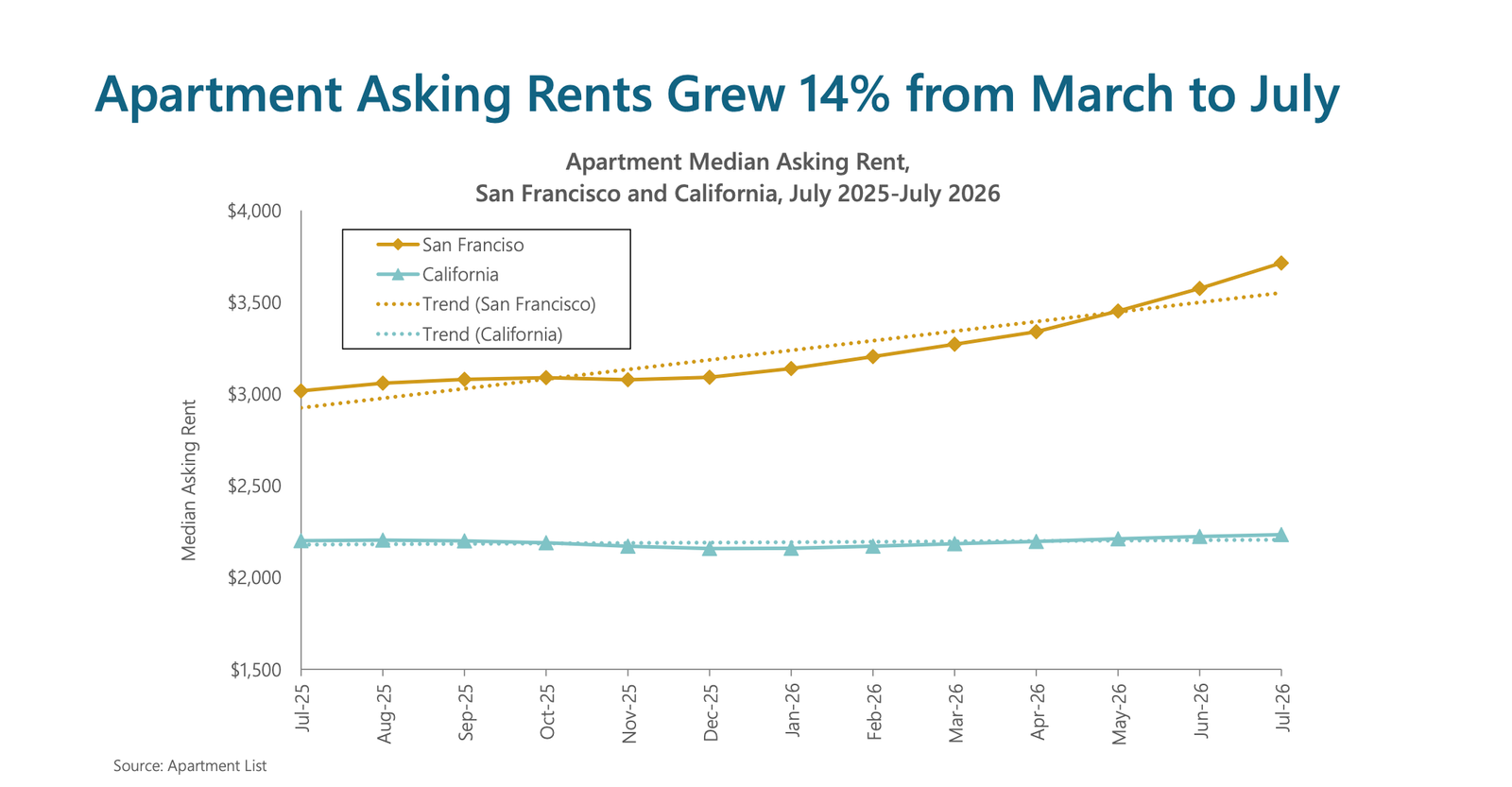
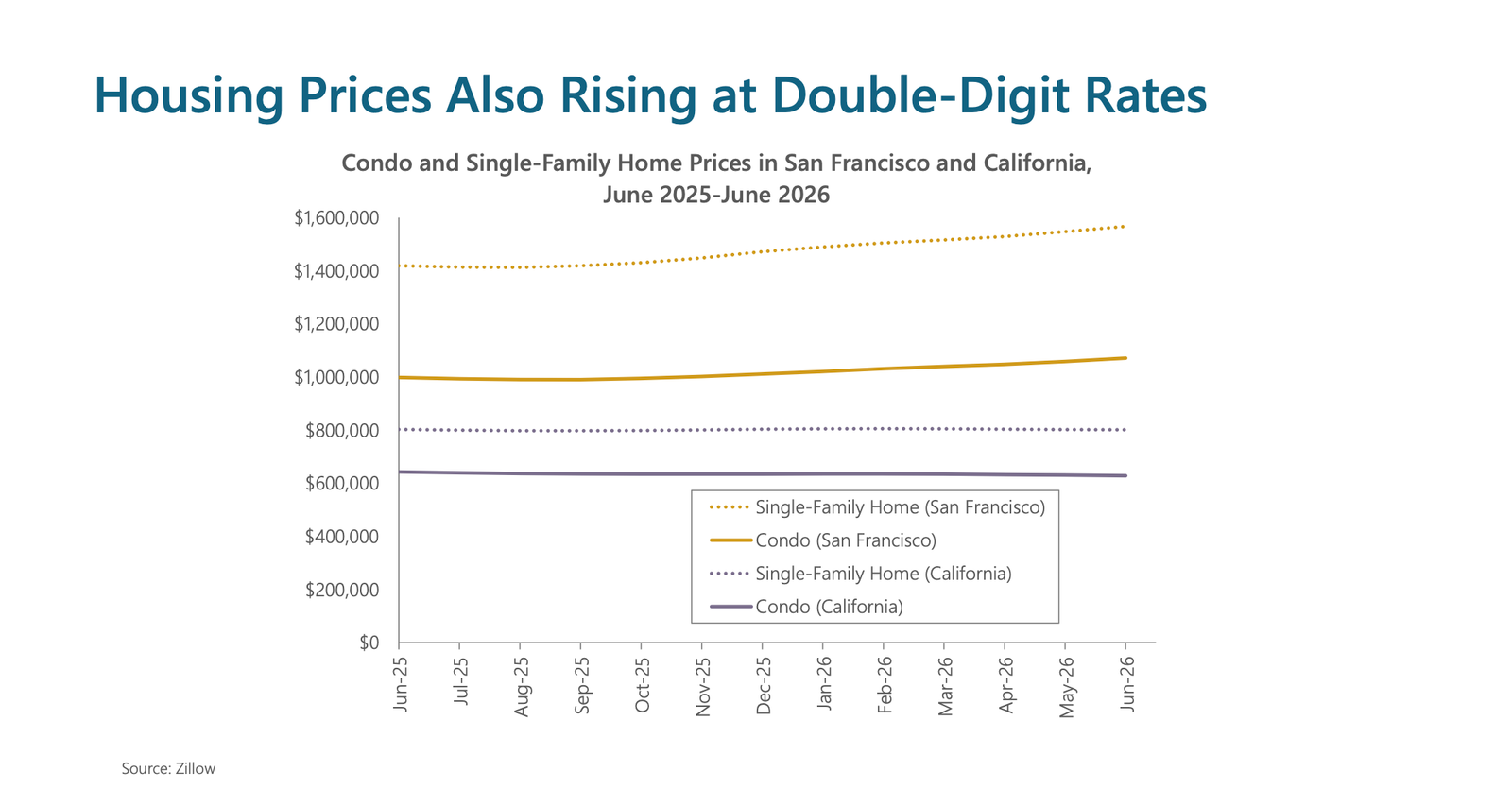
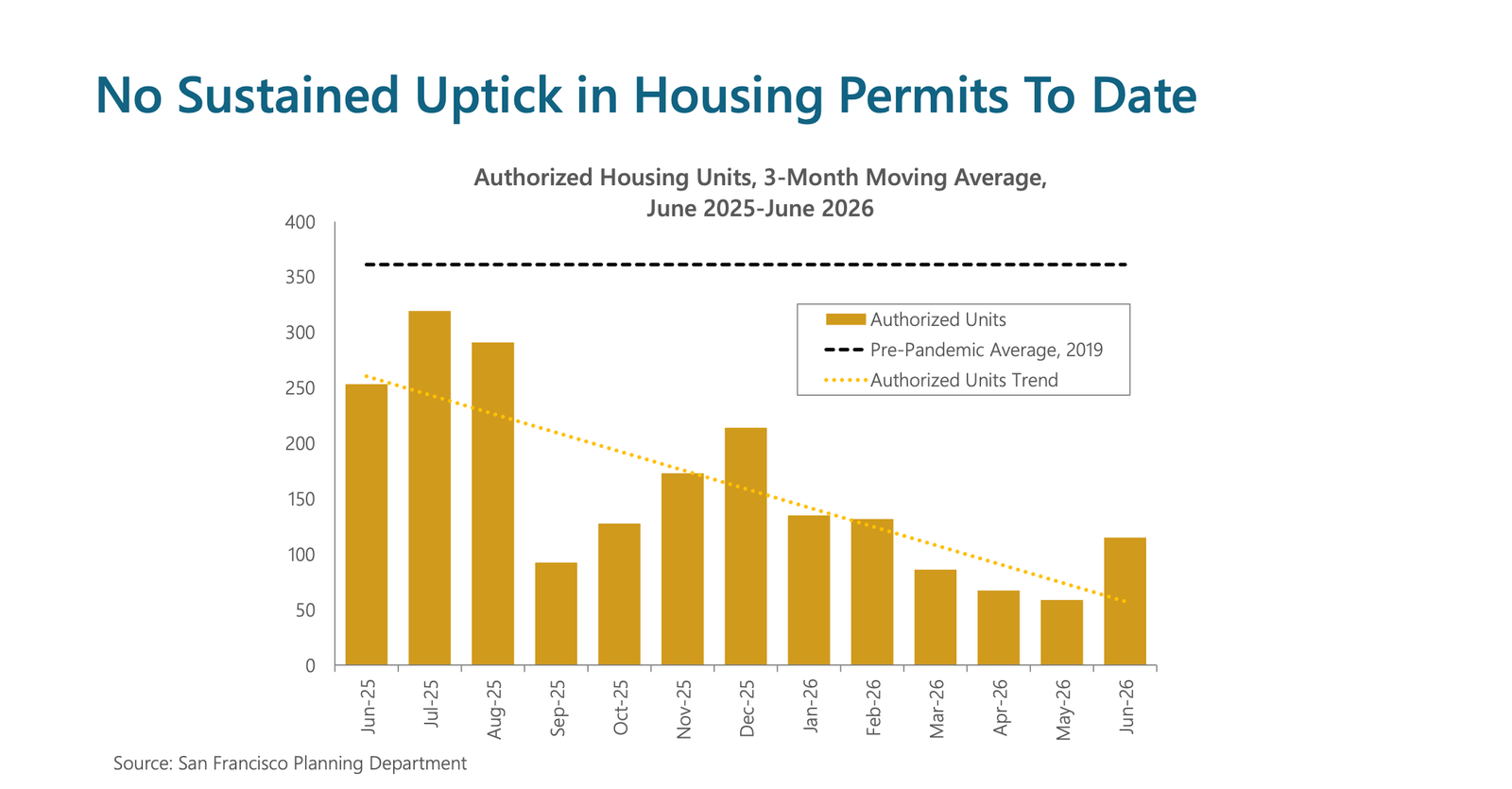
Housing Supply Crisis: Residential apartment rents grew 14% from March to July, and single-family house prices are now growing at double-digit annual rates. And yet, the city continues to see a structural decline in housing permits, below pre-pandemic levels.
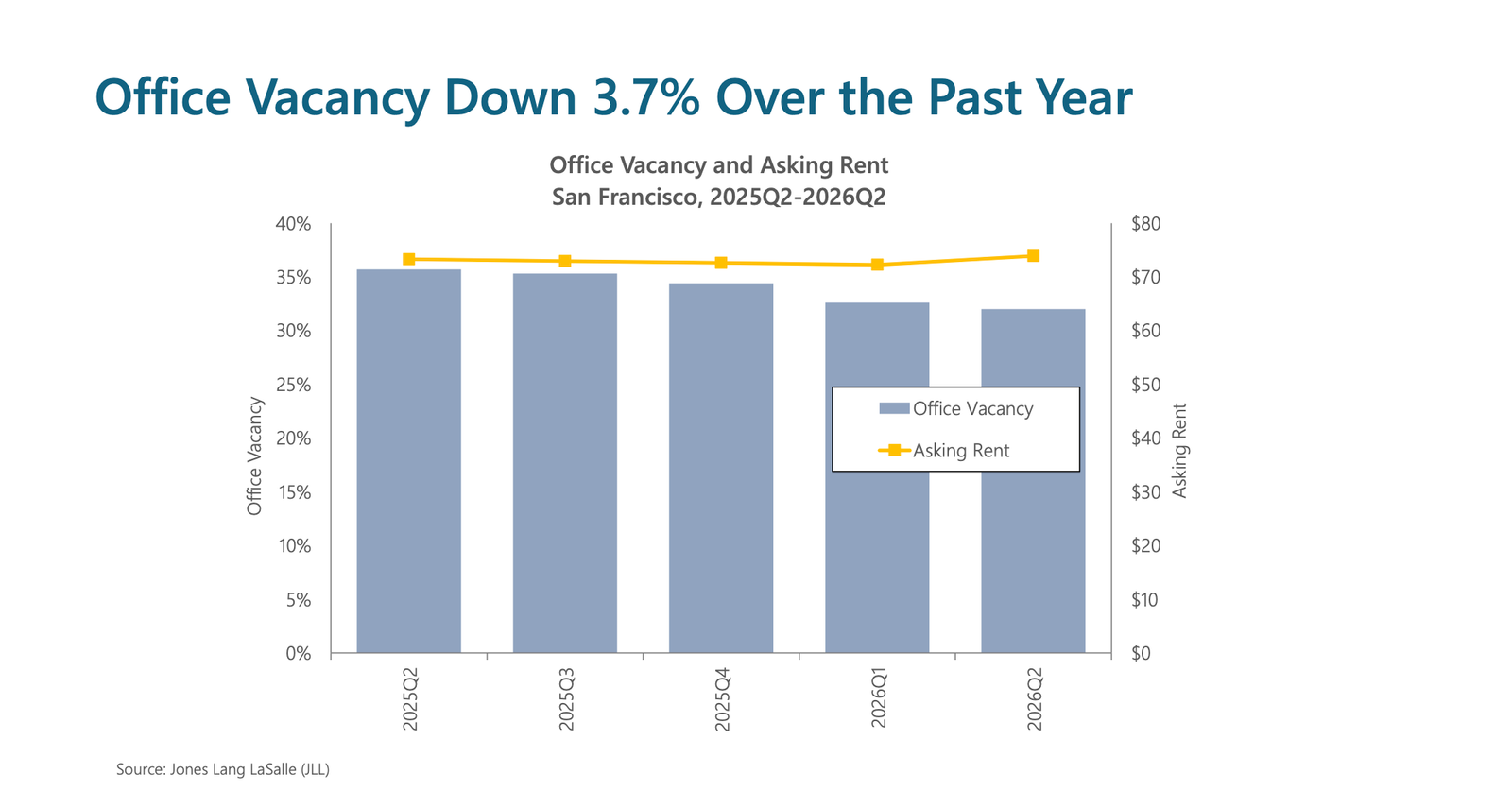
Segmented Commercial Market: The city’s office vacancy rate declined 3.7% over the past year, but the overall vacancy rate is still greater than 30%. Weekly office attendance also remains below 50% of pre-pandemic levels.
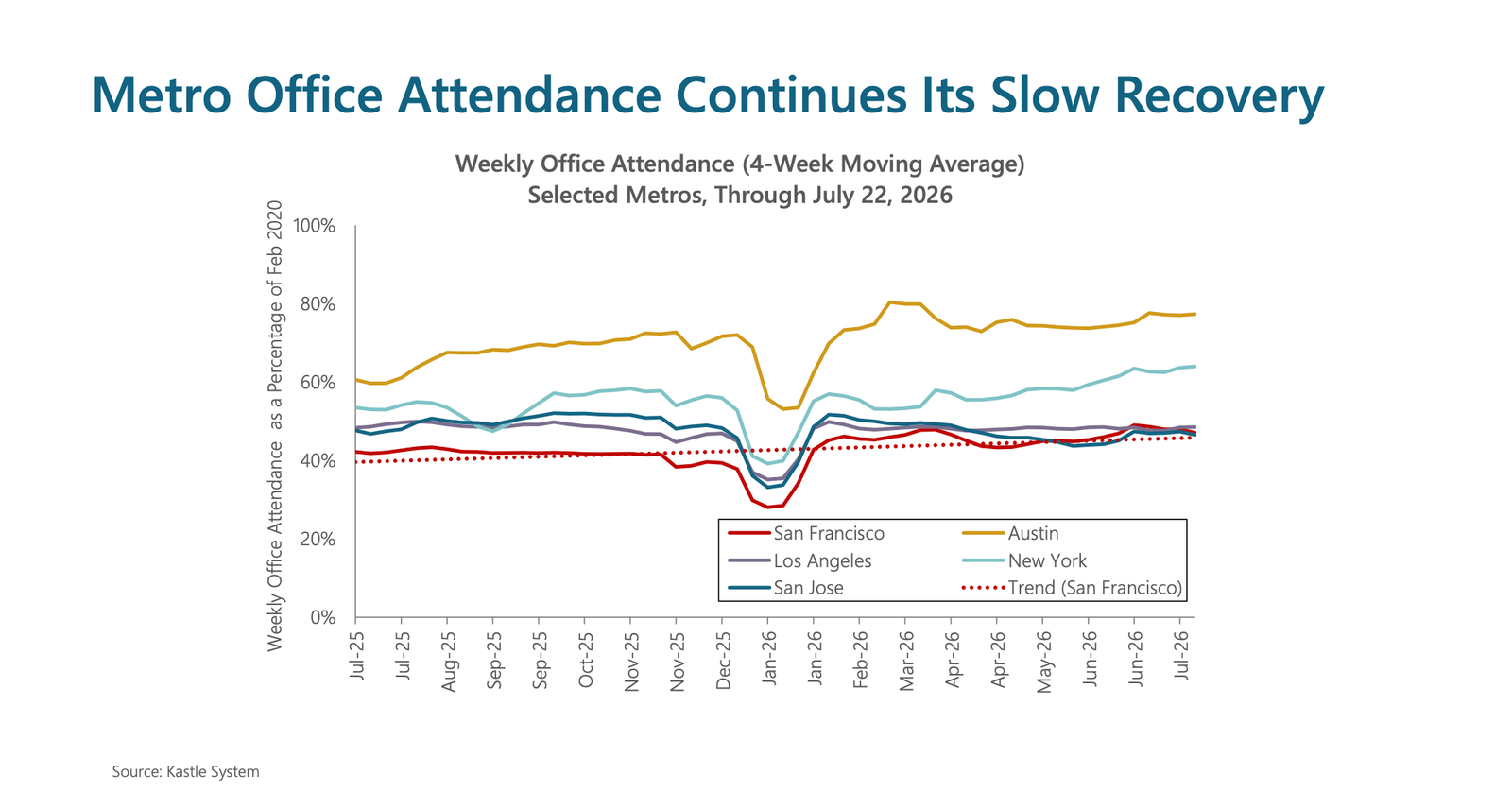
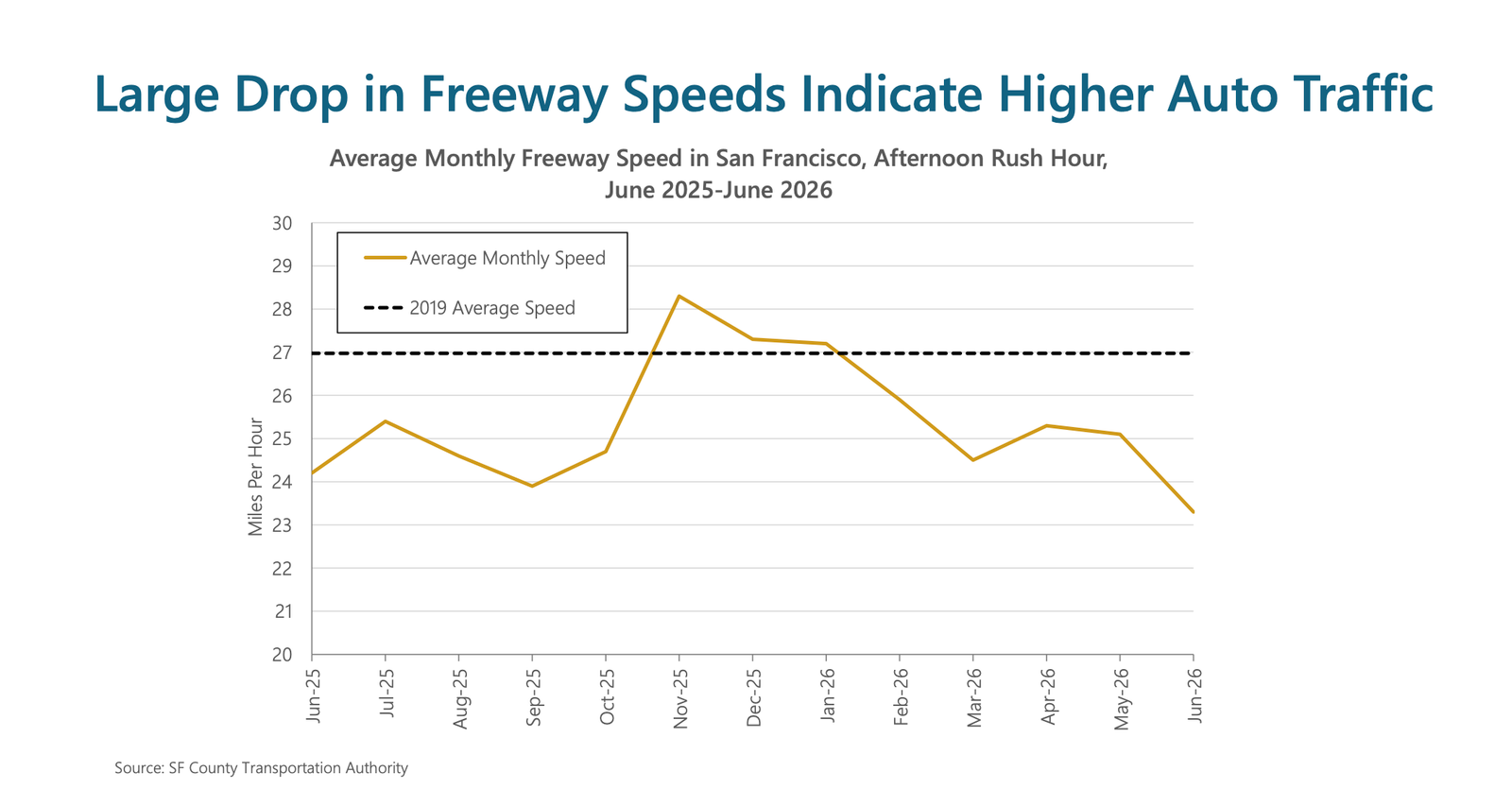
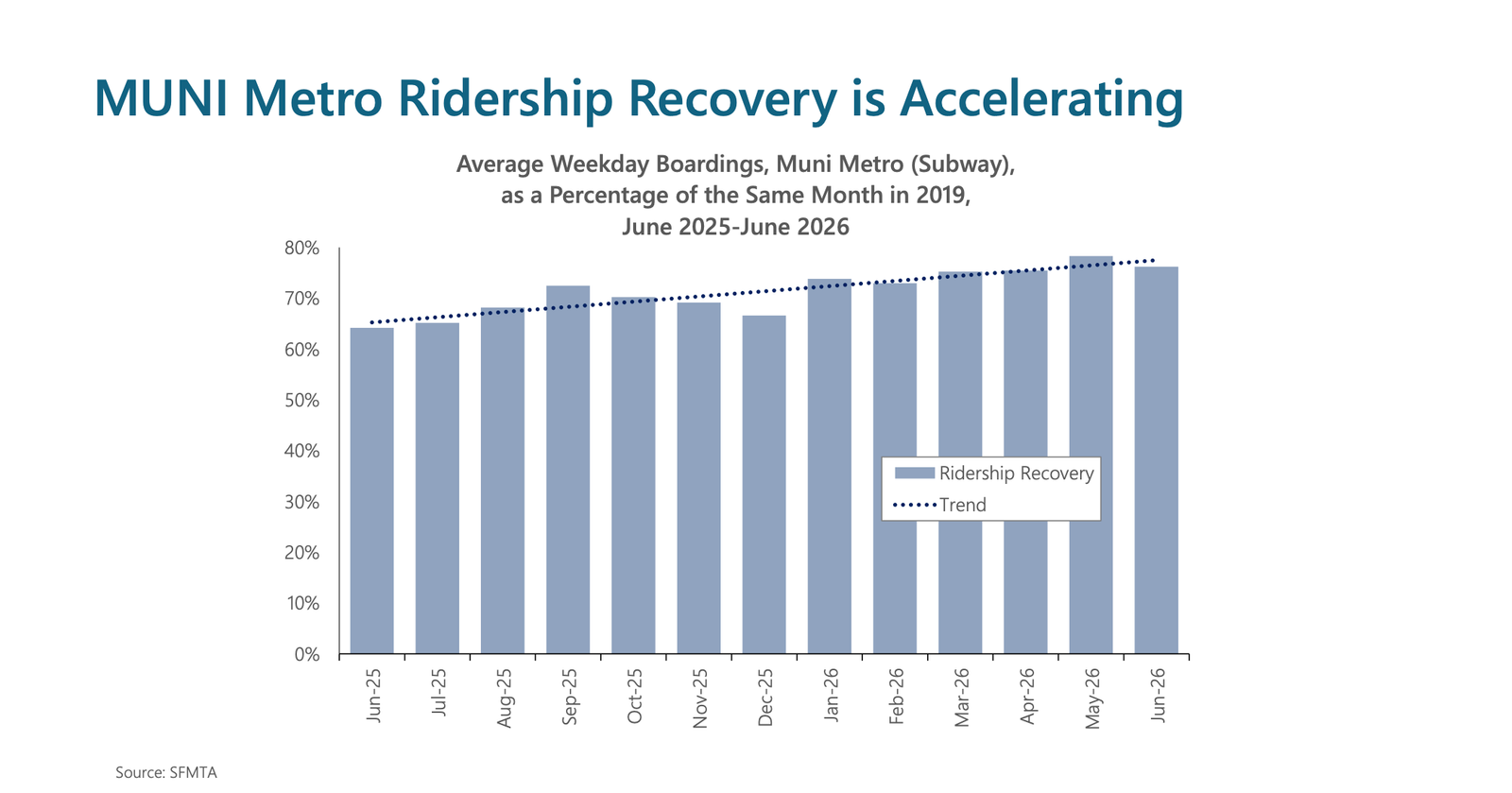
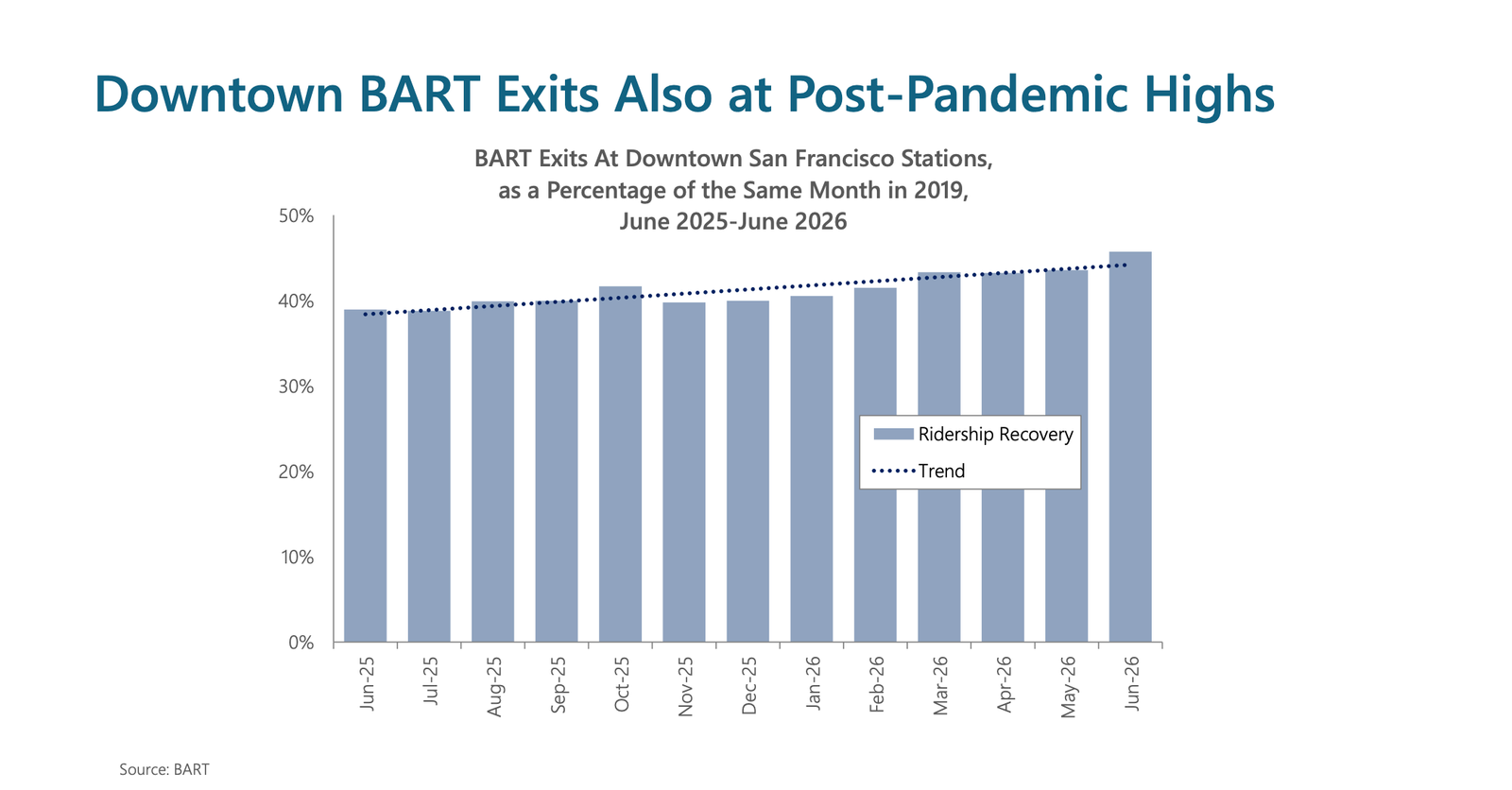
Urban Rebound: Average highway speeds are dropping, suggesting more user demand. MUNI Metro (local) ridership is also increasing rapidly, reaching over 70% of pre-pandemic levels. But downtown BART station exits (regional rail) are below 50% of 2019 levels, reinforcing the fact that though the city is active, but people simply aren’t commuting in nearly the same way.
Ultimately, the surge in housing prices proves that the “urban doom loop” narrative was fundamentally wrong (remember that?). San Francisco remains an intensely desirable place to live and work. But they’ve got to get moving on building more housing.