>4.2K subscribers
Share Dialog
Share Dialog


I'll be the first to admit that I have an urban bias. I like walkable narrow streets. I like being able to cycle around. And I like not having to drive when I want to do things. But this can create a city-building blindspot and Paul Kulig, Principal at Perkins&Will Toronto, reminded me of that this week. Here's a tweet where he compares two streets, both of which have a right-of-way width somewhere around 40m:
The image on the left is Prenzlauer Allee in Berlin. And the image on the right is Finch Avenue West in Toronto. Despite both having light rail running down the middle, one of these streets is walkable, vibrant, and generally urban, and the other is very suburban. What this reminds us is that a wide street isn't necessarily an insurmountable challenge. It's ultimately how we design that street that is the make or break.
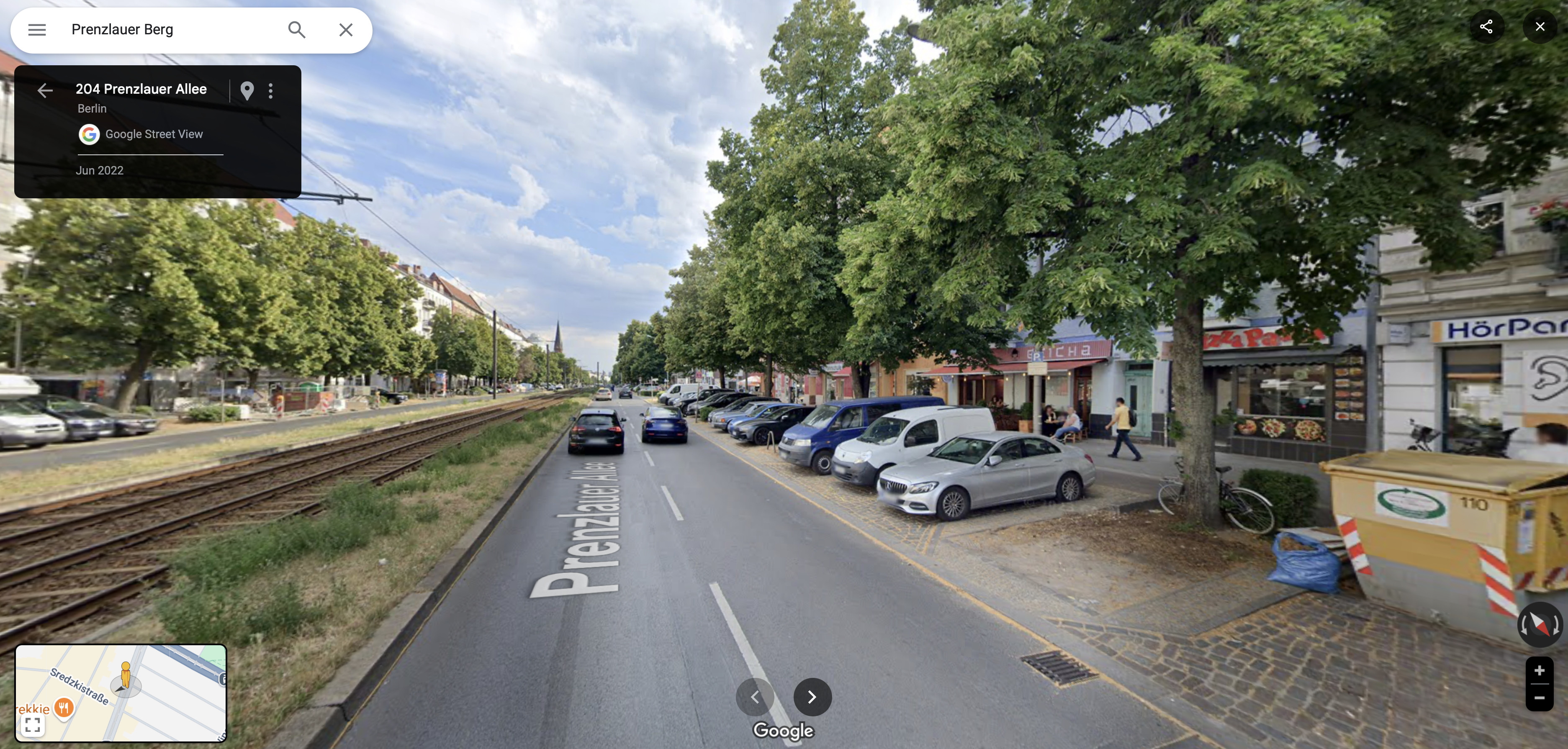
Here's another look at Prenzlaurer Allee:

In addition to transit running down the middle of it, it also has a ton of on-street parking. In many cases, the cars are parked perpendicular to the curb. So it's not like this street isn't also accommodating to motorists. The key differentiator is how the buildings are placed. They come right up to the street and are accompanied by a great pedestrian realm (note all the patios below).
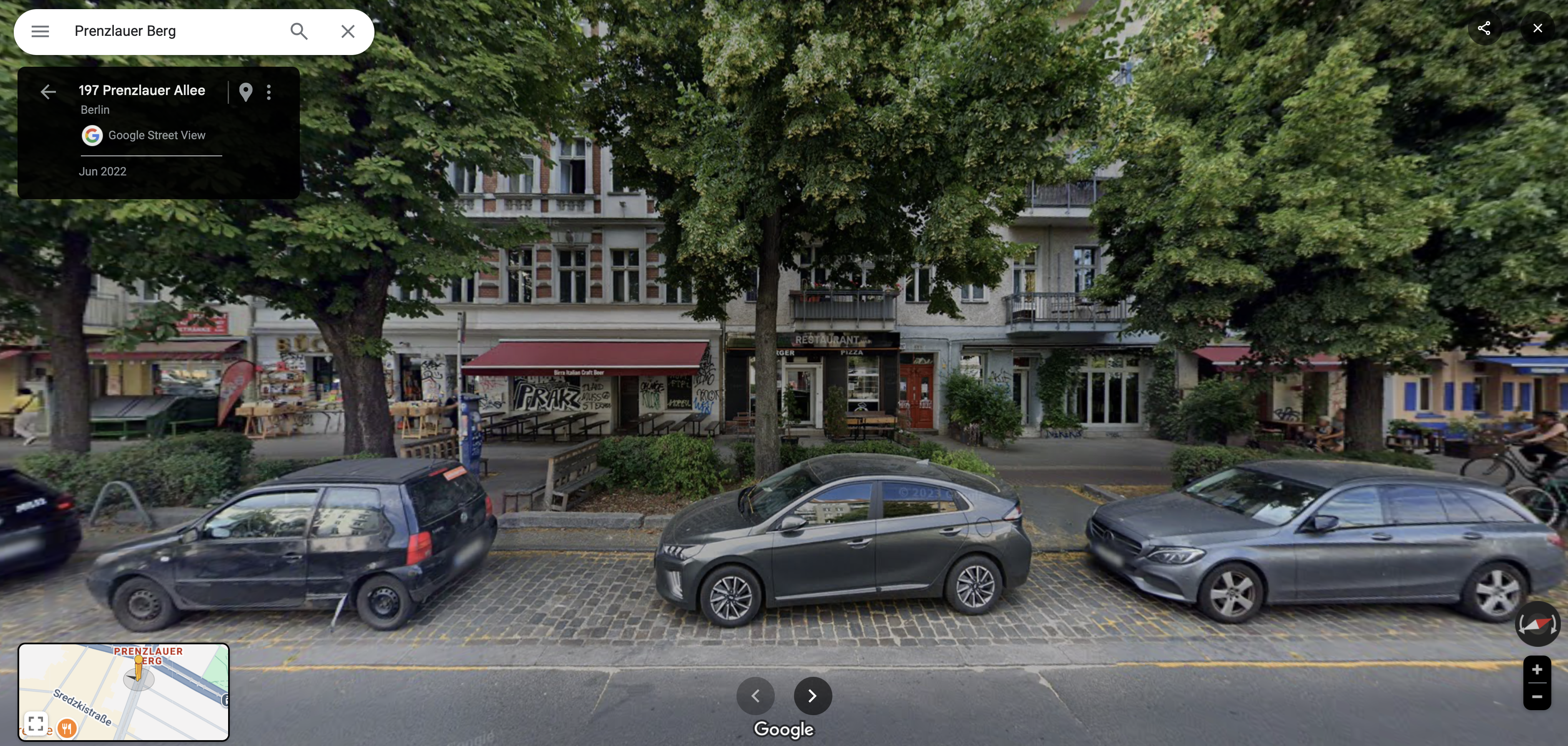
This is one of the things that Toronto needs to be focused on following the investments made in public transit on streets like Finch and Eglinton. We don't want generous setbacks on these streets. Make them 0m. Towers in a park kill any chance of street life. We can talk all we want about "active frontages" on our arterial roads, but who wants to sit on a patio on a street like Finch? Nobody.
But as Berlin shows, there's absolutely no reason why we couldn't change that. Thanks for the reminder, Paul.
Cover photo via Google Street View
I'll be the first to admit that I have an urban bias. I like walkable narrow streets. I like being able to cycle around. And I like not having to drive when I want to do things. But this can create a city-building blindspot and Paul Kulig, Principal at Perkins&Will Toronto, reminded me of that this week. Here's a tweet where he compares two streets, both of which have a right-of-way width somewhere around 40m:
The image on the left is Prenzlauer Allee in Berlin. And the image on the right is Finch Avenue West in Toronto. Despite both having light rail running down the middle, one of these streets is walkable, vibrant, and generally urban, and the other is very suburban. What this reminds us is that a wide street isn't necessarily an insurmountable challenge. It's ultimately how we design that street that is the make or break.
Here's another look at Prenzlaurer Allee:

In addition to transit running down the middle of it, it also has a ton of on-street parking. In many cases, the cars are parked perpendicular to the curb. So it's not like this street isn't also accommodating to motorists. The key differentiator is how the buildings are placed. They come right up to the street and are accompanied by a great pedestrian realm (note all the patios below).

This is one of the things that Toronto needs to be focused on following the investments made in public transit on streets like Finch and Eglinton. We don't want generous setbacks on these streets. Make them 0m. Towers in a park kill any chance of street life. We can talk all we want about "active frontages" on our arterial roads, but who wants to sit on a patio on a street like Finch? Nobody.
But as Berlin shows, there's absolutely no reason why we couldn't change that. Thanks for the reminder, Paul.
Cover photo via Google Street View
Toronto is a lost cause. Just move to Vienna.
Stop with the suburban setbacks https://brandondonnelly.com/stop-with-the-suburban-setbacks
We noticed this when staying in Amsterdam in the fall. Incredibly wide ROWs and yet well balanced in mobility options and buildings not afraid to be seen close to the street
Another great example. Toronto needs to make some land use moves.
I’m not sure why your comment isn’t also showing up in the post itself. I turned on the Farcaster integration.
I am considering moving my thing from substack to paragraph and I’d be curious to know how well this works as well. Maybe @colin knows?