Daily insights for city builders, delivered every morning at 6 AM ET. I’m Brandon Donnelly — a Toronto-based real estate developer and founder of Globizen. I’ve been writing here since 2013.
Traveling is one of life’s greatest experiences. Pack a carry-on (so you bring only what you really need). Strip yourself of your regular surroundings. And explore the world with new eyes — maybe with a camera in your hand.
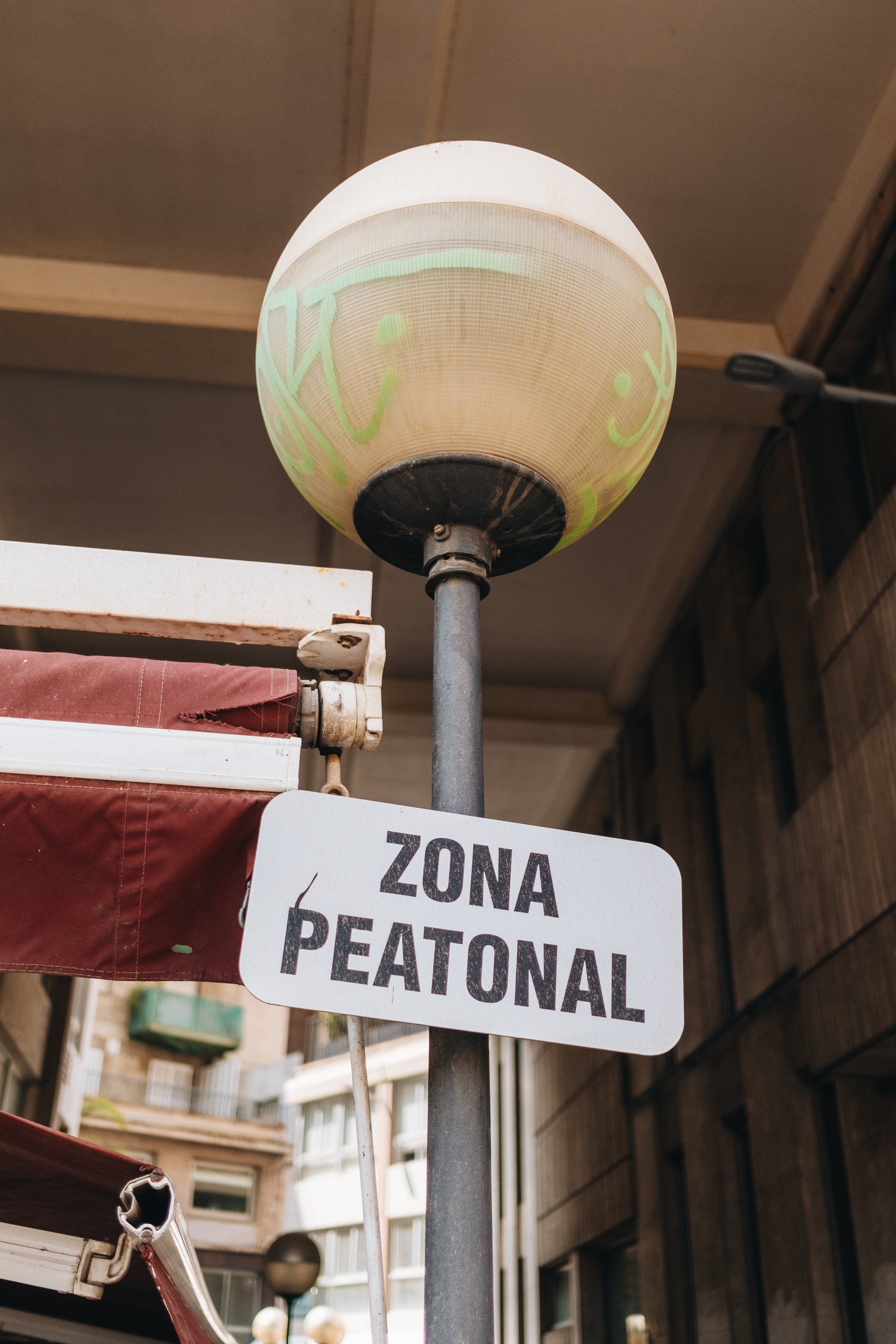
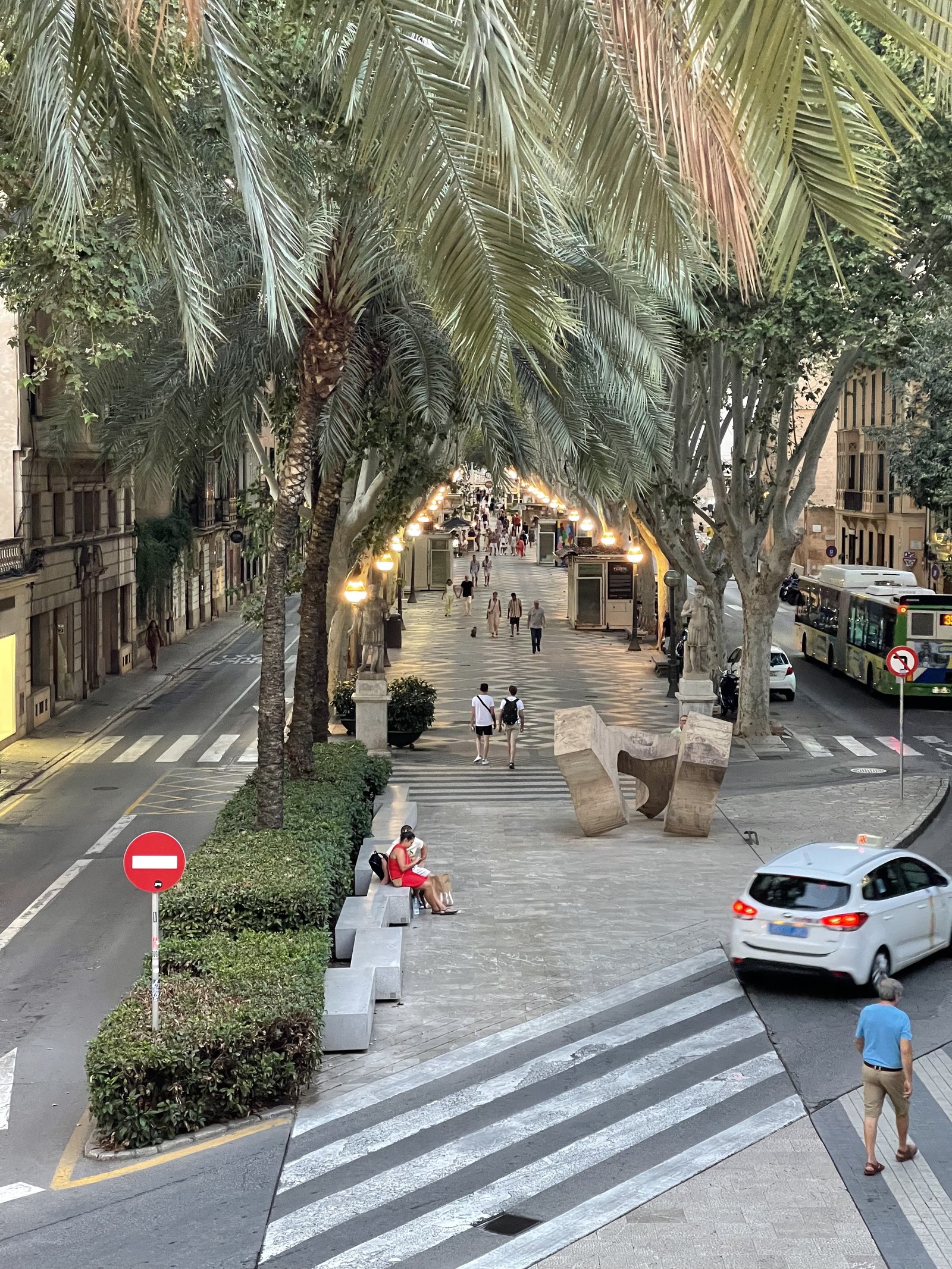
It’s hard to think of Barcelona and not think of its famed street, La Rambla. But this same street design (and name) also appears in other cities throughout Spain. The above two streets are in Palma. The first is also called La Rambla (which is supposedly derived from an old Arabic word meaning sandy riverbed) and the second is called the Paseo del Borne. Both follow the exact same urban design principles. They’re broad tree-lined streets with a large center median dedicated to only pedestrians. All car traffic is relegated to the sides. What’s great about this design is the following. One, it reallocates public space according to who uses it the most (i.e. pedestrians). Two, it consolidates the main pedestrian realm (in lieu of just having larger sidewalks on either side of the street). And three, it establishes a clear hierarchy for the street. Pedestrians are most important here, and that’s why they get the center position. It’s surprising that more cities don’t adopt this same design.
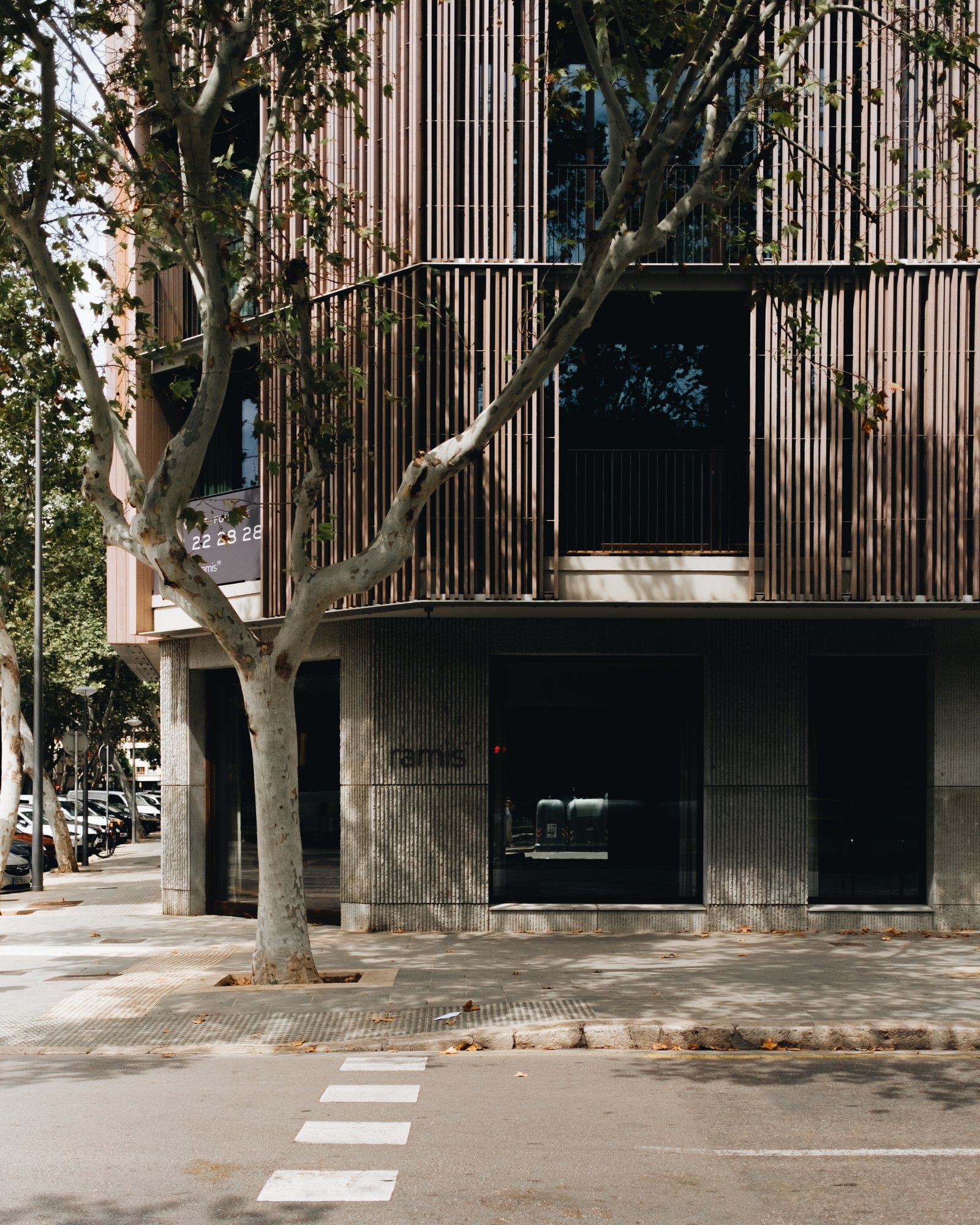
This is a beautiful apartment building in the center of Palma. Brutalist ground floor. Operable wooden slats up the rest of the facade. It feels right at home in this climate. It’s also a passive-energy building that uses 90% less energy compared to a “conventional” apartment building. The technical classification is nZEB (or a nearly zero energy building). It’s pretty amazing that with only 9 apartments, these kinds of projects pencil here. Perhaps it’s no surprise that it’s also a single-stair building.
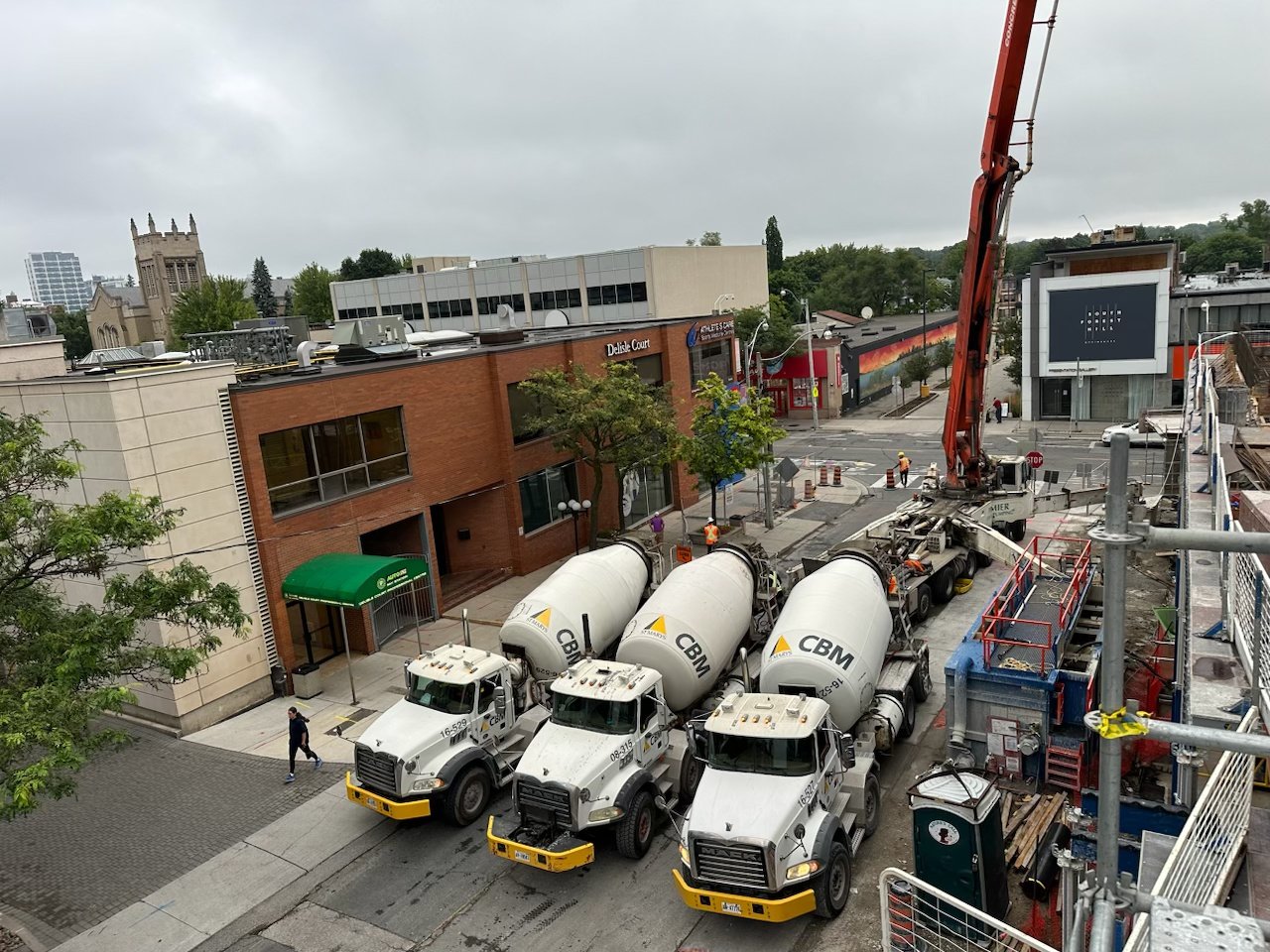
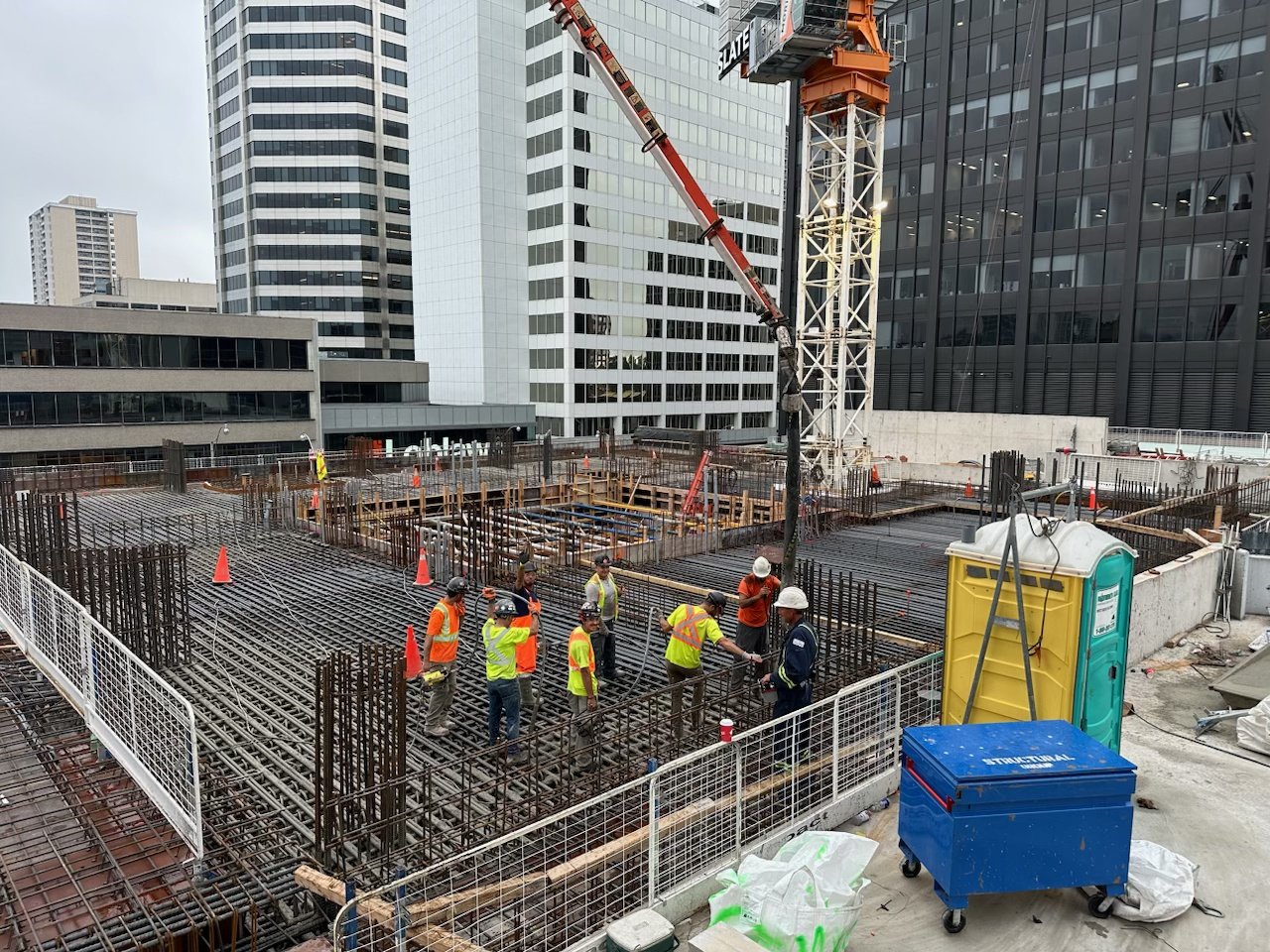
Today we are pouring our massive level two transfer slab at One Delisle. Delisle Avenue has been temporarily closed and the first concrete truck arrived at 6 AM. We’re currently averaging about 100 m3 per hour. There’s also a bit of light rain in Toronto right now, so that should help keep the slab cool. We’re a few weeks later than we were initially targeting back in June, but a lot of coordination has gone into this one slab. Our level three slab is also somewhat unique because of the double-height pool space and the gym; but following that, we’re on to our “typical” floors. And by “typical”, I mean as typical as one gets on a project like One Delisle.
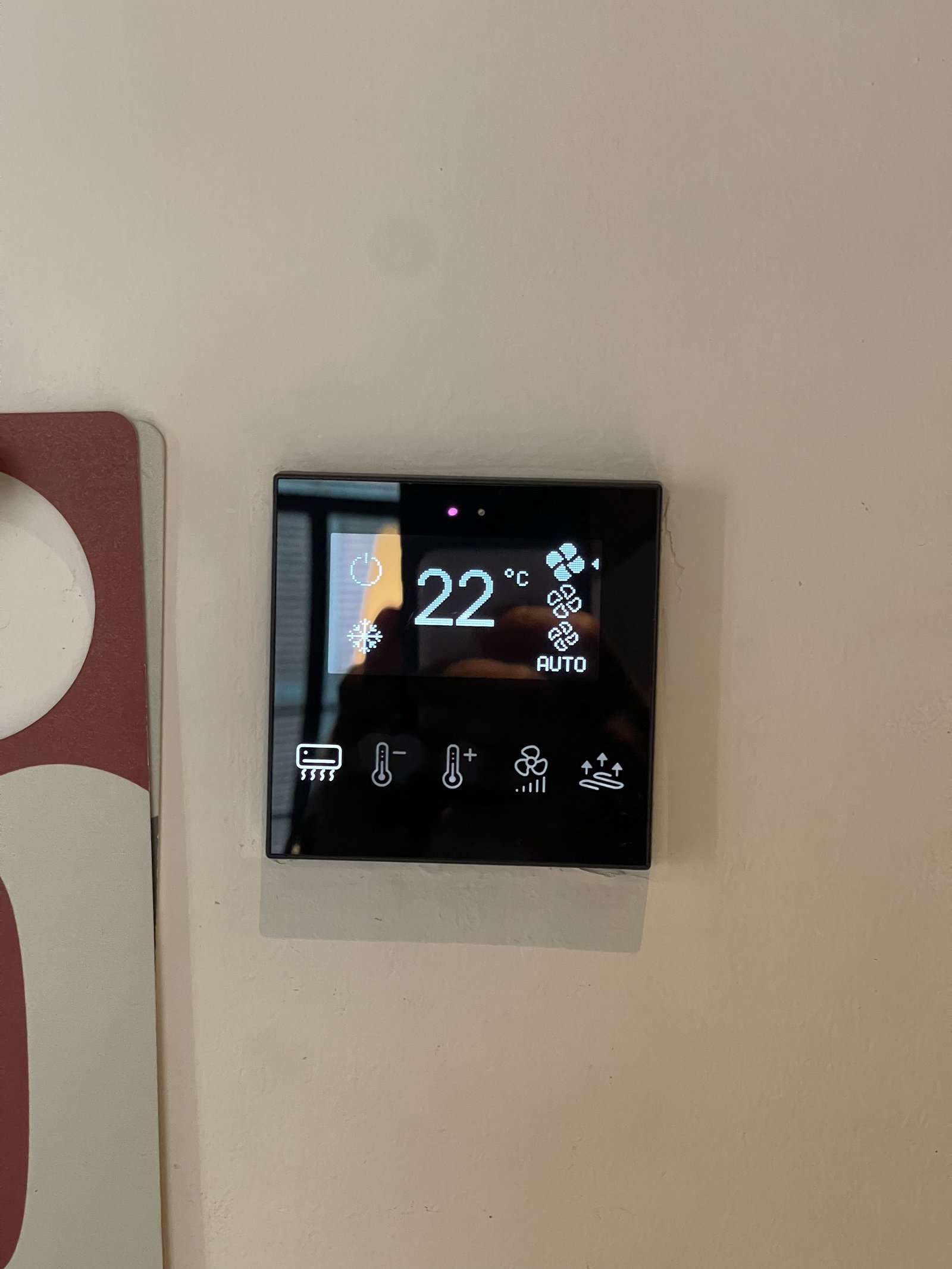
We just checked into our hotel in Palma and one of the first things I noticed is that as soon as you open any of the windows/doors, the AC automatically turns off. A message on the thermostat then alerts you that it will come back on once you close the windows. I haven’t yet figured out how this particular hotel room is sensing that things are open, but it’s relatively easy to do this at home through smart thermostats and sensors like these. I make a real concerted effort to do this manually, and so it’s great to see it automated in a hotel room, where people are naturally going to care less about wastage. Europe is so far ahead of North America when it comes to energy efficiency.
I just turned on my out of office. Neat B and I leave this evening for our honeymoon. Our first stop is Mallorca. Neither of us have been before and it has been on our list.
One of our goals for this trip is to be active. So among lots of other things, the plan is to get on some bikes at some point. We hear that Mallorca is a pretty good island for that.
As always, I’ll be continuing to write. I love writing when I’m on vacation and experiencing new things. The laser distance meter is also in my bag, so expect some of this and this.
Roncesvalles Avenue is a successful north-south main street in the west end of Toronto. I say successful, because it is truly a great street. It has transit, bike lanes, a fine-grained built form, and lots of interesting retail:
But it is somewhat unique in that a large section of it is a one-sided retail street. Meaning, it looks like this:
This obviously isn’t a fatal flaw. It remains a wonderful street. And there are lots of examples of thriving one-sided retail streets. Ocean Drive in Miami Beach immediately comes to mind (notwithstanding the fact that locals tend not to go to it).
But conventional retail wisdom does dictate that two sides are better than one. Consider this 2023 report by Cushman & Wakefield ranking the top global main streets across the world. All of the streets that I have been to before are two-sided:
5th Avenue in New York between 49th and 60th (above 60th is, incidentally, when the street converts to single-sided because of Central Park)
Montenapoleone in Milan
The main street of Tsim Sha Tsui in Hong Kong
New Bond Street in London
Avenues des Champs-Élysées in Paris
Grafton Street in in Dublin
Passeig de Gracia in Barcelona
Bloor Street in Toronto
These are all two-sided retail streets.
None of this is to say that the west side of Roncesvalles has nothing going on. It has a diverse mixture of uses, including churches, libraries, apartments, and many other things. But I think there is still an argument to be made that it has been hamstrung by restrictive zoning.
That said, Roncevalles is defined as a “major street” in Toronto’s Official Plan and so it does fall under the city’s new Major Street Study. Maybe that changes things.
One of the commitments that Paris made for this summer’s Olympics was ensure that every single competition venue was served and accessible by public transport. In fact, if you look on their website, it clearly says “no venues in the Paris region are accessible by motorized vehicles.”
L.A. mayor Karen Bass said Saturday the city is working on expanding its public transportation system to hold a “no-car Games” in four years, which means spectators will have to take public transportation to all Olympic venues. To accomplish this, she added that L.A. will need more than 3,000 buses and plans to borrow them from around the U.S.
Of course, the built environment of Los Angeles is slightly different than that of Paris’. One was built around the car, and the other was not. And I think the success of Paris 2024 shows how a robust public transport system is uniquely equipped to absorb significant demand shocks when needed.
Not only was the audacious gamble of organizing the first Olympic Games completely accessible by low-carbon public transport, on bicycle and on foot successful. Not only was transportation to the many competition venues scattered around Paris and its surrounding region fluid. But the transit network and its agents also proved their ability to ensure, thanks to planned initiatives and adapted resources, fast, reliable and even pleasant travel. What’s more, the Paris Olympics offered the pleasing spectacle of a large city mostly freed, for a time, from the clutches and nuisances of automobile traffic.
But regardless of built form, both of these examples represent one of the positive externalities associated with hosting the games. They force cities toward massive positive change, and that’s always a good thing.
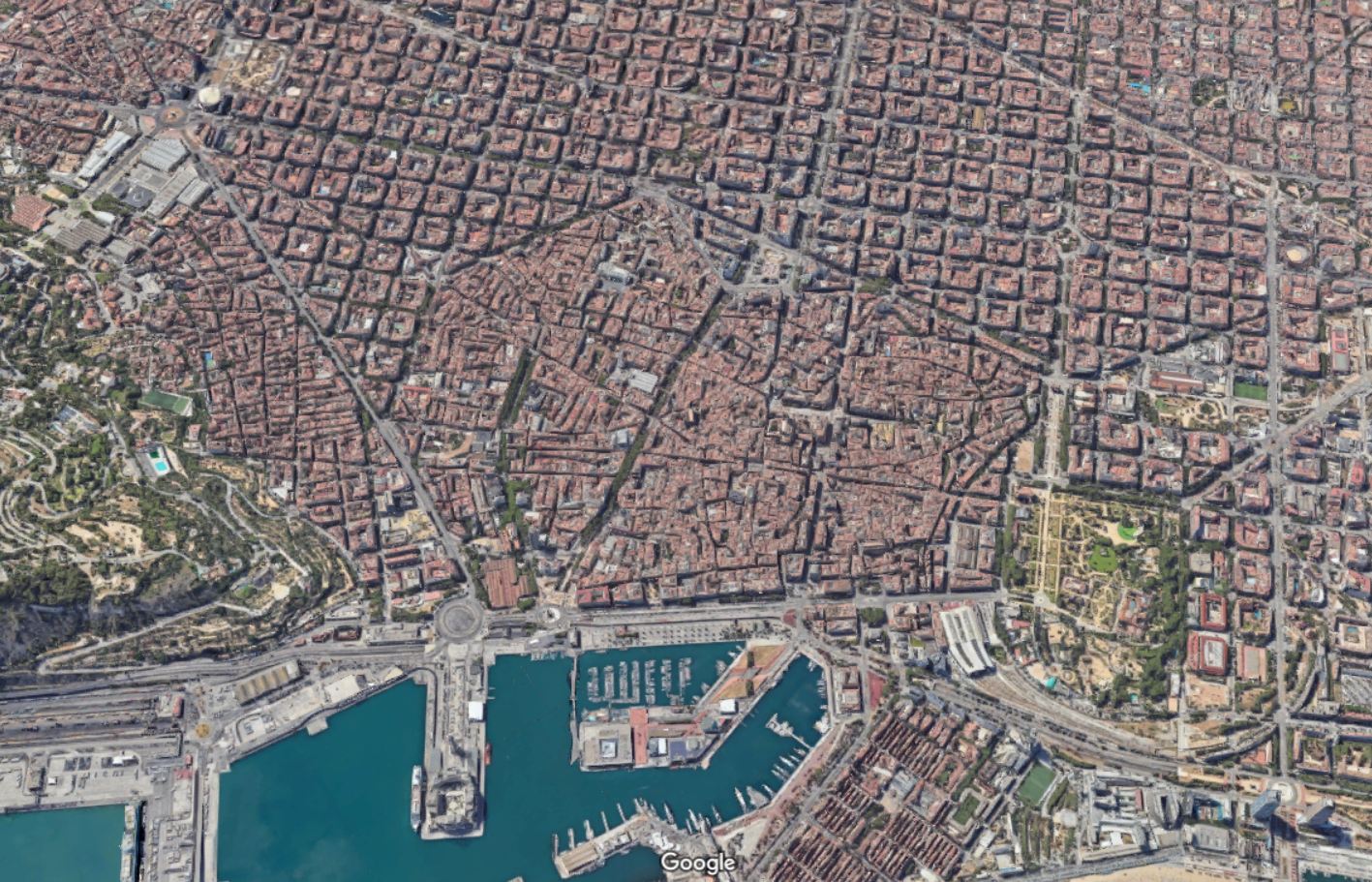
Let’s continue with our theme of city blocks and talk about another city with a noteworthy street grid: Barcelona. Up until the middle of the 19th century, Barcelona was a tiny medieval city hemmed in by 6 km of walls and totalling just over 2 square kilometers. If you look at a map of the city today, it’s pretty easy to see where this was:
This was of course done for military purposes. Barcelona’s medieval walls helped the city resist siege after siege. But the result was also overcrowding, unsanitary conditions, and a generally low life expectancy. So after much debate, it was eventually decided that the walls would need to come down and that the city would need to expand outward.
This then raised the question: how should it be done?
Enter a civil engineer named Ildefons Cerdà. Created in 1860, the Cerdá Plan for Barcelona was a continuous grid of blocks intended to guide the future growth of the city, similar to what the Commissioners’ Plan did for Manhattan. The blocks measured exactly 113.3 by 113.3 meters and each was to have a central open space of at least 800 square meters.
In his original plan, the streets were to be 35 meters wide. But supposedly these were narrowed to no more than 20 to 30 meters due to criticism from the public. Wide streets and more lanes were, I guess, not seen as a benefit in the second half of the 19th century. Either this, or landowners simply wanted bigger buildings.
The Cerdá Plan got approved in 1860 and, today, the city looks like this:
One particularly unique feature of this plan was that the blocks all had/have chamfered corners. This improved visibility at the intersections, as well as created opportunities for public spaces and other uses. For better or for worse, today, you’ll find parking for cars and scooters, bike share stations, ramps leading to underground garages, patios, and more.
The heights of the buildings on each block were also intended to be capped at a consistent height. But even with relatively few tall buildings, the Cerdà Plan led to one of the densest cities in Europe. Today, it is also viewed as a highly livable and desirable city. Hence why the city announced a total ban on short-term rentals. Too popular.
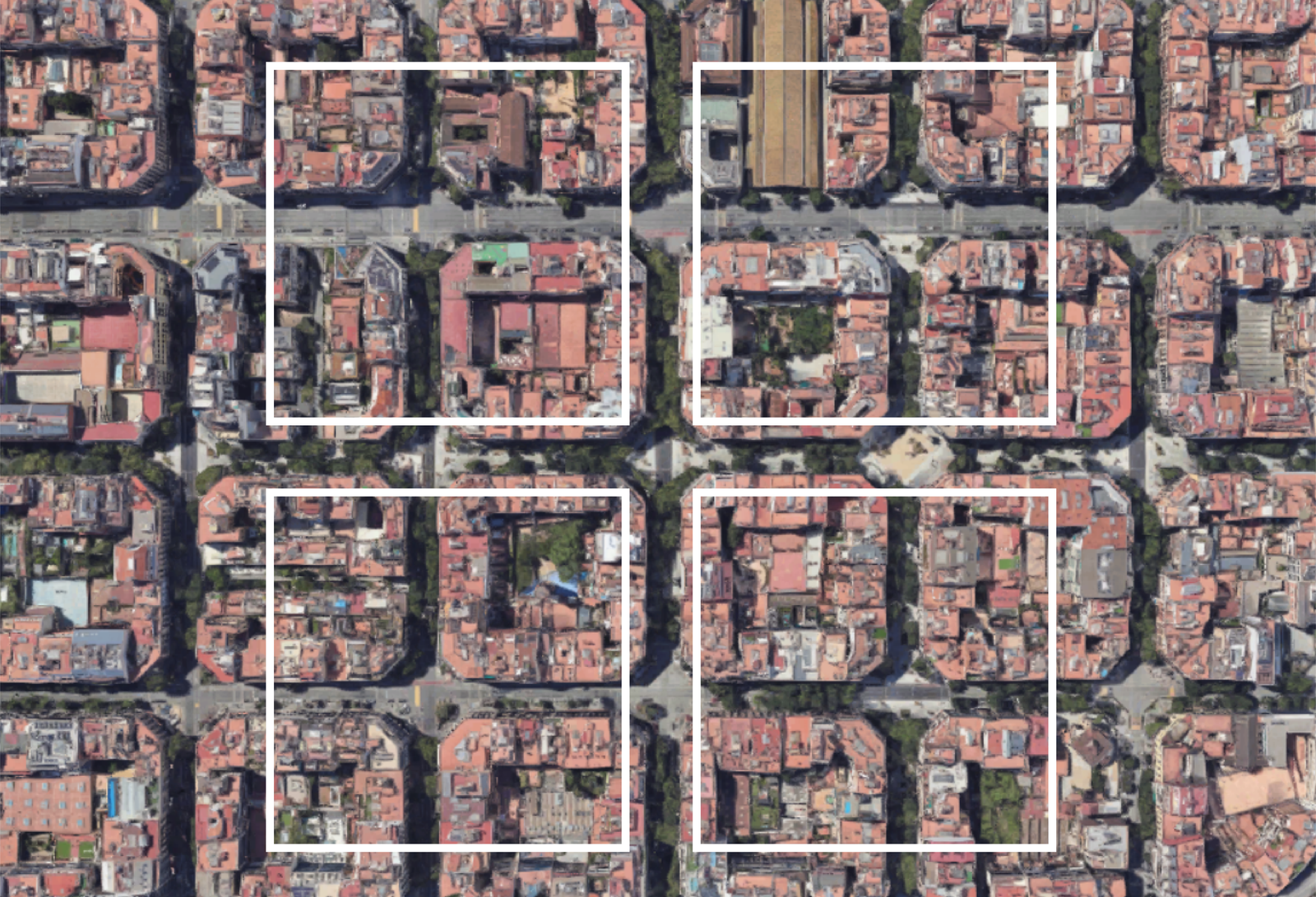
Now for a comparison. Last week we spoke about Salt Lake City’s large city blocks (here and here). And so for fun, here’s what these blocks would look like on top of Barcelona:
The most obvious takeaway is that Salt Lake City has larger city blocks than Barcelona, and that’s one reason why, objectively, Barcelona is more walkable and urban than SLC. But I think you could also view this graphic as a tremendous opportunity.
Barcelona is in the midst of rethinking its urban fabric around something called “superblocks.” The idea here is to cluster blocks together and then concentrate transit and vehicular traffic along its edges, creating a more pedestrian-focused center. For example, in its largest form, a superblock might be a 3 x 3 grid, creating a grouping of 9 city blocks.
But it doesn’t necessarily need to be a 3 x 3 grid. Other permutations are possible and the city plans to eventually introduce over 500 of them.
The first superblock was implemented in 2017 and, not surprisingly, it improved air quality, increased quietness, and led to a significant decrease in car usage (-92%). Interestingly enough, it only led to a moderate increase in car traffic on surrounding streets (+3%). Traffic can be a funny thing.
Creating superblocks out of smaller blocks is naturally easier than the opposite. You have an existing grid to work with. But there’s no reason that the opposite can’t also be done. And I think that’s one way to look at Salt Lake City’s street grid. It already has its superblocks. Now it’s just a question of creating all of its smaller blocks.
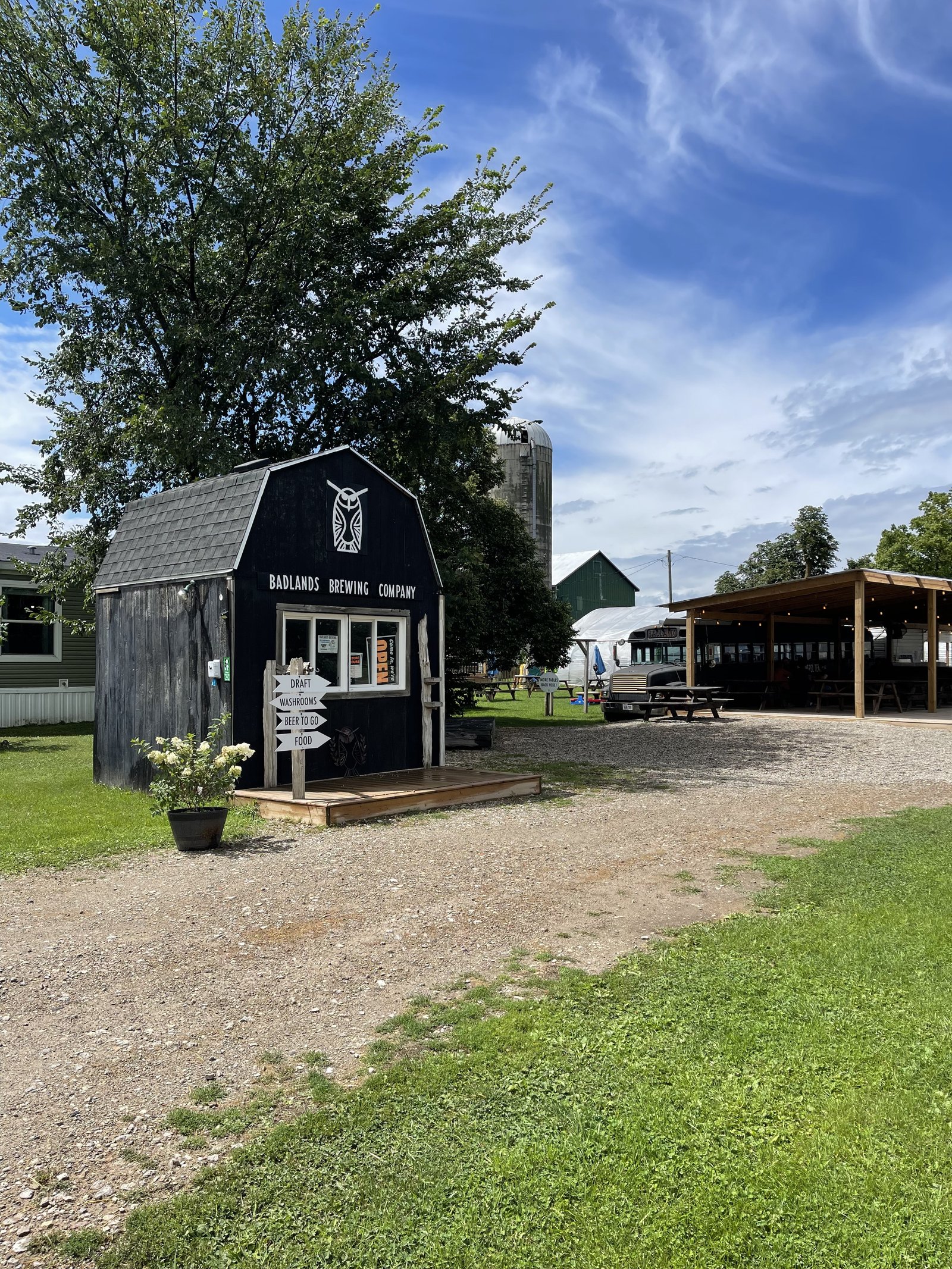
My friend Austin Kjorven convinced me that we should ride 70 km today so that I can try the beer and burgers at Badlands Brewing Company. Here’s the route we took:
I can now confirm that their smash burgers are as advertised. Great buns. I even had two of them just to make sure the first one wasn’t some sort of fluke.
My knees are, however, still giving me problems. I even tried KT tape and the brightest compression socks available in Austin’s closet.
Still, it was an awesome ride. If you happen to find yourself near Caledon, Ontario, definitely check out the Badlands Brewing Company.