Daily insights for city builders, delivered every morning at 6 AM ET. I’m Brandon Donnelly — a Toronto-based real estate developer and founder of Globizen. I’ve been writing here since 2013.

  • Did we hit peak car?

    image

    The total number of vehicle miles traveled in the US used to largely do only one thing: go up. This is made it fairly easy for the Federal Highway Administration (FWHA) to forecast how much more Americans were going to drive in the coming years – they just extended the trend line.

    Below is what that looked like since the early 1970s (via FRED Economic Data). You’ll see that the total vehicle miles traveled went from somewhere around 1.1 trillion miles to around 3 trillion miles in and around the late 2000s. The shaded areas represent recessionary periods.

    image

    But then in 2007, something happened. Total vehicle miles traveled peaked, declined, and then flat lined at just under 3 trillion miles. Here’s what that looked like (the ending time period is October 2014):

    image

    However, since this was new for the FHWA, they continued to believe that this would ultimately correct itself and that total VMTs would eventually continue on their linear ascent. So here’s what their projections looked like (via State Smart Transportation Initiative):

    image

    Clearly things didn’t go as planned.

    But then in May of last year (2014), the FHWA finally changed its tune and released this forecast, which had the following projections:

    image

    It outlined 3 economic scenarios: a pessimistic one, a baseline one, and an optimistic one. In their baseline outlook, they believed that the annual growth rate for total vehicle miles traveled in the US would be 0.75% over a 30 year period running from 2012 to 2042.

    At the same time, they also stated that population growth would average about 0.7% per year through this same period. This means that the FHWA has more or less conceded that total vehicles traveled per person will likely remain flat, which is a significant change from previous forecasts.

    Now, given their track record, I don’t think any of us should put a lot of faith in the accuracy of these numbers. Per capita driving could flat line. But it might also go down, which is what it has been doing over the past few years.

    Either way, I do think it’s worth thinking about this shift. It’s a pretty big deal.

    Top Image: Flickr

  • STEM + Art = STEAM

    image

    Most of you have probably heard of the STEM subjects. STEM stands for Science, Technology, Engineering, and Mathematics. These academic fields have been the focus of many federal governments around the world as they have been seen as the key to driving innovation.

    But what you may not have heard of is something called STEAM. I hadn’t heard about it until this morning. STEAM is an initiative being led by the Rhode Island School of Design to integrate art and design into national agendas pertaining to STEM. STEM + Art = STEAM.

    Here’s a snippet from RISD:

    The goal is to foster the true innovation that comes with combining the mind of a scientist or technologist with that of an artist or designer. RISD offers endless examples of how art and design education teaches the flexible thinking, risk-taking and creative problem solving needed to solve today’s most complex and pressing challenges – from healthcare to urban revitalization to global warming.

    I couldn’t agree more with this initiative. As somebody who thought a lot about how to combine design and technology in my own career, I believe that there are huge benefits to a multidisciplinary approach to problem solving and innovation. In fact, it’s one of the reasons I decided to go to Rotman for my MBA (see Business Design).

    So if you feel the same way, I would encourage you to add yourself and/or your company to the “STEM to STEAM map” that RISD has created. Click here to do that.

  • My #CityResolve

    Yesterday the Urban Land Institute here in Toronto launched a great social media initiative called #CityResolve. The idea is that instead of making a personal New Year’s resolution, that you instead make one that would benefit your city as a whole. This is great for me because I don’t really believe in New Year’s resolutions.

    You can read more about the initiative here, but all you have to do is tweet your resolve using #CityResolve. One person will be selected for a one-on-one meeting with Toronto’s Chief Planner, Jennifer Keesmaat – where you could then pitch your idea directly to the top 🙂

    For me though, I feel like I’ve already been acting on my resolve, which is this blog. When I started writing every day back in August 2013, I did so for myself, but also for a clear mission: To promote the building of beautiful, sustainable, and globally competitive cities. I don’t profess to have all the answers, but I hope to initiate the right kind of discussions.

    If that feels like a cop out though, here’s another:

    //platform.twitter.com/widgets.js

    What’s yours?

    Image: Flickr

  • Engaging with the sharing economy

    image

    Last week I wrote (yet another) post about Uber where I argued that leading cities will be the ones that engage with the sharing/rental economy (as opposed to try and outright ban it) and that Uber is going to continue to impact current beliefs around vehicle ownership.

    As to be expected, some people agreed with me and some people didn’t:

    //platform.twitter.com/widgets.js

    But I also discovered following that post that there are groups, and hopefully cities, who are working to adapt to the changing realities brought about by disruptive innovation.

    One of those groups is The National League of Cities – which I truthfully don’t know that much about. But they have created something called “The Sharing Economy Advisory Network.”

    “Cities across the country have been struggling to respond to the rapid emergence of the Sharing Economy,” said Clarence Anthony, National League of Cities executive director. He continued, “Cities are looking for ways to update and improve their current regulatory framework to ensure that regulations like safety and health protect residents, while at the same time supporting the growth of new businesses. It is imperative for cities to learn how this industry operates and discover ways to engage in order to support these new modes of doing business and to create jobs.”

    It sounds like the right kind of initiative and I wish them lots of success. I hope it’s effective and I hope that Toronto will look at how it too can properly manage these economic changes. This is going to take both the private and public sectors working together.

    Image: Sidecar

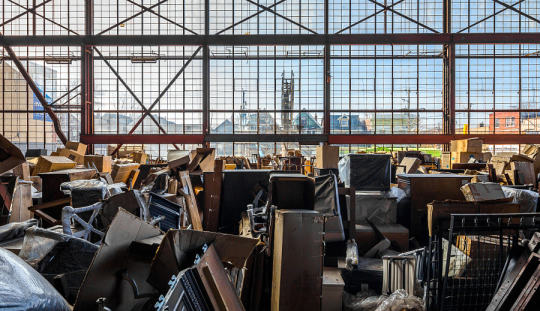
  • Dead malls — what’s the future of offline retailing?

    image

    A lot of shopping malls are dying. You’ve probably heard this before. But how bad is it and what exactly is happening?

    Well, a new report by CoStar (heard through the New York Times) found that nearly 20% of the 1,200 malls in the US are presently in trouble. “Trouble” is defined as a mall with a vacancy rate of 10% or more.

    But what’s perhaps most disconcerting about this number is that, as recently as 2006, only about 5% of the malls in America would have been pegged as being “in trouble.” Here’s a chart from the New York Times (I’d love to see this same graph with a longer time horizon):

    image

    But not all malls are dying. The general sentiment seems to be that the high-end A malls are and will continue to thrive, and that it’s only the B and C malls that are dying:

    Tom Simmons, who oversees the mid-Atlantic shopping center division of Kimco, another real estate giant, is more blunt. “There are B and C malls in tertiary markets that are dinosaurs and will likely die,” he said, but “A malls are doing well.” (NY Times)

    So why is this happening? Some think it’s because the US is over-retailed. And some think it’s because of rising income inequality – which would explain why the high-end malls continue to thrive. But the experts seem to agree that it’s not the result of more people shopping online:

    One factor many shoppers blame for the decline of malls — online shopping — is having only a small effect, experts say. Less than 10 percent of retail sales take place online, and those sales tend to hit big-box stores harder, rather than the fashion chains and other specialty retailers in enclosed malls. (NY Times)

    I wrote a post 2 months ago where where I argued that big box stores will be the most impacted by online shopping (which is why so many of them now sell groceries). But I don’t believe that they are the only retailers that will be affected. Quite the opposite: Every retailer is or eventually will be impacted by the internet.

    This threat is real.

    Millennials have no hesitations about buying things online and, in many cases, they would prefer to do so. It has already been well documented that we (I’m a Millennial) don’t like driving as much as previous generations. So what makes you think we’d enjoy the process of driving to a mall?

    But the other factor at play, I think, is that malls are no longer the “public space” of young people. Their position as a kind of cultural institution is waning. At the same time, more and more people are craving uniqueness. They like independent shops, not malls that all look and feel the same. And as these young people become old people, we might find that even the A malls start becoming impacted.

    I don’t believe, for a second, that retail nodes within cities will ever disappear. But I think our attention would be better spent figuring out what the mall of the 21st century will be, as opposed to hiring PR firms to try and spin doctor our way out of this dead mall phenomenon.

    Image: Flickr

  • Villages and mountains (in Switzerland)

    I went snowboarding today and so I’ve got it on the brain right now. It’s one of my passions. But besides the actual act of riding down the mountain on a flexible board, there’s something much more about the sport to me.

    First, I love the small villages that develop – ideally organically – at the base of ski mountains. Here’s a neat video of Zermatt, Switzerland that makes it look like a “miniature" town. Click here if you can’t see it below.

    //player.vimeo.com/video/28956652?portrait=0&color=ff001a

    And second, I love the vistas that you get. I don’t know exactly how to describe it, but I find that they really pull you away from your everyday life. Here’s a stunning time-lapse video called the Mountains of Valais (Valais is the Swiss canton that Zermatt is located in). You need to watch it. Click here if you can’t see it below.

    //player.vimeo.com/video/81082164?portrait=0&color=a3e5ff

    The town of Zermatt is almost completely surrounded by high mountains and is home to Switzerland’s highest peak at 15,203 feet above sea level. I think it’s time I added it to my bucket list.

  • Do you know where you spend your time?

    Yesterday my friend Sachin Monga published a really great article on Medium called, 2014: My Year in Review. It was broken down into a few sections that included everything from his favorite blog posts of the year to all of the images he posted on Instagram. He called it “a stream of personal observations, data, and highlights for the year.”

    And it put my end of the year blog post to shame.

    One section that really stood out for me though was Places & Transit. Using a mobile app called Moves, Sachin extracted an incredible data set for where he physically spent his time and how he got around in 2014. I can’t believe I haven’t heard of this app yet – it’s totally in my wheelhouse. But I’m clearly late to the party. Facebook bought them in the first half of last year.

    The data set included how many hours he spent at home and at work. His top 3 most visited coffee shops. His top 5 most visited friends. How many nights he stayed in a hotel. His average daily commute time. And his total distance walked and cycled, among many other things. It was fascinating. I love data – especially when it was previously impossible or difficult to collect it.

    He was also able to translate his data into a set of beautiful maps, showing where he spent his time and how he got around. Here is his personal map for Toronto. The larger the circle, the more often he was there. Blue lines are cycling. And green lines are walking.

    image

    And here’s San Francisco (where he now lives):

    image

    After reading his post, I immediately downloaded Moves. And I can’t wait to see how my personal map of Toronto will look like in a few weeks and months. Once I have enough data points, I’ll be sure to share it with you all here.

    In the interim, do you have any ideas for what this kind of data might be used for? I can certainly think of many. Let us know in the comment section below.

  • Why Bitcoin might still be a big deal

    Welcome to 2015!

    To start off the year, I thought I would talk about something pretty geeky, but very forward looking: Bitcoin.

    I wrote about Bitcoin just over a year ago when I was first starting to wrap my head around it, but a lot has happened since then. Many of you might know that 2014 was a terrible year for Bitcoin and that its price has declined significantly (chart from Coinbase):

    image

    But does that mean Bitcoin is a flop, or that the hype has just died down a bit?

    If you follow what’s being discussed within the tech community, you’ll know that there are still lots of people who are bullish on Bitcoin. But more precisely, they are bullish on the underlying architecture behind Bitcoin and something that is called the Blockchain.

    I’m not going to get too technical in this post (if you want that, go here), but I do want to talk about three things (that I’ve mostly learned from the folks over at Union Square Ventures): the Blockchain, why it matters, and what it could mean for specific industries such as transportation and real estate. I promise to make it relevant at the end.

    The way to think about all of this is in layers.

    The Blockchain is the foundation or base of Bitcoin. It’s essentially a decentralized public ledger that keeps track of all the Bitcoin transactions. Decentralized means that not one single person or company owns the database. It’s free for anyone and everyone to see. This structure is important because it enables peer-to-peer transactions across the internet, as opposed to going through a bank or other intermediary.

    But the key takeaway is that Bitcoin is simply one example of a “protocol” built on top of the Blockchain. And there are many others in the works, including a protocol for realtime ride sharing (Lazooz) and a protocol for a decentralized peer-to-peer marketplace (OpenBazaar). And so the real innovation is the Blockchain, not Bitcoin itself.

    Why does this matter?

    It matters because these protocols are, again, not owned by a single entity, which is remarkably different than the way most things work today. Take for example the residential real estate industry. In the Greater Toronto Area, the data that emerges from home listings and sales is owned by the Toronto Real Estate Board.

    And since this data is privately owned, a lot of it remains only accessible to “members” or real estate agents. The Competition Bureau has been fighting for more openness, but the Toronto Real Estate Board obviously wants to keep as much of this data as it can to itself. Who can blame them.

    But what if somebody came along and created a new protocol for a decentralized peer-to-peer home marketplace? In that case no one would own the data, which means everyone would have access to it. And that would completely change the landscape. I’m fuzzy on what this protocol would even look like, but it seems entirely possible given what else is in the works.

    And if this Bitcoin Blockchain revolution does actually take place, it wouldn’t be restricted to only non-tech legacy industries. Joel Monegro of Union Square Ventures believes that “decentralized protocols” such as Lazooz and OpenBazaar (mentioned above) could even have a big impact on companies such as Uber and eBay, respectively.

    I’m still trying to wrap my head around all of this, but I want to understand it and I thought you all might as well. Because even though it seems very tech right now, the implications would also be very non-tech if it turns out to be true.

  • That’s a wrap

    Today is the last day of 2014.

    It felt like a frenetic year for me, and so I have to say that I’ve been really enjoying this holiday break. I needed the downtime. I needed the time to think and strategize. And I got all of that this holiday. (The only thing that would make this break even better would be some more snow on the mountains.)

    I’m super excited for the new year and what’s ahead, but before getting into that, I thought it would be worthwhile to look back at what happened in 2014.

    I was initially going to list out some of my thoughts, but then I figured that a better way would be to simply list out the most read Architect This City posts. That way it’s my (daily) thoughts, but curated according to what readers cared about most this past year.

    Click here for the top 15 most read Architect This City posts of 2014. I’ve listed them on a “topics” page that I plan to update every year.

    If you’re looking for some other 2014 themed reading material, I recommend also checking out the best #cityreads of 2014 by CityLab; the best articles of 2014 from ArchDaily; and what just happened? by venture capitalist Fred Wilson.

    Happy new year everyone! Thanks for reading. See you in 2015.

    Image: Family and friends lunch at Pizzeria Libretto, University

  • The unmet demand for real estate education in Canada

    image

    I continue to be amazed by the unmet demand for real estate (development) education here in Canada.

    Following yesterday’s post on the real estate development process, I received a few emails from readers asking about the best university programs (MBA, MRED, etc.) and the best approaches for becoming a developer.

    I also had a good conversation on Twitter, which covered off some details that I had left out from my post (for simplicity) and which resulted in me suggesting that a real estate development school needs to be started here in Toronto:

    //platform.twitter.com/widgets.js

    //platform.twitter.com/widgets.js

    Now, part of the reason things are the way that they are, I think, is because the real estate industry has been historically dominated by private rich families. People didn’t go to school to learn how to be developers. They learned by doing and that was then passed down to the next generation. All it took was chutzpah.

    But as the real estate industry continues to institutionalize and become run by pension funds and large publicly traded companies, I think the point of entry will also become increasingly institutionalized. And that’s where dedicated real estate programs will continue to come in. 

    I’ve spoken to a few people at the Rotman School – where I did my MBA – and there doesn’t seem to be a huge interest in a dedicated program such as a Master of Real Estate Development (they already offer real estate courses). It’s more of a “longer term” strategy. 

    But I think that’s a mistake.

    I’m confident there’s strong demand from the student side, so hopefully a wealthy donor will step forward to help make this happen. The University of Toronto has both a great business school and a great architecture school. That feels like a great recipe for a first-in-kind joint degree offering.

    Image: Urban Learning (via Flickr)