Daily insights for city builders, delivered every morning at 6 AM ET. I’m Brandon Donnelly — a Toronto-based real estate developer and founder of Globizen. I’ve been writing here since 2013.

  • Walking the West Side Highway

    image

    I am in New York this weekend. Every now and then I need to get my fix of this city. I just love it here.

    Given the debate that’s going on in Toronto right now about the elevated Gardiner Expressway, one of the things I wanted to do this weekend was walk the West Side Highway. The West Side Highway runs along the western edge of Manhattan from 72nd Street all the way down to the southern tip of the island. It used to be an elevated highway, but it runs mostly at grade now.

    I’ve been to and on it many times before, but I wanted revisit it with a different lens. Many people in Toronto seem to think that if we remove the Gardiner East and replace it with an enlarged Lake Shore Blvd that it would pose just as much of a physical barrier as an elevated structure.

    So I walked the West Side Highway and filmed this (Hyperlapse) video:

    //platform.twitter.com/widgets.js

    I think it’s a big improvement over an elevated structure. What do you think?

    There is, however, an elevated highway uptown. So tomorrow I plan to travel it on a scooter that I’ve rented to see how the urban fabric changes around it. I suspect it’ll be quite different.

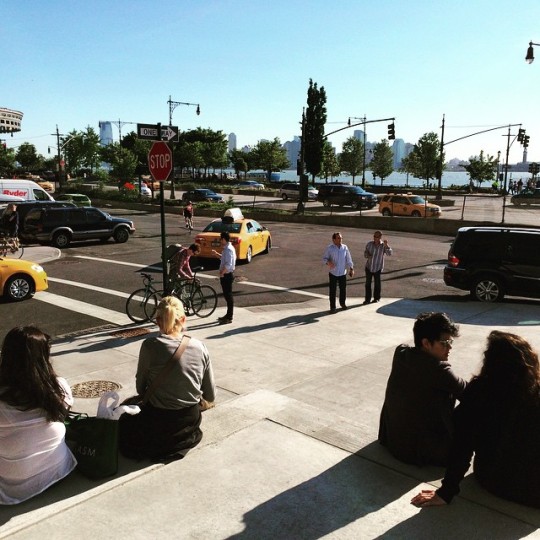
    In case you were wondering, the picture at the top of this post is from the steps at the Whitney Museum. They face the West Side Highway and the water. It’s a great public space, but I’m pretty sure that Renzo Piano wouldn’t have designed it that way (and with that orientation) had there been an elevated highway in front of it.
  • What a Shopify Mafia could mean for Canadian tech

    image

    Yesterday Shopify went public on both the Toronto (SH) and New York Stock Exchanges (SHOP).

    For those of you who aren’t familiar with Shopify, they are a Canadian company that provides e-commerce solutions to small and medium sized businesses. I’ve been a paying customer of Shopify many times before and they offer great products and services.

    But this isn’t an investment blog, so what’s the big deal?

    Well, the big deal is that Shopify – which was started in Ottawa – raised over $120 million of venture capital funding, went public (raising another $131 million), and now sits with a market cap close to $2 billion dollars. And that is a great thing for not only the founders and employees of Shopify, but also for the larger Canadian tech ecosystem.

    Yesterday my friend Evgeny (of 500px) tweeted this out:

    //platform.twitter.com/widgets.js

    What he’s getting at it is that when a successful company goes public it generates a tremendous amount of wealth for a lot of people (the founders, employees, investors, and so on). And invariably many of those people are going to recycle their capital back into the local economy by starting new companies and/or investing in other startups.

    But this isn’t some sort of trickle down economic theory. Startup ecosystems just seem to operate very much in this way. There’s almost a natural cycle: start or join young startup, exit company (sale or IPO), make lots of money, become angel investor in and mentor for new startups. And since this cycle compounds, it’s probably the most important prerequisite for a thriving tech ecosystem.

    So while this IPO has been no doubt a great thing for Shopify, let’s not ignore what a “Shopify Mafia” could mean for Canadian tech.

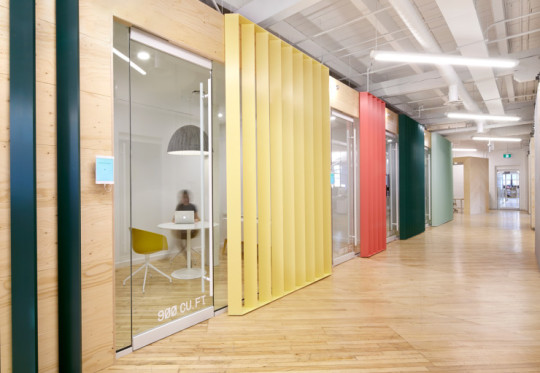
    Image: Shopify Toronto via Officelovin

  • Learning from boutique hotels

    At the beginning of this year, my friend Amy Bath wrote an interesting post on her blog comparing condos and boutique hotels. It’s called: Could condos be more like boutique hotels? It’s a great read and it touches on something that I think we will see more of going forward.

    The idea is that boutique hotels – many of which invest heavily in things like programming and “cultural engineering” – could serve as a model for condos and developers who want to further differentiate themselves by doing more with their common areas and amenities. I think it’s a great idea. 

    But let’s backup for a second.

    In many cases, I feel that developers tend to privilege the brands of their specific projects over their own corporate brands. This likely has something to do with the entrepreneurial nature of how development projects often come together, but I personally don’t think it’s the best approach.

    It’s the equivalent of a car company downplaying its own brand and instead creating a new one for each and every car model that it comes out with. That’s a lot of work and it’s harder to build brand equity that way. So I think the trend is probably away from this approach.

    But as that happens, developers will inevitably start to wonder how they can differentiate them themselves: How do I make my bricks and mortar less of a commodity? The same way that Apple made computers not about processor speeds and memory, but about something so much more. You create a brand story and an experience.

    And one of the best ways I think you could do that is through exactly what Amy is talking about: programming and cultural engineering.

  • Real estate and house music in Johannesburg

    I’ve written about the Ponte Tower in Johannesburg before. At 54 storeys, it is the tallest building in Africa. It’s located in Hillbrow, which is an inner city neighborhood known for its crime and poverty. 

    In the 1970s when the tower was built, Hillbrow was an Apartheid-designated white-only neighborhood and the tower was filled with affluent residents. But that didn’t last long and eventually the wealth fled for the suburbs.

    Here’s a brief 6 minute video talking the Ponte Tower. Let’s call it the real estate perspective. Click here if you can’t see it below.

    [youtube https://www.youtube.com/watch?v=3EIKmmSifqw?rel=0&w=560&h=315]

    Now, here’s a Real Scenes documentary talking about the thriving electronic music scene in Johannesburg. I think it’s fascinating to look at a city from a particular subculture and, compared to the first video, I get a very different feel for the city. Click here if you can’t see it below.

    [youtube https://www.youtube.com/watch?v=Ykt2f6o7-e8?rel=0&w=560&h=315]

  • Locations of the 100 tallest skyscrapers in the world

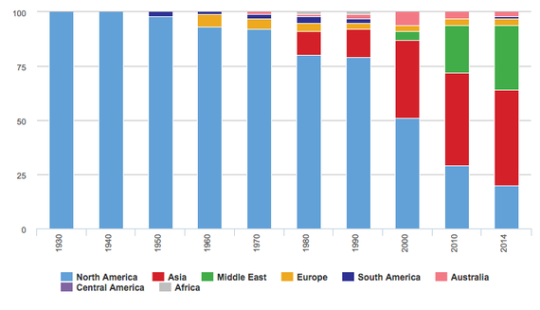
    This morning I stumbled upon the following chart (via The Atlantic) summarizing the locations of the 100 tallest skyscrapers in the world.

    As you can see North America dominated tall buildings for most of the 20th century. But then in the 1980s, Asia starting building. Then in the 2000s, the Middle East started building. And today, Asia and the Middle East are where the world’s “supertalls” sit.

    What’s fascinating about this shift is that in many cases, there’s absolutely no physical or economic need to developing so tall. Yes, rising land values can drive up the height of a building, but not to the extent that we’ve been seeing.

    Instead, building “the tallest building in the world” is more symbolic than anything else. It’s about ego. It’s about asserting your position on the global stage. And so while this is a chart about tall buildings, it’s actually a pretty telling chart about global ambitions.

  • 4 design strategies for your cold-climate waterfront

    Photograph Sugar Beach in Toronto by christophmarten on 500px

    Sugar Beach in Toronto by christophmarten on 500px

    Since we’ve been discussing waterfronts lately, I thought I would share this post from ArchDaily talking about 4 ways that cold-climate cities can make the most of their waterfronts.

    They are:

    1. Plan for winter sun
    2. Create plazas that block wind
    3. Break up outdoor spaces with comfort stations (not sure why they just have to be stations)
    4. Design for active winter programming

    These, of course, aren’t new design strategies. Cities have been built around their climates since, probably, the beginning of cities. It wasn’t until more recently that we started basically ignoring local climates and focusing more on what mechanical systems can do to make us feel comfortable.

    But I think that was a mistake. I don’t think that mechanical systems are bad though. I just think that there’s a lot that we can do first – without mechanical systems – to address local climates.

    If you’ve ever sat on a patio during a swing season (i.e. right now) where the wind was blocked and you were in the direct sun, you already know that there’s a lot that can be done without relying on active systems.

    But the other thing I like about this post is that it acknowledges the fact that winter waterfronts require just as much, if not more, design attention than a warm-climate waterfront.

    Saying that we’ll (insert cold-climate city name here) never be Miami or Barcelona or Sydney is just giving up.

  • I would make a terrible politician

    Ever since I was a little kid, I have thought that I would one day get into politics. 

    A lot of it has to do with me wanting to affect positive change, which is also one of the reasons I love real estate development (and one of the reasons I write this blog). Developers might have a bad rap in some circles, but I view it as a mechanism for positive change in the built environment.

    However, I have also felt that politics is something that’s better to do when you have grey hair and you don’t actually need the money to live. That way people take you more seriously and you can, hopefully, just do what you feel is right as opposed to playing the political game.

    But more and more I find myself thinking: Brandon, you would make a terrible politician.

    I don’t want to play games. I don’t want to have to think about which stance will win me the most votes. And I don’t want to have to dance around questions so I can avoid upsetting certain constituents. I’d rather be clear and decisive about what I think is the right thing to do.

    But that doesn’t always work so well in politics. So I think I’ll just stick to building things and writing this daily blog.

  • A petition to Toronto City Council to remove the Gardiner Expressway East

    image

    “If the decision ultimately of the council is to support the hybrid I think frankly it’ll be a major step backwards and you’re going to miss a once in a lifetime opportunity, and I’ll be very frank, we’ll be the laughingstock of the world.” 

    -Paul Bedford, former chief planner of Toronto

    As many of you I’m sure know, I have been a vocal and passionate supporter of removing the eastern portion of the elevated Gardiner Expressway in downtown Toronto. I have written about it so many times that a lot of you are probably sick of hearing about it.

    I’m sorry if that’s the case. But it’s a hot and important topic in Toronto right now. We’re just over 3 weeks away from City Council finally making a decision. That is scheduled to happen on June 9th and/or 10th. 

    For the most part though, I was pretty confident that we would ultimately make what many of us believe is the right decision. But then this past week Mayor John Tory went public in his support for the “hybrid” option, which is basically to rebuild the elevated expressway in a slightly different configuration. And that really upset me.

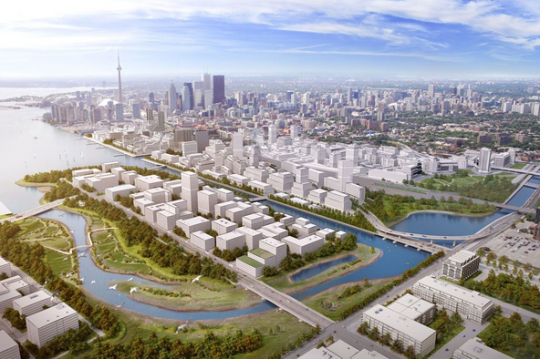
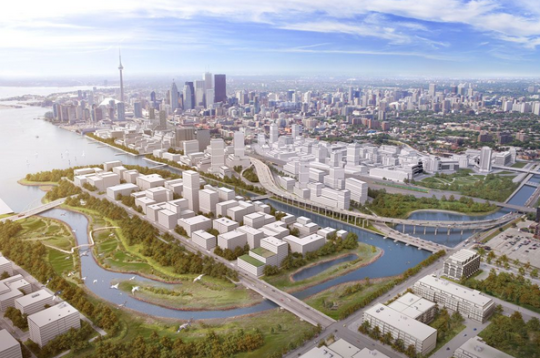
    Here’s what that looks like (versus the remove option shown at the top of this post):

    image

    Have we learned nothing from our past city building mistakes?

    Since that announcement, I went on Twitter every night this week to check out the discussions that were happening around #GardinerEast. And every night it got me so worked up that I then had trouble falling asleep. I have since stopped reading about the Gardiner East before bed.

    But rather than just get frustrated, my friend (a fellow city builder named Stephen Job) and I decided to do something about it and create a petition using Change.org.

    It is a petition that we will ultimately be sending to Toronto’s entire City Council prior to their June 9 meeting and we hope that you will consider signing it and sharing it with your network – regardless of whether or not you happen to live in Toronto. (Although it’ll certainly help if you’re a taxpayer and voter in the City of Toronto.)

    We just finished getting it up and you can check it out and sign it by clicking here.

    Images: Toronto Star

  • The perfect high street

    How do you create and maintain a thriving high street in this era of increasing online shopping? This was one of the questions that Monocle asked at its recent Quality of Life Conference in Lisbon and here’s a video with its recommendations. Click here if you can’t see the video below.

    [youtube https://www.youtube.com/watch?v=Ox2WJwDbuIo?rel=0&w=560&h=315]

  • When the crowd builds a city

    I’ve been following and checking out Kickstarter pretty much since the beginning. But it wasn’t until last night that I backed my first project. 

    After doing that, I immediately started thinking about urban projects that might be able to also get crowdfunded using Kickstarter. How could it be used for city building? A Kickstarter project, after all, just has to be something with a defined scope and a clear end goal.

    Not surprisingly, this has already been happening for many years now.

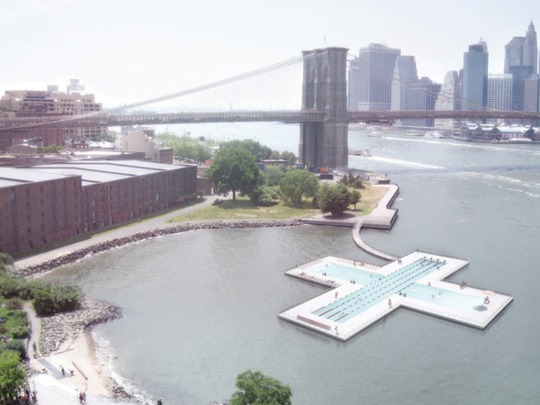
    A great example is +Pool in New York, which is an initiative to build a publicly accessible floating pool that also filters river water. The project launched in June 2011 and by July 2011 they had raised $41,648 USD to build and test different filtration techniques.

    image

    Today, the project is still moving ahead and they are now offering up the opportunity to buy and have your name engraved on tiles within the pool. If I lived in New York, I would be all over this.

    But what’s powerful here is the ability for crowd-based platforms (like Kickstarter) to both get radical new ideas off the ground and to empower local communities to affect change. Here’s a quote from PSFK:

    It’s very difficult to get funding for these ‘out there’ ideas that regular systems might not support. Creators have to take risks and be imaginative, as well as put their ideas out there and let the public decide. There are no traditional guidelines on crowd-sourced platforms—they’re much more meritocratic. You can think in big scope and that changes what gets made and who can access it. Anybody with a couple of doubles can voice what they want to be built, and in that way we see the entire community having a huge say in the design world.

    And when I see projects and platforms like this, I can’t help but wonder if (when) city building is going to become even more decentralized. 

    Last night I was also at an event – being put on by Ryerson University’s City Building Institute – called Bridging Divides: What Can Cities Do? And one of the suggestions that came up was that Toronto needs more local and granular community councils (there are currently 4) in order to bridge some of the divides that are happening in our city.

    But in a world where it’s possible for each and every person in a city to not only have a say but to quickly say it from their smartphones, why can’t we go even more local? Instead of 4, 10, or 90 community councils, why can’t we have everyone more engaged?

    I think we’re headed in that direction.