Daily insights for city builders, delivered every morning at 6 AM ET. I’m Brandon Donnelly — a Toronto-based real estate developer and founder of Globizen. I’ve been writing here since 2013.

  • With Vancouver voting “no” to transit tax, could Hong Kong now serve as inspiration?

    https://500px.com/embed.js

    Earlier today it was announced that Metro Vancouver voted “no” to a 0.5% sales tax increase that would have been used to fund a $7.5 billion regional transportation plan. 

    Roughly 62% of respondents said “no”. And not surprisingly, the percentage of people who voted “no” increased as you moved outward towards the suburbs. But even the City of Vancouver itself sided slightly with “no” at 50.81%.

    Since I’m not that plugged into the Vancouver scene, I’m not going to comment on this issue. But hopefully you all will in the comments below. I know that a lot of you are incredibly passionate about this.

    Instead, I’d like to pose two questions. 

    Firstly, why is it that Asian transit operators seem to be so much better than North American transit operators at recovering their costs through fares? (Urban density and car ownership likely have something to do with it). And secondly, why hasn’t Hong Kong’s famous “rail plus property” transit model been exported to North America?

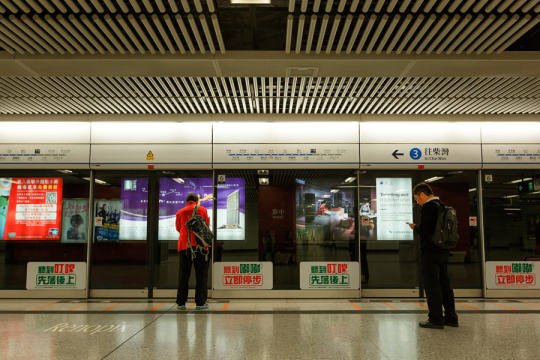
    For those of you unfamiliar with Hong Kong’s Mass Transit Railway Corporation, here’s how much money they make (via The Atlantic from 2013):

    The Mass Transit Railway (MTR) Corporation, which manages the subway and bus systems on Hong Kong Island and, since 2006, in the northern part of Kowloon, is considered the gold standard for transit management worldwide. In 2012, the MTR produced revenue of 36 billion Hong Kong Dollars (about U.S $5 billion)—turning a profit of $2 billion in the process. Most impressively, the farebox recovery ratio (the percentage of operational costs covered by fares) for the system was 185 percent, the world’s highest. Worldwide, these numbers are practically unheard of—the next highest urban ratio, Singapore, is a mere 125 percent.

    In addition to Hong Kong, the MTR Corporation runs individual subway lines in Beijing, Hangzhou, and Shenzhen in China, two lines in the London Underground, and the entire Melbourne and Stockholm systems. 

    And here’s how they do it (also via The Atlantic):

    Like no other system in the world, the MTR understands the monetary value of urban density—in other words, what economists call “agglomeration.” Hong Kong is one of the world’s densest cities, and businesses depend on the metro to ferry customers from one side of the territory to another. As a result, the MTR strikes a bargain with shop owners: In exchange for transporting customers, the transit agency receives a cut of the mall’s profit, signs a co-ownership agreement, or accepts a percentage of property development fees. In many cases, the MTR owns the entire mall itself. The Hong Kong metro essentially functions as part of a vertically integrated business that, through a "rail plus property” model,  controls both the means of transit and the places passengers visit upon departure.  Two of the tallest skyscrapers in Hong Kong are MTR properties, as are many of the offices, malls, and residences next to every transit station (some of which even have direct underground connections to the train). Not to mention, all of the retail within subway stations, which themselves double as large shopping complexes, is leased from MTR.

    I believe that we could do this too. So hopefully we can have a great discussion about it in the comment section below.

  • Happy Canada Day

    https://500px.com/embed.js

    Not everyone who reads this blog is Canadian. Not by a long shot. But for those of you who are, Happy Canada Day. Today, July 1, 2015, celebrates the Constitution Act of 1867.

    Canada is a young country, especially since we were still quite British in 1867. But we are a great country. And I feel privileged and proud to call myself Canadian and to have been born in this country. The best years are ahead of us still.

    As Pierre Elliott Trudeau once said (15th Prime Minister of Canada):

    “The past is to be respected and acknowledged, but not to be worshipped. It is our future in which we will find our greatness.”

    Oftentimes I feel that many Canadians struggle with their sense of national identity and that we don’t have the same patriotism that our neighbors to the south have. (Some would say that’s a positive.)

    But Canada actually feels incredibly distinct to me and I love this country. So I hope you are celebrating today. I’ll be celebrating with tacos and margaritas. What about you?

  • Teaming up to fix Toronto’s traffic troubles

    image

    “This will be a game changer and will establish Toronto as a leader in running a truly smart city.”
    – John Tory, Mayor of the City of Toronto

    Yesterday I registered for a hackathon called TrafficJam that’s taking place this October 2 – 4, 2015 here in Toronto. It’s being organized by Evergreen CityWorks and the City of Toronto, with the goal of fixing Toronto’s traffic troubles.

    Tickets are free, but going fast. If you’re interested in this sort of thing, I would encourage you to sign up today. And if you do register or are already registered, drop me on a line so we can connect. I’m excited to see what kind of solutions we’re all able to come up with over the course of a weekend.

    But as I was registering and reading through the website, I couldn’t help but think about some of the traffic problems that we won’t be solving over the hackathon weekend, namely the politicization of transportation planning in this city.

    As an example of that check out a post by transit blogger Steve Munro called, The Vanishing Relevance of SmartTrack

    SmartTrack is the transit platform that Mayor John Tory ran on last year. And this post explains why it is unlikely to achieve its pitch promises.

  • Pre-leasing, pre-selling, and building on spec

    When you build a new office building, the typical strategy is to pre-lease a certain portion of it. That is, you sign leases with a tenant or a few tenants so that you know for sure that X% of the building will be occupied upon completion. It’s a way to manage risk. If you don’t do this, then you are said to be building the office building “on spec.” 

    When you build a new condo building, the typical strategy is to pre-sell a certain portion of it. That is, you sell suites to purchasers based on plan drawings, certain finishes, and a model suite intended to illustrate what that future suite will more or less look like. And the reason this is typical is because most construction lenders will require you to do that.

    So when you see office buildings and condo buildings going up, there are usually already tenants and residents who plan to move in or investors who plan to rent out their suite and have generally transferred that risk away from the developer. 

    Because really the only time that a purchaser or investor wouldn’t close on a condo suite (and walk away from their deposit) is when the market corrects so badly that it actually makes financial sense to do that. That happened in the U.S. in 2008-2009 in a number of markets.

    But by contrast, when you’re building a rental apartment building you don’t have anything to pre-sell and your tenants (unlike office tenants) aren’t going to sign leases with you for some space that will be ready in 3 years. If you’re lucky, they might sign a lease with you for an apartment that will be ready in 3 months. This means that by default you are also building “on spec”.

    Now rental apartments are often considered to be the safest real estate asset class and the least correlated with the macroeconomy. But as a developer and city builder, this dynamic is still something to keep in mind.

  • How Melbourne reinvented itself one block at a time [Video]

    https://500px.com/embed.js

    Melbourne is famous in urbanist circles for the revitalization of its central area. In 1992, 40% of the buildings were empty above the first floor and only 5 (yes five) residents actually lived in the core. Everyone had fled to the suburbs and the city had hollowed out.

    Today, there are over 29,000 residents in the central area and Melbourne has become revered around the world for its vibrant public spaces and innovative laneway repurposing. 

    Here’s a quick 11 minute video that explains how they did it (via The Urbanist). Click here if you can’t see it below.

    [vimeo 131396094 w=500 h=281]

    What is clear from the video is that it took a lot of work convincing property owners and getting them to buy into the vision. Being able to repurpose the laneways often meant punching through blank walls at the base of buildings. And so there was pushback.

    Here in Toronto I’ve heard people say that we’re not Melbourne and we shouldn’t expect to have similar kinds of urban spaces. Well guess what, neither was Melbourne in the 1980s and 1990s. It was a dying city. But they made it happen.

  • #LoveWins in the United States

    https://500px.com/embed.js

    By now, I am sure that all of you know that the U.S. Supreme Court made a landmark ruling yesterday (Friday, June 25, 2015). In a 5-to-4 vote, it was decided that the U.S. Constitution guarantees the right to same-sex marriage.

    Here is Justice Anthony Kennedy’s closing paragraph. What a great read.

    image

    With this decision, the United States joins the Netherlands, Belgium, Spain, Canada, Norway, Sweden, and many other countries who already allow same-sex marriages nationwide. And I am delighted to see that happen with Canada’s neighbor.

    I am also proud to say that it has already been a decade (2005) since Canada became the 4th country in the world – and the 1st country outside of Europe – to allow same-sex marriages. Not because it had a direct impact on my life, but because it is the right thing to do.

    It is the right thing to do because it creates “equal dignity” among all men and women (as Justice Kennedy states above) and because it’s the right thing to do for our economies.

    I believe that the strongest economies are the ones that can remain open and tolerant to new ideas and all kinds of people. 

    Cities like Toronto and New York (as I’ve argued before) became successful precisely because they opened themselves up to new ideas and new people (immigrants).

    But many studies show that as people age, “openness” declines. We become less intellectually curious and our preference for variety wanes. Perhaps this is where the expression “set in your ways” comes from and why political orientation often correlates with age.

    Thankfully the U.S. wasn’t so set in its ways that it couldn’t provide equal dignity to its citizens.

  • Fun Friday: Your ancestry

    People often ask me about “my background”. When I’m feeling cheeky, I usually just say that I’m Canadian or that I was born in Toronto (because that’s what I culturally self-identify with). But that’s not what most people want to hear.

    The short answer I usually give is Eurasian (European + Asian) or Chirish (Chinese + Irish). Although I recently learned that Chirish means something else to people from Chicago.

    But now, thanks to 23andMe’s DNA test, I can give a much more specific answer. Here’s the full chart:

    Now I can say that I’m 50.6% East Asian & Native American and 49.2% European. 

    More specifically, I can say that I’m 43.7% Chinese, 2.0% Broadly East Asian, 2.1% Southeast Asian, 1.5% Native American, 1.4% Broadly East Asian and Native American, 16.5% British & Irish, 6.0% French & German, 11.5% Broadly Northern European, 1.7% Iberian, 1.7% Italian, 6.9% Broadly Southern European, 1.5% Eastern European, and 3.4% Broadly European.

    But the interesting thing is that I don’t really feel any cultural affinity towards any of the regions or countries listed above (except for maybe France since I grew up going to a French school based off the French schooling system). For me, I identify as being Canadian. That’s more than enough for me.

    Now it’s your turn. 

    What’s your “background” and how do you self-identify? I think this is an interesting discussion given that we are now an incredibly mobile world. What your DNA says and how you feel about yourself, could be two totally different things.

  • Toronto is at the center of an emerging megalopolis

    https://500px.com/embed.js

    With the recent talk around downtown Cleveland’s resurgence, I am reminded that for those of us living near the Great Lakes, we are living in one of the most important urban agglomerations in the world: The Great Lakes Megalopolis.

    In 1962, French geographer Jean Gottmann wrote a seminal book called, Megalopolis: The Urbanized Northeastern Seaboard of the United States. And in it, he described the remarkable clustering of cities in the northeast, running from Boston in the north to Washington D.C. in the south. He called this the Northeast Megalopolis.

    The term megalopolis simply refers to a clustering or chain of generally adjacent metropolitan areas.

    Then in the 1960s and 1970s, architect and planner Constantinos Doxiadis started writing about the emergence of what he called the Great Lakes Megalopolis. In his mind, a contiguous urban region was forming that stretched all the way from Chicago in the west to Quebec City in the north east. And at its economic center was the city of Detroit.

    More recently, Richard Florida, as well as others, have been referring to these urban clusters as mega-regions. And in the case of the Great Lakes, Florida broke the area down into two distinct regions: Chi-Pitts in the west and Tor-Buff-Chester in the east. (I think you can guess how the names were derived.)

    According to his research, these two mega-regions have a combined population of almost 60 million people and an economic output equivalent to almost $3 trillion. That places it in line with the Northeast Megalopolis. But according to the Brookings Institution, the output coming from the Great Lakes could be closer to $4.5 trillion.

    Whatever the case may be and whatever you want to call it, the Great Lakes Megalopolis is unquestionably an economic and cultural powerhouse. But this has me wondering whether or not we’re doing enough to unleash its full potential.

    When I attended Joe Berridge’s talk last week on Toronto as a global city, I asked him how he thought we should be organizing our cities and regions. Do city-states make sense? Should we be rethinking the relationship between provinces/states and cities?

    His response was that we should be creating agencies and entities with regional authority (as opposed to fighting to make any constitutional changes). For example, the Toronto region should not have an array of competing transit agencies (as it does today). It should have one regional transit authority that blankets the region. People, ideas, and capital don’t follow borders.

    So with that in mind, what opportunities are there for us to unite the metropolitan areas within the Great Lakes Megalopolis?

    The first idea that comes to my mind is a high speed rail network that seamlessly connects to each city’s local transit network. Imagine a Great Lakes bullet train that could zip you across the region. It would completely reorganize the spatial landscape.

    Here’s an excerpt from a recent report by the Independent Transport Commission called, Ambitions & Opportunities – Understanding the Spatial Effects of High Speed Rail:

    There has been a global shift of economic power and influence from nation states to cities and city-regions. Today’s successful cities collaborate across existing boundaries to form polycentric metropolitan regions. As a result cities function in a much less self-contained manner than they did fifty years ago. Longterm trends in the pattern of urban settlement reflect the interplay between opportunities for dispersal afforded by greater mobility, and economic and social forces promoting concentration.

    But what else could we be doing to empower the Great Lakes Megalopolis? 

    I would love to hear your thoughts in the comment section below. I think there’s a strong case to be made for thinking at the scale of the megalopolis and not just at the scale of our own backyard.

  • “Am I supposed to like this?”

    image

    Today I had lunch at Webers Hamburgers so that I could see what all the fuss is about. Here’s my check-in.

    For those of you who don’t know Webers, it’s a burger place on the side of the highway in Orillia, Ontario. It opened in 1963 with the goal of targeting cottage goers and has since become an “institution” in the region.

    I don’t think I’ve ever been, so I figured I had to give it a try.

    Before going, I decided to ask around to see what people thought of the burgers. And in almost all of the cases, I got the same response: “You can get better burgers in the city. But you have to go. It’s an institution. It’s tradition.”

    And that ended up being a very accurate description.

    Were the burger goods? Yes. Were they mind blowing? No. In fact, they’re pretty basic burgers. You have a choice of 3 different toppings and 2 different condiments. That’s it. Want mayo? Sorry, they don’t do that.

    But in the end, it’s not really about the burgers.

    While there, I was reminded of a blog post by Seth Godin called, “Am I supposed to like this?” His opening line is the following: “If we think we are, we probably will.” And it’s all about how we make judgments well before we think we do (and how marketers invest in that).

    What matters a great deal is how we’re “supposed to” feel about something. If a wine is expensive, we’re “supposed to” to think it tastes better and our mind usually makes that a self-fulfilling prophecy.

    And in this case, Webers has become symbolic of summer and good times at the cottage. You’re “supposed to” stop there whenever you go to the cottage. It’s tradition.

  • The Laneway Project is looking for a Fundraising Coordinator

    https://500px.com/embed.js

    As many of you know, I advise a non-profit called The Laneway Project. The goal of the organization is to change Toronto’s relationship with its laneways and help create laneway friendly policies and procedures.

    It’s something that I’m incredibly passionate about. I believe that our laneways represent a missed opportunity, both from a public space standpoint and a real estate standpoint. And I’m confident that Toronto will eventually figure that out.

    If you’re also interested in this space, now is your chance to get involved. The Laneway Project is currently looking for a Fundraising Coordinator to help develop its operational funding strategy and to help with actual fundraising.

    Since it’s still early days, this is a volunteer position (with an honorarium). But it’s a great opportunity to get involved early with a passionate group of city builders. So I hope you’ll consider applying. Click here for the full job description.