Daily insights for city builders, delivered every morning at 6 AM ET. I’m Brandon Donnelly — a Toronto-based real estate developer and founder of Globizen. I’ve been writing here since 2013.

  • Why creativity requires freedom

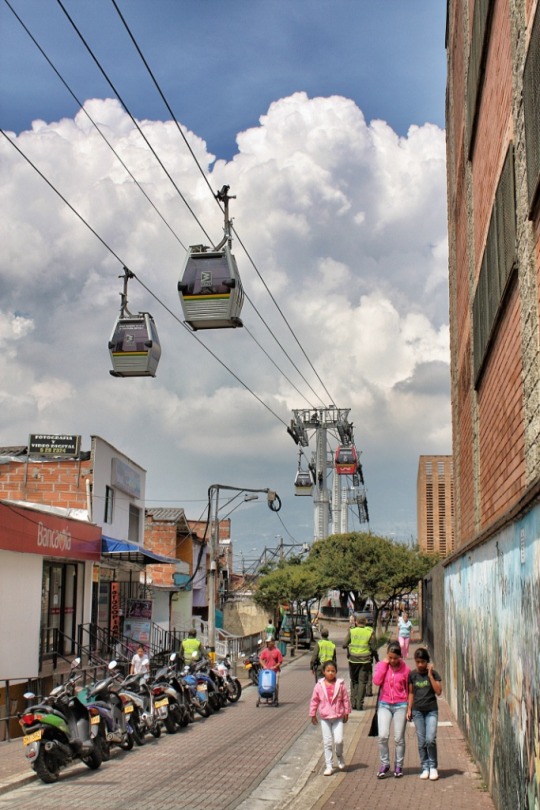
    Brazil colors by bruno Gueroult on 500px.com

    https://500px.com/embed.js

    In a knowledge and innovation economy, new ideas matter a great deal. But it seems to be a lot easier for existing companies to come up with sustaining, incremental innovations, than it is for them to come up with new, disruptive innovations. 

    New can be hard.

    That’s why I was interested in a recent New York Times article by Wharton professor Adam Grant called, How to Raise a Creative Child. Step One: Back Off.

    The article starts by arguing that many “child prodigies” rarely become adult creators who go on to the change the world:

    The gifted learn to play magnificent Mozart melodies, but rarely compose their own original scores. They focus their energy on consuming existing scientific knowledge, not producing new insights. They conform to codified rules, rather than inventing their own. Research suggests that the most creative children are the least likely to become the teacher’s pet, and in response, many learn to keep their original ideas to themselves. In the language of the critic William Deresiewicz, they become the excellent sheep.

    To become creators Adam argues that children need to be given the freedom and independence to develop their own sense of self:

    When psychologists compared America’s most creative architects with a group of highly skilled but unoriginal peers, there was something unique about the parents of the creative architects: “Emphasis was placed on the development of one’s own ethical code.”

    Yes, parents encouraged their children to pursue excellence and success — but they also encouraged them to find “joy in work.” Their children had freedom to sort out their own values and discover their own interests. And that set them up to flourish as creative adults.

    I firmly believe in this approach. But of course, this doesn’t just apply to children; though that is certainly an important takeaway. I also think that if you want the best work out of people in the workplace, you also need to: back off.

    Creativity needs freedom.

  • 10 city building predictions for 2016

    Dawn by Adrian Popan on 500px.com

    https://500px.com/embed.js

    Few things are better than waking up in the mountains and seeing a notification on your phone that 9″ of fresh snow have fallen overnight, bringing the 48 hour snowfall total to 16″.

    This is what people in mountain towns live for. They ski in the morning and then head to work in the afternoon. I heard a number of people on the mountain today saying that they, “want to be in the office after lunch.” It’s a lifestyle thing.

    On that note, today I’d like to focus on 10 city building predictions for 2016. I’ve been assembling this list over the past few weeks and now that I have had my fill of Utah powder for the day, I’m dedicating the rest of the afternoon to writing.

    These are never easy to put together. But here are my thoughts:

    1. We will see increased migration to secondary cities – outside of the alpha global cities – which offer a higher quality of life, more affordable housing, and the ability to live a particular lifestyle. This includes cities like Austin (creative startup hub) and Denver (outdoor recreation).
    2. As more and more cities wake up to the importance of lifestyle in attracting top talent, I think we will see a lot of cities follow the lead of Amsterdam and create “night mayors” or some other equivalent. These cities will begin to see nightlife as a competitive urban advantage.
    3. Global cities will start experimenting with different land use and property tax reform strategies to try and deal with rising income inequality and eroding housing affordability.
    4. We will see a barbell of residential unit sizes. We’ll see more well-designed small units as a way to try and promote housing affordability and we’ll see larger urban infill units for families and baby boomers who want to live/remain in walkable urban communities.
    5. In line with above, I think we will see a further rethinking of urban spaces. Flexible spaces, unique program mixes, and a continued blurring of public/private spaces. One example of this is the trend towards small private spaces surrounded by generous public/communal spaces.
    6. The Toronto and Vancouver real estate markets will continue to chug along because of low interest rates, a weak Canadian dollar, and increased foreign investment. That said, I think we will see more restraint when it comes to over-the-top luxury product.
    7. We will finally see a disruptive technology product that starts to get people in the real estate industry thinking that change is on the way. This will not be a product that ports an offline experience online; it will a new way of thinking about the industry.
    8. This will be the year that cities stop fighting Uber (and other similar marketplaces). Cities (and lobbyists) will finally accept that this is a new reality and then work to figure out the best way to create policy around it. Edmonton, Alberta has already become the first Canadian city to regulate Uber.
    9. Road pricing will get the attention it deserves in North America. Things will start out slow, but we will finally get ourselves on a path which recognizes that we can’t build our way out of traffic congestion in most major cities.
    10. I will publish a book on becoming a real estate developer.

    Many city building trends and shifts seem to happen in a global way. But I think it’s worth noting that a lot of these predictions were likely written with my North American lens on, and in some cases my Toronto lens on.

    It’s not easy sitting down and thinking about what will happen in the future. But it’s a worthwhile exercise. It forces you to take a stance and then, when the future does come, you can see how well you did. I saw Fred Wilson do this on his blog and I thought it was a great idea.

    Now I would love to hear what you think about my predictions and what yours are for this year. Please let us know in the comment section below.

  • Cities aren’t the only places struggling with housing affordability

    We already know that many successful cities are struggling with housing affordability. But what you may not know is that a similar phenomenon is happening in many ski towns. Supply is constrained and demand is high.

    Here is an excerpt from a recent New York Times article:

    Local officials and housing experts say it is a symptom of widening economic inequality, one that is especially sharply felt in tiny resort towns hemmed in by beautiful but undevelopable public land. While the wealthiest can afford $5 million ski homes and $120-a-day lift tickets, others work two jobs and sleep in shifts to get by.

    “It’s so much worse today than it’s ever been,” said Sara Flitner, the mayor of Jackson, Wyo., where the median single-family home price rose 24 percent last year to $1.2 million, according to the Jackson Hole Report.

    It’s for reasons like this that some ski towns have strict criteria around who is an eligible resident. For example, Banff, Alberta does this to ensure, “that housing remains available for those whose primary objective is to live and work in the community.”

    In small landlocked ski towns – where it’s difficult or almost impossible to increase supply – there are only so many options. 

  • Off to the mountains

    image

    I am leaving this morning for my annual retreat to the mountains. This year we are going to Park City, Utah, which we decided to do about a year ago.

    The reason we chose this particular place is because Vail Resorts spent $50 million over the offseason to merge Park City Mountain Resort with the neighboring Canyons Resort. 

    There’s now a mountain-to-mountain gondola and 7,300 acres of skiable area across the two resorts, which makes it the largest ski resort in the United States. And that’s why, this month, the New York Times named it one of the 52 places you need to visit in 2016

    But it’s not all puppy dogs and ice cream. What kickstarted this transformation was that the previous operator of Park City, Powdr Corporation, actually forgot to renew its sweetheart land lease.

    So if you’re at all interested in skiing, snowboarding, real estate, and/or lawsuits, you might be interested in what happened here. Curbed did a summary of the battle last year. It was big news in the ski world.

    Image via the New York Times

  • Amsterdam is about to host the first Night Mayor Summit

    Canal Reflections by Peter Elliston on 500px.com

    https://500px.com/embed.js

    What is a night mayor, you might ask?

    Well, just as the name suggests, a night mayor is the chief executive officer of a city’s nighttime activity. And in 2014, Amsterdam became the first city ever to have one.

    Why is this important, you might ask?

    Well, for most cities the night is a blindspot. It’s viewed as something that needs to be carefully controlled as opposed to something that is celebrated and leveraged. Amsterdam saw this opportunity and, in my opinion, is now at the forefront of rethinking the night.

    Here’s an example of the kind of changes that this has meant for the city (via CityLab):

    “Until recently, Amsterdam enforced what by continental European standards is a fairly strict curfew: nightclubs had to close by 4 a.m. on weekdays and 5 a.m. on weekends. The city often had problems with noise and disorder at the exact moment when all the clubs closed, filling narrow inner city streets with rowdy people.

    To solve this problem, the night mayor suggested not less, but more time for people to go clubbing. He has helped push through the granting of 10 24-hour licenses for nightclubs. Crucially, all of them were located not in the dense city center but in thinly populated districts around Amsterdam’s outer ring road. The result was a marked reduction in street noise.”

    Some of you are probably feeling skeptical as you read this. Especially since 4AM and 5AM hardly seem strict when compared to other cities (Toronto’s last call is at 2AM). 

    But I would not underestimate the importance of what Amsterdam is doing. We are living in an era of the 24-hour global city and it’s about time that governments woke up to that. I’m sorry Toronto, but 2AM is an absolute joke.

    The night can be your competitive advantage in attracting human capital. As the CityLab article cited above suggests, a big part of what transformed Berlin into a capital of cool was its nightlife. 

    I wholeheartedly believe that and I have no doubt that the night will start to become a greater focus in city building.

    If you’d like to learn more about the Night Mayor Summit, click here.

  • Top 20 cities for venture capital investment

    The Martin Prosperity Institute here in Toronto recently published a new report that looks at worldwide venture capital investment by city. The report is called Rise of the Global Startup City.

    The data is from 2012, because that’s what was available from Thomson Reuters, so keep in mind that there might be some variation in the rankings if we were to look at more recent data. Some of the cities sit fairly close.

    Nonetheless, here are a few of the broader takeaways (from the report page):

    “The United States accounts for nearly 70 percent (68.6 percent) of total global venture capital, followed by Asia (14.4 percent) and Europe (13.5 percent).”

    “Just two broad regions — the San Francisco Bay Area and the Boston-New York-Washington Corridor — account for more than 40 percent of global venture investment.”

    “Global venture investment is highly uneven and spiky — it is concentrated in a small number of large cities and metros around the world.”

    Here are the top 20 cities by total venture capital investment (in USD millions):

    image

    And here are the top 20 cities according to venture capital investment per capita:

    image

    Given the variation in these two lists, you realize that some cities are largely benefitting from sheer size. London, for example, drops off the list when you look at venture capital investment per capita. 

    In fact, in this second list, 19 of the 20 cities are in the United States. The only non-American city that remains is Toronto.

  • Maximize your space with square foot hours

    I am more than happy to trade-off living space (that I don’t really need) for a better location. It means I get the benefit of driving less and enjoying the city more.

    But as more of us move to urban centers, we are finding ourselves having to do more with less space. Often this means creating flexible and multi-purpose spaces.

    One strategy for this that I really like – which I just learned about through 5 Kids 1 Condo – is the idea of square foot hours. Here’s how it works:

    “The concept behind ft2hours (square-foot hours) is to add a time-based measurement to how we assess and use our space. So if your 10′ x 12′ bedroom is used only eight hours a day (i.e., when you’re sleeping), your actual usage is 120 ft2 divided by three (one-third of the day), which is just 40 ft2hours of used space.”

    In many ways, this happens intuitively. If you really want to maximize a space, you figure out how to use it more often throughout the day. But I like the idea of applying some math to it.

    Of course, this runs counter to the notion that some spaces should be reserved for specific uses. In the case of a bedroom, it’s sleeping and sex. This is so that your mind doesn’t start associating it with things like work, which might start to disrupt your quality of sleep. But perhaps that’s about to become an anachronism in the modern city.

    Without having the above formula in mind, I have thought along similar lines for my own apartment.

    When I think about where I spend most of my waking hours, it’s bouncing between the kitchen and the living room. And yet my kitchen isn’t up against the windows; it’s recessed towards the back. Instead, my bedroom – where the blinds are almost always drawn – got the windows. (Access to light is a code requirement.)

    If it were up to me, I would have flipped my bedroom and the kitchen. But typically in the real estate world, “recessed bedrooms” are considered less desirable. 

    I don’t think I’ve heard many people complain about a recessed kitchen, but maybe that will change once we start thinking more about things like square foot hours.

  • The Business Blockchain Series

    I just backed this project on Kickstarter.

    https://www.kickstarter.com/projects/wmougayar/the-business-blockchain-books/widget/card.html?v=2

    I haven’t backed a lot of projects on Kickstarter, but I definitely enjoy the process of discovering a project that I’m interested in and then providing a small, seemingly insignificant, sum of money to help make it a reality.

    In this case, it’s a collection of two books by William Mougayar about Bitcoin, blockchains, cryptocurrency, and decentralization.

    These are all topics that I’ve touched on before on this blog, albeit with much less rigor than what I’m sure William will be applying to his books. I wrote this post about 2 years ago, when I first started wrapping my head around Bitcoin. And more recently, I wrote posts about how the blockchain could transform home buying and how Honduras is building a decentralized land registry system using the blockchain technology.

    So while at first glance it may seem like these books having nothing at all to do with city building and real estate, I am betting that they will over the long term, which is why I am doing my homework today.

    Here’s a snippet from William’s Kickstarter page:

    “The fundamental characteristics of blockchains are puzzling to consumers, corporations, governments, policy makers and regulators, because their implementation challenges centrally orchestrated trust, and enables a new kind of trust: one that is distributed, decentralized, from peer to peer, and not centrally managed by any single entity. Take any service, and add “without previous center-based authority”, and replace by “peer to peer, trust-based network”, and you will start to imagine the possibilities.”

    If all of this isn’t enough to pique your interest, then you should also know that William is from Toronto. Great things come out of this city 🙂

  • The decline of US homeownership

    Charlie Gardner (aka the Old Urbanist) recently published an interesting pair of posts (here and here) about the decline of homeownership in the United States.

    What really stood out for me, though, was this chart (showing the percentage of household real estate equity):

    And this conclusion:

    “The implied conclusion here, that a dramatic expansion of debt has been necessary just to maintain the illusion of a stable homeownership rate (setting aside the explosion of debt in the 2000s necessary to support an increase in homeownership), puts an even more negative spin on the figures from the preceding post.  In short, a decline in homeownership has until the past few years been masked by shifting demographics and an increase in household debt.”

    What I would now be curious to see is the above chart in terms of household equity value. Because I wonder to what extent rapidly appreciating home prices (as a result of cheap credit) are having an offsetting affect on declining equity percentages.

  • UberPOOL is the new networking tool

    crossing by Milan Kalkan on 500px.com

    https://500px.com/embed.js

    UberPOOL launched in Toronto last week. It was tested in Toronto last summer and it’s been available in other cities for awhile, but now it’s officially here.

    If you’re not yet familiar with UberPOOL, it basically allows you to share your ride with other people who are headed in the same direction. I’ve heard some people on Twitter complain about route inefficiencies, but I’ve had only positive experiences with it so far.

    The disadvantage of this system is that it’s a bit slower. You’re stopping to pick up other people on the way. But the advantages of this system are twofold. First, it’s cheaper, which means it’s already starting to eat into my transit usage. And second, you get to meet new people everywhere you go.

    This second piece is really interesting to me, because I place a lot of emphasis on getting to know as many people as I can. That’s one of the reasons I blog every day and one of the reasons I spend a lot of time on Twitter. I get exposed to people that I might otherwise not meet. And I believe there’s huge value in that. I want to sit down and have a coffee with everyone. (Time doesn’t always allow that to happen.)

    Because since the beginning of cities, personal connections is one of the things that has made urban life so valuable. Here’s an excerpt from a CityLab article published back in 2013:

    “If you look at the interaction patterns of cities,” Pan says, “You will see that they grow super-linearly with population with the same growth rate as productivity, as innovation, as crime, as HIV, as STDs.”

    All of those facets of urban life have appeared until now to share a somewhat mysterious mathematical relationship. But this research suggests that this particular super-linear growth rate is directly tied to how dense cities enable us to connect to each other. As cities grow, our connections to each other grow by an exponential factor. And those connections are the root of productivity.

    “What really happens when you move to a big city is you get to know a lot of different people, although they are not necessarily your ‘friends,’” Pan says. “These are the people who bring different ideas, bring different opportunities, and meetings with other great people that may help you.”

    Clearly there can also be some negative externalities associated with urban life – such as crime and disease. But it’s also clear that for a many people, the benefits far outweigh the potential negatives. Big cities tend to make us more productive. And as we’ve discussed here before, they can also bring us happiness in ways not associated with economic success.

    If you’ve used UberPOOL before, I would be curious to hear about your experiences in the comment section below.