Daily insights for city builders, delivered every morning at 6 AM ET. I’m Brandon Donnelly — a Toronto-based real estate developer and founder of Globizen. I’ve been writing here since 2013.

  • The value of saying no

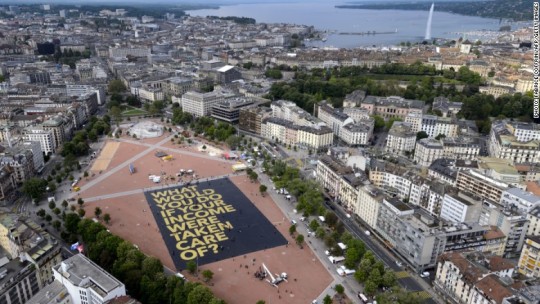
    If you’re somebody who has a lot of ideas, it can be pretty easy to get overwhelmed and/or distracted by all of the possibilities. It’s also worse when you’re an optimist and you believe it can all be done. I am definitely guilty of this. It is one of my weaknesses.

    We all have a finite amount of time to work with and so saying no to the stuff that isn’t core is critical. I believe I am getting better at this, but every now and then I find myself having to do some pruning. And once I do that, boy does it feel great.

    Seth Godin has a fantastic blog post on this topic that I love called, No is essential. Here it is in its entirety (it’s a short post):

    “If you believe that you must keep your promises, overdeliver and treat every commitment as though it’s an opportunity for a transformation, the only way you can do this is to turn down most opportunities.

    No I can’t meet with you, no I can’t sell it to you at this price, no I can’t do this job justice, no I can’t come to your party, no I can’t help you. I’m sorry, but no, I can’t. Not if I want to do the very things that people value my work for.

    No is the foundation that we can build our yes on.”

    To drive the point home even further, let’s shift gears and talk about wine. (For all of you fellow wine drinkers.)

    In viticulture, overall yield – usually measured in hectoliters per hectare of vineyard – is often seen as an important indicator of quality. The idea being that low yields produce better wines because the flavors get concentrated over fewer grapes. 

    Part of what drives this is the leaf to fruit ratio. Too much fruit and not enough leaves, means the grapes won’t ripen properly.

    The parallel to this conversation is that leaves are much like time. There’s only so much of it. And while many of us are constantly trying to maximum yield – I know I am – there are limits to the kind and quality of grapes we can produce when we do that. 

    I know this in principle. And more and more, I know this in practice. I am learning to say no.

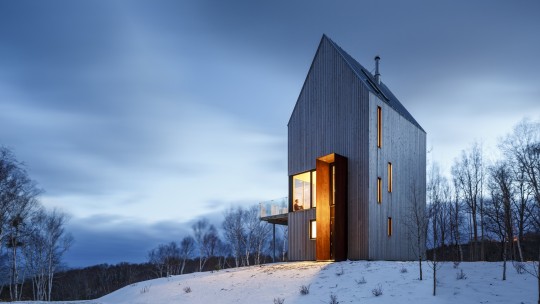
    Image from Flickr

  • 2 new ways to think about economic inequality

    We talk a lot about economic
    inequality these days. We worry, among other things, that our successful cities
    are becoming playgrounds for the rich and that housing is becoming increasingly
    unaffordable for the middle class.

    Without negating the
    importance of things such as attainable housing, I’d like to offer up two,
    potentially new, perspectives on economic inequality.

    The first is an
    essay by venture capitalist Paul Graham
    . In it, he rationally unpacks, as he always does, the phenomenon of economic inequality. One of his key points is the distinction between rent seeking degenerate economic inequality and the economic inequality caused by rapid value creation (i.e. Two Stanford students decide to create a new search engine called Google).

    “If the rich people in a society got that way by taking wealth from the poor, then you have the degenerate case of economic inequality where the cause of poverty is the same as the cause of wealth. But instances of inequality don’t have to be instances of the degenerate case. If one woodworker makes 5 chairs and another makes none, the second woodworker will have less money, but not because anyone took anything from him.”

    Of course, Paul Graham is thinking about this from the perspective of a venture capitalist that funds startups and helps entrepreneurs get rich. But what about the impacts to people who live in a city where the rich are far richer than the poor?

    That brings me to the second perspective.

    A recent study, published in The Journal of the American Medical Association and written about in the New York Times, has discovered a surprising relationship between income and life expectancy across the United States from 2001 to 2014.

    What they found was that cities with high economic inequality – such as New York and San Francisco – actually have lower inequality when it comes to life expectancy. 

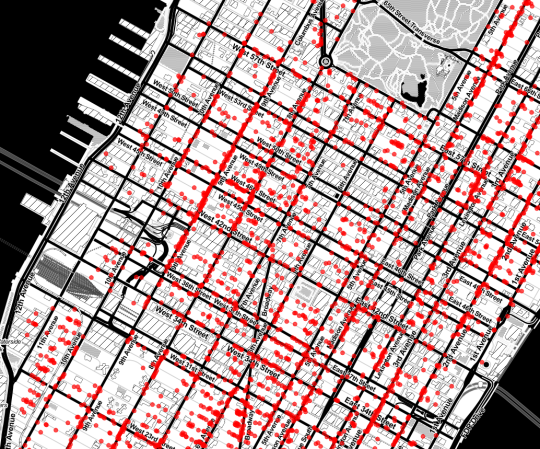
    Here is a chart from the New York Times:

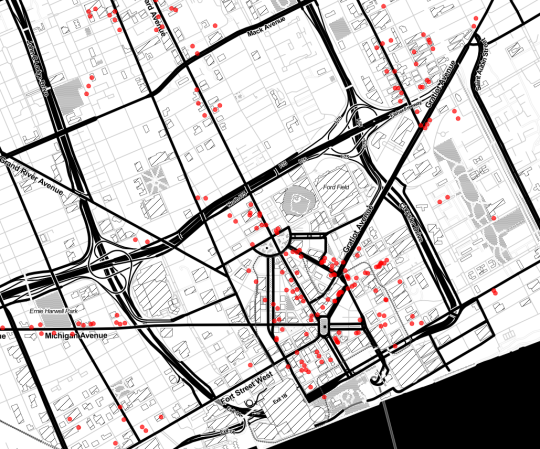
    And here is a chart from healthinequality.org:

    If you’re rich, it doesn’t matter where you live. The life expectancy of a rich person in New York is roughly the same as a rich person in Detroit. (Though, as to be expected, women generally live longer than men.)

    However, as income levels fall, so does life expectancy. But it falls more in a city like Detroit than it does in New York. In fact, rich cities such as New York and San Francisco are almost model cities in this regard. Why is that?

    The biggest predictor appears to be health behaviors, such as smoking and obesity:

    “The research seems to suggest that living in proximity to the preferences — and tax base — of wealthy neighbors may help improve well-being. New York is not just a city of rich and poor, but also one of walkable sidewalks, a trans-fat ban and one of the most aggressive anti-tobacco agendas of any place in the United States.”

    So there you have it. Two, potentially new, ways to think about economic inequality.

  • How much market share are New York’s yellow cabs losing to Uber?

    Todd W. Schneider recently mined data from the New York City Taxi & Limousine Commission to create a chart summarizing yellow taxi, Uber, and Lyft usage

    The data only runs up until January 2016, but here’s what he found:

    “…yellow taxis provided 60,000 fewer trips per day in January 2016 compared to one year earlier, while Uber provided 70,000 more trips per day over the same time horizon.”

    The Uber data only begins in 2015, but you can still see how quickly it is growing and how yellow taxis are losing market share. Five years ago, yellow taxis were reaching over 500,000 trips per day (a pretty amazing number) and in January of this year they were at about 350,000 trips per day. 

    It also appears that Lyft is struggling to gain traction.

    image

    What’s also great about Todd’s blog post is that he has set it up so that his chart will automatically update as new data becomes available. So if you’re interested in this topic, you should bookmark his post.

  • How megacities are changing the map of the world

    In advance of his new book, titled Connectography, Parag Khanna recently delivered an interesting TED Talk called, How megacities are changing the map of the world. It’s about 20 minutes long.

    A lot of what is covered won’t be new to this audience, but I like how he talks about the importance of urban connectivity, the shift from political to functional geography, and the idea that, in a megacity world, countries can actually be the suburbs of some cities.

    One thing you might notice about the talk is how he glosses over both Canada and Europe. This is a reminder to me that if Canadian cities are going to continue to compete against the emerging megacities of the world, we are going to need to think at the scale of the megalopolis. And a big part of that means a focus on extra-urban connectivity.

    Click here if you can’t see the embedded talk below.

    https://embed-ssl.ted.com/talks/parag_khanna_how_megacities_are_changing_the_map_of_the_world.html

  • The unbranding of this blog

    You’ve probably noticed that I have removed the Architect This City branding from this blog and gone to just my name. I like to refer to it as unbranding. (Though one could argue that a person’s name is still just another brand.)

    Already I’ve received a few emails from people telling me that they prefer the old look and feel of ATC and that there’s some level of brand equity there. But let me explain my thinking.

    First and foremost, this is a personal blog. I’ve written about that before. And it’s why it’s hosted at brandondonnelly.com. But along the way, as readership grew, I attached a name to it (ATC) and it started to become a kind of pseudo-independent brand. 

    When I would speak at events, people would introduce me as the founder of Architect This City, which always struck me as a bit odd because, again, this is just my personal blog. People also started asking me why I wasn’t turning ATC into some big company and started treating the blog as a media channel. You should see how many press releases I now find in my inbox.

    Of course, these are good “problems” to have. It means my writing is getting out there and I am thrilled about that. But I was starting to feel increasingly uncomfortable with the grey area between a personal and independent brand. I also felt like it was starting to impact my creative writing because I would sometimes wonder if I was going too personal on “Architect This City.”

    To reinforce that point, below is a snippet from a post that Fred Wilson wrote on his blog last summer. His 10+ year old blog has been a huge inspiration for me.

    “There is something about the personal blog, yourname.com, where you control everything and get to do whatever the hell pleases you. There is something about linking to one of those blogs and then saying something. It’s like having a conversation in public with each other. This is how blogging was in the early days. And this is how blogging is today, if you want it to be.”

    So I decided to clarify the brand. I wanted to make it clear that this blog is about my personal musings on city building, among the other things that I’m passionate about. And I wanted it to not pretend to be anything else.

    Ultimately, regular scheduled programming won’t really change for you. The content on this blog is still going to be heavy on city building, real estate development, design, planning and so on. And I will endeavor to create as much value as I can for all of you on a daily basis. (I am humbled by the number of people who now subscribe.) But hopefully it will end up feeling a bit more personal.

    Of course, now there’s the question of what do I do with the ATC brand (and social accounts). Do I let it die or do I spin it off into something else? I’m considering the latter. I’ve been obsessed for years with the idea of crowdsourcing and collecting meaningful real estate and city building activity, so maybe ATC will turn into some kind of open platform for that.

    But for now, I am feeling pretty excited about the unbranding of this blog. Hopefully some of you feel the same way.

  • How Premise is crowdsourcing economic data in developing countries

    I have to tell you all about a company that I just discovered called Premise. I think it’s incredible what they’re doing and a perfect example of mobile (smartphones) eating the world.

    The problem that Premise is solving is that of developing-world economic data being both not timely enough and not all that accurate/granular. This is important, because lots of big organizations – ranging from governments to private companies – are making funding and investment decisions based on this inadequate information.

    So here’s what Premise did:

    They put smartphones into the hands of the people who are on the ground in these places. They paid them meaningful amounts of money (relative to local wages). And they developed a technology platform that could index and analyze the millions of local observations being sent in. So far they have paid out over $3 million to their contributors located across 34 countries.

    As an example: Premise has developed food price indices. And the data comes directly from locals physically going to the market on a regular basis (which most would do anyways) and snapping photos of the food + prices. This allows Premise to provide basically realtime pricing data. (There are checks and balances to ensure data integrity.)

    Why does this matter? 

    Because it allows Premise, for instance, to figure out exactly what happens to food staple pricing when something like an Ebola epidemic hits:

    “Premise started tracking food prices in Monrovia on September 8, and throughout the month we observed upward pressure on prices (our Liberia indices and data are freely available at data.premise.com). The price of rice, Liberia’s primary food staple, increased 12% during September. Moreover, we saw significant price differences across the city. Prices in neighborhoods with the most exposure to Ebola were 8-12% higher on average than relatively unaffected neighborhoods. As the disease tore through the city, market sellers avoided the worst-hit areas and trade declined.”

    This is powerful information and just one example of what Premise is doing. Obviously this data is also of use to for-profit companies, which is how the company has managed to raise over $66 million in VC funding. But I think there will also be big benefits for these developing countries. As the saying goes, you make what you measure.

  • Not zoned for dancing

    Yesterday, when I was reading up on Toronto’s “TOcore” initiative, I came across a report from 2014 called Not Zoned For Dancing: A Comprehensive Review of Entertainment in Downtown Toronto

    It was prepared by five graduate planning students at the University of Toronto: Anna Wynveen, Brenton Nader, Carolyn Rowan, Chris Hilbrecht, and Kyle Miller. 

    The entire report is fascinating, but here’s one diagram that stood out to me:

    image

    It shows the migration of bars, clubs, and lounges westward, away from the downtown core, from 1991-2013.

    This migration doesn’t surprise me at all. I saw it happening and I understand the market forces at play here. There’s also the simple fact that nightlife is often viewed as a nuisance.

    But it’s worth calling this out. 

    Because I don’t think enough city builders appreciate the value of nightlife. It can and has served as a valuable catalyst for urban regeneration and I believe that it should form part of any city’s economic development strategy.

    A lot of cities are focused on things like bike lanes, public spaces, and on becoming the next Silicon Valley. And don’t get me wrong, those are all important things (though we could debate the Silicon Valley part). 

    But let’s not forget about nightlife.

  • Have your say in the future of downtown Toronto

    I was recently on a call with someone living in California, but who is originally from Toronto. He told me that every time he comes back to Toronto to visit, it feels like the city has changed, grown, and become even more cosmopolitan.

    That is a great compliment, because every city today is in a competition to remain relevant. Which means that if a city is not changing, evolving, and adapting, then it is falling behind. Competition is fierce and it’s global.

    Toronto is fortunate enough to be experiencing rapid population growth and that is driving a lot of this change. But at the same time, it naturally raises questions about how to best manage and leverage that growth, particularly in areas like the downtown core where a lot of that intensification is happening.

    To that end, the City of Toronto has been working on a three year study called TOcore, that will, among other things, result in a new comprehensive plan for the downtown core. (I’ve blogged about this before and it has come up in the comments a few times.)

    Today, however, marks the start of their public engagement process. And so if you’d like to have your say (there will be implications for developers, architects, and other city builders), you can do that here. There’s an online survey, an email address, events you can attend in person and, of course, a hashtag: #DTadvice.

    But the tool I think is really neat, is their “Favourite Places” map. What it allows you to do is drop pins onto a map of downtown and describe your “Favourite Places” and places that have “Great Potential.” Notice that the focus is on positivity. There’s no pin for “Shitty Places.”

    I have a lot to say, so I’ve been flooding the map with pins. I would be curious, though, to hear what you would like to see happen in downtown Toronto – and so would the TOcore team.

  • WeWork launches first co-living space in New York

    I’ve written about co-living spaces before – here and probably elsewhere on this blog.

    Well this morning, WeWork (the co-working startup currently valued at a cool $16 billion) unveiled its inaugural co-living space on New York’s Wall Street. It’s called WeLive and Vanity Fair describes it as “Soho House meets Airbnb meets a tricked-out Restoration Hardware storeroom, but for the Slack Set.” 

    Got it?

    Ultimately, this location at 110 Wall Street will have 600 fully furnished WeLive apartments, but they’re coming online in tranches. This first release includes 200 units. Here’s a bit of information on pricing from Fast Company:

    “There are 200 units available—ranging from $1,375 per person in shared apartments to $2,000 for an individual studio—all with the option of either a month-by-month or yearly lease (a $125 monthly fee covers amenities). The apartments are about 450 square feet on average, with the largest units topping out at 1,000 square feet (one-bedroom apartments in the area, by comparison, range in prices from about $2,850 for 451 square feet to $3,500 for 700 square feet). Each apartment comes fully furnished, minimally decorated, and set up with cable and Internet at move-in.”

    But this is not just about price. The WeLive concept is about creating a strong sense of community within the building. Every floor, for instance, has some sort of common area to foster interaction – a space for yoga classes, a laundry room with a big pool table, and so on.

    I am interested in seeing how this concept pans out because I’ve had discussions before with people in the industry about how condos/apartments might be programmed to feel a bit more like hotels. Years ago, I even spoke to a major European company about trying to pioneer a model like this.

    Because there’s something very social about being in a hotel – something that I really like. You can walk down to the lobby bar by yourself and you never know who you might meet. That’s not really the case in many multi-family buildings.

    Now, part of that might have to do with the fact that people tend to be more open when they travel. But maybe WeLive can help create that kind of social interaction within the apartment building. I think that would be a positive thing.

  • Un bosco verticale

    At the end of 2015, the Council on Tall Buildings and Urban Habitat awarded Bosco Verticale in Milan the “2015 Best Tall Building Europe” and the “2015 Best Tall Building Worldwide.” It was the 14th Annual of these awards.

    What makes Bosco Verticale (or Vertical Forest) special is its integration of landscape into the tower building typology. In fact, the architect, Stefano Boeri, describes the project as a “skyscraper for trees that also takes humans.”

    Here is a photo of the two towers via Wikipedia:

    And here is description of the plantings via Houzz:

    “The more than 17,000 plantings include 780 full-size trees of 60 species on all sides of both towers for a suspended-garden visual effect. Among the plantings are holly oak, ornamental apple and beech trees, as well as a great mass of smaller plants, such as lavender, azaleas and camellias, positioned among the trees with taller crowns. The plantings provide shade in summer and help filter the air. The number of trees in each building is the equivalent of 1.7 acres of forestland and 18.5 acres of an urban area with single-family dwellings. The vegetation is watered with a greywater filtration system.”

    This idea is something that has appeared a lot in theoretical projects. But it is still in its infancy in terms of realized projects. So the architect has also published a book explaining – using drawings and photos – how the project works and how it could be reproduced in other cities. It’s in both Italian and English.

    With so many cities trying to build up, as opposed to out, it makes a lot of sense for us to figure out how to make up as livable, enjoyable, and sustainable as possible.

    Photo by Luca Nebuloni from Milan, Italy – Milan_7899, CC BY 2.0, Wikipedia