Daily insights for city builders, delivered every morning at 6 AM ET. I’m Brandon Donnelly — a Toronto-based real estate developer and founder of Globizen. I’ve been writing here since 2013.

  • Home prices and negative interest rates

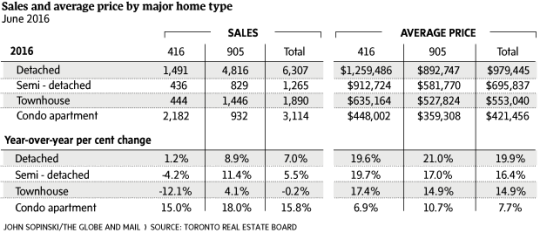
    This morning, I am looking at the following chart of average home prices in the Greater Toronto Area:

    It’s from this Globe and Mail article.

    These are staggering numbers. The average price of a detached home in the suburbs (905 area code) increased 21% year-over-year. In the city (416 area code), the increase was 19.6% YOY. These numbers are almost unbelievable.

    The article focuses on low supply (decrease in listings) and high demand. And that is certainly a big part of what’s going on here in this city, as well as in many others.

    But of course, the backdrop to all of this is our low / zero / negative interest rate environment.

    Larry Summers has a great post on his blog (which I discovered this morning via Fred Wilson) that talks about this “remarkable financial moment.” In some instances, real interest rates are actually negative! (You should read his post.)

    There are always people threatening that interests rates just have to go up. But Larry, as well as others, continue to argue that natural real interest rates are likely to remain close to zero going forward.

    Fred mentions Albert Wenger on his blog this morning and I have written about him before as well, here. In his book World After Capital, Albert argues that capital is no longer the scarce resource of our time. Instead, it has become attention.

    If you believe all of this to be true, then perhaps the numbers at the top of this post aren’t so unbelievable after all.

  • Mapping of global migration

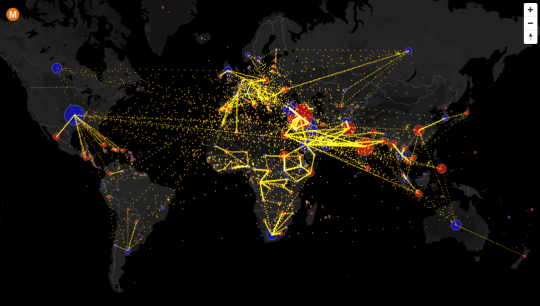
    Max Galka has created an incredible visualization of country-to-country net migration (from 2010 to 2015) on his blog, Metrocosm.

    Here’s a screenshot:

    image

    But you really need to view the full screen interactive version

    In that version, you can hover over a country to see the total net migration number (+/-) and you can click on a country to see where people are moving to and from. A blue circle indicates positive net migration (greater inflows) and a red circle indicates negative net migration (greater outflows).

    All of the data is from the United Nations Population Division. And though the numbers are estimates, it’s a fascinating look at global migration. For instance, look at the outflow from Syria.

    It would also be interesting to see these numbers on a per capita basis because some countries certainly punch above or below their weight in terms of migration. Off the top of my head, I’m thinking of Canada and Australia vis-à-vis the US.

  • Your own 24/7 chauffeur

    image

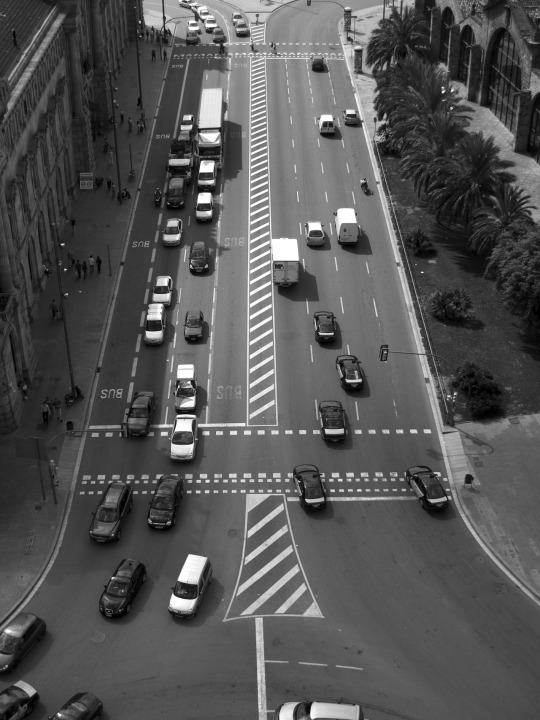
    If you had a free 24/7 chauffeur to drive you anywhere you wanted, do you think that would impact where you lived, worked, and played? 

    Put differently, if you were relieved from actually having to contend with traffic yourself and if you never had to worry about parking and/or drinking and driving, would you be more inclined to live further out of the city to get bigger and cheaper housing?

    This is the question I tried to ask in a Twitter poll this morning:

    //platform.twitter.com/widgets.js

    Personally, I think that this scenario would impact my behaviour, only slightly. I would certainly take advantage of the free chauffeur, but I would not be more inclined to live 1 or maybe even 2 hours of the city.

    Sure, I would be able to get more real estate, but I wouldn’t want to sit in a car every morning – even if I wasn’t the one driving. Maybe I’d be more inclined to have a cottage out of the city, but I can’t imagine a big commute. In my view, minimizing commute times is one of the most effective ways to up your quality of life.

    I’m thinking about all of this because of this TechCrunch article, arguing that technologies such as driverless vehicles and VR (for telecommuting) will soon cause rapid decentralization. This reminds me of what was said during the dot com era. Real estate was out of favor and it was all about tech. 

    Though I am sure that there are technological impacts that you or I cannot foresee right now, I think it’s important to remember that people live in cities for many different reasons. It’s not only for access to a labor market, it’s also for access to a dating market, as well as other things that involve people coming together. I believe that we are inherently social beings. And technology is not going to make that disappear overnight.

    I would be curious to see how you all feel about this topic. Please leave a comment below so we can discuss.

  • The most fascinatingly boring city in the world

    The Guardian Cities UK is currently focusing on all things Canada for a special week-long series. The first post is up and it’s about why Toronto is “the most fascinatingly boring city in the world.” The piece is by Stephen Marche.

    I don’t agree with everything in the essay – or maybe I just despise being called boring, steady, and predictable – but there are a number of great gems that I would like to reblog today. Here are the 5 that stood out for me.

    1. Chicago vs. Toronto:

    “What Chicago was to the 20th century, Toronto will be to the 21st. Chicago was the great city of industry; Toronto will be the great city of post-industry. Chicago is grit, top-quality butchers, glorious modernist buildings and government blight; Toronto is clean jobs and artisanal ice-creameries, identical condos, excellent public schools and free healthcare for all. Chicago is a decaying factory where Americans used to make stuff. Toronto is a new bank where the tellers can speak two dozen languages.”

    2. London vs. New York vs. Toronto Bankers:

    “In London and New York, the worst stereotype of a banker is somebody who enjoys cocaine, Claret and vast megalomaniac schemes. In Toronto, a banker handles teachers’ pension portfolios and spends weekends at the cottage.”

    3. Montreal vs. Toronto:

    “I was 19 when he said that, and I knew even then that for the rest of my life, Canada’s future would be built on money and immigrants. I wasn’t wrong. Most Canadian business headquarters had already taken the five-hour drive west. After 95, the rest followed. Montreal decided to become a French-Canadian city. Toronto decided to become a global city.”

    4. The last time Toronto built a white elephant subway line:

    “On any given morning on the Sheppard subway line in the north of the city, you can sit down in perfect peace and order, although you will find little evidence of good government. As the latest addition to Toronto’s fraying infrastructure, the Sheppard subway is largely untroubled by urban bustle. The stations possess the discreet majesty of abandoned cathedrals, designed for vastly more people than currently use them, like ruins that have never been inhabited. Meanwhile, in the overcrowded downtown lines, passengers are stacked up the stairs. The streetcars along a single main street, Spadina, carry more people on a daily basis than the whole of the Sheppard line, whose expenses run to roughly $10 a passenger, according to one estimate. A critic has suggested that sending cabs for everybody would be cheaper.”

    5. On Mayor Tory:

    “The current mayor, John Tory, is not an idiot, although he is hardly a figure of the “new Toronto”. He represents, more than any other conceivable human being, the antique white anglo-saxon protestant (Wasp) elite of Toronto, his father being one of the most important lawyers in the city’s history. The old Wasps had their virtues, it has to be said – it wasn’t all inedible cucumber sandwiches and not crying at funerals.”

  • The back-end of our cities

    I love cities. We all love cities right now. 

    Everyone, for good reason, seems to be fixated on both people returning to cities (like those narcissistic Millennials) and people urbanizing for the very first time. This latter scenario is happening rapidly across the developing world and in many cases – but not all cases – it is helping to lift people out of extreme poverty.

    But by most measures, urban areas represent only about 2-3% of the world’s land area, despite housing over 50% of our population. So here’s an interesting thought for this morning: What is happening and what will happen with the remaining 97-98%?

    In this recent talk by architect Rem Koolhaas, he attempts to dissect the future of living, loving, and working through the lens of architecture. However, he starts by saying that architecture is, in fact, too slow to properly capture the zeitgeist of any time period. It is, “an unbelievably slow art.” That said, Koolhaas has a remarkable ability to identify what is happening (see Delirious New York) and then call it out in a way that you probably haven’t thought about. 

    In the above talk, he hones in on the impact of Silicon Valley – certainly the spirit of our time – on the rural landscape outside of our cities. Interestingly enough, he also talks about how the tech industry has begun to borrow terminology from architecture in order to describe itself.

    Screenshot from the video:
    image

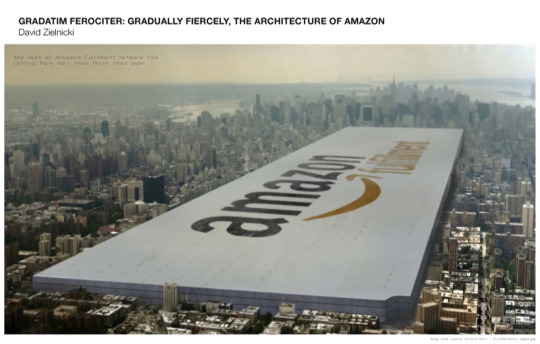
    Despite their ethereal appearance, technology giants still have large physical footprints for servers, production, logistics, and so on. But there’s no reason – or way – to accommodate them inside of our cities and so they cluster outside, in the 97-98% areas. These are places like the Tahoe-Reno Industrial Center, which is the home of Tesla’s new Gigafactory.

    Because of sheer scale and because there’s no need for them to possess much in the way of humanistic qualities, these are spaces which are void of architecture, urbanism, and, in some cases, a light spectrum beyond what is absolutely necessary for the specific function of the building (discussed in the video).

    Of course, the periphery has long serviced the core. But Koolhaas’ thinking has, as it often does, made me consider this phenomenon in a slightly different way. He paints a picture of a spiky world where we are all crammed into sensor and app-driven cities (the front-end), all of which are then powered by big mechanistic boxes that many of us may be naive to (the back-end). In some ways it feels like the Matrix. What we see and experience could just be the tip of the iceberg.

    Architecture may be unbearably slow, but as a society we have always built what matters to us most at the time. At one point it was places of worship. But today, at least for part of our landscape, it is boxes not intended for us to really experience. Maybe that’s not really architecture. Maybe it is simply the back-end for our cities.

  • State of Center City, Philadelphia

    The Center City District and Central Philadelphia Development Corporation recently published a report called: State of Center City 2016. The objective was to measure the progress being made in Philadelphia’s downtown. 

    I moved out of Center City (Rittenhouse Square) in 2009, but I still like to follow what’s happening. I really enjoyed my time in Philly. In fact, I remember missing its immensely walkable downtown after I returned to Toronto and touched down in the suburbs briefly before moving back downtown.

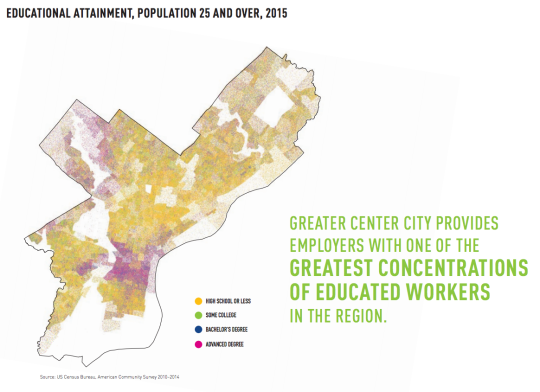
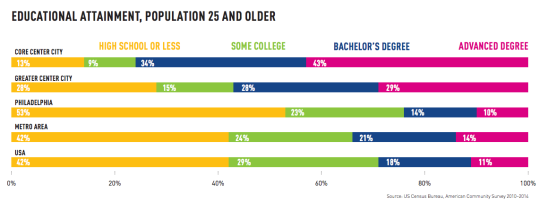
    If you take a look at the report, one of the first things you’ll probably notice is the concentration of jobs and the concentration of knowledge works (with advanced degrees) in the Center City area. We are seeing this shift in so many cities around the world.

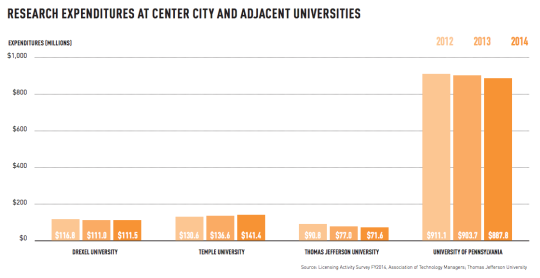
    Here are a few graphics (all of which are from the report):

    imageimage

    Part of the reason for this is that Center City is anchored by a number of fantastic Universities. This is critical for cities, today.

    image

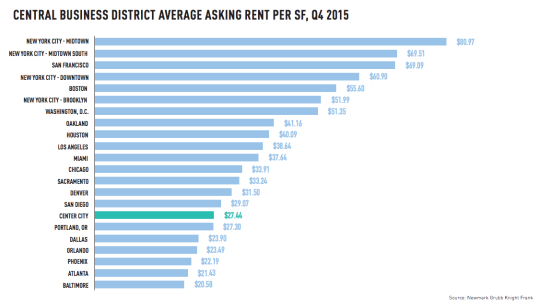
    To end this post, I thought I would post the below comparison of average office rents in major CBDs across the US. I always find these charts interesting, even though the usual suspects are up at the top.

    image

    I hope you’re all having a great holiday weekend.

  • The war on work

    Air Canada bumped me from my flight this morning and so I am spending the day hanging out at Toronto Pearson Airport. I can think of more enjoyable ways to spend Canada Day, but at least there’s a nice seating area in Terminal 1 with free wifi and lots of plugs.

    I just finished watching the below talk by Harvard economist Ed Glaeser at the Manhattan Institute. His overall thesis is that unemployment is a far worse problem than income stagnation and that the US needs to stop creating incentives for people not to work. He refers to it as a war on work.

    He addresses a few topics that we’ve talked about here on this blog, such as guaranteed basic incomes, as well as others that we haven’t talked about, such as raising the minimum wage. To give you one spoiler: He argues that a higher minimum wage has been shown to cause an overall drop in employment, which he, again, believes is a deeper problem.

    Glaeser delivers a passionate performance. So if you have 30 minutes to spare – perhaps you’re stuck in an airport somewhere – I recommend you give it a watch. If you can’t see the video below, click here.

    [youtube https://www.youtube.com/watch?v=8xaNV_6wgak?rel=0&w=560&h=315]

  • Off to New York

    I’m packing and getting ready to leave for New York right now. I’ll be there for both Canada Day and Independence Day. My out of office message has been activated.

    I have a lot going on at the moment (which I’ll soon be able to share on this blog) and so I’m looking forward to getting out of the city and disconnecting a little. (I’ll, of course, still be blogging.) I’m generally not very good at down time. I like to keep busy and I like to work a lot. 

    But every now and then my body tells me that I should do otherwise. I also notice that I start getting decision fatigue. I am sure many of you probably feel this way as well. So I said no to a lot of things this week and I have very few things planned for New York. I’m content with that.

    A big city is probably not what comes to mind when many of you think of down time. But one of my favorite things to do is just wander around a city, look at buildings, and absorb it all. In some ways that feels like a luxury because most of the time I’m too busy rushing around. 

    But who knows, maybe I’ll end up on a beach somewhere. That’s the sort of thing that can happen when you don’t have much in the calendar. Either way, I’m off to New York for some rest and relaxation. Talk tomorrow.

  • The urban wealth pendulum

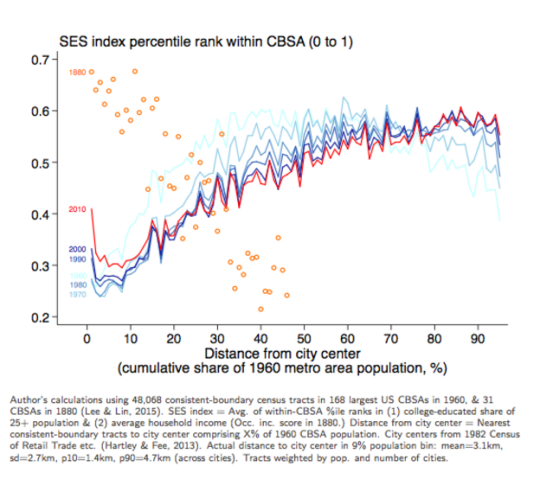
    Jeffrey Lin, who is an economist at the Federal Reserve Bank of Philadelphia, recently published the following chart:

    image

    I found it in this Washington Post article. And it’s packed full of fascinating information.

    The chart compares the socioeconomic status in US cities (y-axis) against “distance from city center” (x-axis) in 1880 and then in recent years (1960 to 2010 census data). The orange circles represent the 1880 data and the red and blue lines represent the recent census data.

    What this chart and research tells us is that in 1880, rich people overwhelmingly lived in the center of cities. And as you moved further away from the city center, socioeconomic status fell off pretty precipitously. This makes sense given that, at the time, it was hard to get around and travel long distances.

    However, in the post-war years, the exact opposite became true. We began driving and wealth decentralized. This should surprise no one. 

    But what’s interesting is how this appears to be reversing. In 2010 (the red line), there’s a sharp increase in socioeconomic status for people living basically right in the center of cities. And for the 30 – 60 km range, there has been a decrease in socioeconomic status essentially from the 1960s onwards. 

    The important takeaway here – which is spelled out in the Washington Post article – is that the neighborhoods which appear to be in high demand today are also in very short supply:

    “We have 80 years of essentially zero production of neighborhoods with these qualities,” Grant says. “We’ve spent the last 80 years building car-oriented suburbs. Then when the elites decide they want to go back into the city, there’s not enough city to go around.”

    This is one reason why supply matters.

  • Visions of urban living

    This apartment is such a great idea:

    Let me explain.

    Freunde von Freunden (FvF) is a Berlin-based publication that documents inspiring people from creative and cultural backgrounds. If you don’t read their stuff, I think you should. Sample: Here’s an interview with Chang Lin. He is Creative Director at Zalando and lives in Mitte, Berlin. I always find it fascinating to see how people live.

    In 2014, FvF decided to bridge the online and offline worlds and open up their first “apartment” in Berlin. They refer to it as: The FvF Apartment – Visions for Urban Living. And they describe it like so:

    “The apartment has been designed to be fully adaptable to the diverse and often unexpected scenarios of everyday life, reflecting how a creative, mobile and digitally-oriented generation lives. It serves not only as a platform for innovative products from friends and partners, but as a unique venue for events, workshops, and presentations.”

    Basically, the space serves as one part apartment and one part venue. They have used it as a pop-up shop, as a stage for photo and film productions, as a place for distillers to host private tastings, and the list goes. 

    Again, I think this is such a great idea as a brand extension. It is giving me all kinds of ideas and so I thought I would share it with you all today as well.

    Image: The FvF Apartment