Daily insights for city builders, delivered every morning at 6 AM ET. I’m Brandon Donnelly — a Toronto-based real estate developer and founder of Globizen. I’ve been writing here since 2013.

  • Architecture bike tour

    I am in New York right now and I spent the day riding around on a Citi Bike looking at architecture. Atop two wheels is such a fast way to get around.

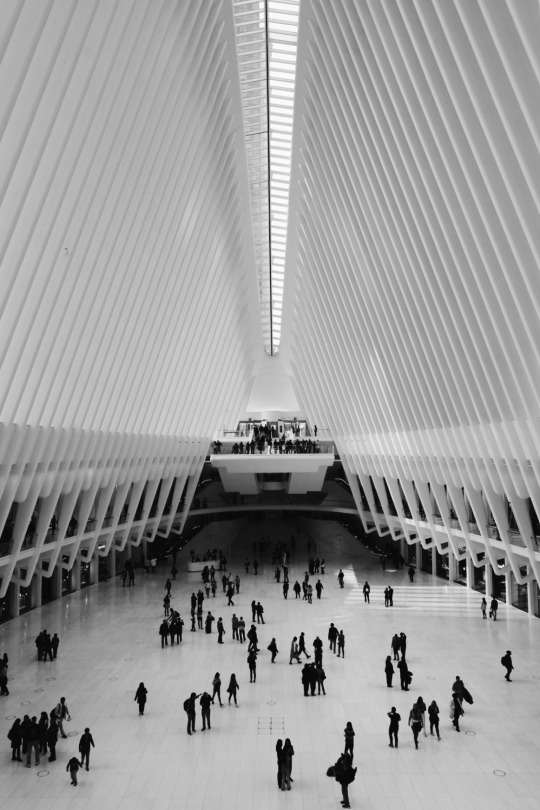
    The first stop was the new transportation hub at the World Trade Center. Here’s a photo of the Oculus:

    The main station house (above) is absolutely breathtaking, but the exterior (in particular the entrances) felt a bit unresolved to me.

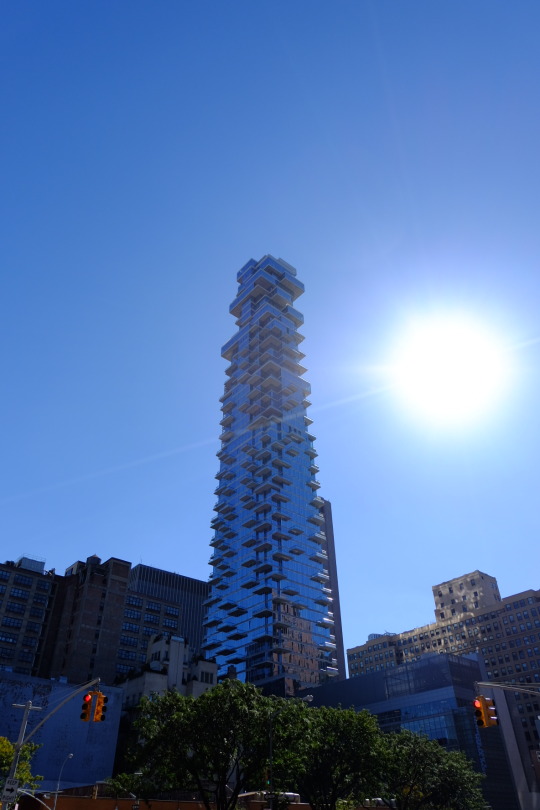
    Here’s a photo of 56 Leonard by Herzog & de Meuron:

    People call it the Jenga tower.

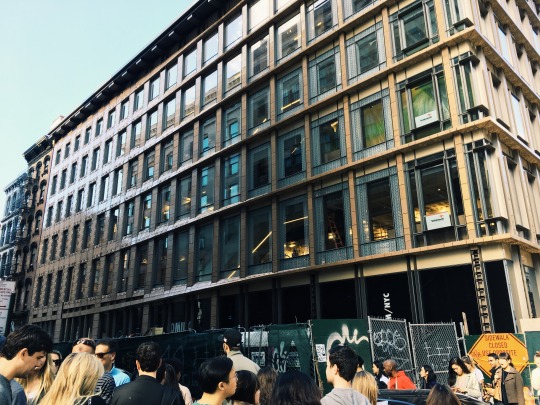
    And here’s a photo of a building on Broadway in Soho:

    Look at how the overhangs fold down and adjust the window dimensions so that it matches the building to the left. Bigger windows towards Broadway. Smaller windows as you move inward. I thought this was really neat.

    And now back to New York City. See you tomorrow.

  • Inviting behaviors

    The following paragraph is a great way to describe urban cycling and to explain how our built environment can explicitly invite certain behaviors:

    “If you want people to drive, build more automobile infrastructure. If you want people to bike, build better bike infrastructure. In San Francisco, as in most US cities, we’ve treated the idea of bike infrastructure as secondary to optimizing traffic flow, and have wound up protecting parked cars with bike lanes instead of the opposite. Because of this our bike lanes are plagued with double-parking. While enforcement is an important piece of the puzzle, we usually fail to admit how inviting a striped space between parked cars and traffic appears to an Uber driver. Our built environment invites a driving behavior that causes cyclists to spend much of their commute pushed into traffic, encouraging a culture of every-man-for-himself cycling behavior, adding to the discouraging perception that bikes are for the young and fearless only. This perception is elevated by the fact that bicycling deaths in San Francisco are hovering at least four times higher than the average rate in Copenhagen, a city with ten times as many cyclists.”

    This snippet is from a blog post written by Alex Schuknecht (urban designer with Gehl). In the posts he also contrasts the cycling cultures of San Francisco and Copenhagen – two cities of similar size and density, but with fundamental differences. It’s a good read.

    Many of us probably assume that we are agents of our own lives. We decide what we do and when we do it. We’re our own boss. That’s at least how I want to feel.

    But the built environment is distinct from the natural environment in that we design it. It is not a given. And the environments we collectively choose to fund and build will ultimately have a significant impact on the way we “choose” to live our lives. 

    This gets back to the first line of the above quote: build more of this; get more of that. It’s also related to the startup mantra: “you make what you measure.” If all we’re measuring is traffic flow, then that’s the kind of city we will make. And that’s certainly be done.

    I don’t think a lot of us think in these terms. But we should.

  • Franchise starchitecture

    Back in 2014, Witold Rybczynski (who taught at Penn while I was there) wrote an article in The New York Times Style Magazine called The Franchising of Architecture. In it, he argued against the trend of “starchitecture.” 

    Here’s an excerpt:

    “Architecture, however, is a social art, rather than a personal one, a reflection of a society and its values rather than a medium of individual expression. So it’s a problem when the prevailing trend is one of franchises, particularly those of the globe-trotters: Renzo, Rem, Zaha and Frank. It’s exciting to bring high-powered architects in from outside. It flatters a city’s sense of self-importance, and fosters the perception of a place as a creative hotbed. But in the long run it’s wiser to nurture local talent; instead of starchitects, locatects.”

    Following this, James Russell (a longtime architecture critic) wrote a searing rebuttal called The Stupid Starchitect Debate. He called Witold’s story a piece of utter laziness and urged us to stop whining about celebrity architecture.

    Here’s an excerpt:

    “Celebrity architecture is not a franchise (McDonalds is a franchise), but branding. Branding is repellently ubiquitous, and it is pure romanticism to think architecture can escape a trend that so powerfully guides spending. A friend became a museum director in part because building a new building was part of the job. I thought he would bring up an energetic young local talent, but he ended up with an international big name because, he said, only the stars would bring in the donors. That’s sad, but emblematic of an era when private wealth builds the cultural facilities the public won’t pay for. That’s why celebrity architects are brands—a title none of them sought, though all are adept at exploiting. Even wealthy, sophisticated trustees like to bask in the glow of a name that’s got cachet, rather than look hard for someone with obvious talent but who is not well known.”

    This is a fascinating debate. And I would be curious to hear your thoughts in the comment section below.

    My own view is that, yes, it is wonderfully romantic to think that we can go back to a period of time when London architecture was designed only by English architects, Paris architecture designed only by French architects, and so on. But the world has changed. The genie is out of the bottle on that one.

    I also don’t think that brand needs to be a dirty word in the context of architecture. There’s value in brand equity. And everything can be construed as a brand. This blog is part of my personal brand. That’s our world.

    The problem I have with this line of thinking is when architecture gets reduced to style, to form, to a veneer. Architecture is an opportunity to solve problems and respond to real (including local) constraints. That also creates value – arguably much more value. And I don’t believe that only “locatects” have the ability to respond to that challenge.

    There’s so much more that can be said about this topic.

  • The VanMoof hack

    8 years ago the Amsterdam-based bicycle company VanMoof started shipping bicycles to its customers. And since that time, they struggled to find a quality shipping partner that wouldn’t damage the bikes in transit. 

    They tried every varietal of shipping company, but the problem persisted. And since their goal was and is to sell 90% of their bikes online by 2020, they knew that they needed to solve this problem.

    So here’s what they did. This is a great story.

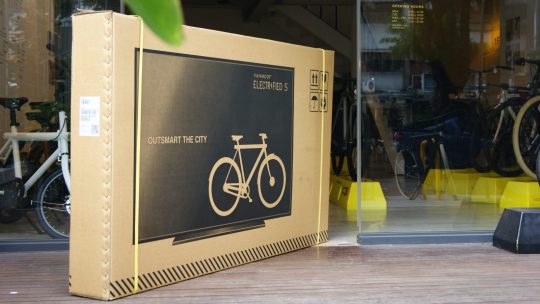
    They noticed that their bicycle boxes were about the same size as a large flatscreen TV. And since flatscreen TVs seem to always arrive in perfect condition, they decided to print a TV (along with an image of their bicycle) on the box.

    Here’s what that looks like (via QZ):

    The result? They immediately saw a 70-80% drop in shipping damages. That’s all it took. I love that.

    Since I know that a lot of you are cyclists, I thought you might appreciate this little hack. Their bikes are also quite stylish and reasonably priced if you happen to be in the market. (I am waiting to hear back on whether they ship to Canada.)

  • Case Study: Lumiere London

    Last week I wrote about the value of urban lighting.

    Another case study worth looking at is Lumiere London. It was a four day light festival that took place in January, which is normally a pretty quiet and dark month. This past year in London the festival saw over 1 million visitors who spent over £22 million.

    Here’s a time lapse video of the festival in action:

    [youtube https://www.youtube.com/watch?v=ESxG9KsaeJo&w=560&h=315]

    Click here if you can’t see the embedded video.

    It’s obviously a temporary festival, but it’s a great example of how lighting can transform a city. After the event, the Guardian (which gave it 4/5 stars) talked about the city itself becoming the story. They also said that it managed to “unzip and open out the city” in a way that politicians and town planners often struggle to do.

    Sounds like fun.

  • October baseball in the city

    You can have one of the best records in the league or you can be slumping right before the post-season, and none of that matters when the month of October hits. Such is baseball. And such is life.

    What does help, though, is being bold. The Blue Jays got lucky on Sunday night with Odor’s throwing error. But Donaldson was also willing to take a chance and make a run for home plate. It paid off in a big way. His instincts were right.

    I found the above image on social media without a source. If I’m pissing anyone off by posting it here, let me know and I’ll take it down. I just love how it captures the exact moment – with the ball still in the air – when Donaldson proclaims victory.

    Baseball will always be a special sport for me. I have never been a big hockey fan and the Raptors didn’t exist until the mid-90s. So as a kid growing up in Toronto, I played baseball and watched the Jays.

    So here’s to more October baseball. The playoffs are always such a fun time in the city. It has a way of cutting through our differences and uniting us all around a common dream. That doesn’t always happen.

  • The rise of paradiplomacy

    In the words of Mike Bloomberg, then mayor of New York: “We’re the level of government closest to the majority of the world’s people. We’re directly responsible for their well-being and their futures. So while nations talk, but too often drag their heels, cities act”. Whereas diplomacy is carried out for the state, paradiplomacy is executed for the population.

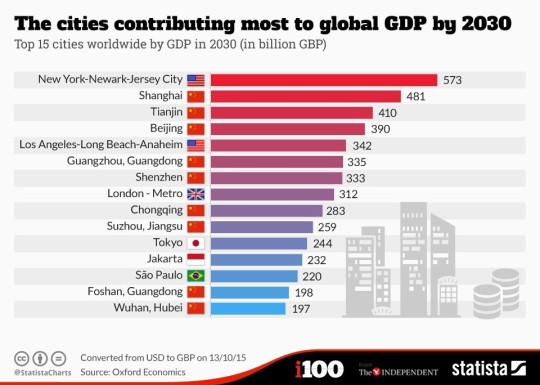
    Rodrigo Tavares has an interesting article up at the World Economic Forum talking about the rise of foreign policy and international relations at the local level. The argument is that as cities rise (and they are certainly rising) paradiplomacy is inevitable.

    He admits that the diplomatic networks tend to be stronger for regions who have “flirted with sovereignty.” Regions such as Quebec, Catalonia, and Scotland are given as examples. However, this shift is by no means exclusive to them. Lots of examples in his article.

    It is also manifesting itself very differently compared to at the national level. And that’s part of the advantage. One example is London & Partners, which is an arm of the City of London that sells consulting services to other cities and nations who want to replicate its successes. Do nations do this?

    I have argued before on this blog that our governance structures do not accurately reflect today’s urban reality. Rodrigo’s article is a reminder that we continue to underestimate the role of cities in the global economy.

    I’ll end with this chart from his article:

    image

  • Urban change through rapid prototyping

    image

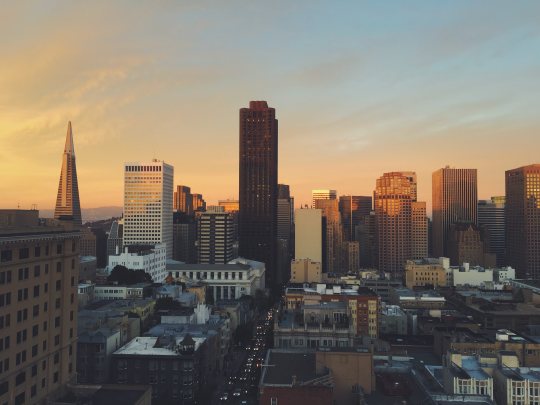
    The Market Street Prototyping Festival is just finishing up in San Francisco. The festival, which is now in its 3rd year, is centered around urban interventions that can be rapidly prototyped and tested. The goal is to discover new ideas that could be used to transform and improve Market Street – the city’s civic spine. It is a joint effort of both the San Francisco Planning Department and the Yerba Buena Center for the Arts.

    Here is a list of all the prototypes. You can “like” projects, but I wish they would have made it easier to filter and see which ones are the most popular.

    One project that I liked is Vote With Your Feet. It consists of two doorways and a single crowdsourced YES/NO question above it. You vote by choosing a doorway. Once you walk through, you are then shown the results. Here’s a Boomerang video of it in action. I like it because it provides a frictionless way to acquire lots of ground-up feedback. Imagine placing something like this at the exit of a busy train station or transforming the existing doors.

    Tactical urbanism can be a great mechanism for investigating and instigating positive change. This is hugely important considering how slow moving and bureaucratic city building can be. It’s not the same format, but NXT City here in Toronto has similar ambitions. They source new ideas for our public spaces from young people. I am thrilled that both of these initiatives exist.

  • Adaptive reuse in Hamilton

    Yesterday evening I was in Hamilton, Ontario for an adaptive reuse building tour that was put on for the 2016 OPPI Symposium (Ontario Provincial Planners Institute). 

    Hamilton has lots of these sorts of projects underway. The city has a rich history and, because it never saw the development pressures that cities like Toronto saw from the 70s to 90s, many of these buildings now remain ready to be reused. That’s my theory at least.

    I was told that last year downtown Hamilton delivered about 600 residential units. This may not seem like a lot, but keep in mind that the number was zero for a very long time. In fact, just seeing a crane up in the air is exciting for those who lived through that period of inactivity. I can’t fully relate to that.

    But it’s not just development that is going on. It’s city building. 

    The city is creating new cultural spaces and developers such as Core Urban have carved out niches working on boutique-scaled “pain in the ass” heritage projects. How’s this for commitment: Core Urban has been awarded heritage builder of the year 3 times, but they have yet to work on a designated heritage property.

    I’ve said before that I think there’s a new breed of developer emerging in cities today. Hamilton is no exception. And that’s very exciting for this region.

    If you’re interested in Hamilton, check out the blog Rebuild Hamilton. It’s written by Thomas Allen who I think of as Mr. Hamilton. It’s a phenomenal resource for architecture and city enthusiasts.

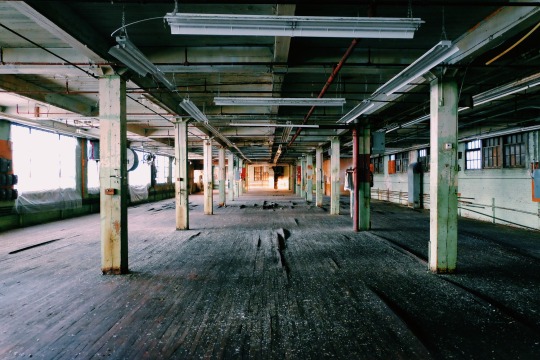
    The photo at the top of this post was taken by me within the proposed Beasley Park Lofts by Stinson Developments.

  • The value of urban lighting

    image

    This week I picked up the Philips Hue lighting system. For those of you aren’t familiar with it, it’s a connected home lighting system. All you need are a Philips Bridge (which hooks up to your wireless router); a smartphone; and whatever bulbs, lightstrips and fixtures you want to use with it. It also works seamlessly with the Apple Home app.

    At first I was a bit nervous that it would turn my place into a cheesy nightclub. But as soon as I powered it on and started messing around with the Hue app, I was blown away by the quality of the light and the options. There are settings for reading, to simulate a sunset, and so on. You can schedule routines, such as a bedtime lighting scheme, and you can even color match a photo to find exactly the light you want.

    After playing around a bit, I then sent out an obligatory tweet saying that I was now hooked on and obsessed with the Philips Hue lighting system. Trust me, it’s really cool. My friend Andrew then responded saying that he doesn’t get it. Why would anyone want a color of light besides “white?” To me, this is like asking: Why would anyone want to see a beautiful sunrise or sunset? The sun should just appear or disappear using one consistent color.

    In a city like Toronto where most of us in the winter will wake up when it’s dark and come home from work when it’s dark, I have always believed that we should be more creative and daring with the way we light our city, our buildings, and our public spaces. We don’t want to be kitschy about it, but there’s an opportunity to maximize our darker months and enhance the overall urban experience.

    The CN Tower is a perfect example. Its night lighting has completely changed how we view it and has become a beacon for what is going on in this city. I can see it clearly from my elevator lobby and I always look to see what color it is. I’m not great at picking out when it’s Rett Syndrome Awareness Month, but I can usually tell when there’s a game going on.

    Now my place is certainly not the CN Tower. And there’s only one CN Tower in the world. But that doesn’t mean we can’t get fun and creative in other ways within the shared walls of the public realm. We should do that. Let’s not be so conservative.

    If any of you have great examples of urban lighting, please share it in the comments below. Perhaps we can all use it as inspiration to make a change.