Daily insights for city builders, delivered every morning at 6 AM ET. I’m Brandon Donnelly — a Toronto-based real estate developer and founder of Globizen. I’ve been writing here since 2013.

  • Pause button

    Councillor Kristyn Wong-Tam recently put forward a request for a report on the implementation of a 1-year moratorium (let’s ”hit the pause button”) on new tall building rezoning applications in the downtown core of Toronto. You can read the full letter here.

    Not surprisingly, the building industry doesn’t like this.

    But besides that obvious point, I did want to draw attention to the following comment made by Quadrangle Architects partner, Richard Witt (taken from this BuzzBuzzNews article):

    “The city has, for years, used the development charges that should have been used to upgrade infrastructure to artificially lower property taxes by putting the development charges into general revenue,” he says.

    The intent of development charges is that they fund the infrastructure required as a result of new development – everything from transit to water. In the US, they are (I think) more commonly called impact fees. In this case the name makes the intent quite clear.

    I am curious to what extent we are relying on development growth to fund the status quo. Because growth may not always be there. History has shown us that.

  • Total work of art

    image

    I toured 56 Leonard Street in New York today. The only picture I have on my phone is the above photo of the lobby. The rest of the photos are on my Fuji and so they’ll make their way to my Instagram over the coming days. 

    There’s lots that has already been said about the architecture of 56 Leonard, but one thing I wanted to point out was this idea of a “total work of art.” The German word for this: Gesamtkunstwerk. I’ve written about this before, here.

    With many/most development projects, there will be a separate architect and a separate interiors firm. There’s absolutely nothing wrong with this approach, but it could lead to a disconnect between the exterior and interior. Or at least, some architects will tell you that.

    In the case of 56 Leonard, the architect (Herzog & de Meuron) also designed all of the interiors – right down to the kitchens, the sinks and tubs, the light fixtures, and likely a few other things. Hence the “total work of art.”

    It’s incredible to see what happens when you have one design sensibility brought to an entire project. 56 Leonard is beautiful. For the rest of the photos, make sure to follow me on Instagram.

    In case you’re wondering, the condo prices in the building run between $3,500 and $5,000 psf. One of the penthouses recently sold for USD$47 million.

  • Uberpooling your way to cheap rides

    This morning on my way into the office I ran into a friend who lives in my building (downtown). She works in midtown and so I asked her how she gets into the office. She told me that she either takes the subway or an Uber, but that increasingly she has been taking Uber, particularly on the way home.

    We then started talking costs and she told me that what she does is carpool with a friend from work using UberPOOL. They live nearby and so what they do is leave from the same place at night (the office) and then select a midpoint location between their homes for the drop-off. After splitting their portion of the fare, the ride costs her about $3.25.

    As she was telling me this, I couldn’t help but think to myself: Wow, this is massively disruptive to transit. That is the same cost as taking the subway. So why take transit? With the subway, there may be a speed argument in certain instances, but that certainly wouldn’t be the case with some of Toronto’s streetcar lines (such as the King line). It’s faster to walk.

    However, there are obviously geographic limits to how far you can go in an UberPOOL before your costs greatly exceed taking transit. But as Uber and other similar services continue to bring down the price of a ride (eventually the labor cost component will disappear), how big does that area get?

    All of this – including my own mobility patterns – has got me thinking yet again about the role of transit in the city of tomorrow. 

    One segment that continues to be underserved is the regional scale. Here in the Greater Toronto Area, we are working on that by transforming our commuter rail service into a two-way all-day Regional Express Rail service. Today that strikes me as being hugely valuable. And unless driverless vehicles somehow solve our traffic problem, it will likely remain that way.

    I would love to get your thoughts in the comments below.

  • The yellowbelt

    We talk a lot about the greenbelt here in Toronto. Some argue that it’s squeezing the housing market and driving up prices.

    But what about the yellowbelt? (Credit to Gil Meslin for the term.)

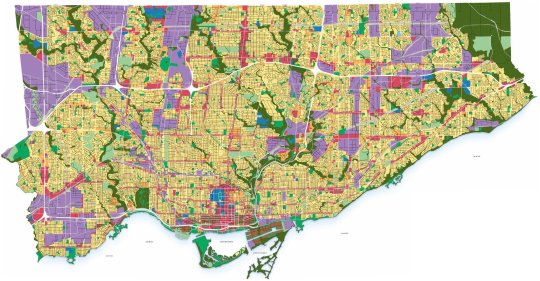
    Here is a land use map of Toronto:

    The yellow areas are “neighborhoods.” They, along with parks, ravines, watercourses, and valleys, make up ¾ of the city’s land area. The Official Plan describes these areas as being “stable” – meaning they will see little physical change. Supply cannot adjust to demand.

    I get why this is the way it is and I understand how difficult it would be change something like this. But let’s not ignore the impact that this land use constraint has and will continue to have on the housing market. 

    It’s the yellowbelt. Thank you Gil for letting me to steal the name.

  • Morning routines

    I often get asked: How the hell do you find time to write every day?

    The trick, for me at least, is to do it first thing in the morning. I get up early, prepare a bowl of cereal with fruit, make a single cup of coffee, and then sit down at my desk and read until something hits me. I like to do this before touching my inbox. It’s too easy to get sucked in once you start opening emails.

    I am not naturally a morning person, but I find this approach works best for me. When I did my MBA a few years ago, I did it part-time through 7am to 9am classes. I really enjoyed that ritual of morning education before the office and so I try and replicate that experience with my blogging routine.

    Some people like to workout in the morning, but I have never been great at that. I have more energy and I lift more when I work out in the afternoon or evening. I just wish I could find a gym that wasn’t so busy in the evenings.

    What’s your morning routine?

    Image: Snapped at Quantum Coffee last week

  • 3 word addresses

    image

    When I was in undergrad, I spent a summer in Taipei. One of the things I remember about that summer was how difficult it was to locate building addresses. Sure, there was the whole language barrier thing, but I swear that some of those alleys (which I loved) didn’t follow a consistent numerical logic.

    It turns out that a lot of the world is actually poorly addressed. Think about the favelas in Brazil. How are they addressed? (Not actually a rhetorical question; I’ve never been.)

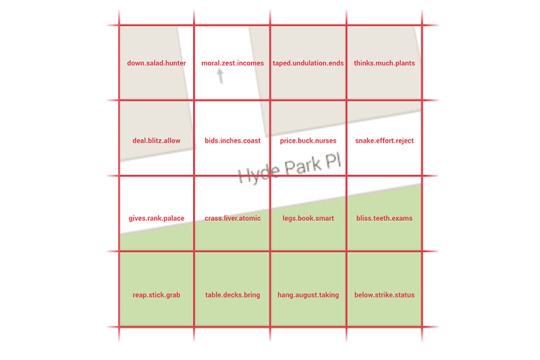
    A company out of the UK called what3words is trying to solve this problem. What they have done is created a 3m x 3m grid of the entire world and assigned a 3 word address to each square. Apparently that translates into about 57 trillion squares.

    This is similar to long / lat coordinates, except that 3 words are far more user friendly than a string of numbers. They are more easily remembered and more easily communicated to other people. The front door of the Starbucks in my neighborhood looks to be migrate.stunner.racing.

    One service that has built upon the what3words platform is a bike taxi service in Delhi that offers female drivers for female customers. It’s called Bikxie Pink and the 3 word addresses aim to solve the safety problem of inefficient pick-ups and drop-offs.

    Even in places where addressing isn’t generally a problem, I could see what3words helping. Interesting platform.

    Images: what3words

  • Some thoughts on how we plan cities

    I came across this discussion on Twitter yesterday about how so many of the spaces we love in cities would not conform to today’s modern city planning practices:

    //platform.twitter.com/widgets.js

    This is a topic I’ve been thinking about lately and so it’s a timely discussion. In fact, I’ll often come across spaces in Toronto where I’ll think to myself: This is a really great space. But it’s highly unlikely that it could be built this way today. Naturally the question then becomes: What does this say about modern city planning?

    City planning is obviously important. But at the same time, we are almost certainly making mistakes and doing things that we will later regret. I say this not because I’m particularly critical of planning today, but because cities are enormously complex entities and it’s difficult to believe that we’ve figured everything out at this point.

    One thing I wonder about is if we aren’t over-planning and being too prescriptive about our cities. Some of you will probably argue the exact opposite. But hear me out.

    Vancouver is a city that has long been considered to be the gold standard in modern city planning. We talk about its podium + tower building typology. We talk about its “gentle density.” And we talk about its great public and recreational spaces, among many other things.

    But when I was there last month having dinner with a friend of mine, she said something to me that stood out. She said: “Brandon, Vancouver is a boring city. If it weren’t for my family being here, I would happily move to Toronto, New York, or somewhere else.”

    Cities are amazing places because they unleash human ingenuity. They allow new and unforeseen things to emerge. The challenge, I think, is to not sterilize that away when we plan and build. And all of us involved in the building of cities are probably guilty of doing that to an extent.

  • Where Canada’s immigrants have come from

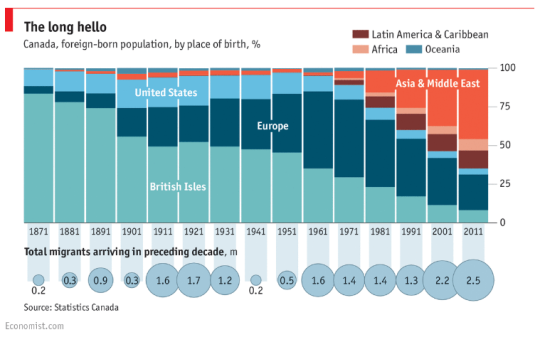
    Earlier today The Economist published the below chart showing where Canada’s immigrants have come from (place of birth) between 1871 and 2011. So basically from Confederation (1867) to today – almost.

    It’s a great chart. It really shows our evolution.

    Perhaps the most meaningful date to point out is 1962. That is the year Canada introduced new immigration regulations which effectively privileged skill and talent over race and national origin when it came to deciding who would be allowed to enter the country. 

    Look at the impact that had.

  • It’s content marketing

    Oscar Wilde once said:

    “There is only one thing in life worse than being talked about, and that is not being talked about.”

    I’m sure that all of you can think of someone right now who subscribes to the philosophy that any press is good press.

    But there is something to be said about exposure. Almost every company on the planet wants it. They pay for it.

    They fight for it.

    It’s the lifeblood of business. If nobody knows who you are and what you do, you’re dead.

    In my view, one of the best ways to gain exposure today is content marketing. Marketing sometimes has negative connotations, but content marketing is probably the least offensive varietal. It’s a soft, rather than hard, approach. It invites you in and tries to earn your trust, instead of hitting you over the head with an ask.

    But at the same time, it’s a more difficult form of marketing. You have to be insightful. You have to be useful. And you have to try and create value for people on a regular basis. That’s easier said than done. I try and do that every day, but I don’t always succeed.

    I say all this because we live in a content-driven world. In fact, this blog – despite it being a personal one – is a form of content marketing. I like how Fred Wilson responded on his blog to the criticism that too many entrepreneurs treat venture capital blogs as scripture:

    “So how should entrepreneurs use this knowledge that is being imparted by VCs on a regular basis? Well first and foremost, you should see it as content marketing. That is what it is. That doesn’t mean it isn’t useful or insightful. It may well be. But you should understand the business model supporting all of this free content. It is being generated to get you to come visit that VC and offer them to participate in your Seed or Series A round. That blog post that Joe claimed is not scripture in his tweet is actually an advertisement. Kind of the opposite of scripture, right?”

    Again, that doesn’t make the content necessarily bad. It’s just the truth. It’s content marketing.

  • The New Urban Crisis

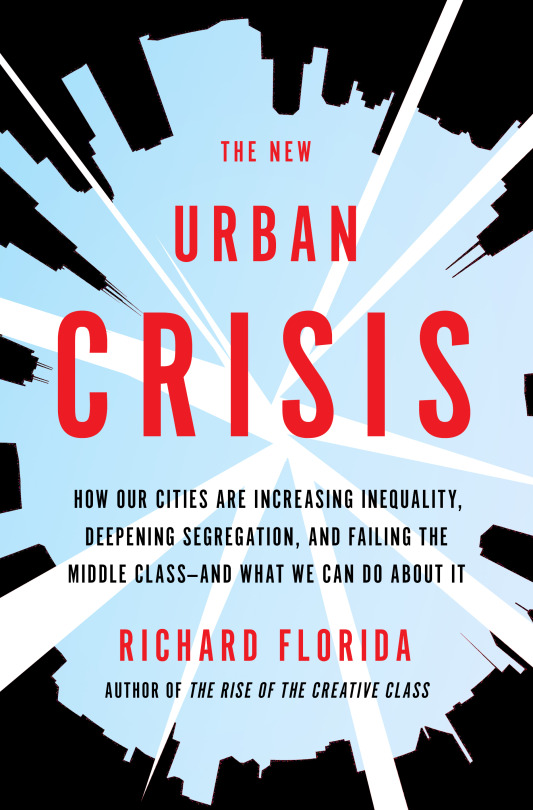
    Richard Florida has a new book coming out in the spring called, The New Urban Crisis

    Noteworthy about the book is that he has changed his tune with respect to the potential of the “creative class” to form the new middle class. Here’s a quote from the Houston Chronicle:

    “I got wrong that the creative class could magically restore our cities, become a new middle class like my father’s, and we were going to live happily forever after,” he said. “I could not have anticipated among all this urban growth and revival that there was a dark side to the urban creative revolution, a very deep dark side.”  -Richard Florida

    Regardless of what you think of the work of Richard Florida, I’m sure this book will be bedside for most urbanists. The focus is on creating a new kind of inclusive urbanism, which is top of mind for so many of us today.

    If you’d like to pre-order it, you can do that here.