Daily insights for city builders, delivered every morning at 6 AM ET. I’m Brandon Donnelly — a Toronto-based real estate developer and founder of Globizen. I’ve been writing here since 2013.

  • Ingressi di Milano

    A new architecture book, called Entryways of Milan, will be released next month that profiles some of the city’s most beautiful residential entryways. There are 144 of them and they are housed in buildings dating from 1920 to 1970. For a sneak peek of the architecture, click here.

    What makes a book like this interesting is that these are private entryways, which means they are spaces that are largely overlooked within a city. They are the spaces that mediate between public (street) and private (residences). The book also dives into things like materials and the art-historical and social significance of each lobby.

    I am now wondering if similar books or photography projects exist for other cities. I think it would be fascinating to compare residential entrance halls across different cities during the same time period. Although the above Milanese lobbies have set the bar pretty high. 

  • The Millennial Dream [Documentary]

    Back in 2015, I was interviewed for a documentary called The Millennial Dream. I then completely forgot about it until somebody tweeted it at me yesterday. So the documentary is out – it was released last year – and you can rent it or buy it on iTunes.

    The documentary calls into question the [North] American Dream. This idea that you just have to work hard, save up, buy a house in the suburbs, pay off your debt, and then everything will be just fine. For many, that dream is quickly disappearing, if it hasn’t already.

    Enter the Millennial Dream. Our economy is changing. Our jobs are changing. Our cities are changing. And by 2020, the Millennial generation is expected to form 50% of the global workforce. What is this generation dreaming about? That is what this documentary is about.

    But I should probably stop here because I haven’t actually seen the film. I could be overselling it. I’ll watch it this weekend and then report back. If you can’t see the trailer embedded below, click here.

    [youtube https://www.youtube.com/watch?v=CVCNXJk2fT8&w=560&h=315]

  • Knowing how (automated medicine)

    I should read The New Yorker more often. I’m going to subscribe right now (done). The articles are fantastic. In the April 3, 2017 issue, Siddartha Mukherjee wrote a piece talking about automated medicine. It’s called A.I. Versus M.D.

    Here is an excerpt:

    His prognosis for the future of automated medicine is based on a simple principle: “Take any old classification problem where you have a lot of data, and it’s going to be solved by deep learning. There’s going to be thousands of applications of deep learning.” He wants to use learning algorithms to read X-rays, CT scans, and MRIs of every variety—and that’s just what he considers the near-term prospects. In the future, he said, “learning algorithms will make pathological diagnoses.” They might read Pap smears, listen to heart sounds, or predict relapses in psychiatric patients.

    This is a world where you could snap a photo of your unsightly rash, submit it, and then have a machine provide a diagnosis. This is a world where early detection and prevention would become common place. Already, today, there are instances where learning-based algorithms (distinct from rule-based) have proven to be more accurate than raw humans.

    I don’t know how you all feel about this, but I actually feel a sense of comfort thinking about this as the future of medicine. There’s piece of mind that comes with large amounts of data and the discipline of algorithms. At the same time, this is not necessarily about replacing humans. It is also about augmenting human ability.

    If it leads to better health outcomes, then why wouldn’t we?

  • Downstream effects of electric and autonomous vehicles

    I speculate a lot on this blog about what electric and autonomous vehicles will mean for the future of our cities. The reason it’s speculation is because it’s phenomenally difficult to know with any sort of certainty what the downstream effects of these technologies will be.

    I’ve seen some people claim that a car is still a car. That is, all of the same rules will apply even if they’re powered completely by renewals and we manage to make drivers obsolete (5-10 years?). But I fundamentally disagree with this line of thinking. There will be both positive and negative consequences. They are just yet to be seen.

    Benedict Evans recently wrote a post where he started to think about where some of these changes might happen. And so I thought it might be valuable to throw a few of these into the discussion mix. Here are some of his ideas:

    • About half of car maintenance spending in the US goes to things directly related to the internal combustion engine. Electric takes that away.
    • There are about 150,000 gas stations in the US. They go, along with their associated convenience stores, which is where the margins are made. Interestingly enough, more than half of all US tobacco sales happen at gas stations. Where does that go?
    • It is estimated that electric vehicles will increase overall electricity demand by 10-20%. But this could disappear with the battery storage and off-peak power.
    • Globally, about 1 million people die every year from car accidents. In the US, something like 90% of all accidents are thought to be caused by human error and about 1/3 of fatal accidents involve alcohol. Autonomy has the potential to take most of this away. Personally, I think we’ll look back and think about how dangerous driving used to be and wonder how/why we all did it.
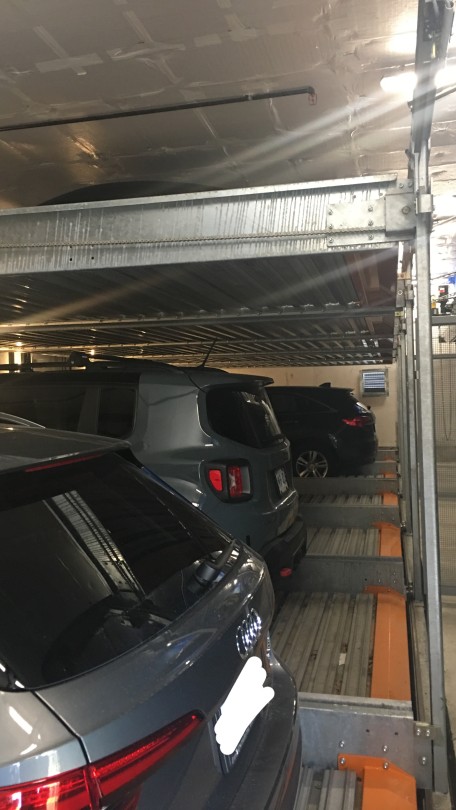
    • A complete rethink of parking. This obviously gets talked about a lot. ~14% of LA’s land is thought to be used for parking. My guess is that parking ratios/requirements go way down (we’re already in the 0 to 0.3 per residential unit territory here in Toronto) and parking garages transform into yards for AVs.
    • Autonomous vehicles once again rewrite the retail real estate landscape. Benedict believes they will create more billionaires in real estate and retail than in tech or manufacturing. I like how he describes big box retailing as an arbitrage of land costs, transportation costs, and people’s willingness to drive and park. This point is likely about AVs + e-commerce. See yesterday’s post about Amazon.
    • Finally, his last point is that autonomous vehicles could become a kind of mobile Panopticon. The Panopticon was an institutional building typology conceived of by Jeremy Bentham in the late 18th century. It was based on the idea that inmates could all be monitored by a single watchman, without any of the inmates knowing if they were, in fact, being watched. It was a way of trying to impose strict obedience in prisons, and so on. Since virtually all autonomous vehicles require some sort of computer vision, Benedict argues that they could become the 21st century watchmen. Move over CCTV.

    The other big question is about decentralization. New transportation technologies have consistently promoted greater suburbanization – think streetcar suburbs to car suburbs. The fact that you’ll be able to use your time more productively in an autonomous vehicle is continually floated as an argument for this trend to continue. But I haven’t made up my mind about this one.

    Do you have any other thoughts on the downstream effects of electric and autonomous vehicles?

  • Amazon is just getting started

    image

    The Economist has an article up talking about what a behemoth Amazon has and will continue to become. Here are some interesting stats for you to think about:

    • More than half of every dollar spent online in America now goes to Amazon
    • Amazon’s share price has increased 173% since the beginning of 2015 (12x faster than the S&P 500)
    • With a market capitalization > $400 billion, it is the 5th most valuable company in the world
    • 92% of its value is supposedly being derived from profits expected after 2020 – they are playing the long game
    • Investors believe that revenue will go from $136 billion (2016) to half a trillion over the next decade

    If I can buy something online, instead of in person, I will do it. And that very often leads me to Amazon. In fact, I bought my new camera lens from them last week. Many others seem to be doing the same.

    When I go to a store now it’s because I need something immediately or because I’m looking for a new experience. I want novelty and I want to feel something special when I walk in. That, or I just need groceries.

  • rain gravity heat cold

    image

    Today I got a copy of rain gravity heat cold. It’s a book by the Toronto-based architecture firm superkül and it’s meant to celebrate their first 10 years of practice. 

    The book itself was put together by Blok Design. Blok has also done a new – yet to be rolled out – identity for superkül. (Definitely worth a click through.)

    One thing I wanted to highlight from the foreword of the book (written by Kiel Moe) is this line: “Great design does not respond to a static sense of context but rather perhaps transforms its flaws into assets and certainly amplifies the potential of site.”

    We often talk about contextual architecture. That is, architecture which responds to and is sensitive to its surroundings. But here’s the idea that responding is, in fact, not enough. The ambition should be “amplification of site through design.” 

    I like that a lot.

    If you’d like a copy of the book, it can be found on Amazon, at the University of Toronto bookstore, as well as, I’m sure, other places.

  • Ecodesign for cities and suburbs

    Larry Beasley and Jonathan Barnett are about to start teaching a free online course through the University of British Columbia edX called: Ecodesign for Cities and Suburbs. It starts April 4, 2017 and runs for 6 weeks.

    Here’s what you’ll learn (taken verbatim from edx.org):

    • The principles of ecodesign and why it is important as a response to the current disorganized urban growth model
    • Ways to adapt to a changing climate, and ways to mitigate climate change locally
    • Policies to balance auto and airplane transportation with walking, cycling, transit and high-speed rail
    • Ways of designing urban and suburban regulations to make cities more livable and environmentally compatible
    • Strategies for designing and managing the public realm, plus innovative arrangements and processes for implementing ecodesign

    The course is geared toward urbanists from all over the world and so the case studies will be global in nature. You can also participate as actively or passively as you’d like. Though, if you’d like to get a certificate, then you need to fully participate.

    What immediately stood out for me was the focus on both cities and suburbs. In many ways the suburbs are a more challenging problem to solve. So I hope there’s a good amount of focus on that context.

    Beasley was formerly co-director of planning at the City of Vancouver and Barnett is a professor of city and regional planning at the University of Pennsylvania (my alma mater). It should be an interesting course.

  • Stepping back

    Yesterday the New York Times reported on the fact that Donald Trump has ordered the removal of most of Barack Obama’s policies intended to fight climate change. 

    (Interestingly enough, the Editorial refers to Donald Trump as simply Donald Trump, but it refers to Barack Obama as President Barack Obama.)

    Here’s a sampling of what they had to say:

    It was dismaying also because it repudiated the rock-solid scientific consensus that without swift action the consequences of climate change — rising seas, more devastating droughts, widespread species extinction — are likely to get steadily worse. It was dismaying because it reaffirmed the administration’s support for older, dirtier energy sources when all the economic momentum and new investment lies with newer, cleaner forms of energy. It was dismaying because it flew in the face of widespread public support for environmental protection — including the pleas of the executives of hundreds of major American corporations who fear that without energy innovation their costs will rise and their competitive edge over foreign companies will be lost.

    This is certainly frustrating, but as they mention in the article, it is not unexpected.

  • Formula retail

    San Francisco has something known as the Commission Guide for Formula Retail. Formula retail = chain store. Formula retail uses are regulated by the San Francisco Planning Code. 

    The intent behind the guide is really twofold: It’s to help assess the appropriateness of chain store uses in specific locations and it’s to help counter their homogenizing force on neighborhoods.

    This, of course, is a perennial tension for city builders. The challenge is that formula retailers usually have the ability to pay higher rents compared to smaller independent businesses. And so that’s who landlords will often lease to.

    If you’re the kind of person who enjoys reading esoteric planning documents, then consider incorporating the above SF commission guide into your bedtime reading repertoire.

  • Residential agri-tecture

    Last month Curated Properties and Windmill launched a “residential agri-tecture” project on Toronto’s Queen West called The Plant

    The entire development is oriented around our connection to food. The building will have an interior greenhouse and an industrial style common area kitchen for food prep and events. Each unit will have micro-garden beds for fresh herbs and lattices for growing your own food.

    This is a trend that I hope we see more of going forward. Toronto developers such as TAS have been incorporating urban agricultural elements into their projects for a number of years now and I believe it has the potential to become quite common, particularly for end user buildings. 

    I grew veggies and hot peppers on my terrace one summer and there was something really nice about walking outside to harvest a salad. The hardest part for me, though, was getting enough sun exposure. Some of my crop wasn’t getting enough sun, but for whatever reason my hot peppers really thrived.

    If all of this does really catch on, I could imagine a world where condos and apartments get marketed based on the precise amount of sunshine hours they receive throughout the year. Perhaps some developers are already doing that.