Daily insights for city builders, delivered every morning at 6 AM ET. I’m Brandon Donnelly — a Toronto-based real estate developer and founder of Globizen. I’ve been writing here since 2013.

  • Shenzhen has just electrified its entire bus fleet

    image

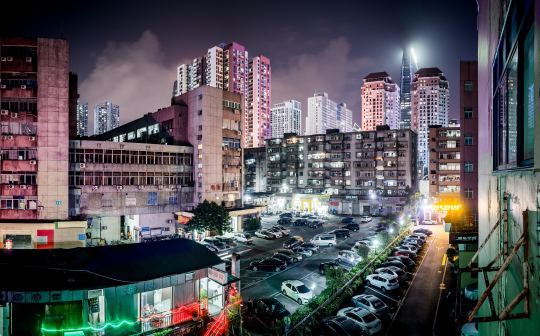
    This is impressive: Shenzhen recently finished converting its entire bus fleet to electric vehicles. That’s 16,359 buses and around 8,000 charging stations according to Electrek.

    It is estimated that this all-electric fleet saves 345,000 tons of fuel per year and reduces carbon emissions by 1.35 million tons.

    Shenzhen is now working on doing the same to its 12,518 taxis. Already 62.5% of them are electric-powered and the goal is 100% by 2020. 

    But let’s not forget that China still generates most of its electricity from coal. Coal represented 72% of its electricity generation in 2015. And in 2014, carbon emissions from China allegedly made up almost 30% of the world .

    Photo by Anton Strogonoff on Unsplash

  • What’s your favorite Olympic winter sport?

    The 2018 Winter Olympics start this Friday, February 9 in PyeongChang, South Korea. Unlike the past couple of winter games, which struggled with warm temperatures, this should be a cold one.

    The Winter Olympics tend to be less popular than the Summer Olympics, with fewer athletes and countries participating. 207 countries participated in the 2016 Summer Olympics in Rio de Janeiro, but only 88 countries participated in the 2014 Winter Olympics in Sochi. A big part of this has to do with the fact that winter sports generally require winter and snow and not every country has those things.

    I like the Winter Olympics. And perhaps not surprisingly, my favorite sport is snowboarding. This year I’m really rooting for Canadian snowboarder Mark McMorris. If you don’t know who Mark is, watch this short video. He has had a tough time over the years with a number of serious injuries, but he managed to bounce back and qualify for the Olympics. He won bronze in Sochi and is hungry for gold.

    The Olympics are always a good reminder that if you want to be the best, you’re going to have to be prepared to work beyond hard and make many many sacrifices in your life. And even then, there are absolutely no guarantees. 

    So what’s your favorite Olympic winter sport?

  • One year of Inclusionary Housing in Portland

    image

    About a year ago, Portland enacted “Inclusionary Housing” policy requiring new apartment buildings of 20 units or more to offer up a portion of the units at below market rents.

    Developers are able to select from a few different options and the rents are calculated according to a percentage of the city’s median family income (30-80%). I’m not sure how this policy would apply to new condo buildings.

    This is an interesting account by The Portland Mercury of what this policy may be doing to the housing market. I say may because it’s only been a year and there could be other factors at play.

    Between 2013 and 2017, Portland typically built between 3,000 and 6,000 new units per year. Since the IH policy went into effect on February 1, 2017, 682 new units have applied for permit. 

    About half are coming from one developer who appears to be building the requisite affordable units in exchange for no parking minimums. They are now proposing buildings with zero parking.

    Again, in all fairness, it’s only been a year. But already Mayor Ted Wheeler is looking at other incentives to encourage more new construction in the central city. The biggest levers: height and density.

    All of this begins to speak to the very real impact of inclusionary zoning on development feasibility.

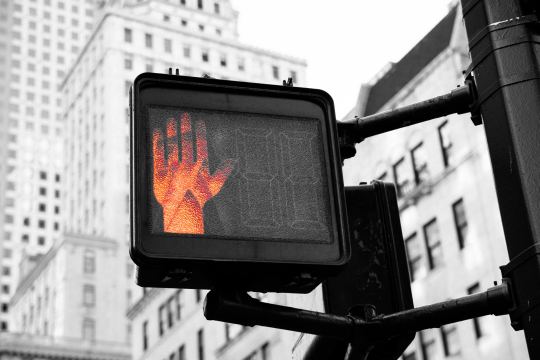
    Photo by Zach Savinar on Unsplash

  • Will autonomous vehicles make location irrelevant?

    I am not convinced that autonomous vehicles will make “location” irrelevant. 

    But I do agree with the following line from this recent Bloomberg article called, A Driverless Future Threatens the Laws of Real Estate.

    “The link between property and transport has been perhaps the most durable in human history.”

    So this remark by David Silver could very well be correct:

    “Real estate might be the industry that is most transformed by autonomous vehicles.”

    Technological advances in mobility have historically brought about decentralization because each advance – from streetcars to the automobile – made it reasonable to travel further distances.

    Of course, autonomous vehicles are also expected to free up our time and focus while in transit – although trains do that for us today albeit with that pesky last mile problem.

    But just like the internet in the late 90′s didn’t make location irrelevant (the opposite appears to have happened), I am similarly unconvinced when it comes to autonomous vehicles. What we consider a desirable location may simply shift.

    So this is not to say that the won’t see profound change in our cities. We will. Which is why we’re all trying to get ahead of it.

  • The case for self-driving electric car fleets

    Below is a presentation by Frank Chen – head of research, deal, and investing at the venture firm Andreessen Horowitz – which makes the case for self-driving electric car fleets.

    He starts the presentation by talking about why he thinks this shift is going to happen faster than most people think. 

    One reason for this is that the batteries are becoming dramatically cheaper and the battery makes up a large part of the cost. By 2025, it is expected that electric vehicles will become cost neutral with ICE (internal combustion engine) vehicles assuming zero government subsidies.

    And by 2038, Bloomberg believes we will hit peak ICE vehicle sales. That is, electric vehicle and ICE vehicle sales globally will hit 50/50. Norway has already hit this threshold but they impose heavy financial penalties on ICE vehicles.

    2025 is not that far away.

    If you can’t see the presentation below, click here.

    [youtube https://www.youtube.com/watch?v=of5j-Lztqrg?rel=0&w=560&h=315]

  • Skater’s Paradise: On/Off

    This skateboarding video is incredibly well done. I particularly like the 42 second mark. If you can’t see it below, click here.

    [vimeo 227394921 w=640 h=280]

    It’s incredible from a filmmaking standpoint, but – as I have said many times before on this blog – it also showcases the deep relationship between skateboarding and the urban environment.

    I can’t think of many other sports with that kind of relationship.

  • 9th annual

    Delta: “Final destination today?”

    Me: “Jackson.”

    Delta: “Ooohh, everyone is going to Jackson today!”

    Me: “That’s because they’ve been getting a lot of snow.”

    It’s that time of year again. I’m at the airport right now about to leave for my annual retreat to the mountains. 

    If you know me or you’re a regular reader of this blog, you’ll know that I’ve been doing this every year at roughly the same time for almost a decade. Next year will be our 10th “annual”, so that likely means we’ll have to ratchet things up a bit.

    Jackson Hole received 6″ of fresh powder last night and the weather forecast for this week is filled with even more snow. However, I think we may stay off Corbet’s Couloir. (Whatever you do, don’t click-through.)

    Regular scheduled programming will resume tomorrow. If you need to reach me, you know how. There never seems to be a good time to be out of the office, but traditions are traditions, right?

  • Revisited: Habitat 67

    Last summer I went to see Moshe Safdie’s Habitat 67 in Montréal. Unfortunately, you can really on experience the architecture from the street. The entire complex is clearly marked as private and you can tell they have to work very diligently to keep the throngs of architecture nerds at bay. I almost called up an agent to see if I could see one of the listed apartments, but decided not to waste anybody’s time.

    Thankfully, James Brittain has a photography exhibition going on in London right now called Revisited: Habitat 67. The aim of the exhibition is to expose the hidden side of the famous housing complex, which I find fascinating, particularly because I wasn’t able to see anything hidden last summer. You can check out a bunch of his photos over at The Spaces.

    There are many dimensions to Habitat 67. But one aspect that stands out is this idea of conferring the benefits of low-rise single-family housing – things like large outdoor spaces and access to light – onto higher density urban housing. It is something that architects today still explore and something that we consider in basically all of our development projects. Habitat 67 considered this over 50 years ago.

  • In defense of Instagrammable moments

    Surface Magazine – and more specifically the CEO of Surface Magazine – recently published this article criticizing the “trend” toward designing for Instagrammable moments.

    Here is an excerpt:

    We—and yes, this includes architects, too—have succumbed to the pressures of gaining followers, likes, and comments. High-priced, difficult-to-attain architecture degrees are now, incomprehensibly, being used to create “Instagrammable” installations for things like impromptu selfie fashion shoots and hotel lobby photo booths. The whole thing is, I must say, sad. It’s embarrassing enough that our team at Surface has received press releases from architects promoting their latest project with “Instagram-friendly interiors.” They can’t be serious.

    And here are his final words:

    If retail is dead, then its rebirth will depend on creating memorable atmospheres that don’t call for #✌💙👯🙋📷.

    I certainly appreciate the push for lasting and memorable spaces, but, at the same time, I can’t say I’m nearly as fussed about lobby selfies and the alleged timelessness of Instagram. 

    In fact, I think it would be an interesting exercise to study how social media may be impacting the way we design physical spaces.

    Maybe it is simply a fad being promulgated by “knucklehead junior marketers” or maybe 100 years from now nerdy architectural historians will look back on that quaint period of time when we designed spaces to service rudimentary 2D images shared amongst friends.

    Whatever the case may be, I think that architecture, like all art, should embody the milieu in which it was designed. 

    But often we have biases telling us that what is new is not as good as what’s existing and already accepted.

  • No is the second best answer

    image

    In addition to email, phone, and text, we live in a world where you can also easily and directly connect with people on LinkedIn, Facebook, Instagram, Twitter, Tumblr, Snapchat, Swarm, WhatsApp, Slack, as well as on many other platforms.

    As much as I love tech, I personally find this exhausting and far too distracting. So early last year I turned off all social media and messaging notifications – on both mobile and desktop – other than on the two platforms that I most commonly use. (Facebook and LinkedIn are not on this shortlist.)

    The result is that I am now missing (and consequently ignoring) a ton of direct messages. But as the saying goes, there’s no such thing as too much information, just poor filters. If you really want to reach me, I am not hard to find. You’re reading my public and daily journal right now.

    Zooming out from social media DMs, I am reminded of one of my all-time favorite Seth Godin posts where he talks about the value in saying no – which is, of course, just another kind of filter:

    No I can’t meet with you, no I can’t sell it to you at this price, no I can’t do this job justice, no I can’t come to your party, no I can’t help you. I’m sorry, but no, I can’t. Not if I want to do the very things that people value my work for.

    No is the foundation that we can build our yes on.

    And nobody should feel bad for saying no. A friend of mine likes to remind me that no is the second best answer. Yes is obviously the best, but a firm no is far better than an indecisive maybe that leaves everyone wondering what to do next.

    I should probably say no more often than I do. But I am working on it. Every now and then I remind myself that there’s huge value in saying no. Today’s post is that reminder and maybe it will be yours too.

    Photo by Kai Pilger on Unsplash