Daily insights for city builders, delivered every morning at 6 AM ET. I’m Brandon Donnelly — a Toronto-based real estate developer and founder of Globizen. I’ve been writing here since 2013.

  • Going dockless

    A couple of months ago I wrote about Bird, the electric scooter sharing company that is trying to solve the last-mile problem. They are expanding across the US and it is seemingly wildly popular.

    But its popularity is also leading some people to call them a public nuisance. Perhaps the biggest contributor to that is the fact that the system is dockless. That is, when you get to your destination you can park the Bird wherever you want.

    That’s obviously a great feature for users (who wants to look around for a docking station?), but it’s also causing a proliferation of “Bird litter” in the cities and neighborhoods where they are widely used. 

    I am sure this will eventually get resolved.

    The other thing about going dockless is that you now have a charging problem. Where and when do these scooters get charged and by whom? Bird solves this problem through decentralized contract workers called “Bird hunters.”

    You register to be one and then Bird pays you $5 to $20 for every scooter charged, depending on how difficult the Bird is to find. And as you can expect, these scooters are getting left all over the place.

    I thought this was a clever solution. And apparently it is popular with high school students looking to earn extra cash. Some are making several hundred dollars a day by spending their evenings picking up and dropping off Birds.
  • Birth rates in the United States last year

    The National Center of Health Statistics just released this update on births and birth rates for the United States in 2017. The provisional number of births last year was 3,853,472, which represents a 2% reduction from 2016 and the lowest number in 30 years. The general fertility rate was 60.2 births per 1,000 women aged 15-44, which represents a 3% reduction from 2016. Also a record low.

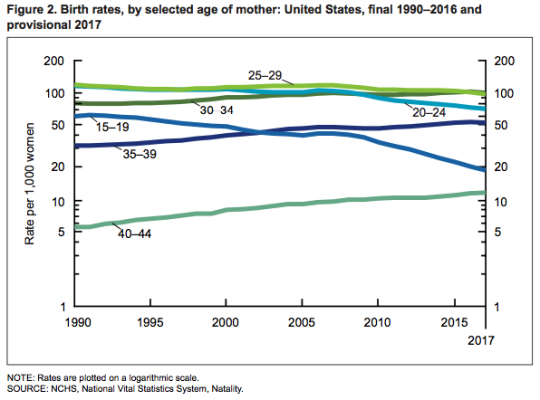
    Here is a chart from the report showing birth rates for selected age ranges from 1990 to 2016 (the 2017 numbers are provisional):

    image

    Many of the age ranges have remained stable. Notable are the decline in the teenage (15-19) birth rate and the increase in births to women aged 40-44. The teenage birth rate declined 7% from 2016 and has averaged a decline of nearly 8% a year since 2007. And the birth rate for women aged 40-44 has generally been rising since 1982.

    I am sure that you can all think of many explanations for the above phenomena without even diving into the report. I find all of this relevant because demographics obviously impact the real estate business and how we build cities.

  • Balkrishna Doshi

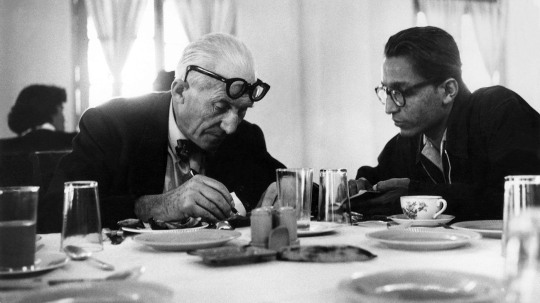
    On Friday evening, here in Toronto at the Aka Khan Museum, this year’s Pritzker Architecture Prize was awarded to Indian architect, Balkrishna Doshi. He is 90 and will receive US$100,000, as well as the honor of being the first Indian to receive architecture’s Nobel Prize. This year was also the first year it was awarded in Canada.

    Alex Bozikovic of the Globe and Mail sat down with Doshi while he was in Toronto. Article here. Doshi also lectured at the Daniels Faculty at the University of Toronto earlier in the week. 

    Some of you will probably recognize the name because of his collaborations with Le Corbusier and Louis Kahn. But as Alex quoted in his article, this year’s prize is about, “expanding the scope of architecture’s usefulness.” Doshi’s architecture is less about objects and more about the public good it creates.

    For more on Doshi, check here.

    On a related note, I was happy to see worlds collide in my Instagram feed this morning with this photo from the event. It’s a picture of Jeanne Gang, Meg Graham, and Andre D’Elia of Studio Gang and Superkul, respectively. 

    We are thrilled to be working on projects here Toronto with both firms.

    Photo via The Pritzker Architecture Prize

  • How drones will change cities

    Dezeen, the architecture and design magazine, has a documentary out called Elevation – How Drones Will Change Cities. It premiered in Hong Kong in March and is supposed to be widely available this month. I’m not exactly sure when that is happening, but below is a trailer. If you can’t see it below click here.

    [youtube https://www.youtube.com/watch?v=YSlep5XCpaw&w=560&h=315]

    Included in the trailer is footage of a delivery drone concept by design consultancy PriestmanGoode called Dragonfly. Norman Foster also talks about the development of “aerial highways.” It’s 2018 and we were promised flying cars by this point. But flying drones, similar to what’s in the above trailer, seem more probable right now.

  • Many days in the Junction

    This morning blogTO did a post on how to spend a day in the Junction neighborhood of Toronto.

    I love the Junction. I’m planning to move to the Junction. And we have a development project in the area called Junction House. So know that I am entirely biased when I talk about this neighborhood. 

    A couple of my favorite places from blogTO’s list include Mjolk (Scandinavian interior design), Gerhard Supply (menswear), Playa Cabana Cantina (tacos and tequila), and Indie Alehouse (brewpub). 

    One spot that wasn’t on the list is the Italian restaurant, Nodo. Big fan of this place. Great pastas. Great negronorum. Yes, the plural of negroni is allegedly negronorum.

    One of the big game changers for the Junction – besides the reintroduction of alcohol in 1997 – is the Union Pearson Express train.

    Many people only think of it as civilized airport travel. But it also provides an incredible inner city service. It shows you the potential of Regional Express Rail in this region. We need more of this.

    We’ll be providing an update on Junction House very soon and I’ll be sure to blog it. So stay tuned.

  • Architectural fashion cycles

    Witold Rybczynski wrote on his blog this week about historic preservation. He cites a number of reasons for why one might want to renovate, restore, and preserve an old building. But he also provides a reason for why one might not want to renovate, restore, and preserve an old building.

    “What seems to me a less compelling reason is the idea that a building should be preserved simply because it is representative of a previous period or architectural fashion. In architecture, as in many human endeavors, not all periods are equally admirable; there are ups and downs.”

    I thought this was an interesting comment because it reinforces the idea that this is a fairly subjective exercise. One of his reasons for preserving a building is that it might be particularly beautiful or represent some sort of human achievement. But beautiful to whom?

    Similarly, who determines which architectural period or fashion is an up or a down? Is brutalist architecture worth preserving or is it not yet old enough to have perceived value? Will it ever be widely admired? And is there really an architectural cycle?

    Many of us can probably agree that New York City’s original Penn Station by McKim, Mead and White was a tragic loss. But I am sure that many of us will also disagree on what are considered to be the most admirable periods of architectural fashion.

  • Anachronistic employment areas

    Today I was at the Land & Development Conference here in Toronto. I started live tweeting during the breakfast, but my vintage iPhone 6 couldn’t keep up, so I had to stop. Some insights throughout the day. But a lot of what you would expect. I suppose it’s more about the networking.

    I would, however, like to reiterate something that Ken Greenberg mentioned about Employment Areas/Lands in Toronto. For those of you who aren’t familiar, these lands are essentially intended to serve one, and only one, purpose: employment. And the process for introducing a mix of uses, including residential, is an onerous one to say the least.

    I appreciate why this is the case. But I agree with Greenberg in that this kind of single use zoning is antiquated. It does not reflect the realities of the market today. There are other mechanisms we can use to maintain and provide for employment, and ensure that we don’t end up with a city of all residential.

  • 1 out of 5 commuters in Manila relies on ride-hailing

    Earlier this year Uber sold its Southeast Asia business to Grab. At the time, it was estimated that Grab had 95% of the ride-hailing market in Southeast Asia. That’s why Uber decided to sell. Instead of continuing to bleed, they figured it would be better to instead merge businesses in exchange for a “sizeable stake in Grab.” This is similar to the deal that it struck in China with Didi.

    It’s clear evidence of cultural advantage. Though maybe you could argue it’s first mover advantage. Either way, many, including Wired, have argued that while Uber has dominated in the West, it has often struggled in the developing world. Different markets. When Grab launched you could pay with cash because so many users didn’t have a credit card.

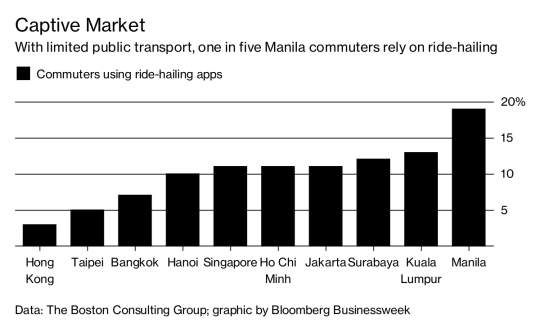
    Here is another interesting insight from Bloomberg (see above): Nearly 1 out of every 5 commuters in Manila relies on a ride-hailing service because the public transit situation is allegedly so dire. Grab controls 90% of the market with 35,000 vehicles receiving somewhere around 600,000 requests a day.

    When Uber launched it was positioned as “Everyone’s private driver.” It was expensive. It was luxurious. And it was done because they knew they weren’t going to be able to compete on speed and/or price in the early days. But now ride-hailing services are tackling the very opposite end of the spectrum.

  • Percentage of residential properties dedicated to single-family housing in US cities

    The Seattle Times has an article up about “widespread single-family zoning” that will feel familiar to many here in Toronto who, I know, are having similar conversations about the amount of land dedicated to low-density housing.

    The article, by Mike Rosenberg, estimates that 49% of all developable land in Seattle is dedicated to single-family housing; that 8% is dedicated to multi-family housing; and that another 8% is dedicated to commercial and mixed-use buildings. The rest of the land is institutional, open space, vacant, and so on.

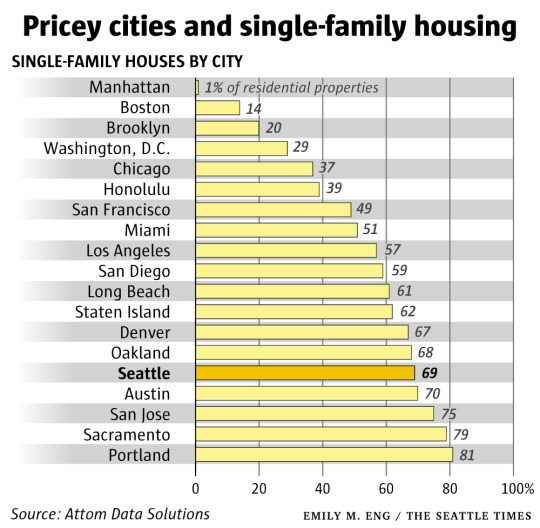
    Of all the residential lots in the city, the estimate is that 69% of them are occupied by single-family houses. This is compared to 1% in Manhattan. 

    I tried to reverse engineer the 69% based on the land use areas in the article, but the math didn’t quite add up. In any event, the argument here is, of course, that single-family homes are too expensive in Seattle and that the city needs more land available for multi-family housing.

    Housing supply is no doubt important, but looking at the above chart, having a low, or lower, percentage of residential land dedicated to single-family housing doesn’t seem to necessarily guarantee affordable housing.

  • Puerto Rican migration during and following Maria

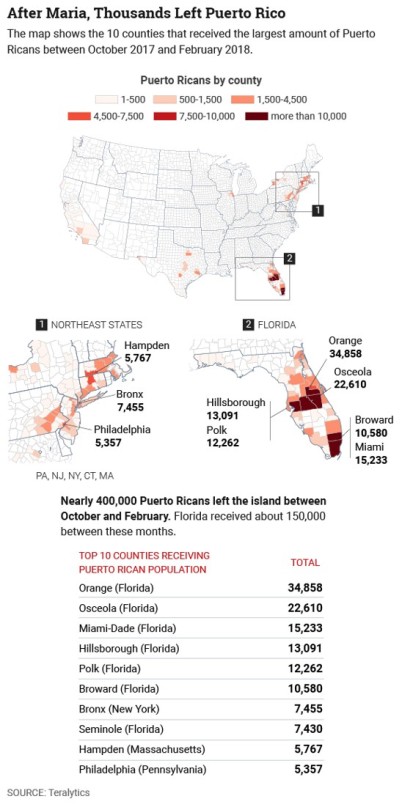
    Teralytics recently looked at data from 500,000 smartphone users to determine how, when, and where Puerto Ricans moved between August 2017 and February 2018 during and following Hurricane Maria – generally considered to be the worst natural disaster on record for the area. 

    CityLab published the data here and along with the following maps:

    image

    It shows the locations and the top 10 counties that received Puerto Rican population during the above time period. Florida and the Northeast are at the top of list, which isn’t all that surprising. Privacy concerns aside, it is once again an example of the kind of granular data that we now have access to. Prior to this data being available, all we apparently had was estimates.